Fantasy Name Generator
This fantasy name generator builds names for ten different fantasy peoples — human, elf, dwarf, orc, halfling, gnome, dragon, fae, undead and celestial — each from its own set of invented sound-roots, not one shared pile of syllables wearing different hats. Pick a race, a gender, whether you want a given name, a full name or a name with an earned epithet, and a tone, then generate. Every result comes with a pronunciation guide and the invented meaning behind it, so you know how to say the name and what it's supposed to mean before you write it down anywhere.
Most fantasy name tools do one of two things badly: they run every race through the same syllable blender, or they hand you a string of consonants with no way to say it out loud and no idea what, if anything, it means. This one treats each race as its own small invented language, with its own phonology and its own glossary, and it shows its work on every card. If you need something more specific — a Tolkien-style elf, a Baldur's Gate 3 race, a Dungeons & Dragons class, a whole kingdom's worth of place names — the hub near the bottom of this page links to roughly 53 dedicated generators built for exactly that.
👇 Click any name to copy it
How Fantasy Names Are Built
A fantasy name is a small performance of sound. Before a reader knows anything else about a character, the name has already told them something — soft or hard, grand or humble, safe or dangerous — and it did that through nothing but consonants and vowels. Understanding the mechanics behind that effect is the fastest way to stop picking names by feel and start picking them on purpose.
Every name, invented or real, breaks down into syllables: an optional opening consonant sound (the onset), a vowel at the core (the nucleus), and an optional closing consonant (the coda). Ael is just a nucleus and a coda. Thal stacks an onset, a nucleus and a coda. String two or three of these together and you get a name — Ael plus dur makes something that reads as elvish crossed with dwarvish, which is exactly why keeping one race's syllables in one race's names matters so much, a point the section below on cultural consistency covers in more depth.
Consonants split roughly into hard and soft, and the split does most of the emotional work. Hard consonants — k, g, d, b, r, x — stop the airflow abruptly and read as blunt, forceful, sometimes threatening: think of the way Grak or Vrok lands compared to Lian or Fael. Soft consonants — l, m, n, w, th, s — let air flow more freely and read as gentle, flowing, sometimes eerie depending on the vowel that follows them. Vowels matter almost as much: long, open vowels (ae, ee, oo) stretch a name out and give it a musical, sometimes mournful quality, while short, closed vowels (i, u, o in a tight syllable) clip a name short and give it weight. None of this is an accident of taste — it's the same sound symbolism that makes real-world brand names and baby names cluster the way they do, applied deliberately to a race that doesn't exist yet.
The guide to how we build fantasy names goes further into the phonotactic rules — which consonant clusters are actually pronounceable and which just look impressive on the page — that keep this generator's output on the right side of the line.
Naming by Race
Race is the single biggest lever in this generator, because it swaps out the entire sound palette, not just a prefix. Here's a snapshot of the sound each race leans on, with one live example pulled straight from the generator for each.
| Race | Sound | Example |
|---|---|---|
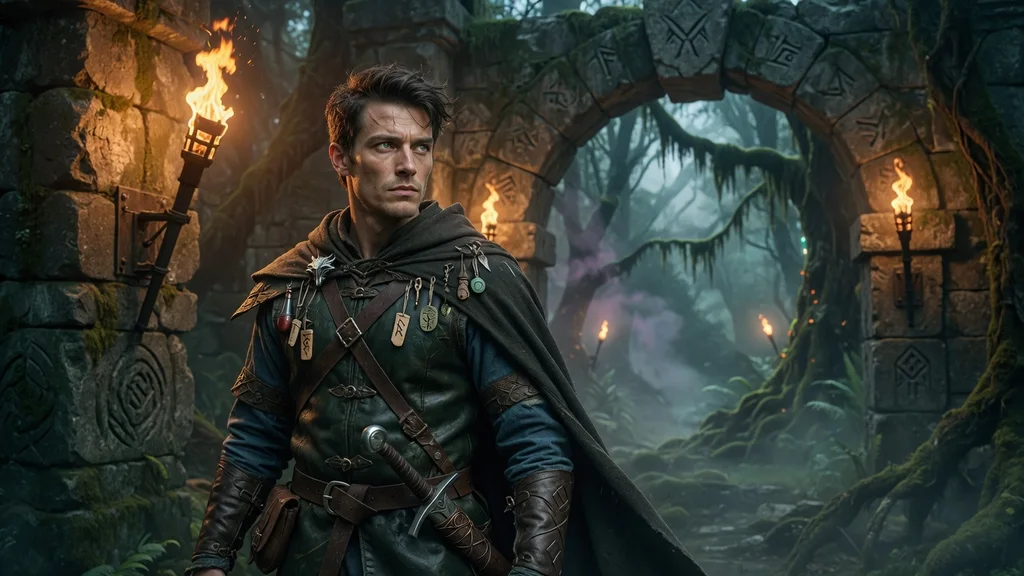
| Human | Familiar, Old-English-leaning roots — ald, bran, wil, -ric, -wen | Edan Stoneridge |
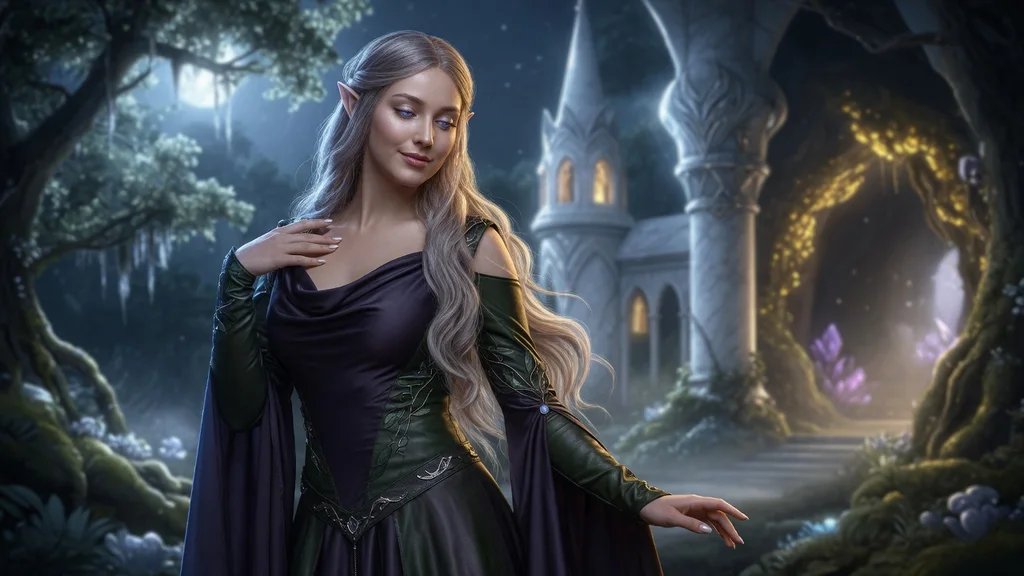
| Elf | Flowing, liquid, vowel-heavy — l, r, th, ae, ie | Renen Soltar |
| Dwarf | Hard and short — k, g, d, r, tight vowels | Glughob Copperhand |
| Orc | Guttural and harsh — g, k, z, sh, ur | Zarrag Warmaw |
| Halfling | Warm and homely — b, l, m, w, -ie endings | Holtehak Cloverfield |
| Gnome | Quick and clicky — t, z, k, short bursts | Rustivex Tinwhistle |
| Dragon | Grand and sibilant — x, z, th, rolling r | Ryxvash the Ember-Fanged |
| Fae | Light and mischievous — l, w, y, quick vowels | Danewyn of the Dew Court |
| Undead | Cold and hollow — v, n, ch, long vowels | Vaelhusk the Forgotten |
| Celestial | Open and airy — l, s, r, vowel-forward | Sornen of Judgment |
Set Race to any single option and every generated word — given name, surname, everything — draws only from that race's own roots. Set it to Any and each name in the batch picks a fresh, independent race, which is the fastest way to browse the full range in one go.
Names by Tone
Tone works inside whichever race you've picked, choosing which slice of that race's vocabulary gets used. It's the difference between an elf named after starlight and an elf named after dusk, without changing the fact that both are unmistakably elvish.
- Noble / Heroic pulls roots around honor, crown, valor, forge and strength — Skarug, Celael.
- Dark / Sinister pulls roots around ruin, blood, grave and fang — Malrava, Vashax.
- Whimsical pulls roots around laugh, spark, chitter and mischief — Wobbukka, Pukyn.
- Ancient / Mythic pulls roots around memory, elder, eternity and stone — Aelsol, Thistae.
Any keeps the full pool in play and lets each name land wherever it lands. It's the right setting for a mixed cast where not every character is cut from the same cloth — a war party rarely agrees on tone any more than a real one does.
Full Names, Surnames & Epithets
A single given name is often all a background character needs. A protagonist, especially one whose full name gets said out loud a few hundred times over a novel or a campaign, usually benefits from a second word — and this generator gives you two different kinds of second word, because real fantasy naming conventions use both.
Full Name pairs a given name with a second name built to fit that race's own conventions, not just more invented syllables tacked on. A human gets an English-shaped surname or a patronymic (Audine Greenford, Audel son of Eshan); a dwarf gets a clan compound or a clan affiliation (Hildokaz Ironhand, Stubrunt of Clan Bordin); an elf gets a second short invented house name built from the same root system as the given name (Solenmir Lianar); a dragon skips a surname entirely and gets a title instead (Krynsakarn the Ember-Wreathed). Ten races, five different structures — the point is that a dwarf's second name should never look like it wandered in from an elf's family tree.
Name + Epithet keeps the invented given name but adds a short plain-English title, capped around four words: Dralyra of the Old Deep, Todin of the High Reach. An epithet is the earned kind of name — the one other people started calling you after something happened, not the one your parents picked. It reads as English on purpose: nobody's birth surname is "the Silverclad," but plenty of legends pick one up along the way.
Mixing the two by hand works too. A character can carry an inherited family name for formal occasions and an epithet the rest of the party actually uses — the same way a real person might have a surname on their passport and a nickname everyone else uses instead.
How to Use the Fantasy Name Generator
- Pick a race. This is the filter that changes the most — every other setting works inside whatever race you choose here.
- Pick a gender. Feminine, masculine and neutral each pull from a different ending set for that race, so the choice changes the tail of the name, not just a label on the card.
- Pick a name type. Given Name Only for a single word, Full Name for a given name plus an invented surname, Name + Epithet for a given name plus an earned title.
- Pick a tone. Leave it on Any for a natural spread, or narrow it to match the character or the scene.
- Set the count and generate. Slide it up to twelve if you're naming a whole party or a village census. Click any card to copy that name.
Making a Name Feel Like It Belongs to a Culture
A single great name is easy. Ten names that all sound like they come from the same people, place or family is the harder and more valuable skill — it's what makes a fictional culture feel designed instead of assembled on the fly, and it's the exact problem this generator's per-race root sets exist to solve.
- Stay inside one race's sound world per in-story nation. If a kingdom in your setting is dwarven, every named dwarf from it should come from the Dwarf race option, not a mix of Dwarf and Orc results picked because you liked how they sounded individually.
- Let tone vary more than race within a culture. Real cultures contain noble houses and rough villages side by side; the same race with different tones models that better than switching races to signal class.
- Reuse endings on purpose within a family. If one sibling's name ends in -wen, giving the others endings from the same gender set (rather than a random mix) reads as a family resemblance instead of a coincidence.
- Don't let two unrelated cultures share a naming pattern by accident. If your elves and your dragons both end up sounding suspiciously similar, regenerate — the whole point of separate root sets is that they shouldn't converge.
- Be consistent about whether epithets exist in your world at all. If one character has an earned title and everyone else has a plain surname, that asymmetry should mean something in the story, not just be left over from generator settings.
Why some fantasy names sound fake covers the most common ways a generated name breaks this illusion — mismatched sound systems, apostrophes doing nothing, too many silent-feeling letters — and how to spot it before a reader does.
Pronunciation: Why the Guide Matters
A name a reader can't sound out gets silently skipped every time it recurs on the page, and that's a real cost spread across an entire book or campaign. Every card here comes with a rough pronunciation underneath the name — capital letters, broken into syllables — the same shorthand a dictionary uses for stress, not a full phonetic alphabet, just enough to say the name out loud with confidence the first time you see it.
Take Silen Nymlian, pronounced SIL-en NIM-lee-ahn — an elvish full
name. Or Ragash Grimreaver, pronounced RAG-ash — an orcish name
paired with a plain-spoken deed name. Neither is fully guessable from the spelling
alone; both become easy the moment you see the guide.
A word on apostrophes: this generator doesn't use them, on purpose. An apostrophe in a fantasy name is supposed to mark something real — a glottal stop, a dropped syllable, a grammatical particle — but in most generated names it's decoration doing no linguistic work at all, which is one of the fastest ways a name reads as fake rather than foreign. If your own setting has real apostrophe rules (a clan particle, an honorific), they're worth adding by hand rather than sprinkling on for texture.
Fantasy Name Generators by Race & Setting
This page covers ten broad fantasy peoples in one tool. If you already know exactly which race, class, setting or game you're naming for, one of these dedicated generators will usually get you further, faster — bigger name pools, filters built around that race's real conventions, and lore specific to it. Here's every fantasy, dark-fantasy and Elder Scrolls generator on the site, grouped by kind.
Elves & Fae
The most name-hungry corner of fantasy fiction — seven takes on the same broad family.
- Elf — Every elven branch in one place — pick a subtype or browse them all.
- Half-Elf — Names torn between human and elven worlds.
- High Elf — Melodic noble-elf names.
- Wood Elf — Forest-bound Silvan names by role.
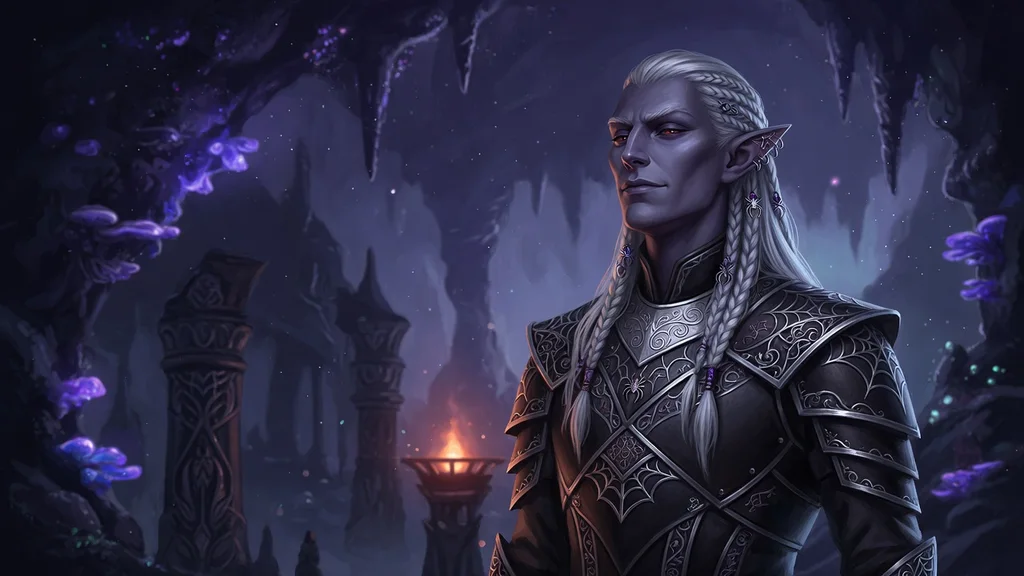
- Drow — Dark-elf names with noble houses.
- Blood Elf — Sin'dorei names with noble houses.
- Fae — Use-names and true names — Seelie, Unseelie, and Wild fae.
Dwarves, Orcs & the Underdark
Hard consonants, clan structures, and the races built to survive underground or on the frontier.
- Dwarf — Dwarf names by gender, style and meaning.
- Dwarven — Sturdy clan names from the deep halls.
- Orc — Brutal warband names by flavor.
- Half-Orc — D&D half-orc names by heritage.
- Goblin — Gnarly goblin names by flavor.
- Hobgoblin — Martial names, war-titles and legions.
- Duergar — Grim gray-dwarf names of the Underdark.
- Kobold — Short, yipping draconic names.
- Troll — Norse folklore to Tolkien, D&D, WoW-style and Discworld.
- Goliath — Birth, earned nickname & unchanging clan names.
- Hobbit — Homely Shire names and family surnames.
- Halfling — Warm, homely names with a wink.
D&D Races & Classes
Built for the tabletop — race and class conventions a generic generator won't know.
- D&D Character — Character names across every race.
- Tiefling — Infernal, human and self-chosen virtue names.
- Aasimar — Human names, celestial titles by subrace, D&D 5e.
- Githyanki — Harsh astral names from the silver void.
- Tabaxi — Two-part cat-folk names for D&D.
- Barbarian — Harsh names with earned epithets.
- Paladin — Holy names and oaths for D&D.
- Sorcerer — Arcane names and epithets by tradition.
- Knight — Chivalric names, titles and holdings.
- Templar — Holy-order names by rank and region.
- Pathfinder — Golarion ancestries D&D doesn't have, plus nine human ethnicities.
- Species & Race — Names for whole fictional species.
Dragons, Demons & the Divine
The biggest names in any pantheon — literally.
- Dragon — Epic names for dragons by element.
- Dragonborn — Draconic clan names heavy with honor and fire.
- Demon — Infernal names by rank and domain.
- God & Goddess — Divine names and epithets across pantheons.
- Goddess — Divine female names and domains.
- Angel — Celestial names by rank, domain and the -el ending.
Places & Realms
A kingdom, a continent or a village needs a naming logic of its own — not a person's name with a capital letter.
- Kingdom — Regal realm names for monarchies.
- Fantasy Country — Names for kingdoms, empires and realms.
- Fantasy Continent — Grand names for landmasses and realms.
- Country — Believable nation names by style.
- Village & Town — Place names from authentic old morphemes.
- Castle — Names for castles and fortresses.
Dark Fantasy
Names for characters who practice something the local temple would rather they didn't.
- Witch — Witch names by craft, coven and epithet.
- Necromancer — Death-mage names by archetype and title.
- Female Necromancer — Elegant, grim death-mage names.
Elder Scrolls (Tamriel)
Lore-accurate names for the races of Tamriel, one game-faithful generator per race.
- Dark Elf — Dunmer Houses and Ashlander clans, plus drow and Warhammer-style takes.
- Khajiit — Feline names, honorific and all.
- Argonian — Reptilian Jel names and descriptive use-names.
- Skyrim Nord — Hardy Nord names of Skyrim.
- Breton — Celtic-flavoured High Rock names.
- Redguard — Crown, Forebear, or Ansei Sword-Singer names across Hammerfell.
- Imperial — Colovian or Nibenese names with Legion rank, county, or Cult titles.
Building an entire invented language rather than a handful of names? The guide to building a naming language walks through designing phonology, morphology and a root vocabulary from scratch — effectively the process behind this generator's ten race pools, laid out step by step.
Example Fantasy Names
Ten full names per race, generated live by the tool above — a browsable sample rather than a fixed list, since generating your own batch takes about as long as reading this one.
Human
- Jonric Wolfridge
- Alderic Stoneholt
- Malsev son of Tavor
- Corine Marrowford
- Audeld Oakhollow
- Ravcoris Greenwater
- Branwil son of Eshan
- Aldewen Colegate
- Audosan Coleholt
- Cormal Colegate
Elf
- Enmirael Celnym
- Lorae Vaeneth
- Sillor Aellyr
- Faelael Ethanym
- Lianen Wispatar
- Lorael Solen
- Celarir Vaeniel
- Wispael Mirnym
- Solmiren Aellian
- Lyrsil Thalen
Dwarf
- Glughob of Clan Kazdur
- Ruunir Stonehammer
- Stubhob of Clan Holgrim
- Dola Emberbeard
- Glugrunt Goldhammer
- Durruun of Clan Kazdur
- Dura of Clan Urkstone
- Durar of Clan Vrokka
- Urkovrok of Clan Bordin
- Kragurk of Clan Bordin
Orc
- Snikbuk Skullbiter
- Moksukar Warmaw
- Bukgurot Bloodreaver
- Grakrag Grimmaw
- Grakor Bloodcrack
- Grotsunik Bonecrack
- Mokug Grimmaw
- Grotash Grimbiter
- Ghulursuh Ironscar
- Ursuhzog Warscar
Halfling
- Todie Honeymeadow
- Humtodie Merrymeadow
- Thaka Honeybrook
- Netsogie Berryfield
- Humgeran Berryburrow
- Wilbelie Greenfield
- Holrin Berrybrook
- Wilen Teaburrow
- Soga Cloverleaf
- Netsog Underfield
Gnome
- Nixkelm Boltfizzle
- Ziben Cogspanner
- Tikpexix Brasstinker
- Rusten Boltwidget
- Kelmette Fizztinker
- Kobit Tinwidget
- Fiztik Gearfizzle
- Kelmidun Cogwidget
- Kobette Cogclank
- Vexdobit Gearclank
Dragon / Draconic
- Xaror the Iron-Scaled
- Ortahen the Storm-Scaled
- Ryxcahar the Bone-Wreathed
- Glerxar the Void-Winged
- Puftyx the Ember-Crowned
- Ortahvor the Storm-Bound
- Ryxzeth the Storm-Wreathed
- Charvash the Ember-Fanged
- Skityra the Shadow-Winged
- Nibith the Sun-Bound
Fae
- Vrith of the Bloom Court
- Graelith of the Mist Court
- Nixmurk of the Dew Court
- Wyndane of the Thorn Court
- Murken of the Bloom Court
- Glamlume of the Mist Court
- Nixion of the Moon Court
- Graelion of the Bloom Court
- Wynae of the Bloom Court
- Lirion of the Mist Court
Undead
- Lichith the Pale
- Vaellich who was Aldric
- Huskyne who was Bramm
- Dredsylv the Unraveled
- Vaelsorr who was Bramm
- Mortonyx the Unraveled
- Nyxvasc who was Bramm
- Huskir the Forgotten
- Sorrith the Hollow
- Jibcolat who was Yselle
Celestial
- Luxser of Dawn's Grace
- Falvaren of Hope
- Chymael of Light
- Sorniel of Light
- Gleetril of Judgment
- Vastith of the Unbroken Vow
- Caelitheon of Hope
- Omirvaren of Light
- Aurlux of Light
- Aurluxa of Hope
Tips for Choosing a Fantasy Name
- Read it aloud before you commit. A name that trips your own tongue will trip every reader's, and the pronunciation guide only helps if you actually check it against how you'd naturally say the letters.
- Match name length to how often the name gets used. A protagonist whose name appears on every page benefits from something short and clean; a one-scene background character can carry something longer without cost.
- Don't let every character in a scene share an ending. Three names ending in -wen in the same paragraph blur together in a reader's head even if each one is individually fine.
- Generate in batches, not one at a time. Naming a full cast or an NPC-heavy town is faster and more consistent when you slide the count up and pick favorites from one batch than when you regenerate a single result over and over.
- Save the ones you like immediately. Click to copy, and paste into your character sheet or notes before you generate again — there's no history to scroll back through.
- Let the epithet do storytelling the surname can't. "The Ashen" implies a specific, checkable event in a character's past; an inherited surname implies nothing beyond family. Pick whichever your character actually needs.
A fantasy name is one of the smallest pieces of a story doing some of its heaviest lifting — culture, era, temperament, sometimes a whole backstory, compressed into two or three syllables a reader has to be able to say. Building it deliberately, with a real sound system and an honest account of what it means, is what keeps it from dissolving into background noise the fortieth time it shows up on the page.
FAQ about fantasy names
How does this fantasy name generator work?
Pick a race, a gender, a name type and a tone, then generate. Each race has its own set of invented sound-roots — not one shared pool reskinned ten times — so an elf name and a dwarf name are built from genuinely different building blocks, not the same syllables with different capital letters.
Are the names' meanings real?
No, and the generator says so on every card. Each race here uses a small invented vocabulary built for this tool — 'ael' meaning 'star' in the elvish set, for instance — so the meaning shown is this generator's own invented gloss, not a claim about Tolkien's Sindarin, real Old Norse, or any other actual language.
What's the difference between Given Name, Full Name and Epithet?
Given Name Only returns a single first name. Full Name adds a second invented word built the same way as a family name. Name + Epithet keeps the given name and adds an earned-sounding title in plain English, like 'the Ashen' or 'of the Hollow Coast' — the kind of name a character gets from other people, not from a naming ceremony.
Why does the generator show a pronunciation for every name?
Because an unreadable fantasy name is a name nobody uses. The guide under each result breaks the name into its syllables in rough capital letters, the same way a dictionary marks stress, so you know how to say it before you commit it to a character sheet or a manuscript.
Can I generate names for a specific race, like elf or dwarf names only?
Yes — set the Race filter to any of the ten options and every result comes from that race's own root set. For deeper, race-specific generators with more lore and larger name pools, see the dedicated pages linked in the hub section below.
What does the Tone filter actually change?
It switches which subset of a race's invented roots gets used. Noble roots lean toward words like 'honor' and 'crown'; Dark roots toward 'ruin' and 'grave'; Whimsical toward 'laugh' and 'spark'; Ancient toward 'elder' and 'memory'. The race decides the sound, the tone decides the flavor inside that sound.
Is it okay to use a generated name in my own writing or game?
Yes. Every name is assembled fresh from invented word-parts and checked against a blocklist of famous fictional names and surnames — Tolkien's, D&D's, Game of Thrones' and similar — so you won't walk away with something that's already somebody else's protagonist.
Why do some names look long? Can I get shorter ones?
Full Name and Epithet results are two words by design, since that's how most fantasy characters are actually named in fiction. Switch Name Type to Given Name Only for a single, shorter word — most results land between five and ten letters.
How do I make a fantasy name feel like it belongs to a specific culture in my story?
Stay inside one race's sound world for every name that comes from the same in-world nation or clan, and don't mix endings across races just because two names sound nice together. The 'Making a Name Feel Like It Belongs to a Culture' section below covers the consistency rules in more detail.
Do you have generators for specific fantasy species or settings, like D&D races or Elder Scrolls?
Yes — the hub section on this page links every race, D&D class, place-name and setting generator on the site, grouped so you can jump straight to the one that matches your race, campaign or setting.
What's the difference between this generator and the individual race pages, like the elf or dwarf generator?
This page is the broad entry point — ten races in one tool, useful when you want a fast name or you're not sure which race you need yet. The dedicated race pages go deeper: more filters specific to that race's real conventions, bigger name pools, and lore built around that race alone.
Can I use this to name a whole fantasy kingdom or world, not just a character?
This generator is built for people and their names, not places. For settlements, nations and continents, see the Kingdom, Fantasy Country, Fantasy Continent and Village generators linked in the hub section — they use their own place-naming logic rather than the given-name roots here.