
Fantasy Country Name Generator

This fantasy country name generator names the lands your story stands on — kingdoms, empires, republics, city-states and wild realms, each shaped by the culture that built it. A nation's name does a lot of quiet work. Before a reader meets a single character, the word on the map tells them whether they're looking at a gilded southern court, a grim iron frontier, or an elven forest older than its borders.
👇 Click any name to copy it
Pick a government and a style, choose a plain name or the full title, and roll. Every result lands tagged with its type or culture and a line of flavour about the land itself. Don't like a batch? Generate again as often as you want, and click any card to copy it.
Below the tool you'll find how country names actually work — the sounds, the roots, the real-world echoes — plus a reference table, grouped examples, and tips for naming a whole map's worth of nations.
What Makes a Believable Country Name
A good land name almost never sounds invented, even when it is. That's because real place names are rarely arbitrary. They come from somewhere — a founder, a river, a feature of the terrain, a word in an older tongue that nobody speaks anymore. Your fantasy nations should carry the same weight of history, even if you make up the history afterward.
Three things do most of the work: sound, root, and echo.
Sound sets the mood before meaning ever arrives. Soft liquids and open vowels — Aelinwyn, Lirien — read as elegant, old, peaceful. Hard clusters and blunt closes — Drakmar, Grimgoth — read as harsh and dangerous. Say a candidate aloud. If it makes your jaw work, it reads as a hard place. If it flows, it reads as a gentle one.
Root is the meaningful core under the decoration. Most real countries are named for a people, a person, or a place: Francia for the Franks, Colombia for Columbus, Mali for its founding city. Give your land a root that means something to its inhabitants and the name stops feeling like noise. Even an invented root works if it recurs — name a river Valen, a dynasty Valen, and a kingdom Valedor, and the world suddenly has a thread.
Echo is the half-familiar ring of a real language. Latin-flavoured endings feel imperial. Norse-flavoured ones feel cold and northern. Arabic and Persian echoes feel like sun and trade. You're not copying — you're borrowing a fingerprint of sound so the reader's ear places the culture without being told.
Naming by Government Type
The kind of state a country is changes how its name should read. A kingdom is not an empire is not a free city, and the title carries that difference before any description does.
Kingdoms lean dynastic. They take their name from a royal line or a founding ruler, and they usually wear it as a single proud word: Valedor, Aldoria, Corwyn. The crown is the country, so the name feels personal and old.
Empires read bigger and more conquered. They often grow from a capital city or a founder and then swallow everything around it, so the name can trail the word itself — Tharnmark Empire — or claim a whole region. An empire's name should sound like it covers a lot of map and a lot of grudges.
Republics sound civic and a little plainer. The power sits in a council or a senate, not a bloodline, so the name tends to reference a place rather than a person: the Republic of Veren, the Free Cities of the coast. Plainness is the point.
City-states are one great city and the land it can defend. Their names are sharp and singular — proud, mercantile, jealous of their independence. Think of a walled trading city that answers to no king and says so often.
Realms and lands are the loosest of all. The border drifts, the rule is half-wild, and the name often describes the place more than its government: the Realm of Frostmark, the Ashen Lands. Use these for frontiers, old pacts, and regions no single throne fully controls.
Naming by Culture and Style
Style is where the sound lives. The same map can hold five cultures that feel completely different, and you build that difference into the phonetics. Pick a style in the generator and the roots, vowels and suffixes shift to match.
| Style | Feel | Example |
|---|---|---|
| Noble (high-fantasy) | Regal, Latinate, vowel-rich and old | Aldoria, Valemont |
| Dark / grim | Harsh clusters, blunt and dangerous | Drakmar, Grimgoth |
| Elven / melodic | Flowing liquids, soft and ancient | Aelinwyn, Lirienloth |
| Norse / rugged | Hard consonants, cold and northern | Thornmark, Skjalgard |
| Exotic / desert | Open syllables, sun, sand and trade | Khazahar, Zaristan |
Noble names borrow from Latin and the romance languages: long vowels, endings like -ia, -or and -mont, a court-and-castle weight. They're your default high-fantasy heartland.
Dark names pile on consonants. Clusters like dr, thr and gr, closes like -mar, -goth and -crag. The mouth has to work, and that effort reads as menace. Use these for villain nations and cursed frontiers.
Elven names flow. Liquids — l, r, n — soft vowels, and trailing endings like -wyn, -thiel and -lael. They sound grown rather than built, which is exactly the effect you want for a forest people who count years in centuries.
Norse names hit hard and short. Think fjords and mead-halls: roots like Thorn, Frost and Skjal, suffixes like -mark, -gard, -fell and -heim. Cold country, stubborn people, names that sound good shouted.
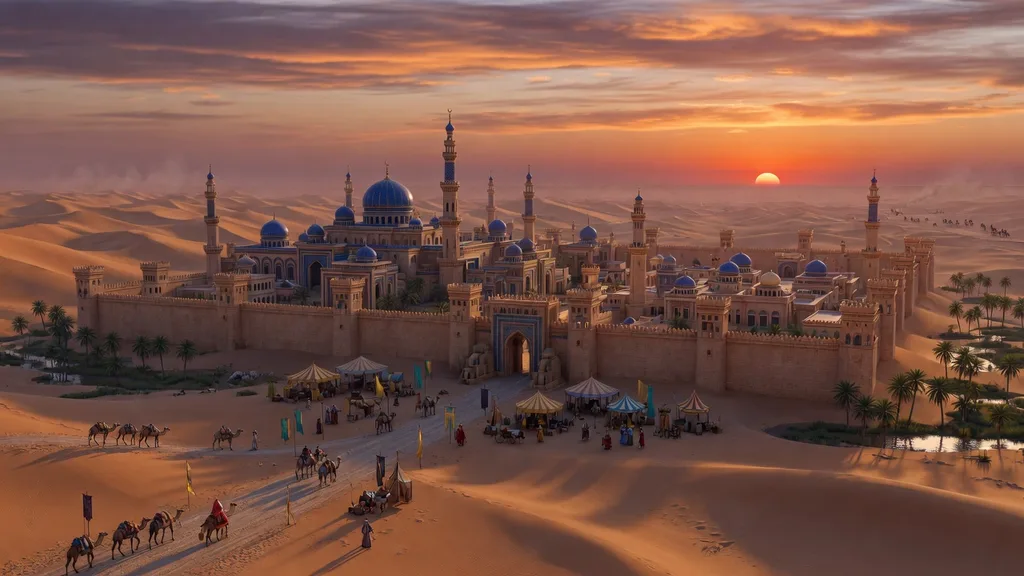
Exotic names open up. Borrowing the fingerprint of Arabic and Persian sound — Khaz, Zar, Sah, endings like -ahar, -istan and -bek — they read as desert empires, spice roads and walled cities shimmering in the heat.
Building a Whole Map's Worth of Nations
One name is easy. A believable world needs a dozen that feel related where they should and foreign where they shouldn't. The trick is to generate in clusters rather than one at a time.
Decide your regions first, then assign a style to each. The cold north gets a run of Norse names. The central kingdoms get Noble ones. The southern reaches get Exotic. The cursed borderland gets Dark. When every nation in a region shares a phonetic palette, the map reads like it has real cultures with real history, not a scatter of random syllables.
Then thread roots across borders where it makes sense. Two neighbouring kingdoms that once were one should share a sound — Valedor and Valemont, clearly cousins. A conquered province might keep its old elven name under a new imperial one. These little inconsistencies are what make a setting feel lived-in, and they're easy to fake once you have a pile of generated options to draw from.
For a campaign, this gives your players a world that hangs together: when they cross from Thornmark into Drakmar, the names alone tell them they've left the rugged north for somewhere worse. For a novel, it spares the reader from confusing two nations that sound nothing alike. Roll big batches, sort by region, and keep a short list.
Suffixes & Prefixes That Carry Weight
The ending of a country name is doing more than you think. Real geographic suffixes carry built-in meaning, and borrowing them is the fastest way to make an invented land sound real.
- -ia — the great Latin territory ending (Gallia, Britannia, Aldoria). Reads imperial and old. The workhorse of high-fantasy nations.
- -land — plainly means country (England, Finland, Iceland). Honest, grounded, a little Germanic. Good for human kingdoms and frontiers.
- -mark — a border or march (Denmark). Signals a frontier state or a contested edge. Pairs naturally with Norse roots.
- -gard — Norse for an enclosure or stronghold (Asgard, Midgard). Reads fortified and northern.
- -mont / -mor — mountain and moor. Ties the name to terrain — Valemont, Drakmor — and grounds it in a place.
- -stan / -istan — Persian for land of (Zaristan). Instantly signals a desert or steppe culture.
- -heim — Germanic for home (Trondheim). Cosy and cold at once; works for Norse and dark styles alike.
Prefixes pull their weight too. A leading Drak-, Mor- or Grim- darkens anything that follows. Aur-, Val- or Sol- gild it. Stack a fitting prefix on a fitting suffix and the middle almost names itself.
Example Fantasy Country Names
A starting palette, grouped by style. Mix, respell, and combine them freely — these are seeds, not a finished map.
Noble Kingdoms
- Aldoria
- Valemont
- Corwyn
- Aurelond
- Serevia
- Lorandor
- Belesse
- Caeloria
- Vantmar
- Montaine
- Estravia
- Roveniá
Dark Realms
- Drakmar
- Grimgoth
- Vornkar
- Mordread
- Skarcrag
- Thromgard
- Ashkmire
- Korvfen
- Ulthmor
- Brakvault
- Ghulscar
- Threxoth
Elven Lands
- Aelinwyn
- Lirienloth
- Sylvadell
- Caelthiel
- Maelriel
- Faervale
- Ysolwynd
- Quelmyr
- Lumenael
- Thaenloren
- Oriawood
- Ilywyn
Norse Holds
- Thornmark
- Skjalgard
- Frostfell
- Hrodheim
- Vardvik
- Bjornstad
- Ravnfjord
- Steinholm
- Drangskar
- Norrdahl
- Valdreim
- Eyrness
Exotic Empires
- Khazahar
- Zaristan
- Sahbek
- Qadiran
- Tahlune
- Mekara
- Shamabad
- Vashaz
- Almirome
- Zenjune
- Nubisai
- Sarafan
Tips for Naming Your Country
A few rules that keep land names sharp and usable at the table or on the page:
- Say it twice. If a name trips your tongue on the second pass, it'll trip your readers and players every session. Strong but pronounceable wins.
- Match sound to place. A peaceful river-kingdom shouldn't sound like a death-cult fortress. Let the phonetics do half the worldbuilding for you.
- Keep regions consistent. Nations that border each other should share a phonetic family unless their difference is the point.
- Give the root a meaning. Even a private, invented meaning makes a name feel intentional. Write it down; reuse it for a city or a river.
- Don't over-decorate. Apostrophes and stacked vowels read as fantasy clichés fast. One distinctive feature beats three.
- Test it on a map label. The real question is whether it looks right printed small next to five other countries. If it does, it's done.
About Fantasy Nations in Worldbuilding
Countries are the skeleton of a secondary world. They give characters a homeland to defend or flee, wars a reason to start, and maps something to label. A name is the first and most durable thing a nation owns — it survives kings, outlasts wars, and is usually the only detail a reader remembers a chapter later.
That's why getting it right pays off. A nation called Aldoria already feels like a place with a court and a history; one called Drakmar already feels like somewhere you wouldn't send your daughter. You've done character work before writing a word of description. The best fantasy settings — the ones whose maps people memorize — lean hard on this, giving every region a name that sounds like its people and its weather.
Use the generator above to skip the blank-page problem. Roll until the right word jumps out, keep a short list, and build the history backward from the name. That's how most real countries got theirs anyway — the name came first, and the story grew up around it.
FAQ for Fantasy Country Name Generator
What makes a good fantasy country name?
A believable land name sounds like it belongs to a people and a place. It usually pairs a root with meaning — a king's name, a river, a feature of the land — with a familiar geographic suffix like -ia, -land, -mark or -gard. Keep it short enough to say twice, and let the sound match the culture: soft and flowing for elves, hard and blunt for a grim frontier.
How do I name a kingdom versus an empire?
Government shapes the title more than the root. A kingdom tends toward a single dynastic name (Valedor, Aldoria). An empire reads bigger and often takes its name from a founding city or conqueror, sometimes as a trailing word — "Tharnmark Empire." Republics and city-states lean civic and plain. This generator builds the full title for you when you pick the Full-title form.
Where can I use the Fantasy Country Name Generator?
It works for D&D campaign maps, novel-length worldbuilding, tabletop RPG homebrew settings, and video game or board game design — anywhere a story needs a nation with a name that sounds like it has a government and a history. Pick a style per region, roll batches, and copy any result straight onto your map.
Can I use these names for D&D or my novel?
Yes. The names are original combinations built from phonetic roots, not pulled from any published setting, so they're safe to drop into a campaign, a map, or a manuscript. Roll a batch, keep the ones that fit your world, and adjust spelling to taste.
How do I fill a whole map with nations?
Generate in batches by style. Roll a cluster of Noble names for the central realms, a set of Norse names for the cold north, and a run of Exotic names for the southern deserts. Keeping each region phonetically consistent makes a map feel like it has real cultures and borders rather than random words.
What makes fantasy country names sound believable?
Believable land names almost always carry three things: a sound that matches the culture, a root with real or implied meaning, and a suffix borrowed from a real geographic tradition — -ia, -land, -mark, -gard and the rest. This generator builds every name from that same formula instead of stringing random syllables together, which is why the results read like they belong on an actual map.
What do suffixes like -mark, -land and -ia actually mean?
They're real geographic markers. "-mark" means a border or march (Denmark). "-land" simply means land or country (England, Finland). "-ia" is a Latin territory ending (Gallia, Britannia). "-gard" comes from Norse for an enclosure or stronghold (Asgard). Picking one signals where your culture's language roots sit.
Are the generated names unique?
Each batch is assembled randomly from large root pools, so repeats within a session are filtered out and most names you see are fresh. They aren't trademark-checked or guaranteed unused somewhere in print, but for worldbuilding they give you original, ready-to-use options.


