Drow Name Generator
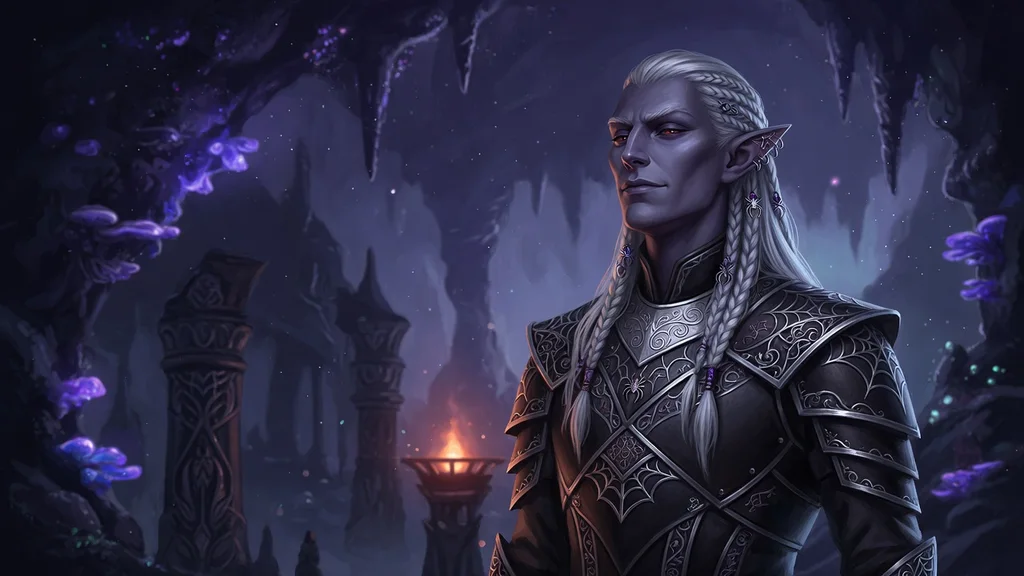
This drow name generator builds dark elf names the way the Underdark actually names its children — short, sharp given names shaped by apostrophes and liquid consonants, with an optional House name riding behind them like a title. Pick a gender, set a tone from noble to exile, and decide whether your drow answers to a House at all. Every name is an original combination, tuned for D&D 5e, dark fantasy fiction, or any Underdark campaign that needs a name with teeth.
👇 Click any name to copy it
A drow's name is never just a label. It announces rank the instant it's spoken — whether a House stands behind the person saying it, whether the temple has claimed them, whether anyone above them still bothers to remember their given name at all.
That's a lot of information packed into two or three syllables, and it's why a lazy dark-elf name — something that could just as easily belong to a wood elf — falls flat at the table. Drow names carry weight because drow society is built on weight: House, temple, blade, or nothing.
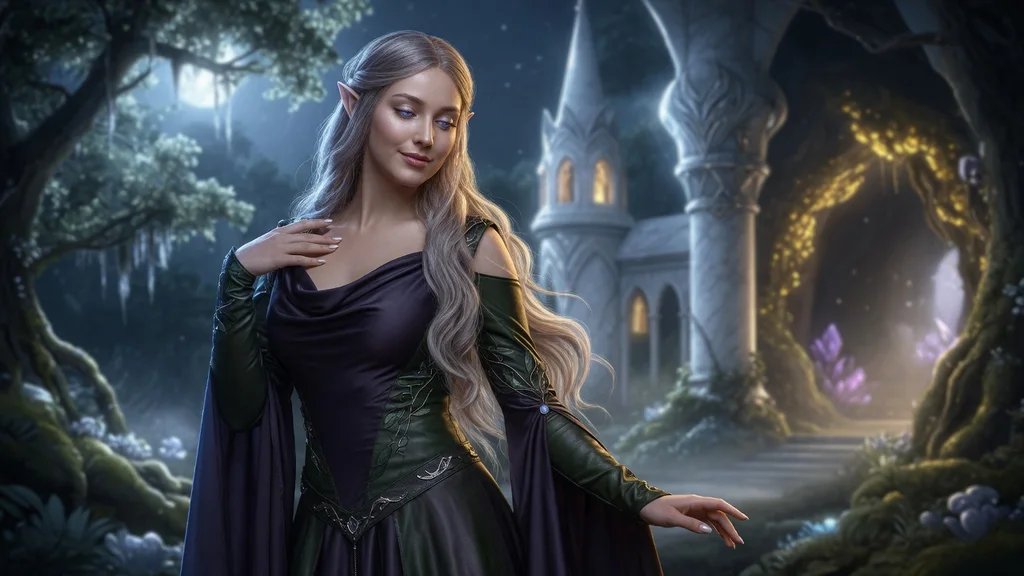
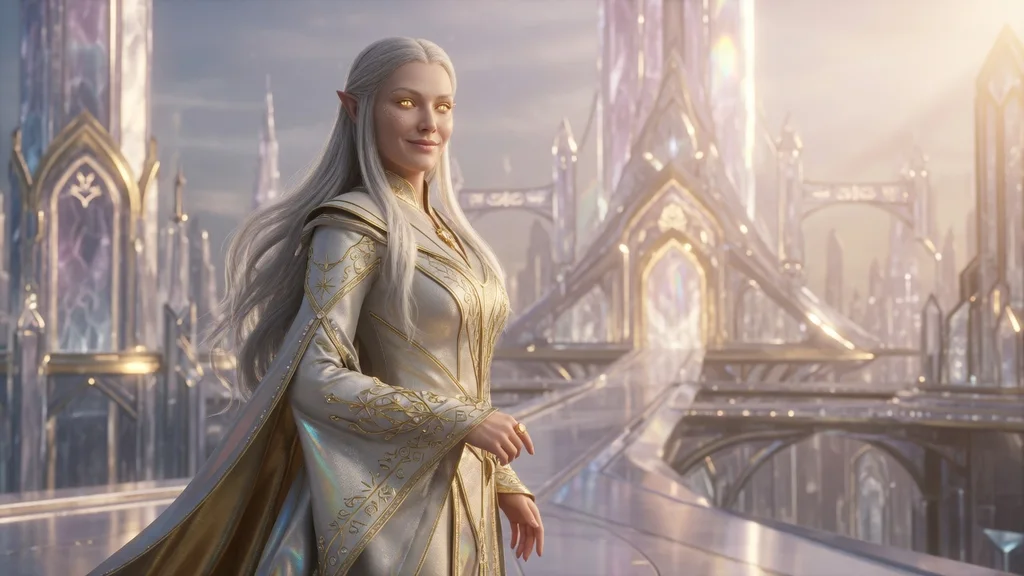
Not sure drow is the branch you're after? The elf name generator compares every elven subtype — high, wood, dark, half, blood, and drow — side by side before you dive into the Underdark specifics here.
Who the Drow Are
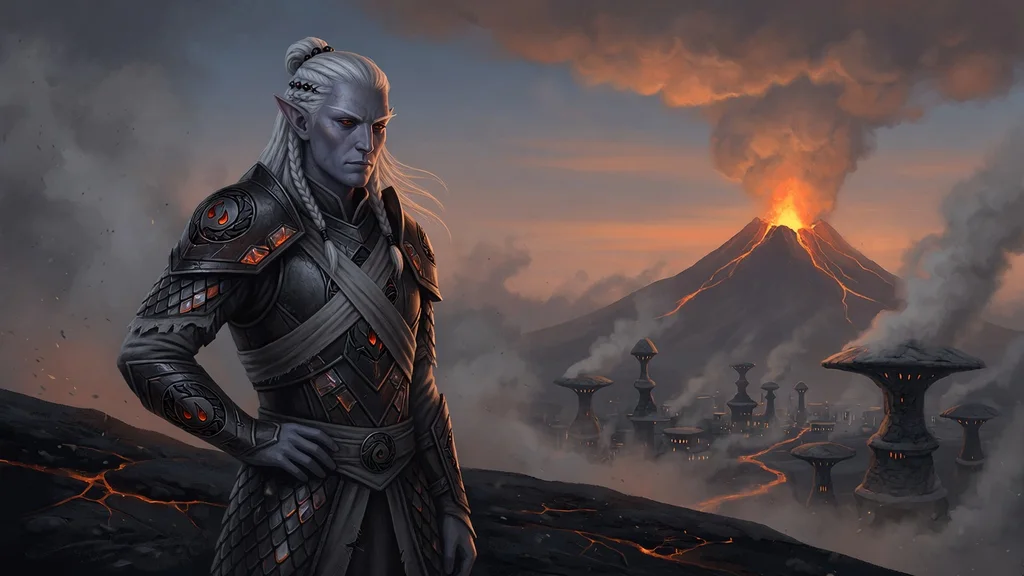
Drow are the dark-skinned, white-haired elves who fled — or were driven — into the Underdark generations ago, and the world below remade them. They keep the elven grace and long lifespan but trade the surface elf's serenity for something colder: a culture built on House rivalry, ambition, and devotion to a goddess who rewards betrayal as readily as loyalty.
Their society runs matriarchal. Matron mothers head the great Houses, priestesses run the temples, and male drow — no matter how skilled with a blade or a spell — answer to a ceiling set by the women above them. Everyone in that structure is watched, and everyone is expected to watch back.
A drow name has to survive inside that pressure. It's rarely soft, rarely wasted on sentiment, and almost always built to be said with authority — or, for the exiled few, to be said quietly, by someone hoping not to be recognized.
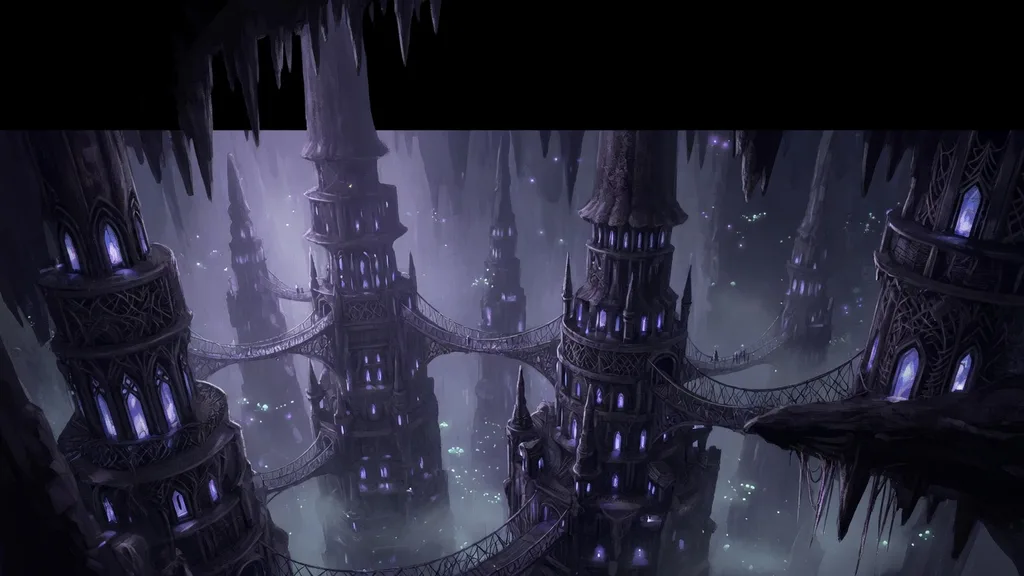
How Drow Names Work
Two layers make up a drow name, and they carry very different information.
The given name. Short, personal, chosen at birth by a matron mother or a temple priestess for how it sounds rather than what it means. Zhaun, Vondressa, Xylea — built to be barked across a duel or murmured in a temple, and rarely longer than three syllables.
The House name. Inherited, political, and worth more than the given name most of the time. A House like Xar'tel or Vel'ryn carries centuries of rivalry, wealth, and blame. Losing it — through exile, disgrace, or a House's fall — is the worst thing that can happen to a drow, worse in most cases than losing a limb.
Between them sits tone. A noble drow, a priestess of the Spider Queen, a House warrior, and an exile all carry names that can share the same syllables but land completely differently once you know who's speaking.
Building a House Name
A House name isn't picked the way a given name is. It's founded once, usually by a matron mother ambitious enough to carve out territory, and then carried by everyone born or married into that lineage for generations. That's why House names in this generator come out of a smaller, harder-edged pool than given names — Xar, Vel, Zau, Kael — each one welded to a second fragment with an apostrophe, so the result reads like something that's been said in council chambers for centuries rather than invented yesterday.
Toggle the House name option on and the generator pairs a fresh House with each given name it rolls, so you can browse combinations instead of committing to the first one. Toggle it off and you get a bare given name — the right call for a street-level rogue, a solo exile, or any drow whose House affiliation the story hasn't decided yet.
Drow Names by Tone
Set the tone filter in the generator above to lean the result toward one of these four archetypes.
| Tone | Feel | Who wears it |
|---|---|---|
| Noble | Cold, deliberate, House-proud | Ruling bloodlines, House heirs |
| Priestess of Lolth | Reverent, sharp, ambitious | Temple clergy — female only in the lore |
| Warrior | Blunt, commanding, blade-ready | House guard, mercenary companies |
| Exile | Quiet, unmoored, no House to answer to | Surface-drow, outcasts, renegades |
Drow Sounds vs Other Elven Tongues
Drop a drow name next to a high elf or wood elf one and the split is immediate — it's not the vocabulary, it's the texture.
Drow names lean on dark liquid consonants — zh, x, dr, v — stacked against sharp stops and apostrophe breaks that force a pause mid-word. Zhaerith, Vrondir, Sszorin. Say one aloud and it clips rather than sings. House names double down on the effect, welding two harsh syllables together with an apostrophe: Xar'tel, Kael'thoss.
Surface elven names — the kind you'd find from a high elf or a half-elf name generator — stay open-vowelled and melodic, built to flow rather than cut. Drow names invert that on purpose. The Underdark doesn't reward a name that sounds pretty; it rewards one that sounds like it could give an order.
How to Use Drow Name Generator
Three controls shape each result. Set a gender, choose a tone — noble, priestess of Lolth, warrior, or exile — and flip the house name toggle if you want the result to carry a House behind it. Leave tone on Any to let the generator roll across all four archetypes.
Note that a priestess of Lolth always resolves female, matching the source lore's female-only clergy, even if you've set gender to male — the generator swaps it quietly rather than producing a mismatch. Use the slider to pick how many names to roll, hit Generate, and click any card to copy it to your clipboard.
Each card also shows a short tone caption, so you're not just staring at a raw string of syllables — you get a sense of who this drow is before you've written a single line of backstory. Don't love a batch? Roll again as many times as you want; the pools are large enough that repeats stay rare even across a full party's worth of names.
Tips for Players and Writers
A drow name should feel like it was earned inside a dangerous social order. These tips help you pick one that does:
- Match tone to backstory. A noble heir and a warrior in the same House guard shouldn't sound interchangeable — pick the tone that fits the role first.
- Use the House name as leverage. A House name on a character sheet gives your GM (or your readers) an instant hook: rivals, debts, expectations.
- Drop the House for exiles. A drow cut off from their House should carry only the given name — the absence reads as loudly as the presence would.
- Keep it sayable at the table. Apostrophe clusters look striking on paper but can trip up a live reading. Say the result aloud before you commit.
- For BG3 and 5e, watch the matriarchy. A male drow character who outranks the women in his own House needs a reason — that tension is a built-in plot hook, not a mistake to smooth over.
- Writers, let the name signal danger early. A drow name on the page should make a reader tense up a little before the character even speaks.
- Rename after a fall from grace. If a noble drow gets stripped of House status mid-campaign, swapping their tone to exile and re-rolling without the House name is a quick, visible way to mark the change.
Example Drow Name Ideas
- Noble: Zhaun Xar'tel, Vondressa Vel'ryn, Xandrel Kael'thoss, Threnessa Ssor'quel
- Priestess of Lolth: Sszarielle Zau'aleth, Nyxandra Nyth'zhar, Ghaerissa Dro'nesse
- Warrior: Vrondir Ryv'vash, Malvurn Skal'orin, Ilzarielle Duv'raen
- Exile: Duskrin, Vezrathia, Fenzuir, Orvathessa (no House name)
Example Drow Names
Male Drow Names
- Zhaun Xar'tel
- Vrondir Vel'ryn
- Xalvor Zau'virr
- Drathis Kael'thoss
- Quyndor Ssor'quel
- Vaelrik Nyth'zhar
- Sszorin Dro'nesse
- Nyxandor Ryv'vash
- Ozrune Skal'orin
- Kelvraith Duv'raen
- Threnvar Yzar'kyrr
- Ilzash Orin'moth
- Ryndoth Mal'vael
- Malvurn Ghael'ithra
- Ghaeril Vex'ossen
Female Drow Names
- Zhaerith Xar'tel
- Vondressa Vel'ryn
- Xylea Zau'virr
- Drassithra Kael'thoss
- Quynara Ssor'quel
- Vaelyssa Nyth'zhar
- Sszarielle Dro'nesse
- Nyxandra Ryv'vash
- Ozvelith Skal'orin
- Kelvraine Duv'raen
- Threnessa Yzar'kyrr
- Ilzarielle Orin'moth
- Ryndessa Mal'vael
- Malvurra Ghael'ithra
- Ghaerissa Vex'ossen
About Drow Society
Drow society is a pressure cooker, and its naming conventions are one of the ways that pressure stays visible. A given name marks a person; a House name marks a network of debts, rivalries, and protections that person can call on — or that can just as easily turn on them. Nothing about a drow name is decorative.
Structure. The matron mother sits at the top of each House, the priesthood of the Spider Queen runs parallel to House politics and often above it, and everyone else — warriors, wizards, artisans, the exiled — fits somewhere beneath both. A name change, a House expulsion, or a priestess's blessing can reshuffle a drow's standing overnight.
Naming patterns. Drow names tend to feature:
- A given name built on dark liquid consonants and apostrophe breaks — short, sharp, easy to bark as an order
- An inherited House name, weightier than the given name, that signals rank and who can be blamed for a drow's actions
- A gap between House-backed and House-less names — the latter marking exiles, renegades, or the disgraced
- A tilt toward reverent, temple-flavored sounds for anyone marked for the priesthood of Lolth
Gender and standing. A male drow can still climb — as a weaponmaster, a wizard, or a House heir's favored consort — but rarely past the matron mother's notice. That imbalance shows up in fiction as often as it does in naming convention: male names in this generator skew blunt and functional, while female names carry a wider range, from priestess-grade reverence down to the same battlefield bluntness the men use. Neither reads as better; they read as differently positioned inside the same hierarchy.
If you're rounding out a wider Underdark or elven roster, pair this with the D&D character name generator for the rest of the party, or branch across the elven family tree with the high elf, half-elf, and blood elf name generators. For an infernal-blooded outsider to drop into the same campaign, the tiefling name generator covers that ground. Looking for "dark elf" in the wider sense instead of D&D's Underdark drow — say, the Elder Scrolls' Dunmer, or a Warhammer-style take? The dark elf name generator is the page for that.
FAQ for Drow Name Generator
How do drow get their names?
A drow's given name comes from the matron mother or the House priestesses shortly after birth, chosen for how it sounds rather than what it means. Surnames belong to the House, not the individual, so a drow carries the House name as a mark of rank and protection rather than a family label in the human sense.
Where do drow names come from?
The tradition traces back to Tolkien's dark-elven exiles and was sharpened into its familiar apostrophe-heavy, liquid-consonant form by D&D's Underdark lore. What makes drow names read as authentic isn't any single syllable — it's the clash of hard stops against soft sibilants inside one short word. This generator keeps that clash intact instead of smoothing it into something that could pass for a surface-elf name.
Where can I use the Drow Name Generator?
Beyond D&D 5e one-shots and campaigns, it works for Baldur's Gate-style playthroughs, original dark fantasy fiction, and any tabletop character sheet that needs an Underdark-flavored name. The pools are original combinations, not canon characters, so results are safe to use in homebrew settings without lore collisions.
What is the difference between a drow given name and a house name?
A given name is personal and short — Zhaun, Vondressa, Xylea — built to be spoken quickly in a temple or a duel. A house name is inherited and political, something like Xar'tel or Vel'ryn, and it signals which of the great Houses can be blamed, credited, or threatened for a drow's actions.
Why are drow societies matriarchal?
Drow culture answers to the Spider Queen, and her priesthood is female by tradition, which puts House leadership and religious authority in the hands of matron mothers and priestesses. Male drow can rise as warriors, wizards, or weaponmasters, but the ceiling on their power is set by the women who run the temple and the House.
Can I use these names in Baldur's Gate 3 or other D&D settings?
Yes. The generator follows the phonetic conventions D&D uses for its Underdark dark elves — apostrophes, hard consonant clusters, liquid endings — without reusing any published character or house name, so results drop cleanly into a BG3 tiefling-adjacent party build, a 5e campaign, or a homebrew Underdark of your own.