Angel Name Generator

This angel name generator spins up celestial names built the way the old ones were — a root drawn from sacred sound, capped with the Hebrew suffix -el, "of God." Pick a rank, hand the angel a domain, and you get a name that already carries a job: a Seraph of War, a Guardian of Mercy, a Fallen thing that used to sing. Every roll lands with a title and a line of lore, so you walk away with a character, not just a label.
👇 Click any name to copy it
A good angel name does two things at once. It sounds holy — bright vowels, that unmistakable -el ending — and it tells you what the angel is for. The angels people remember are never abstract. Michael fights. Raphael heals. Azrael waits at the door. The name and the duty are welded together, and that weld is what makes the name stick.
So this tool doesn't just rhyme syllables. It gives each name a rank in the choir and a domain to preside over, then writes the lore line for you. Roll until one snaps into focus, click to copy, and build outward from there.
How Angel Names Are Built
Strip a classic angel name down and you almost always find the same join: a meaningful root plus the suffix -el. That -el is Hebrew. It means "of God," or "God is," and it turns a syllable into a divine office.
- Gabriel — roughly "God is my strength." The messenger who announces.
- Raphael — "God heals." The angel of medicine and travellers.
- Uriel — "God is my light." The angel of dawn and insight.
- Azrael — tied to the gathering of souls. The angel of death.
The pattern stretches. Add an -i- and you get the smoother -iel (Raziel, Sariel); lean on an a and you get -ael (Azrael, Michael). All three are doing the same work — naming a being "of God" — and all three are what this generator reaches for first. The root carries the meaning; the suffix carries the rank.
The Ranks of Angels
Angels aren't a flat crowd. Medieval theologians, drawing on scripture and on writers like Pseudo-Dionysius, sorted them into nine choirs — a chain of command running from the throne of God down to the messengers who walk among people. You don't need the whole ladder to name a character, but knowing where your angel stands changes how the name should feel.
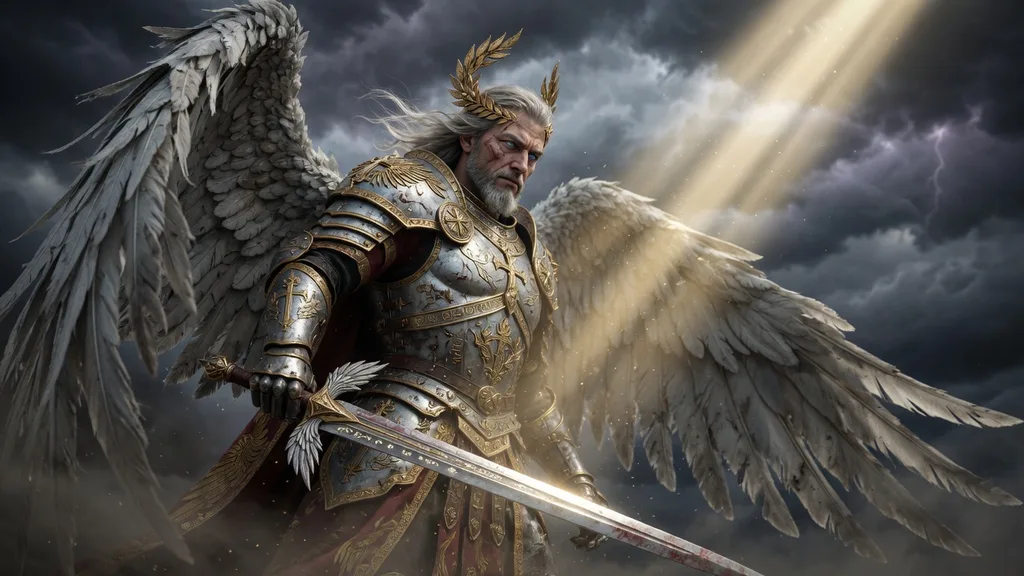
Seraphim burn at the top. The word means "the burning ones," six-winged and blinding, too close to the divine to look at directly. A seraph's name should feel hot and resonant. Archangels sit lower in the formal order but loom largest in story — Michael, Gabriel, Raphael — because they carry the great errands between heaven and earth. Their names land like a command.
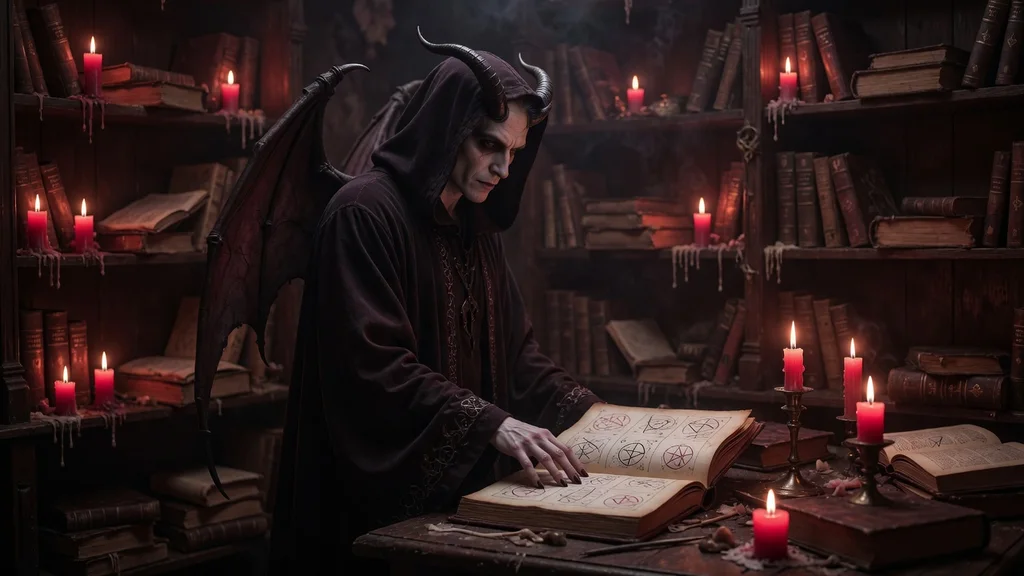
Guardians work the other end of the chain, bound to a single charge, a single human life. Their names run warmer and quieter. Messengers are built for speed and clarity — the voice that arrives, says its piece, and is gone. And the Fallen stand outside the order entirely: angels who broke with the throne and kept the wings but lost the light.
Angel Types at a Glance
Each type in the generator pulls from a different sound. Use this as a quick reference when you pick a rank above.
| Type | Feel | Example |
|---|---|---|
| Archangel | Commanding, resonant, carries weight across the choirs | Ramiel |
| Seraph | Burning and bright, closest to the throne | Seraphiel |
| Guardian | Warm and steady, bound to a single charge | Caeliel |
| Messenger | Swift and clear, the voice between worlds | Nathael |
| Fallen | Harsh and scarred, half-erased from the light | Morgorath |
Domains: What Your Angel Presides Over
A name without a job is half a character. In tradition, every notable angel owns a portfolio — a slice of creation they tend. The domain you choose attaches a title and a line of lore to each result, so the name comes pre-loaded with purpose.
| Domain | Feel | Example |
|---|---|---|
| Mercy | The stayed hand, the pardon, the open door | Raphiel, Angel of Mercy |
| War | The drawn sword and the marshalled host | Zaphael, Seraph of War |
| Healing | The mended bone and the quiet after pain | Mirael, Guardian of Healing |
| Death | The last breath and the weighed soul | Azriel, Angel of Death |
| Light | The first dawn and the truth laid bare | Uriel, Archangel of Light |
| Wisdom | The hidden name and the long counsel | Raziel, Seraph of Wisdom |
Archangels, Guardians and the Fallen
Three flavours of angel show up most in stories, and each wants a different kind of name.
Archangels are the heavy hitters. They lead hosts, deliver the world-shaking messages, and stand at the front of any cosmic fight. Name an archangel and you want a name that sounds like it could end an argument — full vowels, a clear -el or -iel, nothing fussy. Think Ramiel, Zaphkiel, Seraphiel.
Guardian angels are personal. Tradition gives each soul one watcher, unseen and patient, and that intimacy should soften the name. Guardians suit gentler roots and flowing endings — Caeliel, Mirael, Aniel — names that sound like a hand on the shoulder rather than a blast of trumpets.
Fallen angels are the most fun to name. They began as something radiant and then broke, so the best fallen names look like blessed names that went wrong. Keep the celestial scaffolding, then corrode it: a harder root, a heavier ending, the -el twisting into -gorath or -moloch. Morvex, Azagorath, Belmoloch — names with the memory of light still in them, and the wound where it left.
Naming Angels for Fiction, Games and D&D
Angel names carry across a lot of tables. In Dungeons & Dragons, celestials run from the humble deva up to the planetar and the towering solar. Note that an aasimar isn't one of these celestials — they're a mortal descendant who usually carries an ordinary human name, not an angelic one; the aasimar name generator covers that distinction and the celestial titles aasimar actually earn. The -el pattern here fits the celestials themselves cleanly, and a domain tag slots right into a character sheet — your cleric channels a Guardian of Healing, your patron is a Seraph of War.
Urban fantasy and modern myth lean on these names too. A novel about a Fallen walking a city at night, a comic about warring choirs, a game where you recruit angels by domain — all of it runs on names that sound ancient but read clean. Roll a batch, keep the three that fit the tone of your world, and let the rejected ones become minor characters later. There are always more angels than there are stories about them.
Tips for Choosing an Angel Name
- Match the suffix to the rank. Use a crisp -el or -iel for archangels and seraphim; save the softer -ael and flowing endings for guardians.
- Let the domain pick the sound. A war angel can take a harder root than a mercy angel. Read the title aloud and see if the name agrees with it.
- Corrupt, don't abandon, for the fallen. A good fallen name still echoes a holy one. Start celestial, then darken — the contrast is what sells the fall.
- Keep it sayable. Seraphkadiel looks impressive and dies at the table. Strong but pronounceable beats long every time.
- Pair name and purpose early. Decide what the angel is for before you fall in love with how it sounds. The duty should drive the name, not the other way around.
- Mind the meaning of -el. Every -el name claims kinship with the divine. For a being that has rejected heaven, that claim becomes a scar — use it.
Example Angel Names
Archangel & Seraph Names
- Ramiel
- Zaphkiel
- Seraphiel
- Uriel
- Sariel
- Raziel
- Camael
- Jophiel
- Barachiel
- Selaphiel
- Haniel
- Zadkiel
Guardian & Messenger Names
- Caeliel
- Mirael
- Aniel
- Nathael
- Elyriel
- Tabiel
- Verniel
- Lumael
- Periel
- Sariael
- Daniel
- Hanael
Female Angel Names
- Mirael
- Seriel
- Caelael
- Belariel
- Nuriel
- Lumiel
- Avaniel
- Celariel
- Penael
- Silwiel
- Evlael
- Hanwiel
Fallen Angel Names
- Morgorath
- Azagorath
- Belmoloch
- Sathzael
- Drakvex
- Vorrax
- Korzthel
- Nyxiel
- Tharnphel
- Maldrax
- Crovael
- Skornmoloch
About Angels
Angels run through the Abrahamic traditions — Jewish, Christian and Islamic — and through the folklore that grew up around them. The word itself comes from the Greek angelos, "messenger," which tells you their oldest job: to carry word between the divine and the human. Over centuries they picked up wings, ranks, swords and names, until they became the rich celestial cast that fills paintings, scripture and now fantasy worlds.
What they look like. Forget the soft cherub on a greeting card. Scripture describes angels as overwhelming — wheels of eyes, four faces, wings of fire — beings so strange that their first words to a frightened human are usually "do not be afraid." That tension, between the comforting messenger and the terrifying force, is the heart of a good angel character.
Why the names matter. An angel's name is its function. Because so many end in -el, "of God," the name is a standing declaration of loyalty to the divine. Which is exactly why a fallen angel's name hurts to read: it still claims kinship with a heaven that cast it out. Choose the name and you've chosen the angel's whole relationship to the light.
A celestial name is a small contract — between the angel, its domain, and the heaven it serves or once served. Pick well, and the rest of the character writes itself.
FAQ for Angel Name Generator
Why do so many angel names end in -el?
The suffix -el comes from Hebrew and means "of God" or "God is." It binds the angel's role to the divine: Gabriel reads roughly as "God is my strength," Raphael as "God heals." The generator builds on that pattern with -el, -iel and -ael endings, so every name you roll sounds like it belongs to a celestial being.
What are the ranks or choirs of angels?
Classic tradition stacks angels into nine choirs. At the top sit Seraphim and Cherubim, closest to the throne; below them run Thrones, Dominions, Virtues, Powers and Principalities; then Archangels, who carry the great messages; and finally ordinary Angels and Guardians, who watch over people directly. This generator lets you pick Archangel, Seraph, Guardian, Messenger or Fallen.
Where can I use the Angel Name Generator?
It fits any project that needs a celestial cast: a novel with warring choirs, a D&D or Pathfinder campaign building an angelic NPC roster, a tabletop one-shot where players face down a Fallen, or a worldbuilding doc mapping out a whole pantheon of guardians. Because every result comes with a rank and a domain, you get a ready-made character hook, not just a label to fill in later.
How is a fallen angel name different?
A fallen angel keeps the celestial shape but turns it harsher. The vowels darken, the consonants bite, and the gentle -el can curdle into endings like -gorath or -moloch. Set the type to Fallen and the generator pulls from a rougher root pool to give you names that sound exiled rather than blessed.
Can I use these names for a D&D celestial or an angel character?
Yes. The names suit angels, aasimar, deva, planetar and solar celestials in D&D, plus angelic NPCs in any fantasy or urban-fantasy setting. They follow real angelic phonetics but are original combinations, not lifted from scripture, so you can use them in fiction and games without stepping on canon.
What makes angel names historically authentic?
Authentic angel names root in Hebrew theophoric naming, where a word for a virtue or function is fused to a divine element — most famously the suffix -el, "of God." Real angelology also sorts angels into ranks with their own naming conventions, from the burning Seraphim to the intimate Guardians. This generator mirrors both layers: a meaningful root plus a rank-appropriate ending, so a result reads like it was drawn from an old text rather than assembled at random.
Are male and female angel names different?
Traditional angels are often described as beyond gender, and their names skew neutral. Still, sound carries a lean. Pick Male and the generator favours firmer roots and endings; pick Female and it favours softer, more flowing ones; pick Any and it mixes both. The meaning of the -el suffix stays the same either way.
What does the domain do?
The domain sets the angel's portfolio — what they preside over. Mercy, War, Healing, Death, Light and Wisdom each attach a title and a line of lore, so a result might read "Archangel of Healing" or "Seraph of War." It gives you not just a name but a role to build a character around.