Aasimar Name Generator
This aasimar name generator is built on the detail most other tools skip: aasimar almost never carry an obviously celestial name. They're raised by mortal parents and named the way any mortal child is named — the "heavenly" part of their identity usually arrives later, as a title other people give them. Roll a human name from three different cultural pools, a celestial title flavoured by subrace, or both together, exactly the way it works in the lore.
👇 Click any name to copy it
Say "aasimar name" to most people and they picture something like Seraphiel or Lucienne-of-the-Dawn — a single glowing word that announces the celestial blood before the character opens their mouth. That's backwards. It's the exact opposite of how the Player's Handbook and Volo's Guide to Monsters actually describe it.
Aasimar are, first and foremost, someone's kid. They grow up in a house, go to a temple or a market or a farm, and answer to whatever name the people who raised them chose — the same name a fully human sibling would have gotten. The celestial part doesn't erase that. It layers on top of it, usually much later, and usually as something other people decide to call them.
The Name You're Given vs. the Title You Earn
Two separate things get lumped together when people talk about "aasimar names," and keeping them apart is the whole point of this generator.
The personal name comes first and comes from home. It's chosen by parents who, in the vast majority of cases, have no idea their child carries a trace of celestial blood. It follows whatever naming convention their culture uses — which is why this generator doesn't give you one aasimar-flavoured name pool, it gives you three, split by the kind of human culture that might have raised your character.
The celestial title comes second, if it comes at all, and it isn't chosen by the aasimar — it's given. A war-band starts calling their frontline healer "Dawnward" after she holds a line no one expected her to hold. A temple formally bestows "the Bright Sentinel" on an aasimar whose deva patron they credit for a miracle. A village that survived a scourge aasimar's flare of radiant fury starts calling him "Sunscar" behind his back, and the name sticks whether he likes it or not. That's a title, not a name — earned, granted by others, and, like any title, something that can be lost.
If that sounds familiar, it should — it's the same mechanism our guide to epithets, titles and bynames breaks down for real-world naming history. An aasimar's celestial title is a byname in the classic sense: descriptive, earned in the moment, and entirely at the mercy of the people doing the naming.
Protector, Scourge and Fallen — How Subrace Shapes the Title
Volo's Guide to Monsters splits aasimar into three subraces, and each one changes how the celestial title lands, not the human name underneath it. The generator uses your subrace choice to flavour the title pool specifically.
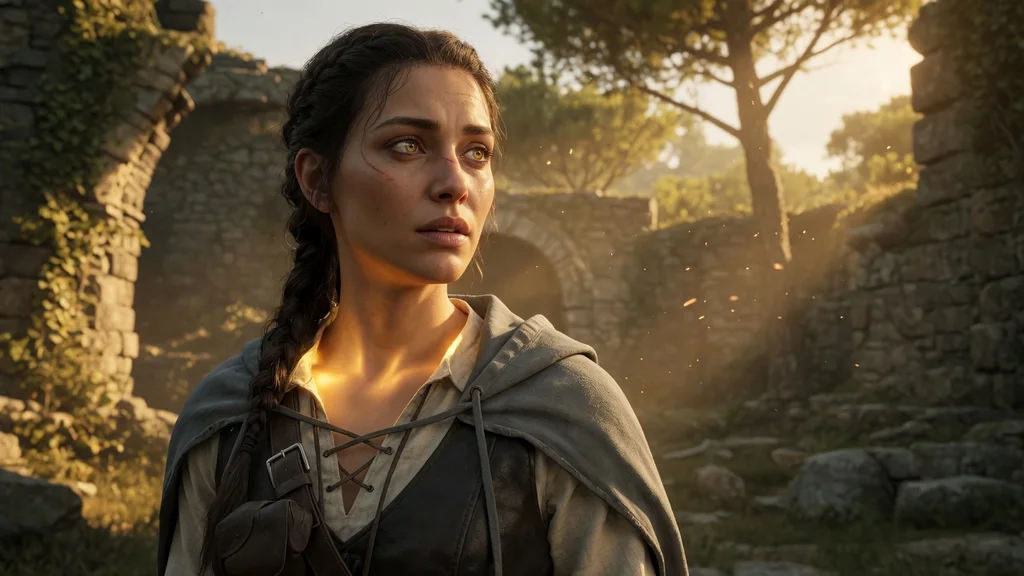
Protector aasimar are the ones the powers of good charged with guarding the weak and standing against darkness. Their radiant soul, at higher levels, can manifest as wings. Titles for a Protector lean warm and steady — dawn imagery, wardens, sentinels, the language of someone who holds a line and doesn't move.
Scourge aasimar carry divine energy they can't always contain. When it flares, it doesn't just hit the enemy — it burns everyone nearby, allies included. Their titles read hotter and sharper: verdicts, fury, burns, things earned in a single overwhelming moment rather than years of quiet service.
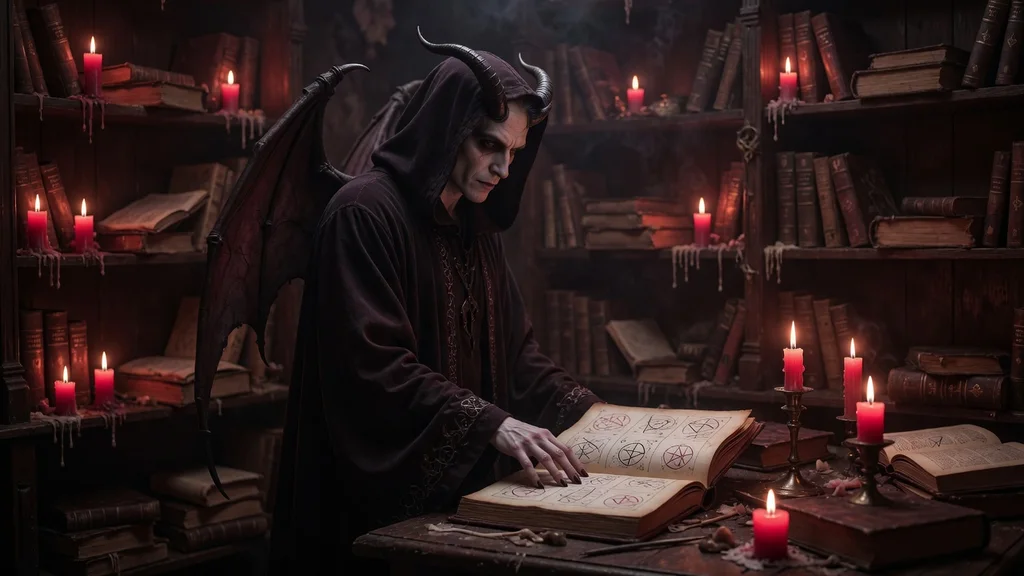
Fallen aasimar have turned toward evil, and their inner light channels necrotic energy instead of radiant. Their titles are the saddest of the three — light gone grey, dimmed, ash-touched, sometimes carrying the ghost of a redemption that hasn't happened yet. A Fallen aasimar's title often names the fall itself, which is its own kind of cruelty.
One important accuracy note: Monsters of the Multiverse (2022) reworked this system. Instead of locking an aasimar into one of the three subraces at character creation, it gives every aasimar the same base ability scores and lets the player choose a Celestial Revelation — Radiant Soul, Radiant Consumption, or Necrotic Shroud — at 3rd level, with the option to swap it after a long rest. Both versions are in wide use at tables today. This generator keeps the three-way Protector / Scourge / Fallen split because it maps cleanly onto three distinct title flavours, whichever rulebook your table runs.
Aasimar Title Flavour by Subrace
| Subrace | Title feel | Example |
|---|---|---|
| Protector | Warm, steady — dawn and guardianship | Dawnward, Lightbearer |
| Scourge | Sharp, intense — barely-contained radiance | Emberjudge, Starburn |
| Fallen | Dimmed, grieving — light turned to shadow | Ashwrought, the Dimmed Star |
Three Cultures for the Human Name
The generator's personal-name pool splits into three cultural flavours, because "human name" shouldn't just mean one narrow default.
| Origin | Feel | Example |
|---|---|---|
| General fantasy | Broadly medieval, familiar in most D&D settings | Corwin, Elowen |
| Celestial-latinized | Parents leaned into light/star imagery, knowingly or not | Auren, Solenne |
| Ethnically-neutral | Plausible across many real-world-inspired cultures | Amir, Chiara |
That middle category — celestial-latinized — is a deliberate wink, not a contradiction of the "no celestial names" rule. Some parents do lean toward light-and-star words when naming a child, sometimes because they suspect something, more often by pure coincidence. Auren, Solenne, and Lumen are still ordinary human names in the fiction of the setting; they just happen to rhyme with what the aasimar will eventually grow into.
The Deva Patron and the Moment of Revelation
Where does the celestial thread actually show up, if not in the name? Two places: the deva, and Revelation.
A deva is a minor celestial that, in most aasimar backstories, acts as an unseen patron — guiding, warning, occasionally intervening, almost always through dreams rather than direct contact. It's a presence, not a parent. Most aasimar don't meet their deva. They just notice, over years, that certain dreams feel different from the others.
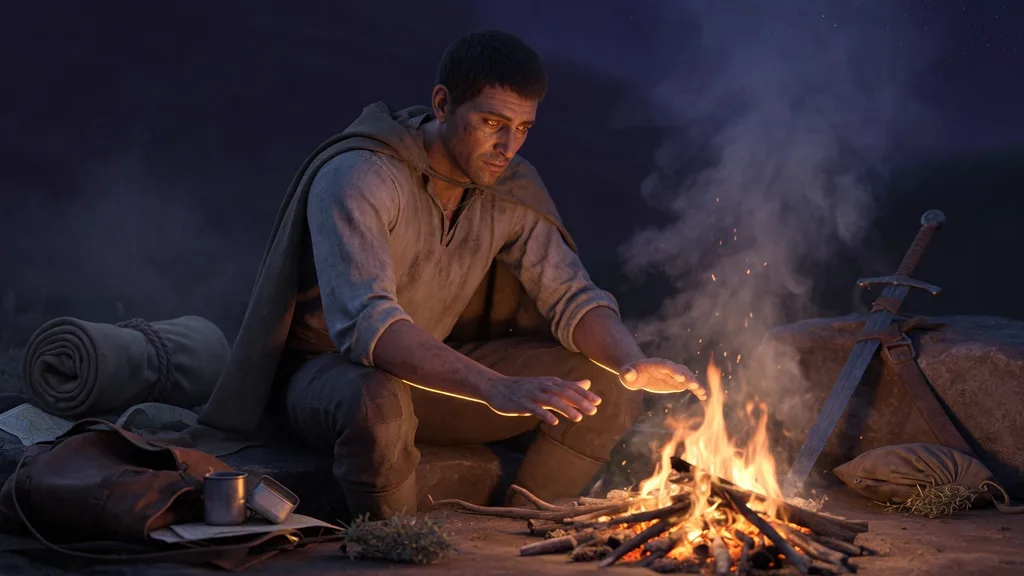
Revelation is the moment that presence stops being a private, half-believed thing and becomes visible to everyone else — usually in adolescence, often triggered by crisis. A burst of radiant light in a fight that should have gone badly. Eyes that suddenly catch candlelight the way no human's do. This is also, not coincidentally, the moment titles tend to start sticking — Revelation gives the people around an aasimar something concrete to finally name.
Aasimar vs. Tiefling: Two Names, Same Shape, Opposite Direction
Aasimar and tieflings get compared constantly, and the naming systems are the cleanest way to see why they're mirror images rather than clones.
Both races usually carry an ordinary human name from the family that raised them — that part is genuinely the same. The difference is entirely in what comes next. A tiefling who wants a second layer of identity chooses it themselves: a single-word virtue name — Hope, Torment, Glory — declared as a statement about who they've decided to be. It's self-authored. An aasimar's second layer, the celestial title, is never self-authored. It's handed down by whoever was watching when the celestial part of them became undeniable — a war-band, a temple, a village, an enemy who lived to talk about it. One race writes their own epithet. The other has it written for them. For the full breakdown of self-chosen virtue names, see the tiefling name generator.
Aasimar vs. Angel: A Mortal, Not a Celestial
It's worth being blunt about this, because the two get flattened together constantly: an aasimar is not an angel. An angel — deva, planetar, solar — is a full celestial, an outsider native to the Upper Planes. An aasimar is a mortal person, born of two ordinary parents (almost always human), who happens to carry a trace of celestial ancestry somewhere in their line. Angels don't grow up. Angels don't have childhoods, or awkward teenage years, or a mom who picked their name off a family tree. Aasimar have all of that. If your character needs an actual celestial being's name — patron, NPC, or otherwise — the angel name generator covers ranks, domains and the -el/-iel endings properly; this page is for the mortal who inherited a sliver of that bloodline, not the being itself.
Aasimar Names for Baldur's Gate 3 and Other Settings
Aasimar became a mainstream playable option far beyond the tabletop once Baldur's Gate 3 shipped them as a race at launch — most players there meet the Protector, Scourge and Fallen split for the first time through that game rather than through Volo's Guide. The naming logic holds regardless of medium: your Baldur's Gate 3 aasimar can carry any human name you like from the three cultural pools here, and if their Revelation happened before the story starts, a celestial title fits right alongside it, same as it would at a tabletop.
The same approach works for homebrew settings, licensed fiction with an "aasimar-adjacent" race (half-celestials, angel-blooded, star-touched lineages — the concept recurs under other names across fantasy), and any campaign where a GM wants a character whose divine ancestry is a slow reveal rather than a name tag. Roll the personal name first and build the character around it for a session or two before you ever touch the title generator — it mirrors how the lore actually plays out, and it gives your table something to discover instead of something to read off a card.
How to Use the Aasimar Name Generator
Four controls shape the result. Pick a name type — Personal name only, Celestial title only, or both together (the way most aasimar are actually referred to at a table: "Corwin, though the guards just call her Dawnward"). Choose a subrace to flavour the title toward Protector, Scourge or Fallen. Pick a human name culture to steer the personal-name pool. And set a gender — male, female, or neutral, all fully supported across every culture.
Drag the slider to choose how many names to roll, then hit Generate. Every card carries a badge — subrace and origin, or just the relevant one — and a line of lore explaining where the title came from or what the name says. Roll again as many times as you want, and click any card to copy it straight to your clipboard.
Tips for Naming an Aasimar
An aasimar name works in two acts. Get both right and the character sells itself:
- Start human, stay human. The personal name should never sound like it belongs to an angel. If it does, you've already given away a twist that's supposed to unfold slowly.
- Earn the title, don't hand it to yourself. A celestial title works best with a story attached — a battle, a rumor, a temple's decision. If your aasimar picked their own title, it reads more like a tiefling.
- Match the title to the subrace's arc. A Protector's title should feel like it was given with gratitude; a Scourge's with a little fear; a Fallen's with grief, or judgment, or both.
- Let the title be optional — or contested. Not every aasimar has earned one yet. Some outgrow theirs. Some hate theirs and refuse to answer to it. That friction is free characterization.
- Keep the deva connection a whisper. It should feel like an unconfirmed rumor about your character's dreams, not a hotline to an angel. The uncertainty is the interesting part.
- Don't confuse Revelation with a name change. Revelation is what makes the celestial nature visible. The title that follows is a separate, social event — it doesn't happen automatically.
Example Aasimar Names
Personal Names — Male
- Corwin
- Gideon
- Auren
- Caelan
- Fabian
- Amir
- Chen
- Ivor
- Justyn
- Merrick
- Nikolai
- Octavian
- Farlan
- Kellan
- Salvian
Personal Names — Female
- Delia
- Solenne
- Cassia
- Fatima
- Bianca
- Elowen
- Lucienne
- Ines
- Marisol
- Novella
- Ottilie
- Priya
- Fiorenza
- Keiko
- Vesperine
Celestial Titles
- Dawnward
- Lightbearer
- the Steadfast Flame
- Emberjudge
- Starburn
- the Zealous Flame
- Ashwrought
- the Dimmed Star
- Greyward
- Sunwarden
- the Unbound Radiance
- Duskfallen
- Skywarden
- Wrathlight
- the Faded Radiance
About Aasimar
Aasimar carry a thread of celestial ancestry somewhere in their bloodline — usually distant, sometimes recent — that surfaces as a faint radiance around the eyes, a warmth to the skin, or a light that seems to gather near them without a source. Unlike a tiefling's fiendish marks, an aasimar's traits are rarely obvious at birth. Most look entirely human until Revelation, when the celestial nature becomes visible for the first time.
How the world treats them. Because the signs take time to appear, an aasimar often grows up as an ordinary member of their community — no suspicion, no stares, nothing to explain. That changes fast once Revelation happens. Some communities respond with reverence, treating the aasimar as blessed or chosen. Others respond with unease, wary of anything that draws divine attention, good or bad. Either way, the aasimar's relationship to their own name often changes at the exact same moment their community's relationship to them does.
Canonical flavour, accurately sourced. Volo's Guide to Monsters (2018) established the three-subrace structure — Protector, Scourge, Fallen — each with a distinct ability score bump and a permanent racial feature. Monsters of the Multiverse (2022) replaced the fixed subraces with the flexible Celestial Revelation system, letting any aasimar choose (and later change) between Radiant Soul, Radiant Consumption, and Necrotic Shroud. Both are documented D&D 5e material and both see regular play; this generator's subrace filter is built to work with either version of the rules.
This site isn't affiliated with, endorsed by, or sponsored by Wizards of the Coast. Aasimar, Volo's Guide to Monsters, and Monsters of the Multiverse are trademarks of Wizards of the Coast LLC. Every name this generator produces is an original combination for your own use — not lifted from any sourcebook, module, or published character.
An aasimar's name is inherited. Their title is earned. Don't let a generator blur the two.
FAQ for Aasimar Name Generator
Do aasimar have celestial names?
Usually not — and that surprises a lot of players. Most aasimar are raised by mortal parents, most often human, and they carry a perfectly ordinary name from that culture. The Player's Handbook and Volo's Guide to Monsters both describe aasimar as taking names from the family and community that raised them, not from a book of angelic language. Any 'celestial' sound in an aasimar's identity usually shows up later, as a title or byname other people give them — not as their birth name.
What's the difference between an aasimar's name and their title?
The name is what their parents called them — human, ordinary, chosen with no idea their child would grow up glowing faintly at the edges. The title is what the world calls them after: a byname earned in a battle, granted by a temple, or settled on them the moment their celestial nature became impossible to ignore. One is inherited. The other is earned, and it can change, or be lost, over a lifetime.
What are Protector, Scourge and Fallen aasimar?
They're the three subraces from Volo's Guide to Monsters. Protector aasimar are guardians whose radiant soul manifests as light and, at higher level, wings — their titles lean toward wardens and dawn imagery. Scourge aasimar carry divine energy they can barely contain, dealing radiant damage to everything nearby when it flares — their titles are sharper, more intense. Fallen aasimar have turned toward evil and channel necrotic energy instead of radiant — their titles carry loss, shadow, and sometimes an unfinished redemption arc.
Did Monsters of the Multiverse change aasimar subraces?
Yes. Volo's Guide to Monsters (2018) locked each aasimar into one of three fixed subraces — Protector, Scourge, or Fallen — each with its own ability score bonus and a permanent racial feature. Monsters of the Multiverse (2022) replaced that with 'Celestial Revelation': every aasimar gets the same flexible ability scores, and at 3rd level the player chooses one of the three revelations (Necrotic Shroud, Radiant Consumption, or Radiant Soul) themselves, with the option to change it after a long rest. Both versions are documented and both are common at tables — this generator keeps the three-way split because it's still the more widely recognized shorthand, and it makes for a cleaner title generator either way.
What is a deva, and how does it relate to aasimar?
A deva is a type of lesser celestial — an angel-adjacent being that, in most tellings, serves as an aasimar's unseen patron. The connection usually works through dreams: a deva offers guidance, warning, or a nudge in the right direction, without ever fully revealing itself. It's a whisper, not a wing. Aasimar don't grow up knowing an angel personally; they grow up with an occasional strange dream and, eventually, an explanation for it.
What is Revelation for an aasimar?
Revelation is the moment an aasimar's celestial nature stops being a rumor and becomes visible — usually around adolescence. It can be dramatic (a burst of radiant light in a moment of crisis) or slow (eyes that start catching light strangely, a faint warmth that never quite fades). It's frequently the point where a title starts to stick, because it's the first time the people around them have something to actually name.
How is an aasimar's naming different from a tiefling's?
They're closer than they look, and that's exactly why they get confused for opposites. Both usually carry a human name from the family that raised them. The real difference is in the second layer: a tiefling who wants a second identity chooses it themselves — a single-word virtue name like Hope or Torment, claimed as a statement. An aasimar doesn't choose their second layer at all. Their title is handed to them, by comrades, by a temple, by rumor, by whoever was standing there for the Revelation. See our dedicated take on virtue names on the tiefling name generator for the full contrast.
Is an aasimar the same as an angel?
No, and it's a common mix-up. An angel — deva, planetar, solar — is a celestial being from the Upper Planes, a full outsider. An aasimar is a mortal, usually born to two ordinary human parents, who happens to carry a trace of celestial bloodline somewhere back in their lineage. They eat, sleep, age, and can be killed the way any adventurer can. If you want names for the celestials themselves rather than their mortal descendants, the angel name generator is built for that.