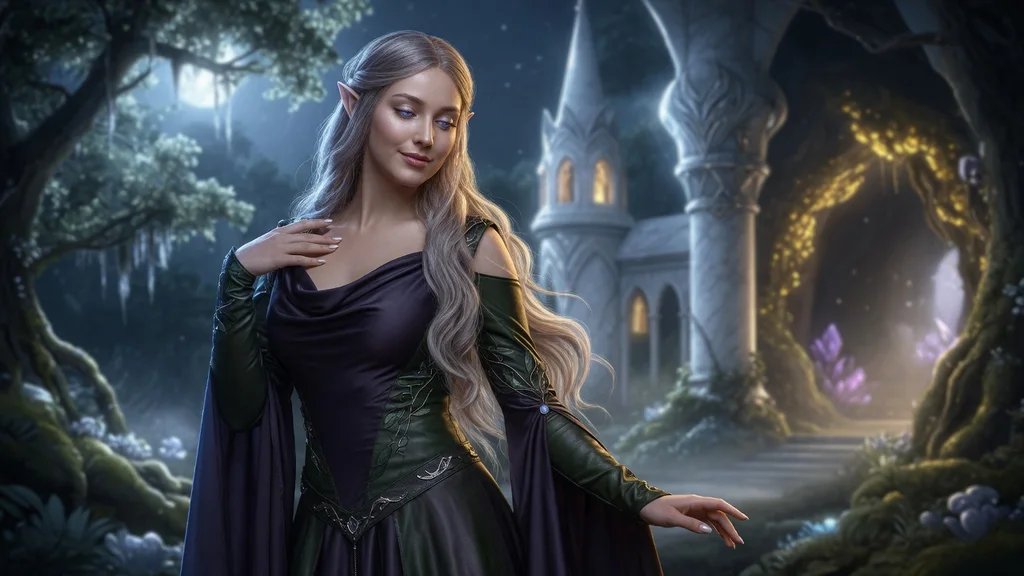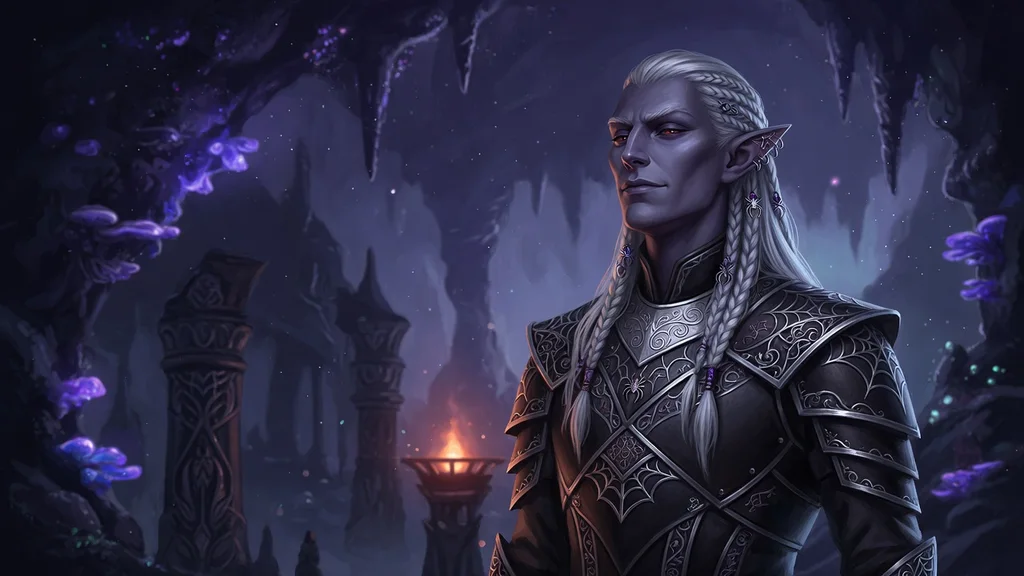
High Elf Name Generator
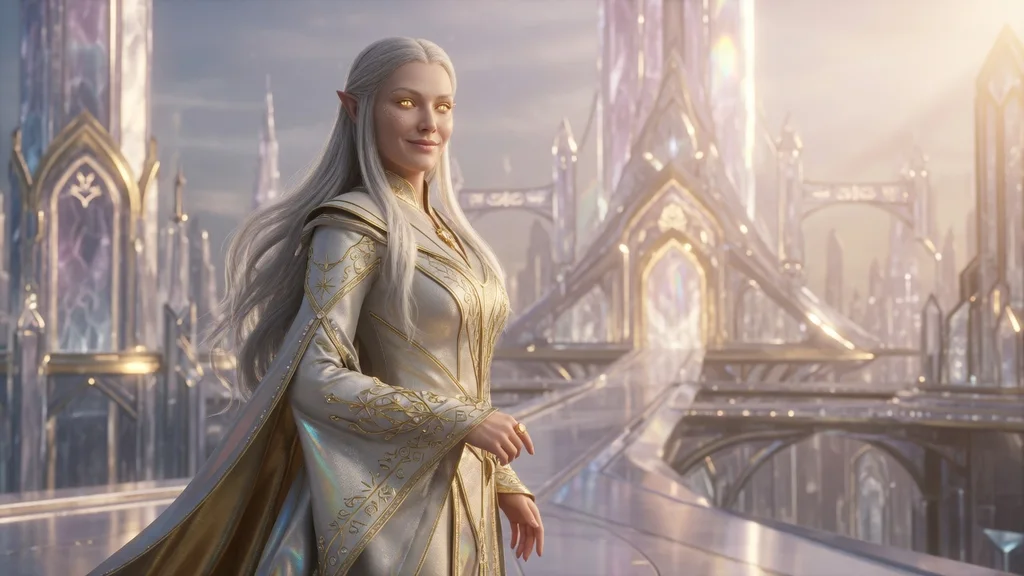
This high elf name generator builds original names for the oldest, most ceremonious branch of elvenkind — the kind of name a court herald would announce without stumbling. High elves favor open vowels and liquid consonants that flow rather than stop, and every name here follows that same melodic pattern. Set a gender, pick a tone — Noble, Arcane, Ancient, or Martial — choose a given name or a full name with house, and generate.
👇 Click any name to copy it
A high elf name is rarely just a label. It marks lineage, a life spent at court or in a library tower, and centuries most other races never get to live through. Noble names echo through council halls. Arcane names carry the hum of old libraries. Ancient names sound older than the city they're spoken in, and martial names are built to survive a shout across a shield line.
Each result comes with a tone badge and a short flavor line. Click any card to copy the name straight to your clipboard.
Not sure high elf is even the branch you want? The elf name generator covers every elven subtype side by side — high, wood, dark, half, blood, and drow — and points you to whichever one matches your character.
Who High Elves Are
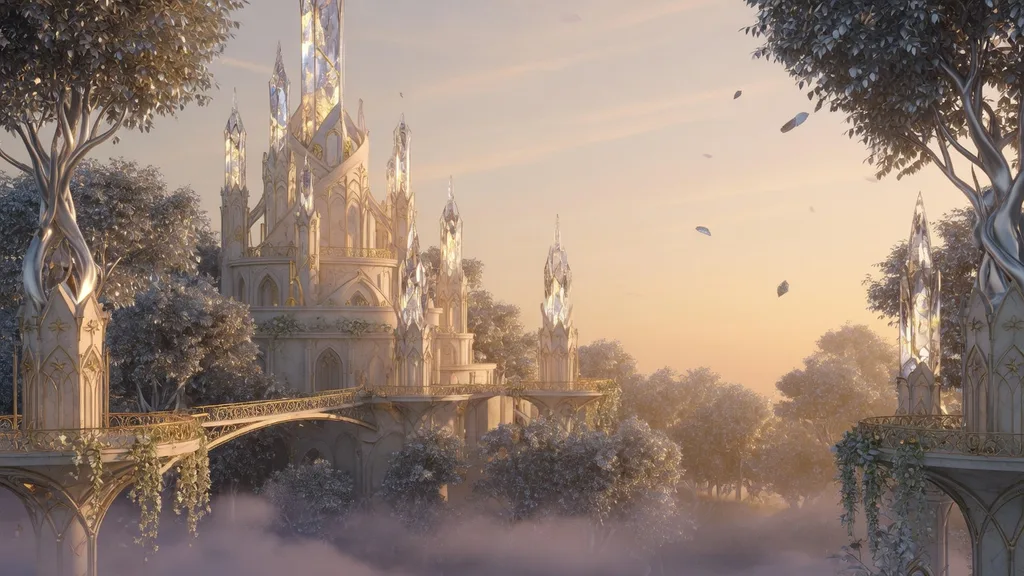
High elves are the eldest and most formal branch of elvenkind — long-lived, learned, and built around institutions that outlast the people who founded them. Where wood elves keep to the forest and dark elves keep to the depths, high elves keep court, and the difference shows in everything from architecture to table manners.
In D&D and most high-fantasy settings, high elves read as scholarly, poised, and quietly aware of their own standing. They favor magic and craft over brute force, and they tend to measure a stranger by bearing before they measure them by anything else. That measuring instinct extends to names — a high elf clocks lineage and standing in a name the way someone else might clock an accent.
That weight is exactly why the naming tradition matters. A wood elf's name says I belong to this forest. A high elf's name says I belong to this line, and the line is the point.
High elves are a mortal, if long-lived, fantasy race built on Tolkien-derived and D&D lineage traditions — a house name marks family standing, not power over the bearer. That sets them apart from British and Irish fae folklore, where court fae aren't mortal at all and where a name can be genuinely dangerous: a true name gives a stranger leverage over the fae who owns it, which has no equivalent in elven house-name culture. For that Otherworldly, true-name-driven tradition, see the fae name generator.
How High Elf Naming Works
High elf names build on two layers: the given name, chosen at birth or naming rite, and the house name, inherited and rarely dropped. The given name is personal. The house name is a biography compressed into one flowing word.
Given names run two to four syllables and open on soft consonants — Ael-, Cal-, Fael-, Lor-, Syl-, Thal- — closing on vowel-forward suffixes like -ion, -iel, -oric, or -anthe. Say Aelendir or Sylaria aloud and notice how little the mouth has to stop moving. That's the tell.
House names are compounds — a bright first element (Sun-, Star-, Silver-, Crystal-, Astral-) fused to a second that grounds it (-spire, -crest, -song, -vale, -reach). Sunspire reads as an old, sky-facing family. Starcrest suggests a line that guarded something once. The pairing is the point: a house name should sound like it means something even before you know the story behind it.
High Elf Naming Tones
Not every high elf name carries the same posture. The generator offers four tones so the result matches your character's role, not just their race.
| Tone | Feel | Suits |
|---|---|---|
| Noble | Formal, court-bred, worn with practiced ease | Diplomats, nobility, council seats |
| Arcane | Scholarly, resonant, a little distracted | Mages, loremasters, spire scholars |
| Ancient | Older than the language around it now | Elders, immortal wanderers, first-age survivors |
| Martial | Clipped, carryable across a battlefield | Blade-singers, sentinels, border watch |
Leave the tone on Any and the generator mixes all four, which is a good way to browse before committing to a character concept.
How to Use High Elf Name Generator
Set a gender, choose a tone, and decide whether you want a given name alone or a full name with house. Use the slider to pick how many names to roll, then hit Generate.
Each card shows the name, a tone badge, and a short flavor line that hints at where the name would sit in high elf society. Not happy with the batch? Roll again as many times as you like — the pools are large enough that repeats are rare — and click a card to copy it.
Example High Elf Name Ideas
- Noble: Aelendir Sunspire, Sylaria Starcrest, Caladrion Ivorytide
- Arcane: Uirendal Etherhall, Faelindra Astralvale, Quelanor Crystalward
- Ancient: Thalorion Argentgrove, Maelys Solreach, Ostarion Moonhollow
- Martial: Verendil Goldcrown, Talanthe Silvercrest, Ravendil Amberchime
Example High Elf Names
Male High Elf Names
- Aelendir
- Caladrion
- Faelaris
- Ilyandor
- Luthendil
- Maeloric
- Orendil
- Quelanor
- Saelithor
- Sylanden
- Thalorion
- Uirendal
- Vaelendris
- Aerion
- Celadorn
Female High Elf Names
- Elowyn
- Nyariel
- Caelithra
- Faelindra
- Ilyara
- Luthiel
- Maelys
- Orianthe
- Quelindra
- Saeliana
- Sylaria
- Thaloriel
- Uiriel
- Vaelithra
- Aerindel
Tips for Players and Writers
- Match tone to role. A martial name on a court diplomat creates friction worth writing into the backstory. A noble name on a soldier reads as someone who left the court behind.
- Use the house name as a hook. Sunspire, Starcrest, Ivorytide — each one implies a family history the table hasn't heard yet. Let a player ask about it.
- Keep it sayable at the table. Four-syllable names look beautiful on a character sheet and get mangled in combat. Aim for something a DM can say fast under pressure.
- Compare against other elf kin. If your setting also has wood elves or dark elves, keep the high elf names visibly more formal — that contrast does worldbuilding work for free.
- For WoW characters, lean into the arcane tone. High elves and blood elves share phonetic roots, so an arcane-toned name slots naturally into either faction's aesthetic.
- Writers, save the house name for a reveal. Introduce a character by given name only, then drop the house name later — it lands harder as a piece of information than as an introduction.
About High Elves
High elves sit at the top of most elven social orders, and centuries of stability have shaped a culture built around memory, craft, and careful manners. They live long enough to watch empires rise and fall twice over, and that perspective makes them patient in ways shorter-lived races often mistake for arrogance.
Personality. A high elf tends to be composed, articulate, and quietly certain of their own judgment. Years of court life or scholarly study make them sharp readers of a room, though not always warm ones. Many carry an old grief or an old grudge they've had centuries to refine into something elegant rather than raw. That composure is exactly what a good high elf name should sound like — measured, deliberate, never rushed.
Naming patterns. High elf names tend to feature:
- A given name built on open vowels and liquid consonants — soft to say, hard to forget
- A house name that signals lineage, standing, or a domain the family has guarded
- A tone — noble, arcane, ancient, or martial — that fits the role the elf plays in their society
- Rare use of nicknames; a shortened given name is usually a mark of real intimacy, not casual friendliness
A high elf name is a small performance of who someone is and where they come from — and that performance is exactly what this generator is built to reproduce.
Related Elf and Fantasy Generators
High elves aren't the only elven kin worth naming. For the forest-bound opposite of the courtly high elf, see the wood elf name generator. If your party or story needs a half-blooded elf, try the half-elf name generator for names that split between human and elven worlds, or the blood elf name generator for Thalassian-style Sin'dorei names. Building toward the darker end of elvenkind, the drow name generator covers the Underdark tradition, and a party rounds out nicely with the dwarven name generator for a grounded counterpoint. For the tradition all of these draw on, the Lord of the Rings name generator covers Sindarin, Quenya, and more across Middle-earth's many peoples.
FAQ for High Elf Name Generator
What makes a name sound like a high elf?
Open vowels and liquid consonants. High elf names lean on ae, ia, and or sounds, plus l and r consonants that flow instead of stop — Aelendir, Sylaria, Thalorion. Say one aloud and it rises and falls like a sentence in a chant. Short, clipped names read as something else entirely.
Where can I use the High Elf Name Generator?
It works for D&D 5e characters, World of Warcraft alts, tabletop one-shots outside the 5e ruleset, and any high-fantasy novel or RP profile that needs an elegant elven name. Every result is an original combination built from elven phonetics, not a name pulled from a published sourcebook, so it's free to use in homebrew or published settings alike.
What's the difference between high elf names and wood elf or dark elf names?
High elf names lean formal and ceremonious — longer, house-bearing, built for a court. Wood elf names run shorter and closer to nature, often a single flowing word with no surname at all. Dark elf names favor harder consonants and a colder edge, closer to a blade than a hymn. The three traditions share elven roots but diverge sharply once you factor in centuries of separate culture — high elves kept the court manners; the others didn't need them. See the <a href="/wood-elf-name-generator/">wood elf name generator</a> and the <a href="/dark-elf-name-generator/">dark elf name generator</a> for those two traditions in full.
Do high elves use house names or surnames?
Often, yes, and a house name carries real weight in high elf society. It marks lineage, a family's standing at court, and sometimes a domain the family has guarded for generations. The generator's house/surname toggle adds one of these compounds — Sunspire, Starcrest, Ivorytide — onto a given name for exactly that courtly effect.
Can I use these names for D&D 5e or World of Warcraft characters?
Yes. High elf is a playable subrace in D&D 5e, and the phonetics here follow that same elegant, vowel-forward pattern fans expect from Azeroth's high elves and blood elves too. The names are original, so there's no lore or trademark conflict either way.
Is there a difference between male and female high elf names?
A modest one. Male names tend to close on firmer syllables — -ion, -oric, -andor — while female names favor softer endings — -iel, -wen, -anthe. Neither rule is strict; some of the most striking high elf names cross the pattern on purpose.