
Tabaxi Name Generator
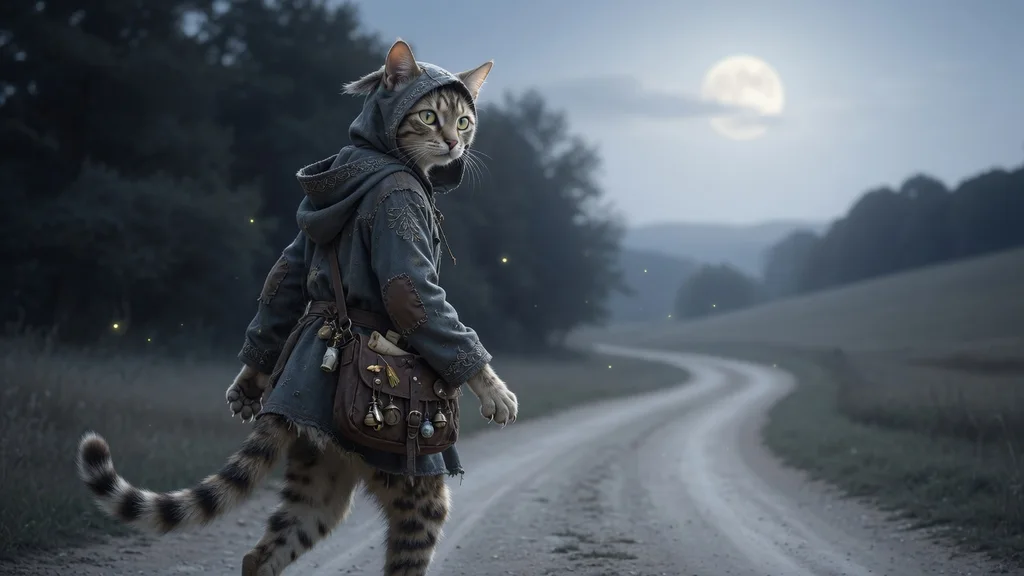
This tabaxi name generator builds the two names every cat-folk wanderer actually carries — a poetic birth name given for whatever marked the night they were born, and the short, worn-smooth use-name everyone actually calls them. Pick a theme, choose which form you want, click generate.
👇 Click any name to copy it
A tabaxi doesn't get named once. They get named twice, and the two names rarely match in tone. One is a small piece of poetry — the kind of thing a parent says out loud the first time they hold a cub and never quite explains again. The other is what actually gets shouted across a camp when dinner's ready.
This generator keeps both halves attached, the way real tabaxi naming does. Ask for the full form and you get "Seven Thunders" or "Whisper of the Dawn." Ask for the short form and you get "Seven" or "Whisper" — the same identity, worn down by years of daily use.
Most cat-folk name generators online stop at a single flat list — pick a random word, done. That works for a background extra, but it falls apart the moment a player wants to actually roleplay a tabaxi with a history. Splitting the output into a birth name and a use-name gives you both: the surface-level name your party uses every session, and a story hook already baked into the longer version, ready for the one scene where your character finally explains it.
How to Use Tabaxi Name Generator
Three controls shape the output. Name form decides how much of the identity you see at once:
- Both forms — a mix of full birth names and short use-names, roughly half and half.
- Full birth name — the complete poetic phrase, best for lore text, journal entries, or introducing a character properly.
- Short use-name — the everyday version, best for a name you'll actually type into initiative order for the next six sessions.
Theme picks the image family the name draws from — nature, hunt, sky, river, omen, or wind — each with its own vocabulary and its own flavor of card note underneath. Flip Clan name to "on" and every result gets tagged with the band that raised them, useful when you're building out a whole traveling group and want them to read as kin. The slider controls how many names land per roll.

The Two-Part Tradition: Birth Names and Use-Names
Most fantasy naming conventions give a character one name and call it done. Tabaxi culture doesn't work that way. A cub is named at birth for something specific that happened that night — a flower opening early, a hawk crossing the moon, a storm nobody predicted. That becomes the birth name, and it's phrased like a small sentence rather than a single word: "Whisper of the Dawn," "Bramble of the Green," "Nine Omens."
Nobody actually says the whole thing day to day. Within a season, the band has worn it down to the first word — Whisper, Bramble, Nine — and that becomes the name everyone uses. The full version doesn't disappear. It resurfaces at introductions, in formal settings, or when an elder wants to remind a wayward cub exactly who they were named for.
The result is a naming system that carries its own story built in. Say "Seven Thunders" to a stranger and you've told them something happened the night this tabaxi was born — loudly, and more than once. Say "Seven" around camp and it's just a name, quick and familiar. Both are true at the same time.
Tabaxi Naming Themes at a Glance
| Theme | Feel | Birth Name Example | Use-Name |
|---|---|---|---|
| Nature | Gentle, plant-marked, den-born | Bramble of the Green | Bramble |
| Hunt | Earned mid-chase, sharp and quick | Talon of the First Kill | Talon |
| Sky | Light, wandering, tied to weather | Comet of the Horizon | Comet |
| River | Cool, restless, water-born | Ripple of the Tide | Ripple |
| Omen | Fated, a little dreaded, taken seriously | Nine Omens | Nine |
| Wind | Restless, storm-marked, always moving on | Gale of the North Wind | Gale |
Example Tabaxi Names
Full Birth Names
- Whisper of the Dawn
- Seven Thunders
- Bramble of the Green
- Talon of the First Kill
- Comet of the Horizon
- Ripple of the Tide
- Nine Omens
- Gale of the North Wind
- Shade of the Broken Star
- Twelve Winds
- Fern of the Wildflower
- Drift of the Sunrise
Short Use-Names
- Whisper
- Seven
- Bramble
- Talon
- Comet
- Ripple
- Nine
- Gale
- Shade
- Twelve
- Fern
- Drift
Clan-Marked Names (NPC-ready)
- Whisper — Duskwhisker Clan
- Seven Thunders — Redclaw Clan
- Talon — Farwalker Clan
- Ripple of the Tide — Rivertrack Clan
- Gale — Stormtail Clan
- Nine Omens — Stargazer Clan
The Tabaxi in D&D — A Brief Lore Guide
Tabaxi entered official D&D 5e material through Volo's Guide to Monsters as a playable feline humanoid: covered in fur, prehensile-tailed, with retractable claws and a Climbing Speed most other player races can only envy. Their defining trait, mechanically and culturally, is curiosity — Cat's Talent grants proficiency in Perception and Stealth, but the flavor text goes further, describing a people driven to see, hear, and touch everything a place has to offer before moving on.
That restlessness shapes everything else about them. Tabaxi don't build cities the way dwarves or humans do; they move in small bands across long distances, chasing rumors of ruins, oceans, and stories worth collecting. A tabaxi's proudest possession is rarely gold — it's an object with a story attached, gathered somewhere three hundred miles from where you're currently standing.
This wandering life is exactly why the birth name / use-name split makes sense culturally. A band that never stays anywhere long needs names that travel well — short enough to shout, memorable enough to survive being retold by strangers in a dozen different settlements, with a fuller version kept in reserve for the rare occasion that calls for ceremony.
Physically, tabaxi are built for that lifestyle: a Climbing Speed most other races don't get, retractable claws, and a feline agility that shows up in everything from how they enter a room to how they land a fall other characters wouldn't survive. None of that is subtle in play — a tabaxi character tends to end up on top of the bookshelf, the rafters, or the city wall before anyone notices they've moved.
If you're building out a broader party or campaign roster, the dragonborn name generator and the githyanki name generator cover two other lineages with their own distinct naming logic, and the D&D character name generator is a faster route if you just need a name by race without the deeper lore dive.
Homeland matters less to a tabaxi than it does to most player races. Where a dwarf might define themselves by which mountain hold raised them, a tabaxi is more likely to define themselves by the furthest place they've been. Ask a tabaxi where they're from and you'll often get a shrug and a story about somewhere else entirely — the answer is rarely the point.
Building a Tabaxi NPC for Your Campaign
A named tabaxi NPC needs three things: a name, a reason they're passing through, and one object or story they're carrying that explains why. The name should carry some of that weight on its own.
"Ripple of the Tide, Rivertrack Clan" suggests someone who grew up near water and still measures distance in rivers crossed. "Nine Omens" suggests a tabaxi other characters treat with a mix of respect and unease — maybe deserved, maybe not. "Talon" alone, no clan tag, no elaboration, suggests someone who left their band behind and isn't eager to explain why.
Use the generator's "Both forms" setting to pull a batch of names fast, pick the one that already implies a role, and build the rest of the NPC around it. The caravan, the tavern corner, or the ruin entrance fills itself in.
Clans, Kinship, and the Wanderer's Life
Tabaxi don't organize around bloodlines the way many other D&D peoples do. What holds a band together is shared travel — the people you've crossed a desert or outrun a storm with, not necessarily the people you were born to. A clan tag marks that: not a surname, but a note on who raised you and who you'd still call family if the two of you crossed paths in a market three kingdoms later.
That's a softer kind of kinship than the tight clan and house structures you'd find among, say, tiefling bloodlines or a kobold warren's pack hierarchy — closer to a standing invitation than a binding tie. A tabaxi can leave a clan, join another, or wander alone for a decade and still answer to the old clan tag if someone from the original band ever calls it out.
For NPC purposes, a clan tag is a fast way to signal relationships without extra dialogue. Two tabaxi sharing a clan name in your campaign are probably old traveling partners, whether or not you've written the backstory yet.
Bands do sometimes split, and a tabaxi can end up carrying a clan tag that no longer exists as an active group — its members scattered across a dozen settlements, remembered only in the name itself. That's not treated as a tragedy so much as a fact of the wandering life. The tag still means something; it just means something that happened, rather than something ongoing.
Tips for Naming Your Tabaxi Character
- Default to the use-name at the table — it's faster to say, faster to remember, and it's what other characters would actually call your tabaxi day to day.
- Save the full birth name for introductions — a formal scene, a tense negotiation, or a moment where your character wants to sound like they mean it.
- Match the theme to the backstory — omen names suit a tabaxi who reads signs everywhere; hunt names suit one raised by trackers; sky or wind names suit a born wanderer.
- Keep the birth name short — three or four words at most. "Whisper of the Dawn" works at the table; a six-word phrase gets shortened by your DM whether you want it to or not.
- Use the clan tag to build relationships fast — give two party NPCs the same clan tag and you've implied a shared history without writing a line of it.
- Let the name explain itself once, then drop it — a tabaxi doesn't need to narrate the story behind their birth name every session. Say it once and let the table remember.
Playing Pathfinder instead of D&D? Pathfinder's closest equivalent is the catfolk (Amurrun) ancestry rather than tabaxi specifically — see the Pathfinder Name Generator for Golarion's own cat-folk naming tradition.
FAQ for Tabaxi Name Generator
What do tabaxi names sound like in D&D?
Tabaxi names read more like short poems than typical fantasy names. A full birth name is a phrase — "Seven Thunders," "Whisper of the Dawn" — built from an image or event rather than a string of invented syllables. The everyday version is just the first word of that phrase, worn down by daily use into something quick to say and quick to shout across a camp.
Where can I use the Tabaxi Name Generator?
It's built for tabletop prep: naming a player character, stocking a caravan of traveling merchants, or giving a one-shot NPC a birth name and a use-name in one click. DMs use it to fill a bazaar scene fast; players use it to build a cat-folk character with a name that already suggests a backstory. Every result is an original combination, not lifted from any published Wizards of the Coast sourcebook, so it's safe to drop into a home game or homebrew content without treading on trademarked material.
Where do tabaxi names come from, and why the two-part system?
The tradition traces back to how tabaxi are raised — nomadic bands who name a cub for whatever marked the night of their birth: a bloom, a storm, a strange light in the sky. That becomes the full birth name. Because a phrase is clumsy to shout mid-hunt, the clan quietly shortens it to one word for daily use. Both halves stay attached to the person; only the occasion calls for one or the other.
Do tabaxi have clan names or last names?
Not in the surname sense — tabaxi society doesn't hand down a family name the way human nobility might. What they do carry is a clan tag: an informal marker of which band raised them, worn more like a badge than a legal name. Toggle "With clan name" in the generator to see how that tag sits alongside a birth name or use-name.
Are tabaxi names gendered male or female?
No. Tabaxi naming customs in D&D don't split by gender the way human, elf, or dwarf names traditionally do — a birth name is chosen for the moment, not the sex of the cub. This generator reflects that: every name pool here works for any tabaxi character, regardless of gender.
Can I use these tabaxi names in D&D 5e or other tabletop systems?
Yes. The naming logic follows the tabaxi tradition as written for D&D 5e, but the names themselves are original phrase-and-word combinations, not copied from any sourcebook. They'll fit Pathfinder, homebrew settings, or any game with a cat-folk lineage just as easily.