Goblin Name Generator
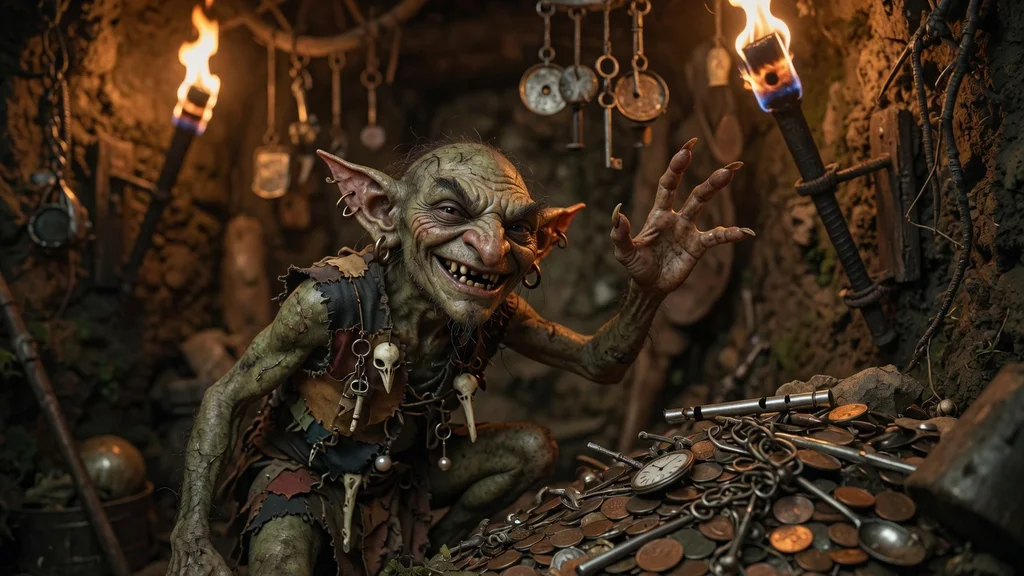
This goblin name generator spits out short, gnarly names for the scrappiest race in fantasy — sneaky D&D raiders, junk-heap tinkers rigging contraptions out of scrap, and the riddling, toll-collecting goblins of old fairytales. Pick a flavor, set a tone, and let the warren name itself.
👇 Click any name to copy it
Goblins get dismissed as filler monsters, and that's exactly the mistake that gets a party's coin pouch stolen. A good name undercuts the assumption immediately — something that sounds harmless right up until the trap springs or the trade turns out to be a swindle.
The results here range from purely comical (Grub Sackpockets, Snik the Giggler) to genuinely unsettling (Krudwart, Rottish the Sneak). Both are correct, depending on whether your goblin is comic relief or the thing your players end up actually fearing.
How to Use Goblin Name Generator
Four controls shape every result. Pick a flavor — D&D-sneaky for a raider or thief archetype, Tinker for a scrap-built mechanic, or classic-fairytale for a riddling toll-keeper. Set a gender, choose a tone (comedic, menacing, or greedy) to color the lore line, and switch the form to add an earned epithet like "Snagtooth" or "the Sneak" on top of the base name.
Drag the slider to set how many names you want, then hit Generate. Every card carries a badge showing its flavor and tone, plus a short line explaining the goblin's habits or reputation. Roll again as many times as you like, and click a card to copy the name straight to your clipboard.
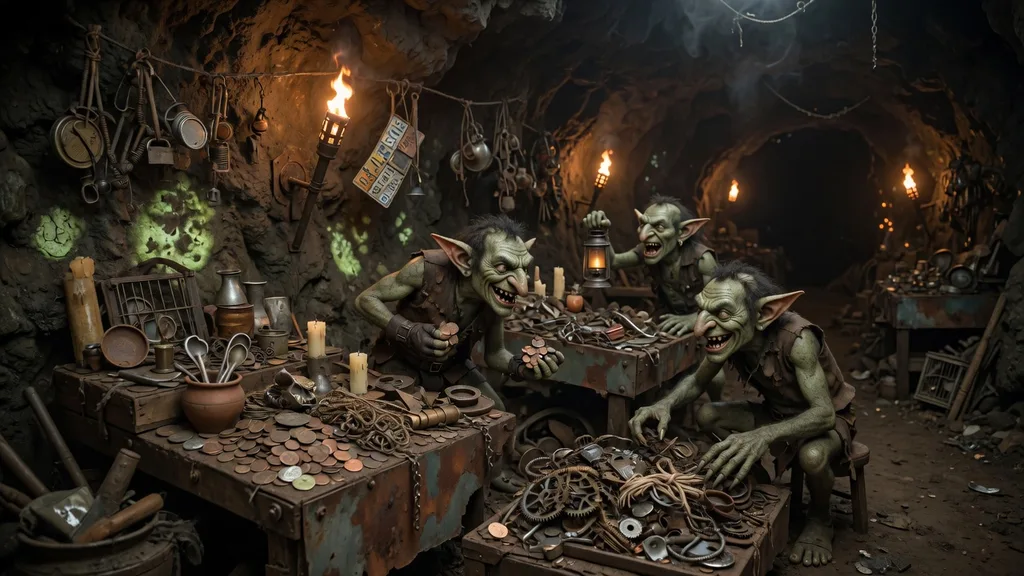
Goblin Culture: Scavengers, Tinkers, and Toll-Keepers
Goblins are small, fast, and built around a single organizing principle: take what isn't nailed down, and if it is nailed down, find a crowbar. Where orcs value strength and elves value tradition, goblin society runs on opportunism. A goblin warband isn't an army, it's a swarm — numerous, disorganized by outside standards, and far more dangerous in aggregate than any single member looks.
Three broad archetypes cover most goblin fiction. The D&D-sneaky goblin is a raider or ambusher — quick, cowardly by choice rather than nature, and always counting the exits. The tinker goblin channels the same scrap-hoarding instinct into invention, bolting together contraptions from stolen gears and cart axles that mostly work. The fairytale goblin is older and stranger — a riddling gatekeeper or bridge-toll collector out of European folklore, who trades favors it never forgets and debts it never forgives.
What ties all three together is scale. A goblin is rarely the biggest threat in the room, so goblin culture compensates with numbers, cunning, and a total absence of shame about running away to fight another day. Their names carry that same scrappy, unpolished energy — nothing about a goblin name sounds carefully chosen, and that's the point.
How Goblin Names and Epithets Work
A goblin identity has two layers. The given name is short, hard, and usually assigned before anyone could predict what the goblin would grow into — Snag, Grix, Kibella. The epithet, when a goblin earns one, is a nickname stapled on by the warren after the fact, describing a habit, a theft, or a running joke that stuck.
Unlike a noble title, a goblin epithet is rarely flattering and almost never self-chosen. "Snagtooth" describes a broken fang, not a compliment. "the Unlucky" follows a goblin around after one spectacularly bad job, whether or not it's fair. The warren decides, and the nickname sticks until a bigger story replaces it.
Because goblins rarely track bloodlines, the epithet fills the role a surname fills elsewhere. Ask a goblin who they are and, if they've been around long enough, you'll get a given name and a story wrapped into a single word — Cointooth, Bramblehide, Scuttlefoot. That's the goblin version of a family name: earned, not inherited.
Goblin Name Flavors
| Flavor | Feel | Example |
|---|---|---|
| D&D-sneaky | Quick, cowardly-clever, ambush-first | Snagnut, Krudock |
| Tinker / mechanic | Scrap-built, inventive, mildly chaotic | Grobwick, Zikub |
| Classic fairytale | Riddling, ancient, toll-collecting | Wortitch, Grelenna |
Naming by Role
A warband scout, a caravan-raiding gang leader, and a solo trickster living under a bridge don't need the same kind of name, even though they're all goblins. Scouts and raiders tend to keep it short and unadorned — the epithet gets earned later, if it's earned at all. Gang leaders usually already carry one, because surviving long enough to lead a gang is itself a small legend. Solo tricksters lean toward the fairytale flavor and often go by the epithet alone, the given name having been half-forgotten decades ago.
If you're stocking a whole warren for a dungeon crawl, mix it up deliberately: one or two named leaders with epithets, a handful of unnamed rank-and-file, and maybe one standout — the cook, the trap-rigger, the one who talks too much — who gets a name purely because the players are going to remember them anyway.
Goblin Tone: Comedic, Menacing, and Greedy
Tone doesn't change the sound of the name — it changes the story that comes with it. A comedic goblin trips over its own scheme and blames someone else. A menacing goblin is quiet, patient, and worse to run into than the size of the fight would suggest. A greedy goblin will trade you something real for something shiny and worthless, and consider that a fair deal.
Set the tone filter and the generator colors the lore line under every card accordingly, so a "Menacing" Snagtooth reads very differently from a "Comedic" one, even though the name itself doesn't move.
Goblins Across Fiction and Games
Tolkien treated goblin and orc as near-interchangeable terms — his goblins of the Misty Mountains were small, vicious, and organized around loot and tunnels rather than any grand war effort. That reading set the template a lot of fantasy still uses: goblins as the disorganized, opportunistic threat below the "real" villains.
Tabletop games split the difference. D&D's goblins are Small, chaotic, and built for ambush tactics rather than open combat — individually weak, dangerous in a pack, and almost always working for someone bigger. Video games have gone further with the tinker archetype specifically, giving goblins a reputation as scrappy engineers who'll bolt a cannon to anything that holds still long enough.
Folklore predates all of it. European goblin stories cast them as household spirits or wayside tricksters — helpful if flattered, vindictive if slighted, and always keeping score. That's the throughline this generator's fairytale flavor pulls from: a goblin who trades in favors and debts rather than raw violence.
Tips for Choosing a Goblin Name
A goblin name should do half the joke — or half the threat — before anyone opens their mouth. Use these to land it:
- Stack the consonants — Gr, Sn, Kr, Zk clusters read as goblin instantly. Snag beats Sanag every time.
- Keep the given name to two syllables — anything longer stops sounding scrappy and starts sounding formal, which is wrong for the race.
- Earn the epithet in play — don't hand a goblin "the Lucky" on day one. Let the table decide the nickname after a session goes sideways.
- Match the tone to the role — comedic for a merchant caravan pest, menacing for a warband captain, greedy for anyone running a toll or a fence.
- Say it fast — a goblin name should trip off the tongue in under a second. If it doesn't, cut a syllable.
- Let the flavor pick the culture — tinker names suit a scrapyard NPC, fairytale names suit a bridge-keeper or riddle-quest.
Example Goblin Name Ideas
- Male Names: Snagnut, Grubtooth, Zikwick, Nixgob, Grobnak
- Female Names: Grixella, Zibika, Snikora, Krixitta, Wrenaxa
- Epithets: Snagtooth, Quickfingers, Rustyfang, Sackpockets, Cointooth
Example Goblin Names
Male Goblin Names
- Snagnut
- Grubtooth
- Zikwick
- Nixgob
- Grobnak
- Snikug
- Krunditch
- Wortock
- Grizzub
- Skabin
- Nabig
- Rottaz
- Grixumb
- Munkork
- Skittitz
Female Goblin Names
- Grixella
- Zibika
- Snikora
- Krixitta
- Wrenaxa
- Moxuna
- Grobirka
- Snipessa
- Vekivi
- Yikonka
- Grakushka
- Nixixa
- Skivola
- Brigenna
- Toxyka
Goblin Epithets
- Snagtooth
- Quickfingers
- the Sneak
- Rustyfang
- One-Eye
- Sackpockets
- Grubgrinner
- Bonepicker
- Sourwart
- Muckboots
- Cointooth
- Bramblehide
- Toadwart
- Copperclaw
- Scuttlefoot
Goblin Name Meanings
Goblin cant doesn't have a formal dictionary, so treat these as flavor readings rather than translations — but a meaning you can point to makes a name easier to remember and easier to run at the table.
| Name | Suggested meaning | Suits |
|---|---|---|
| Snagnut | Caught on everything, drops nothing | Thief |
| Grubtooth | Chews through problems, literally | Brawler |
| Zikwick | Fast hands, faster excuses | Tinker |
| Wortitch | Old, patient, keeps a ledger | Toll-keeper |
| Grixella | Sharp-eyed, missed nothing worth taking | Scout |
| Krudock | Blunt, unbothered by a fair fight | Raider |
About Goblins
Goblins are small — most adaptations put them around three to four feet tall — with green to grey-green skin, oversized ears, and grins full of crooked teeth. Across D&D, video games, and folklore they read as the scrappy underdog race: individually weak, collectively dangerous, and always underestimated right up until it costs somebody a coin pouch or a horse.
Personality Traits. A typical goblin is quick-witted, self-interested, and allergic to a fair fight. Loyalty runs to the warren or to whoever's currently winning, not to any grand cause. That opportunism is exactly why goblin fiction leans comedic as often as it leans menacing — the same trait plays either way depending on the stakes.
Typical Naming Patterns. Goblin names lean on a small, consistent set of sound rules:
- Hard opening consonant clusters like Gr, Sn, Kr, Zk
- Short, clipped vowels and abrupt final sounds (-ock, -itch, -ug, -in)
- Given names capped at two syllables for the rank-and-file
- An earned epithet that carries more social weight than the given name itself
A goblin name should sound stolen, scrappy, and slightly dangerous — never polished.
Building a Goblin NPC for Your Campaign
A named goblin needs three things: a name, a role in the warren, and one habit that makes it memorable. The role usually decides the flavor — a scout or thief fits D&D-sneaky, a scrapyard engineer fits tinker, a gatekeeper or riddler fits fairytale.
"Grubtooth Sackpockets" reads as a hoarder who steals reflexively and hides everything badly. "Wortitch the Unlucky" suggests a fairytale toll-keeper whose deals always seem to go sideways for someone. "Zikwick" on its own, no epithet yet, is a blank tinker waiting for the party to decide what she builds.
Roll a batch with the "Name + epithet" form, pick whichever card already implies a scene, and build the rest of the NPC around that one line. Most sessions only need one goblin with a real name — the rest of the warren can stay nameless.
If goblins are your entry point into the wider goblinoid family, the hobgoblin name generator covers their far more disciplined military cousins, and the kobold name generator handles the small draconic tunnel-dwellers goblins sometimes share turf with. For the muscle a goblin warband might answer to, try the orc name generator, and for the human warriors who actually fight goblins for a living, see the barbarian name generator.
Playing Pathfinder 2e rather than D&D? Goblin is a core Pathfinder ancestry with its own Golarion heritages (Charhide, Irongut, Snow, Songful, Tailed, Unbreakable) — see the Pathfinder Name Generator for that version.
FAQ for Goblin Name Generator
What makes goblin names sound right?
Short, clipped syllables and a pile-up of hard consonants — Snag, Grub, Krud, Zik. Goblin names rarely run past two beats, they almost never end on a soft vowel, and they sound like something you'd spit rather than sing. That percussive, slightly ugly quality is doing a lot of the character work before a goblin says a single line.
Where can I use the Goblin Name Generator?
It's built for D&D and other tabletop encounters, video game character screens, fan fiction, usernames, or a homebrew warren roster you're stocking on the fly. Every result is an original combination rather than something pulled from a published module or franchise, so you're free to use it in personal or commercial projects — just don't lift names from a copyrighted sourcebook and pass them off as your own.
Do goblins have last names or clan names?
Rarely, and when they do it's an epithet earned rather than inherited — Snagtooth, Quickfingers, the Sneak. A goblin introduces itself by what it's done or what it's known for, not by a family line, because goblin society doesn't organize around bloodlines the way most fantasy races do.
What makes a goblin name feel right across D&D, games and folklore?
Consistency of sound more than any single rule. Tolkien's goblins, a D&D module's warband, and an old European folktale's bridge-troll all lean on the same short, guttural building blocks — a hard opening, a cramped vowel, an abrupt stop. Games tend to add a comedic or greedy edge, folklore leans menacing and riddling, but the underlying phonetics barely shift, which is why a good generator can serve all three without sounding out of place in any of them.
Are goblins always evil?
Not by default anymore. Older editions leaned neutral-evil across the board, but most modern settings treat goblins as opportunistic rather than villainous — quick to steal, slow to fight fair, but not cartoonishly wicked. The tone filter here reflects that range: greedy and comedic for the scavenger archetype, menacing for the warband raider.
What's a good goblin name for a player character?
Keep it to one or two syllables so it survives a whole campaign without getting shortened by your table. Snag, Grix, Wortnak, Kibella all work fine on their own; add an epithet only if your character has actually earned one in play — a name like "Grub Sackpockets" promises a backstory, so be ready to deliver it.