Goliath Name Generator — Birth, Nickname & Clan Names
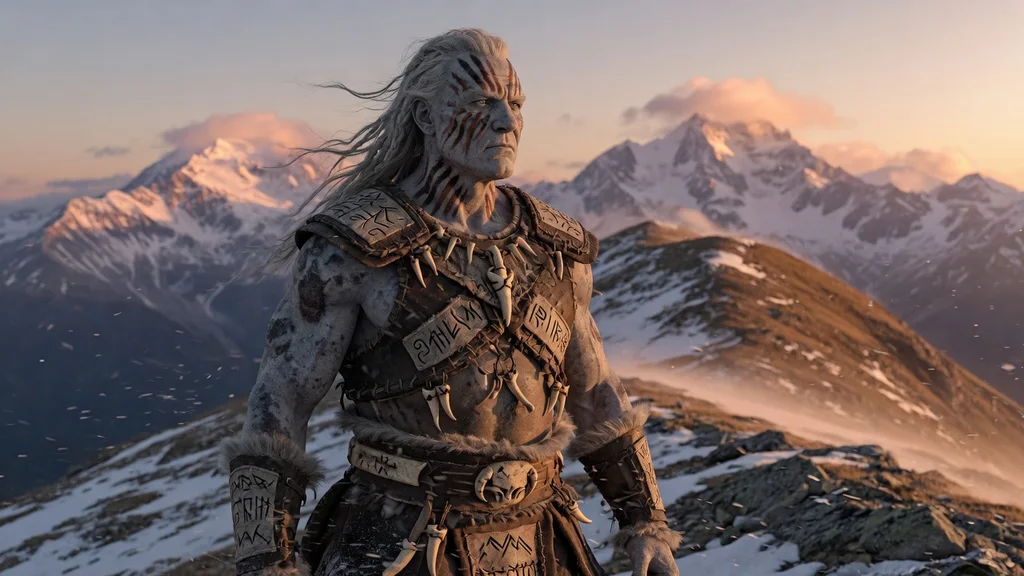
This goliath name generator builds names the way goliath clans actually build them — not as one word, but three: a short birth name from your parents, a nickname an elder gave you for something you did (or didn't) pull off, and a long, unbreakable clan name that outlasts both. Pick a name part, a nickname tone, and a role in the clan, and generate a batch that reads like it was earned on a real mountain, not rolled from a chart.
👇 Click any name to copy it
Of every naming system in D&D 5e, the goliath's is the only one built around a name that can be lost. A dragonborn's clan name doesn't change if they have a bad year. A dwarf's use-name doesn't get revoked by a council. But a goliath's nickname is a live scoreboard — earned by an elder's judgment, and taken away the moment it stops fitting. That single mechanic is the whole reason this generator exists as its own page.
It also means a goliath's name tells a story before you've said a word of backstory. Someone called Ironpeak has already done something the whole camp remembers. Someone called Latecomer is still working it off. Set your filters below and see which story you want to start with.
How to Use This Goliath Name Generator
Most goliath generators stop at "birth name, nickname, clan name" as a label and hand you three random words with no relationship between them. This one ties the nickname to a reason — tone and clan role — so the result reads like an actual biography instead of a word salad.
- Choose a name part — birth name only, nickname only, clan name only, or the full three-part name goliaths actually introduce themselves with.
- Pick a gender — flavour only. Goliath birth and clan names aren't gendered in the source material, so this only shifts the pronoun in the flavour text, not the name pool itself.
- Set a nickname tone — achievement, failure, physical trait, or role. This decides what kind of deed the nickname is reacting to.
- Set a role in the clan — hunter, guardian, shaper, elder, or skywatcher — to bias which nicknames come up toward that role's likely deeds.
- Generate and copy. Click any card to copy that name straight to your clipboard for a character sheet or Discord bio.
Goliath Naming Conventions — Three Names, Three Rules
The Player's Handbook is unusually specific about goliath names, more so than almost any other species entry in the book. Every goliath carries exactly three names, always presented in the same order — birth name, nickname, clan name — and each of the three follows a completely different rule for how it's made and how long it lasts.
Birth Name — Given Once, Kept for Life
A goliath's birth name is chosen by their parents and is up to three syllables long — short, hard-edged, built from consonant-heavy sounds like K, G, V, Th, and R. One detail matters more than the rest: birth names aren't strongly tied to gender in goliath culture. That's unusual enough in a fantasy naming system that it's worth calling out directly: this generator keeps birth names in a single shared pool rather than splitting them by gender, because splitting them would misrepresent how the source material actually treats them.
Nickname — Earned, and Just as Easily Lost
This is the part of a goliath's name that does all the character work. A nickname is assigned by a tribal elder or chieftain in response to something the goliath actually did — not a title of rank, not a birthright, a judgment call. Goliath culture is obsessed with fair competition and personal accomplishment, so the elders take this seriously: pull off something remarkable and you might get handed Cliffbreaker or Stonereaper. Fumble something badly enough and an elder can just as easily hand you Latecomer or Stumblefoot — and the old nickname is gone. Goliaths who receive an unflattering nickname don't hide from it; the culture expects them to wear it until they've done enough to earn a better one, which is exactly the kind of built-in character arc a name rarely gives you for free.
Clan Name — Five Syllables and Unbreakable
A clan name is the goliath's inheritance: five or more syllables, always ending in a vowel, passed down rather than chosen, and — unlike the nickname — completely immune to judgment. No deed changes it. It's the fixed point in a naming system where everything else is earned, lost, or up for renegotiation.
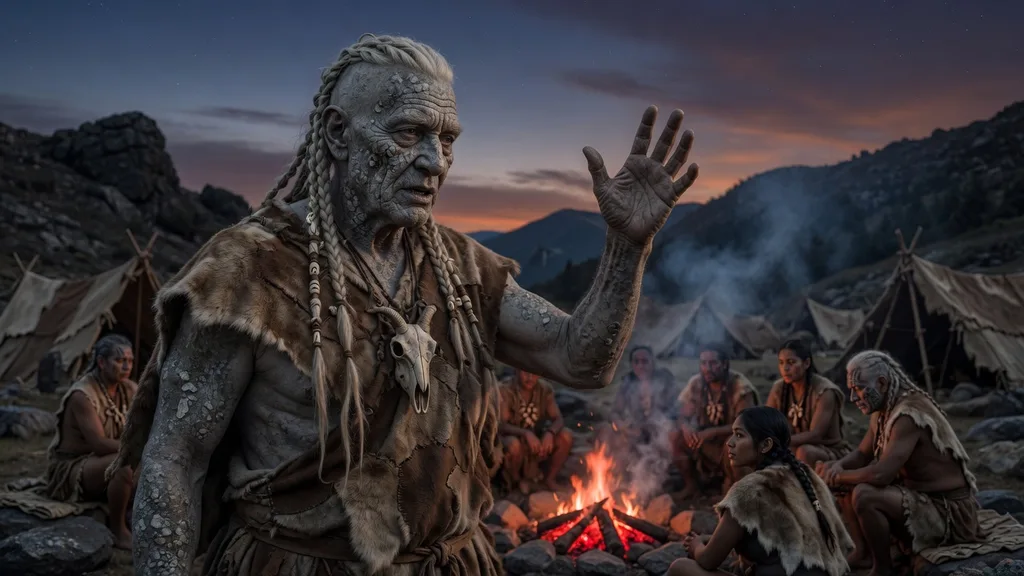
Roles in the Clan — Where Nicknames Come From
The "role in clan" filter isn't decoration — it biases which nicknames the generator surfaces, because a hunter and an elder tend to earn very different kinds of stories.
Hunter
Tracks game and threats across the high passes. Achievement and physical-trait nicknames cluster here hardest — Wolfshadow, Keeneye, Quickstep — because a hunter's worth is proven in the field, visibly, in front of witnesses.
Guardian
Holds the camp's defenses and the mountain passes. Guardians tend to earn nicknames tied to standing firm — Ironpeak, Deeproot, Heavyfoot — the kind of name that describes not moving when everyone expects you to.
Shaper
The clan's artisan — forges tools, reshapes stone and iron, keeps the shaping-fire lit. Shaper nicknames skew toward craft and its failures alike: Emberfist and Stonewright on one end, Ashenhand and Palefinger on the other.
Elder
Judges, advises, and is often the one handing nicknames out to everyone else. An elder's own nickname tends to read as settled and earned over decades: Stillvoice, Judgevoice, Frostcrown.
Skywatcher
Reads weather, tracks storms, and calls warnings before disaster hits the camp. This is the role most associated with the "role"-tone nicknames — Stormwatch, Cloudreader, Ridgewalker — names that describe a function, not a single deed.
Famous Goliath Names in D&D
Wizards of the Coast's own Player's Handbook lists a handful of official examples for each part of a goliath name, and they're worth knowing even though this generator builds its own original names rather than reusing them. Birth names include Aukan, Ilikan, Kuori, and Vimak. Nicknames include Bearkiller, Dawncaller, Rootsmasher, Skywatcher, and the pointedly rough Twice-Orphaned. Clan names include Anakalathai, Elanithino, and Thuliaga — five-plus syllables, every one ending in a vowel, exactly as the rule states.
In official Forgotten Realms material and organized play, goliaths appear less often as named recurring characters than races like drow or dragonborn, which makes sense given their remote mountain homelands — but the naming pattern above is consistent everywhere the species shows up, book to book.
| Name part | Length / rule | How it's given | Can it change? | Example |
|---|---|---|---|---|
| Birth name | Up to 3 syllables | Chosen by parents at birth | No — fixed for life | Vaethun |
| Nickname | 1–2 words, descriptive | Assigned by a tribal elder for a specific deed | Yes — can be reassigned or revoked | Stonereaper |
| Clan name | 5+ syllables, ends in a vowel | Inherited from the clan lineage | No — permanent | Kalvenathoi |
Goliath Names by Nickname Tone
The generator's four nickname tones map to the four kinds of deed a goliath elder is actually watching for — and each reads completely differently on a character sheet.
| Tone | What it marks | Example |
|---|---|---|
| Achievement | A clear, witnessed success — a climb, a kill, a rescue | Cliffbreaker |
| Failure | A public stumble, worn openly until it's outgrown | Stumblefoot |
| Physical trait | A defining physical feature or ability | Longstride |
| Role | An ongoing function the goliath performs for the clan | Pathfinder |
Goliath vs. Other D&D Names — Avoiding the Mix-Up
Goliath is a species, not a class or a culture-of-upbringing, and it's easy to reach for the wrong generator on this site if you're not sure which distinction you need.
- Goliath vs. Barbarian. A barbarian is a class — a rage-fuelled fighter of any race, including goliaths, humans, or dragonborn. If you want earned battle-epithets across any race with a barbarian's culture (Northern, Tribal, Savage, Mountain), use the barbarian name generator. If you specifically need the goliath's three-part birth/nickname/clan system regardless of class, this page is the one.
- Goliath vs. Half-Orc. A half-orc's name is shaped by who raised them — an orcish clan or a human family — with no equivalent to a revocable nickname. If your character is half-orc, not giant-blooded, the half-orc name generator fits better.
- Goliath vs. Aasimar. Aasimar names lean on celestial and Outer Plane influence tied to their divine bloodline, with nothing like a clan-assigned nickname. See the aasimar name generator for that lineage instead.
- Goliath vs. any D&D race. If you just need a fast name for whatever race you rolled and don't need the full three-part goliath system, the D&D character name generator covers nine core races in one tool.
About Goliaths in D&D
Goliaths are giant-blooded, born to human parents who carry the distant legacy of the giants who once ruled their mountain ranges. They live at brutal altitude, in small nomadic clans, in a culture obsessed with one idea: that survival up there depends entirely on individual competence, proven again and again, not on birthright or rank. That obsession with earned merit is exactly what produces the nickname system — it's not a naming quirk, it's the culture's core value expressed as a name.
Volo's Guide (2016) and Monsters of the Multiverse (2022). Goliaths first appeared as a playable species in Volo's Guide to Monsters. The 2022 Monsters of the Multiverse reprint streamlined their traits into Powerful Build, Mountain Born, and Stone's Endurance, and it's still the version most home tables running the 2014 rules use. The birth/nickname/clan naming system is identical across both.
2024 Player's Handbook. The newest version keeps the same three-part naming system but reworks the mechanical traits: goliaths now choose a specific giant ancestor — Cloud, Fire, Frost, Hill, Stone, or Storm — for a bonus ability usable a number of times equal to proficiency bonus, alongside a faster 35-foot base speed and a new Large Form feature at 5th level. If you're building a 2024-rules character, expect the giant ancestor choice on the character sheet; it has zero effect on how the name itself is built.
Whichever ruleset you're playing, the naming logic hasn't moved: birth name from your parents, nickname from your elders based on what you've actually done, clan name from your lineage. Get that structure right and the mechanical differences between editions don't matter for the name at all.
Culture behind the mechanic. Goliaths measure themselves against the mountain, not against each other in the petty sense — a clan survives because every member is competent, so competence gets tracked openly instead of politely ignored. That's why the nickname system isn't cruel by goliath standards, even when a nickname like Stumblefoot sounds harsh to outsiders. It's information, delivered honestly, that the whole clan needs. A goliath who loses a nickname doesn't lose face the way a knight stripped of a title might — they lose a marker that's already gone stale, and everyone already expects them to go earn the next one.
What this means for roleplay. A goliath player character arriving at a new town or dungeon crawl is, in a small way, always mid-story. If their current nickname is an achievement one, other goliaths in the setting will expect them to keep living up to it. If it's a failure nickname, that's an open hook a DM can use — an NPC elder who shows up later, having heard the story, offers a chance to earn something better. Very few species names in D&D carry that kind of built-in narrative pressure.
Tips for Choosing a Goliath Name
- Match the nickname to a story you can actually tell. If your character earned Stonereaper, know the ten-second version of how. That's free backstory the name is already doing for you.
- Failure nicknames make better arcs than achievement ones. A character introducing themself as Latecomer has somewhere to go. Consider starting there and letting the campaign earn them a better name.
- Don't force gender onto the birth name. The lore doesn't, and a mixed pool reads more authentic than an artificially split one.
- Say the clan name out loud before committing. Five-plus syllables is a lot to say at the table every session — pick one you won't dread pronouncing.
- Use the short form day-to-day. Real goliaths probably don't recite all three names constantly either — birth name or nickname alone works fine for a character sheet and dialogue, saving the full name for formal introductions.
- Let the elders' judgment be a plot hook. A DM can reassign a goliath's nickname mid-campaign as a consequence or a reward — it's one of the only names in D&D built to do that.
Example Goliath Names
Birth Names
- Vaethun
- Orikal
- Thuleiv
- Kanuvo
- Braxul
- Ithenor
- Solkav
- Draveth
- Muvarik
- Zenkalo
- Torivak
- Ulmeith
- Kregavo
- Nashtal
- Renthul
Earned Nicknames
- Cliffbreaker
- Stonereaper
- Ironpeak
- Wolfshadow
- Frostcrown
- Latecomer
- Stumblefoot
- Brokenoath
- Duskbroken
- Palefinger
- Keeneye
- Longstride
- Stonehand
- Heavyfoot
- Scarbrow
- Pathfinder
- Stormwatch
- Cloudreader
- Icebreaker
- Bonecarver
Clan Names
- Kalvenathoi
- Rothanivaka
- Duvrenakatho
- Silvanakori
- Braganathevu
- Ovalithanu
- Thurakenavi
- Malikothana
- Grivanakathu
- Ostheniaka
- Karavelinu
- Vaskenithara
- Molgathunei
- Anithravalu
- Threnakavolu
For more on how earned names work across fantasy fiction more broadly — not just goliaths — see the site's guide to epithets, titles, and bynames. Goliath nicknames are one of the clearest examples of that whole pattern: a name as a running scoreboard of reputation, not a fixed label.
This system also travels well beyond a D&D character sheet. Any giant-kin or mountain-clan species in original fiction, another tabletop system, or a homebrew setting can borrow the same three-tier logic — a fixed name from family, an earned name from the community, and a permanent lineage name — even if you rename the parts to fit your own world. The structure is doing the storytelling work regardless of which game it's attached to, which is really the whole appeal of a name that can be won or lost.
FAQ for Goliath Name Generator
How do goliath names work in D&D?
Every goliath carries three names, always given in the same order: a birth name from their parents, a nickname assigned by a tribal elder or chieftain, and an inherited clan name. So a goliath introduces themself as, for example, Vaethun Stonereaper Kalvenathoi — birth name first, earned nickname second, clan name last.
Can a goliath's nickname really be taken away?
Yes, and it's the strangest naming rule in D&D. A goliath's nickname isn't fixed — a tribal elder can change it whenever the goliath's deeds no longer match the name they're wearing. Excel and you might earn something like Stonereaper; slip badly and an elder can hand you Latecomer instead. Losing a good nickname is treated as a real blow to standing in the clan, and winning a new one back is exactly the kind of story goliath players love to play toward.
What's the difference between a goliath birth name and clan name?
A birth name is short — up to three syllables — chosen by the parents and kept for life without ever being judged or changed. A clan name is the opposite: five-plus syllables long, always ending in a vowel, inherited rather than chosen, and permanent. The nickname sitting between them is the only part of a goliath's name that responds to how they're actually living.
Is a goliath a race or a class in D&D?
A species (race in older terminology), not a class. Goliaths are giant-blooded humans who live at high altitude and compete constantly — physically, not necessarily violently — to prove themselves worthy of their harsh environment. Any class can be a goliath: a goliath barbarian and a goliath cleric use the exact same three-part naming system, just with different lives to earn nicknames from.
Did goliath names change between the 2014 and 2024 D&D rules?
The naming system itself hasn't changed — birth name, nickname, clan name is consistent across the 2014 Player's Handbook, the 2022 Monsters of the Multiverse update, and the 2024 Player's Handbook. What changed in 2024 is mechanical: goliaths now pick a specific giant ancestor (cloud, fire, frost, hill, stone, or storm giant) for a bonus trait, replacing the older Stone's Endurance and combined Natural Athlete/Powerful Build traits. None of that touches how a name is built.
What are some official goliath names from the Player's Handbook?
The book lists example birth names like Aukan, Ilikan, Nalla, and Vimak; nicknames like Bearkiller, Dawncaller, Rootsmasher, and Twice-Orphaned; and clan names like Anakalathai, Elanithino, and Thuliaga. This generator builds its own original names in the same phonetic style rather than reusing the book's list, so you won't get duplicates of published NPCs.
How is a goliath name different from a barbarian name?
They're not the same thing at all — barbarian is a class, goliath is a species, and plenty of goliaths are wizards or clerics with no rage feature in sight. If you want class-flavoured names with earned battle epithets across any race, the barbarian name generator is the better fit. This page is specifically about the goliath's three-part birth/nickname/clan system, which no other D&D species uses.
Can I play a goliath in Baldur's Gate 3?
Not as one of the game's origin species — BG3's character creator doesn't include goliath. This generator is aimed at tabletop 5e, D&D Beyond, Foundry and other virtual tabletop character sheets, and homebrew fiction. Most of those only take one name field, so lead with the birth name for a fresh adventurer, or birth name plus nickname once one's been earned, and save the full three-part form for dialogue and backstory text.