Necromancer Name Generator — Death-Mage Names by Archetype & Title
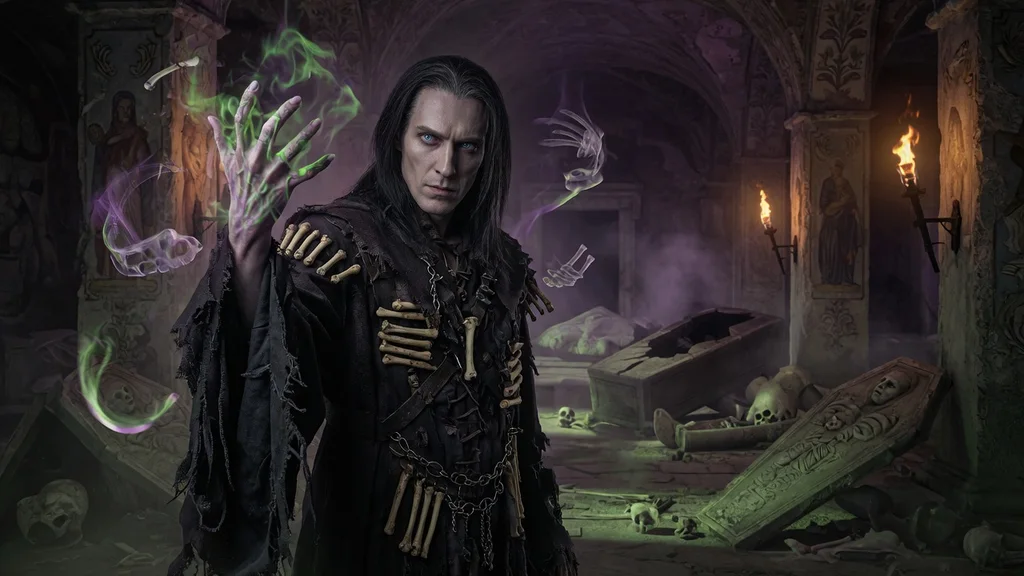
This necromancer name generator builds names across six death-magic archetypes — lich, bone-shaper, grave-tender, plague-caller, soul-binder, and cult leader — for any gender, with optional titles that carry their own explained meaning. Built for D&D, Pathfinder, dark fantasy fiction, and any tabletop campaign that needs a caster who deals in the dead.
👇 Click any name to copy it
Necromancers don't get named the way farmers or knights do. Nobody hands a necromancer a name at a naming-day ceremony and expects it to stick. These are names that get earned, inscribed, whispered, or seized — usually somewhere after the point where the caster stopped being fully alive in the ordinary sense.
That's the gap most necromancer generators miss. They give you a dark-sounding syllable soup and call it done. This one starts from the archetype — what kind of death-mage is this, actually — and builds the name and the title around that answer.
What Makes a Necromancer's Name Sound Right
Necromantic naming, whether pulled from real-world dark-magic folklore or built fresh for fiction, leans on a handful of recurring phonetic moves. Understanding them means you can adjust or invent names with intention instead of guessing.
Dead-language roots. Latin supplies most of the useful vocabulary here: mort- (death), nec- (dead), oss- (bone), umbr- (shadow), nox- (night). Splice these into invented syllables and a name carries weight even when a listener can't consciously place the etymology — it just sounds old and final.
Bone and ash morphemes. Beyond Latin, necromancer names lean on compound constructions built from concrete, physical death-imagery: bone, ash, marrow, grave, wick (as in candle-wick, or churchyard), and rot. Ossrik, Ashenor, Marrowcarve — these read as description before they read as name, and that's the point.
Heavy consonants over open vowels. Compare a bright name like "Alara" to a necromancer name like "Vorgrath." The extra consonant clusters slow the mouth down — the name takes effort to say, and that effort reads as gravity. This is especially true for Lich and Bone-Shaper archetypes, where names are built to sound carved rather than spoken.
Formal, archaic endings. Suffixes like -oth, -ivar, -essa, and -orak read as bestowed rather than given at birth — inscribed by a mentor, a cult, or the caster's own ambition once the old name stopped fitting. A necromancer rarely keeps the name their parents used.
A common mistake worth avoiding: leaning entirely on English death-words stitched together — Deathmage, Boneweaver, Graveheart. These read as job titles, not names, and they age badly the moment a second character in the same setting needs one too. Let the phonetics carry the meaning instead. A reader who hears "Vorondur" doesn't consciously translate it, but they feel the weight anyway — that's a name doing its job quietly.
The Six Archetypes — A Quick Reference
The generator's Archetype filter is the main lever. Each one pulls from its own phonetic pool, so picking an archetype changes the sound of the name, not just a label slapped on top of it.
| Archetype | Feel | Example Name |
|---|---|---|
| Lich | Monumental, regal, the undying sovereign who conquered death by outlasting it | Zarivar |
| Bone-Shaper | Clinical, precise, sculpts skeletal servants joint by joint | Karnander |
| Grave-Tender | Quiet, earthier, closer to folk tradition than to war-magic | Tomlinwick |
| Plague-Caller | Harsh sibilants, rot and sickness, the harvest that never ends | Rotgarok |
| Soul-Binder | Chains and tethers, ties and unties spirits like a jailer | Tethrunorum |
| Cult Leader | Liturgical, charismatic, preaches death to a growing congregation | Malacharus |
Titles With Meaning — Why Necromancers Almost Always Have One
A bare name rarely does the job for a necromancer. Fiction and tabletop lore both reach for an epithet — something that tells the room what this caster has actually done, because the name alone can't carry a résumé written mostly in graves.
Switch the Form filter to Name + title and pick a Tone. Every title the generator offers comes with an explained meaning right on the card — no other necromancer generator does this. A title isn't just a spooky tag; it's a compressed piece of backstory.
| Tone | Example Title | Meaning |
|---|---|---|
| Gothic | the Pale Herald | Arrives before the dead do — a warning, not a greeting. |
| Academic | Doctor of the Black College | Holds a degree from a school that stopped issuing diplomas centuries ago. |
| Ancient | of the First Grave | Claims lineage to the very first burial ever performed. |
| Folk-Horror | the Hollow Bell | The village church rings itself when it's near — nobody pulls the rope. |
Note that Tone controls the title pool only — the base name's sound always comes from the archetype. That means you can pair a clinical Bone-Shaper name with a Folk-Horror title for a character who reads as precise and academic up close, but has become local legend from a distance. Mixing tone and archetype deliberately is where the interesting characters live.
This pairing system solves a specific writing problem: titles generated without meaning tend to sound the same after the third one — another "the Pale," another "of the Bone Throne." Attaching an explicit meaning forces each title to imply a specific incident or reputation, which is the difference between a name that decorates a character and one that hints at their whole arc in four words.
Gender and Naming — Male, Female, and Unisex Necromancer Names
Set the Gender filter to Male, Female, or Any. Every archetype pool has distinct male and female suffix sets layered onto the same prefix roots, so a Lich name built for a male character and one built for a female character share a family resemblance without sounding interchangeable.
If you specifically need a female-coded necromancer with a dark-feminine, lich-queen aesthetic — think Gothic mourning-wear, plague-touched sorceresses, shadow-court regality — the female necromancer name generator is the deeper, more specialized tool for that exact brief. It runs five styles (Gothic, Ancient/Eldritch, Plague/Decay, Shadow, Regal/Lich-Queen) against two language flavors and leans harder into that specific dark-lady register than this generator's broader Female option does. Use this page when you need range across genders and archetypes; use that page when you've already decided the character is a woman and you want the sharpest possible fit for that lane.
There's no mechanical difference in how the two generators handle gender — both split their pools by suffix rather than tacking a gendered name onto an unrelated stem, so a character built on either page will still sound native to its archetype or style regardless of which gender option you pick. The difference is entirely in scope: broad and archetype-driven here, narrow and style-driven there.
Naming for D&D, Pathfinder, and Tabletop Play
In D&D 5e, Necromancer is a Wizard subclass, but the naming logic here spreads well beyond it. Warlocks bound to an Undead patron, Death Domain Clerics, Oathbreaker Paladins, and Circle of Spores Druids all draw on the same well of death-adjacent phonetics without needing to literally cast Animate Dead.
Match archetype to mechanics rather than picking at random. A summoner-focused necromancer who fields a skeleton army all game fits the Bone-Shaper pool. A Warlock who made a literal pact with something undead fits Soul-Binder. A Death Cleric running a splinter congregation out of a converted crypt fits Cult Leader almost too well.
For Pathfinder 2e, the same logic applies — Undead-focused Witches, the Thanatotic Wizard tradition, and any Animist build with a death-adjacent patron all suit names built from the Lich, Bone-Shaper, or Soul-Binder pools depending on how formal the character reads.
For video game character creators — Elden Ring, Diablo, Dark Souls, any title where the name actually renders on screen — favor archetypes with heavier consonant clusters (Lich, Bone-Shaper) for names that hold up visually in all-caps UI text.
Backstory alignment matters as much as sound. A Lich who spent decades as a mortal archmage before crossing over often keeps a fragment of their old, more human-sounding name buried inside the new one — a deliberate half-echo the player or reader can notice on a second pass. A Cult Leader, by contrast, usually chose their name outright, the way a stage name gets chosen: it should sound designed, not inherited, because that's exactly what it is.
Famous Necromancers in Fiction and Games — What Their Names Tell Us
Strong necromancer names in existing fiction tend to do double duty — they sound appropriately dark while also signaling exactly what kind of death-mage the character is. Nagash, from Warhammer's Age of Sigmar setting, is short, guttural, and monumental — a lich name before "lich" was even the word for it. Raistlin Majere from Dragonlance leans softer and more scholarly, fitting a caster whose power came from study and ambition rather than raw undeath. Sauron, functionally a death-cult figure in Tolkien's cosmology even outside his more famous role, carries a title-shaped weight ("the Necromancer" was literally his cover identity in The Hobbit) that outworks the name itself.
The pattern holds: the necromancers readers remember tend to have names that predict their archetype before the plot confirms it. That's the effect this generator is built to reproduce — pick the archetype, and the name should already be doing some of the storytelling.
Video game necromancers follow a slightly different pattern, since a lot of their naming pressure comes from UI constraints rather than prose rhythm. Diablo's Necromancer class leans on short, punchy, ancient-sounding surnames for its lore NPCs. Elden Ring's death-cult figures — the Fingers, the Deathbirds' worshippers — favor titles that read as descriptions first and names second, which lines up almost exactly with this generator's Folk-Horror tone. Studying how a franchise's UI forces its naming choices is a useful exercise even outside games — it strips away flourish and shows you what's actually load-bearing in a name.
Tips for Naming Necromancer NPCs and Familiars
Before the practical rules, one shortcut: if you want a name whose meaning does the work rather than its sound, our list of names that mean shadow collects the real ones — Erebus, Umbra, Caligo, Kage and the rest — with the root word behind each and what it actually says about the bearer.
A single named necromancer is rarely the whole picture. Campaigns and stories tend to need a small ecosystem around them — apprentices, rival death-mages, the skeletal or spectral familiar that never leaves their side. A few practical rules keep that ecosystem coherent.
Keep one archetype per bloodline or order. If your setting has a necromantic college or cult, generate several names from the same archetype pool rather than mixing all six. A Bone-Shaper college should sound like a Bone-Shaper college — consistent phonetics read as a shared tradition, not a coincidence.
Give familiars shorter, harder names. A necromancer's skeletal hound or raven-shaped spirit rarely needs the full multi-syllable treatment. Clip a generated name down to its first syllable or two — "Vorondur" becomes "Vor" for the thing that follows at heel. It reads as a name given in haste, which fits a familiar better than a formal title would.
Reserve titles for named threats. If every NPC in a dungeon has an epithet, none of them land. Save the "Name + title" form for the necromancer the party is actually going to remember — the rest can carry archetype and a plain name.
Let the title outlive the reveal. A classic structure: the party hears the title first ("the Hollow Bell has been seen near the old chapel"), meets the character later, and only learns the actual name toward the end of the arc — sometimes never. Titles generated here work well used exactly that way.
Example Necromancer Names by Archetype
Lich
- Zarivar
- Malothun
- Vorondur
- Thalamir
- Kaalostrun
- Skarnavel
- Ilthariver
- Nyxarondur
- Dravenoth
- Morvathekar
- Kessarivorn
- Vaelorivar
Bone-Shaper
- Ossok
- Karnander
- Ivorith
- Skelorn
- Marrowec
- Ribcarvulor
- Ostrenavik
- Calcinesh
- Skarlorim
- Bonrikatch
- Ossvarok
- Krethylander
Grave-Tender
- Gravwick
- Tomlinold
- Mourneth
- Sodgrimryn
- Hollowow
- Wickmoorarth
- Barrowell
- Sextonnund
- Clayvetheck
- Duskwellorm
- Peatgrimwick
- Loammireold
Plague-Caller
- Pestus
- Miasmok
- Rotgaran
- Corveneth
- Blightorivor
- Fetorakask
- Gangrelorix
- Scourimulen
- Venomiratch
- Wiltrekorn
- Bilecarus
- Poxwynok
Soul-Binder
- Severin
- Kaelok
- Wraitheael
- Tethrunorum
- Bindrakith
- Ashcoilavel
- Vespyrekan
- Chainorusk
- Fettrenandir
- Grimtetherorth
- Hallowbindin
- Lashennoka
Cult Leader
- Malacharus
- Vesrynor
- Dravcultaeth
- Ashenorivun
- Grimhalesh
- Nocturilandor
- Sepulcherolith
- Bleakhornurnak
- Ossimundashen
- Verakelothar
- Duskcrowus
- Hollowveilora
How to Use the Necromancer Name Generator
Pick a Gender — Male, Female, or Any. Choose an Archetype that matches your character's specialty, or leave it on Any to sample all six. Set Tone if you plan to use titles; it decides which title pool the generator draws from. Set Form to Name only for a clean result, or Name + title for the full epithet with its meaning shown underneath.
Use the slider to choose how many names to generate, then hit Generate. Each card shows the name, its archetype badge, and either a short lore line or — if you chose Name + title — the title and what it actually means. Click any card to copy it.
For D&D or Pathfinder: pick the archetype that matches the build, generate a handful, and pull the title's meaning straight into your character's backstory notes. For fiction: run the same archetype through two or three tones and see which title-and-meaning combination gives the character the most interesting entrance.
Necromancer vs. Related Dark-Magic Archetypes
Necromancer sits inside a wider family of dark-magic naming niches on this site, and it's worth knowing where the lines are before you pick a generator. The demon name generator covers infernal beings by rank and domain — useful for the thing a necromancer might summon or bargain with, not the necromancer themself. The witch name generator runs five styles from Wicked and Gothic to Cottage and Mystical, for practitioners whose magic isn't specifically death-focused. The sorcerer name generator handles arcane casters more broadly, including a dedicated Dark/Warlock tradition that pairs well with an undead-patron backstory. And for a female-coded necromancer specifically, the female necromancer name generator goes deeper into that one lane than this broader, all-archetype generator does.
FAQ for Necromancer Name Generator
What makes a good necromancer name?
Strong necromancer names lean on death-adjacent roots (mort-, nec-, oss-, umbr-) and archaic-sounding endings, but the specific sound should match the archetype. A lich wants monumental and regal; a grave-tender wants quieter and earthier; a plague-caller wants harsh sibilants that suggest rot. Pick the archetype first, then the name, not the other way around.
What's the difference between this generator and the female necromancer generator?
This page covers every necromancer archetype and gender — male, female, and unisex names across six death-magic specializations. The female necromancer name generator focuses specifically on five dark-feminine styles (Gothic, Ancient, Plague, Shadow, Regal) with a deeper well of lich-queen and dark-lady flavored names. Use this page for a broader cast; use that one when you specifically need a female-coded name with that particular aesthetic.
Which D&D classes suit a necromancer name?
Necromancer is a Wizard subclass in D&D 5e, but the naming conventions here work for any death-adjacent build: Warlocks with an Undead patron, Death Domain Clerics, Oathbreaker Paladins, Circle of Spores Druids, and homebrew Blood Hunters. Match the archetype to the mechanics — a Bone-Shaper name suits a summoner-focused necromancer, a Soul-Binder name suits a pact-based Warlock.
What is a lich, exactly, and how does that affect the name?
A lich is a spellcaster who achieves undeath deliberately, usually by binding their soul to a phylactery, in exchange for functional immortality and steadily rotting humanity. Lich names in this generator run long, formal, and monumental — they're built to sound like titles even before a title is attached, because a lich has usually stopped being addressed casually by anyone still breathing.
Why do necromancers almost always have a title?
A title tells a table or a reader what a necromancer has done, not just what they're called — 'Doctor of the Black College' signals a scholar, 'the Hollow Bell' signals a folk-horror threat nobody in the village will name directly. Switch Form to 'Name + title' and every title in this generator comes with its own meaning, shown right on the card, so the flavor text writes itself.
Can I use these names in published fiction or games?
Yes. Every name here is an original construction built from phonemic patterns, not lifted from any existing franchise, sourcebook, or character. Use them freely in tabletop campaigns, novels, video games, or any other creative work without attribution.
What's the difference between the six archetypes?
Lich is the undying sovereign; Bone-Shaper is the clinical skeleton-crafter; Grave-Tender is the quiet, almost caretaker-like keeper of the dead; Plague-Caller channels rot and sickness; Soul-Binder ties and unties spirits like a jailer; Cult Leader preaches death to a growing congregation. Each archetype has its own phonetic pool, so the same tone filter produces a very different-sounding name depending which one you pick.
Do the tones (Gothic, Academic, Ancient, Folk-Horror) change the base name too?
No — tone only controls which title pool the generator pulls from when Form is set to 'Name + title.' The base name's sound comes entirely from the archetype. This lets you mix, say, a Bone-Shaper base name with a Folk-Horror title for a character who reads as clinical up close but has become local legend from a distance.
How is this different from a lich name generator or an undead name generator?
A dedicated lich generator only covers one archetype — the undying-sovereign register — while this generator's Lich option is one of six, sitting alongside Bone-Shaper, Grave-Tender, Plague-Caller, Soul-Binder, and Cult Leader. An 'undead name generator' typically names the undead creatures themselves (wraiths, revenants, ghouls), which is a related but different brief from naming the living or once-living spellcaster who commands them. If you specifically need a lich, set Archetype to Lich here and you'll get that exact register.