Fae Name Generator — Seelie, Unseelie & True Names
This fae name generator does something no other name tool on this site does: it gives you two names for the price of one — a use-name safe to speak in front of the creature, and a true name you're never meant to say aloud. Pick a court (Seelie, Unseelie, Wild, or Court-less), a creature type from sidhe to selkie, a tone, and generate. Every result comes with folklore behind it, not just a random string of vowels.
👇 Click any name to copy it
In the fae folklore of Britain and Ireland, a name is never just a label — it's a liability. Say a fairy's real name and you can bind it, command it, or break its hold over you. That's why fae in these stories rarely give their true names to mortals, and why entire tales — Tom Tit Tot in England, Whuppity Stoorie in Scotland — turn on someone overhearing or guessing the one name that matters.
This generator treats that mechanic as a real filter, not a flavor line. Set the name form to use-name for a safe, sayable identity; to true name for the dangerous one; or to both if you're running the table and need to know the secret your players are trying to pry loose.
How to Use This Fae Name Generator
Choose a Court — Seelie, Unseelie, Wild, or Court-less — to set the general temperament, since true names are drawn from court-specific sound pools. Pick a Creature type from the eight covered here, or leave it on Any to pull from all eight. Choose a Name form: use-name for something safe to put on a character sheet, true name for the dangerous version, or both if you want the full picture. Set Gender and a Tone — Folkloric, Whimsical, or Sinister — move the slider, and hit Generate. Click any card to copy it.
The Courts — Seelie, Unseelie, Wild, and Court-less
The Seelie/Unseelie split comes from Lowland Scottish tradition and is the most widely cited framework for sorting fae by temperament, though it isn't universal — plenty of Irish, Welsh, and English folk sources never mention courts at all and treat fairies as solitary or locally organized instead. This generator uses all four categories because each produces a genuinely different naming register.
The Seelie Court
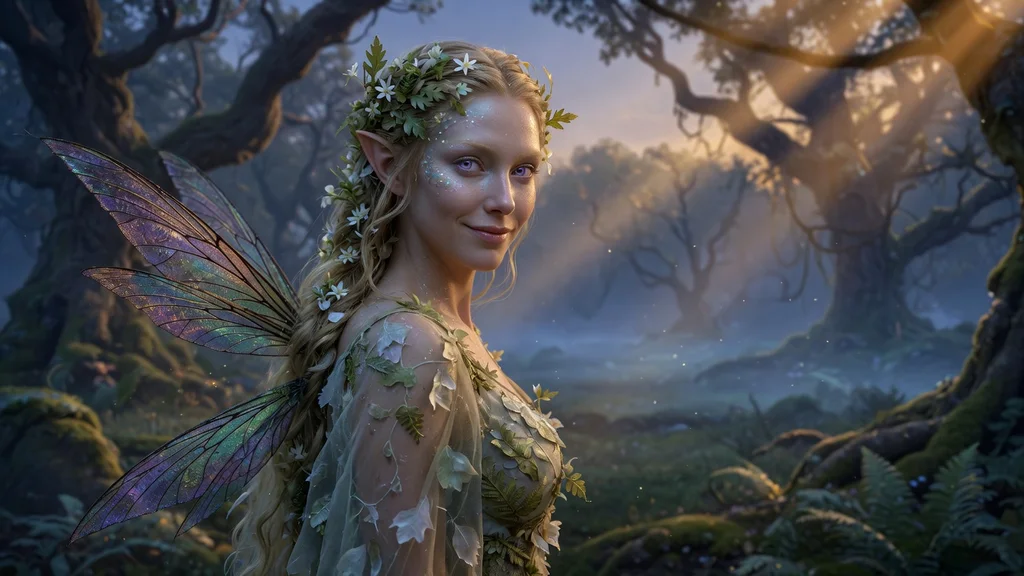
Called the "blessed" or bright court, the Seelie are capable of kindness — blessing a household, warning a traveler, rewarding a good deed — but they are not safe. Insult a Seelie fae and the retaliation is often as sharp as anything the Unseelie would deliver; the difference is that the Seelie need a reason. Their true names in this generator sound melodic and multi-syllable: Aelithoriel, Sylvanieth, Faelindor.
The Unseelie Court
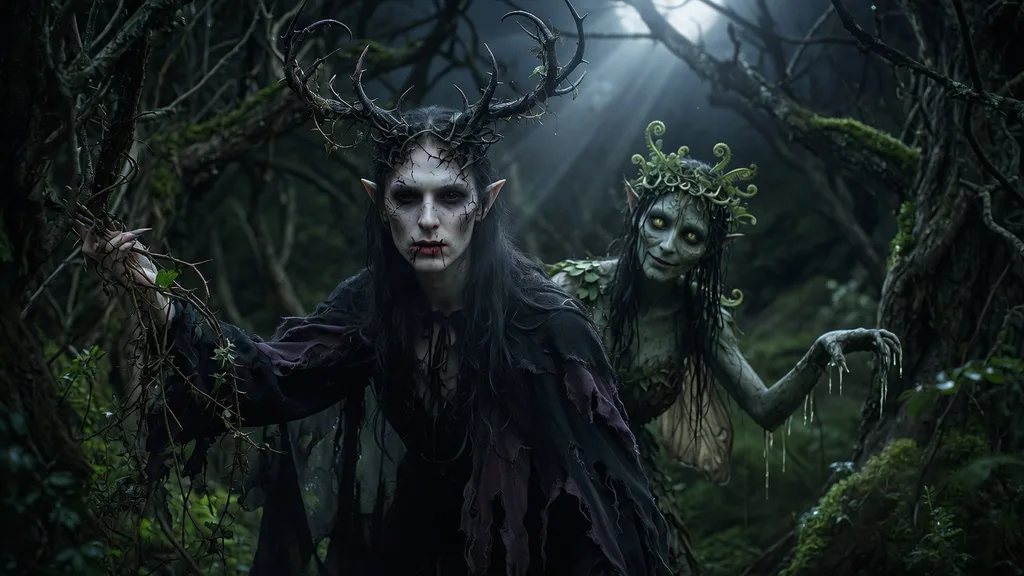
The Unseelie are openly hostile, tied to night travel, elf-shot, blight, and the older, crueler stories folklorists group under "trooping" and "solitary" malevolent fae. There's no courtesy requirement with the Unseelie — they don't need a reason. Their true names here run harsh and guttural: Vorgrathrax, Nithuluk, Skarrenoth.
Wild and Court-less Fae
Not every fae belongs to a court. Some folklore sources — and most modern fiction — treat court membership as optional, especially for nature-bound spirits like dryads or isolated figures like brownies and kelpies. Wild fae answer to a place or a season rather than a throne (Thornwrithe, Brackenhowl, Mossgnaw). Court-less fae are the loneliest and often the strangest of the lot, with true names that sound neither bright nor cruel — just other (Undrolath, Ferngrim, Caelthorn).
True Names — the Naming Mechanic Nobody Else Explains
Here's the part most fantasy naming guides skip entirely. In the fae tradition, a creature's real name isn't just personal information — it's a handle on their will. This is why fairies in folklore go by titles, occupations, or made-up names instead of their birth name, and why communities avoided naming fairies at all, using euphemisms instead: the Good Neighbours, the Fair Folk, the Gentry, or simply Themselves. Speech itself was treated as a risk — say the word "fairy" too casually near a fairy mound and you might draw attention you didn't want.
The clearest version of the mechanic shows up in fairy tales built entirely around it. In the English tale Tom Tit Tot, a spinning imp offers to do impossible work in exchange for a girl's firstborn — unless she can guess his name within three days. She overhears him singing it to himself in the dark and breaks the deal on the spot. The Scottish Whuppity Stoorie follows the same shape almost beat for beat. The pattern recurs so often across regional folklore that some scholars treat it as its own story type. It's also directly comparable to the epithet-and-title systems covered in our guide to epithets, titles, and bynames — a use-name functions exactly like a protective byname, hiding the thing that actually matters.
For your own writing or game, this gives you a built-in plot device for free: give a fae character a use-name up front, hold the true name back, and let a player or reader earn it. Use the Both — GM reveal form on this generator to get a matched pair — a public name for the character sheet, and the secret one for exactly the scene where it matters.
British and Irish folklore isn't the only tradition built around a creature with two names — Japanese kitsune folklore runs on a related but distinct mechanic: not a secret name that grants power over the fox, but a human alias it wears to live among people while its real fox-name (and its age, counted in tails) stays hidden. See the kitsune name generator for that side-by-side contrast. Christian demonology runs its own parallel version, too — a grimoire tradition where a demon's true name is what binds it, separate from the use-name it shows mortals. The succubus name generator covers that hierarchy directly, with the same use-name/true-name toggle built in.
Eight Kinds of Fae — Domain and Naming Register
British and Irish folklore doesn't have one fae species — it has dozens of local traditions that overlap and contradict each other. The eight below are the most commonly cited types and the ones this generator supports, each with its own naming register in the use-name pool.
| Type | Domain / Nature | Typical Court |
|---|---|---|
| Sidhe | Aristocracy of the hollow hills (Aos Sí) | Either — rules both courts |
| Pixie | Devon/Cornwall moorland tricksters | Usually Seelie-leaning, mischievous |
| Brownie | Solitary household helper spirit | Seelie-leaning, easily offended |
| Selkie | Seal-folk of Orkney and Shetland | Court-less |
| Kelpie | Shape-shifting water horse | Unseelie or Wild |
| Redcap | Malevolent Border-country ruin-dweller | Unseelie |
| Changeling | Fae substitute left for a stolen child | Varies by source |
| Dryad | British tree-spirit, closer to the Green Man than the Greek nymph | Wild |
Sidhe
The sidhe (from the Irish Aos Sí, "people of the mounds") are the ruling class of Otherworld tradition — tall, regal, tied to hollow hills, ancient mounds, and the Wild Hunt. They cross both courts freely; a sidhe lord can be Seelie one season and Unseelie the next depending on the tale.
Pixie
Specifically English, specifically southwestern — pixies belong to Devon and Cornwall moorland and are the source of "pixie-led," the old term for getting lost on the moor through fairy mischief rather than bad navigation. Smaller and more playful than the sidhe, less menacing than most Unseelie fae.
Brownie
A brownie attaches itself to one household and does chores overnight in exchange for a bowl of cream or bread — never wages. Pay a brownie outright, or thank it too directly, and the old belief is it leaves for good, insulted by being treated like hired help instead of a member of the house.
Selkie
Selkies are seal-folk from Orkney and Shetland lore who shed their sealskin to walk on land as humans. Lose or hide the skin and a selkie is trapped ashore; recover it and they return to the sea, sometimes leaving a human family behind without a second look. Selkies sit outside the court system in most sources — they answer to the sea, not a throne.
Kelpie
A Scottish water horse that appears as a beautiful, gentle animal by lochs and river fords. Mount it and its skin becomes adhesive; it drags the rider into the water and drowns them. Some tales let a kelpie take human shape to lure victims more directly. Consistently one of the most dangerous entries in Scottish folklore, rarely given any redeeming version.
Redcap
A redcap haunts ruined castles and towers along the Anglo-Scottish Border, dyes its cap in the blood of travelers who wander into its ruin, and must kill regularly or the cap dries out and the redcap dies with it. Almost universally classified Unseelie — there's no folk tradition of a friendly redcap.
Changeling
A changeling is left in a cradle in place of a stolen human infant — sometimes a fae child, sometimes an enchanted object made to look like one. Folk signs of a changeling included unusual sickliness, uncanny intelligence for its apparent age, or eyes that seemed far older than the face around them. Belief in changelings persisted into the 19th century and had real, tragic consequences for actual disabled children accused of being one — worth remembering if you use this archetype in fiction.
Dryad
British folklore has its own tree-spirit tradition, closer to the Green Man and "oak-wife" folk beliefs than to the Greek dryad — rooted in a specific tree, protective of its grove, and older than most human settlements nearby. If you want the Greek version specifically — Dryad, Naiad, Oread, Nereid, Aurai — our nymph name generator covers that tradition on its own terms.
Famous Fae in Folklore and Fiction
Real folklore and centuries of fiction have left plenty of named fae to study — useful reference points, not sources to copy from. None of the names below appear in this generator's output pools.
| Name | Source | Note |
|---|---|---|
| Puck / Robin Goodfellow | English folklore, Shakespeare's A Midsummer Night's Dream | Trickster, shape-shifter, serves Oberon |
| Oberon and Titania | Shakespeare (drawing on French and English fairy-king traditions) | King and queen of the fairies, locked in a marital feud |
| Tam Lin | Scottish Border ballad | Human held captive by the Fairy Queen, rescued by true love and a guessed name |
| Jenny Greenteeth | English (Lancashire) folklore | Water hag who pulls children into ponds — a cautionary figure, not a court fae |
| The Tuatha Dé Danann | Irish mythology | Pre-Christian divine race later folded into Aos Sí / sidhe tradition |
| The Seelie and Unseelie Courts | Lowland Scottish folklore | The two-court framework this generator's Court filter is built on |
Modern fiction leans hard on this material — The Dresden Files, The Cruel Prince, The Iron King, and most D&D Feywild sourcebooks all borrow the Seelie/Unseelie split and the true-name mechanic wholesale, because the underlying folklore already does the narrative heavy lifting. Note that this site isn't affiliated with any of these franchises — the names above are cited purely as reference points.
Fae vs Nymphs, Mermaids, Witches, and Elves
These names overlap in fantasy fiction, but the folklore traditions behind them are distinct — worth separating before you pick a generator.
| Tradition | Origin | Core trait | Generator |
|---|---|---|---|
| Fae | British/Irish folklore | Otherworld beings; true-name mechanic; courts | This page |
| Nymph | Greek mythology | Nature spirits bound to a landscape feature; no true-name lore | Nymph generator |
| Mermaid | Global maritime folklore | Sea-dwelling, fish-tailed; sirens/selkies sometimes overlap | Mermaid generator |
| Witch | Human folk-magic tradition | Mortal spellcaster, not an Otherworld species | Witch generator |
| High Elf | Tolkien-derived / D&D fantasy | Long-lived mortal race, house lineage, no true-name lore | High elf generator |
The clearest line is this: a witch is a human being who practices magic and can, in theory, die of old age or be tried in a court of law — real witch trials happened to real mortal women and men. A fae is not human and was never treated as such in folklore; the whole point of a changeling story is that the thing in the cradle only looks human. A high elf is a long-lived but still mortal fantasy race built on lineage and house names, closer in spirit to a noble human family than to an Otherworld court. A nymph is tied to a specific landscape feature — this tree, this spring — the way a fae's Wild court is tied to a place, but nymphs come from Greek myth and were never wrapped in the true-name secrecy that defines British and Irish fae. And a selkie or a fae-flavored sea-spirit is a different creature from a classical mermaid, even though both end up in the ocean — a selkie has a stealable skin and a human shape underneath; a mermaid simply is a fish-tailed being, full stop.
Fae Names by Court
A quick reference for the true-name register each court produces, matched against the Court filter above.
| Court | Sound | Example true names |
|---|---|---|
| Seelie | Melodic, multi-syllable, soft endings | Aelithoriel, Sylvanieth, Faelindor |
| Unseelie | Harsh, guttural, hard consonant clusters | Vorgrathrax, Nithuluk, Skarrenoth |
| Wild | Primal, nature-compound | Thornwrithe, Brackenhowl, Mossgnaw |
| Court-less | Plain but alien, neither bright nor cruel | Undrolath, Ferngrim, Caelthorn |
Tips for Naming a Fae Character
- Decide the court before the name. Seelie, Unseelie, Wild, or court-less each carry a different sound and a different set of behaviors — pick the temperament first and let the filter follow.
- Give the character two names on purpose. A use-name up front and a hidden true name is the single most authentic fae mechanic you can add to a story or campaign — it does narrative work other fantasy naming traditions can't.
- Match the epithet to the deed, not the species. "Who Steals the Firstborn" says more than "Sidhe #4." Pick a tone — folkloric, whimsical, sinister — and let the epithet carry the character's history.
- Don't hand out true names for free. If you're running a game, hold the true name back and let players earn or overhear it — that's exactly how Tom Tit Tot and Whuppity Stoorie are structured.
- Remember courts contradict each other across sources. If a player asks "is that canon," the honest answer in fae folklore is often "which region's canon?" Use that ambiguity — it's authentic, not sloppy.
- Say the name aloud. True names should feel awkward and slightly wrong in a mortal mouth. Use-names should feel easy. If both sound the same, regenerate.
Example Fae Names
Handpicked combinations pulled from the generator's own pools — use-names first, then a sample of true names by court.
Sidhe Use-Names
- Robin of the Hollow Hill
- Jenny of the Sídhe Court
- Tam Who Rides on May Eve
- Elspeth of the Fairy Rath
- Kit Who Never Misses a Party
- Fergus Who Rides the Wild Hunt
Pixie Use-Names
- Wat Light-Foot
- Nan of the Tor
- Kirsty the Giggler
- Rab Who Leads You in Circles
- Bess of the Standing Stones
- Nod Who Hides Your Keys
Brownie Use-Names
- Hob the Tidy
- Marj Hearth-Keeper
- Dob Who Curdles the Milk
- Tibb of the Milk Bowl
- Sim the Midnight Sweeper
- Ros of the Empty Hearth
Selkie and Kelpie Use-Names
- Mairi Seal-Skin
- Isbel of the Grey Shore
- Rory Bridle-Neck
- Angus of the Loch
- Ffion Whose Coat Was Stolen
- Cuddy of the Last Crossing
Redcap and Changeling Use-Names
- Gil Red-Cap
- Will of the Old Keep
- Sib Left-Behind
- Prue of the Cradle Exchange
- Ned Whose Cap Never Dries
- Alis Old-Eyes
True Names by Court
- Aelithoriel (Seelie)
- Naelforiel (Seelie)
- Vorgrathrax (Unseelie)
- Skarrenoth (Unseelie)
- Brackenhowl (Wild)
- Undrolath (Court-less)
FAQ for Fae Name Generator
What is the difference between a fae's use-name and its true name?
A use-name is the name a fae gives mortals — safe to say, carries no power over the bearer. A true name is the fae's real, original name, and in British and Irish folklore, knowing it means having leverage over the creature that owns it: you can bind it, command it, or break its power over you. That's why folklore is full of fae who give false names, riddling names, or no name at all — and why stories like Tom Tit Tot and the Scottish Whuppity Stoorie turn entirely on a mortal guessing the fae's real name.
What are the Seelie and Unseelie Courts?
They're the two courts of Lowland Scottish fairy lore. The Seelie Court is the 'blessed' or bright court — capable of helping mortals, but still dangerous and quick to punish disrespect. The Unseelie Court is openly hostile, most active at night, and blamed for elf-shot, blight, and abductions. The split isn't universal across all British and Irish folklore — plenty of regional traditions never use it at all — but it's the most widely cited framework, which is why this generator filters by it.
Why do people say 'the Good Neighbours' or 'the Fair Folk' instead of 'fairy'?
Fear of being overheard. In Scottish, Irish, and English folk belief, naming fairies directly was thought to draw their attention or their offense, so communities used flattering euphemisms instead: the Good Neighbours, the Fair Folk, the Gentry, Themselves, or simply Them. It's the same logic behind a true name having power — speech was never treated as neutral in this tradition.
What's the difference between a sidhe, a pixie, and a brownie?
They're different tiers of the same broad tradition. The sidhe (Aos Sí) are the aristocracy — tall, regal, tied to hollow hills and Otherworld courts. Pixies are small, playful, and tied to specific English moorland, best known for leading travelers astray. Brownies are solitary household spirits who do chores overnight in exchange for food, and vanish forever if you pay or thank them. Same broad mythology, very different social class.
Are selkies and kelpies fae?
It depends who you ask. Selkies (seal-folk) and kelpies (water horses) are usually filed under British and Irish 'fairy fauna' rather than the courtly sidhe tradition specifically, but folklorists like Katharine Briggs group them together because they share the same core rules: shape-shifting, Otherworld origin, and real danger to anyone who doesn't respect the boundary. This generator includes both alongside the more classic court fae.
Where can I use the Fae Name Generator?
Anywhere you need an Otherworldly character with real folkloric weight: D&D fey encounters and eladrin/hag NPCs, urban fantasy and portal fantasy fiction, homebrew Feywild settings, tabletop one-shots, or a username with more history behind it than a random word generator. Every name is an original combination, not a name lifted from a specific book or game.
Can I use these names in D&D 5e?
Yes. Fey is an official creature type in D&D 5e — eladrin, satyrs, hags, and the Feywild itself all draw on this same folklore. Set the Court filter to Seelie for eladrin-style NPCs or Unseelie for hags and blights, and use the 'Both — GM reveal' name form so you have the true name on hand for exactly the moment a player tries to bind or banish the creature.
Why don't fae have surnames like elves or humans?
Court fae identify by domain and title, not family line — 'of the Hollow Hill' does the work a surname would do for a human, marking where you belong rather than who your parents were. That's a real difference from lineage-driven traditions like D&D high elf naming, where a house name is the whole point. See our high elf name generator for that contrast in practice.