Kobold Names — Cute, Draconic & Trap-Maker Ideas

Most people typing "kobold names" into a search bar want a list, not a tool — so this page leads with one. Below are 230-plus original kobold names sorted by mood: cute, draconic, tribal, fierce, and trap-maker, each with a note on where it fits. If you'd rather roll your own on demand, the kobold name generator below the intro spins up fresh combinations in any of those same styles, instantly and for free.
Kobolds have quietly become one of D&D's most-loved small monsters, and the naming conventions below reflect that — not just the sharp, hissing draconic style old-school players expect, but the softer, funnier register that's grown up around them since. Pick whichever mood fits the kobold you're actually building, or skim every section for the full picture of how this species gets named across editions and media.
👇 Click any name to copy it
How the Kobold Name Generator Works
Three filters shape the output. Gender biases the phonetics — male names tend toward harder, blunter endings; female names carry a slightly lighter vowel pattern, though both stay firmly in kobold sonic territory. Style is the main dial:
- Yipping — fast, comical, phonetically chaotic. For the pack-brained opportunist.
- Draconic — deliberate, formal, with harder draconic syllables. For the kobold who considers themselves descended from something great.
- Trap-maker — names that suggest craft and patience. Slightly less yippy, slightly more menacing.
- Tribal — warren identity, pack hierarchy, and the weight of shared history.
Switch Form to "Name + descriptor" and every result gains an epithet like "the Trapsmith" or "Scale-blessed" — useful for named NPCs or a player character with a reputation to uphold. Use the slider to control how many names generate per roll, then keep reading for the full hand-picked lists below.
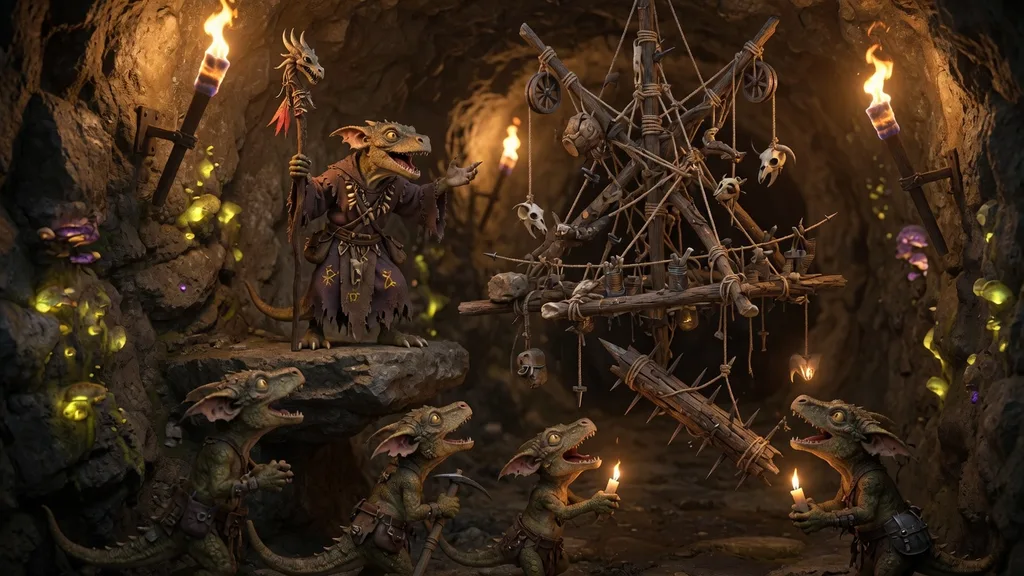
Cute Kobold Names
This is the biggest search behind this page, and it makes sense once you look at how kobolds are actually drawn and played today. Older editions treated them as vermin — disposable trap-fodder a party mowed through on the way to a real fight. Fifth edition changed the art, the tone, and the framing: kobolds got expressive faces, a genuine dragon-parent relationship instead of blind servitude, and — thanks to beloved NPCs like Meepo — a reputation as the monster manual's designated underdog. Actual-play podcasts and streamed campaigns leaned into that hard, giving kobolds comic relief and pathos in equal measure. Somewhere in that shift, "small reptile who is scared of everything but tries anyway" became genuinely endearing rather than pathetic. The names below follow that same softer register — rounder vowels, gentler consonants, and epithets that sound like pet names rather than warnings.
| Cute Kobold Name | Why It's Cute |
|---|---|
| Pip | One syllable, all enthusiasm — the warren's smallest hatchling |
| Dabby | Sounds like something that trips over its own tail on purpose |
| Tikka | Bright, chirpy, impossible to say without smiling a little |
| Wobbin | Named for the way it waddles when it's excited, which is always |
| Snuggril | A trap-maker who somehow still hugs everyone hello |
| Biggle | Round-sounding, soft-edged, the opposite of intimidating |
| Fenna | Gentle, almost songlike — a scale-singer's stage name |
| Nubs | Blunt little tail, blunt little name, entirely on brand |
| Skitterly | Fast, jittery, endlessly apologetic about bumping into things |
| Bramlet | Sounds like a nickname a dragon parent would actually use |
| Dobkin | Soft "ob" sound where a harsher kobold name would hiss |
| Pixie-tooth | A hatchling nickname that stuck well into adulthood |
| Twiggle | Named for a broken twig it still carries as a "trophy" |
| Ribbik | Croaky, chirpy, sounds like it should live in a pond, not a cave |
| Munchkin-vex | Half adorable nickname, half warning label — very kobold |
More cute kobold names and nicknames, for hatchlings, pets, and warren darlings:
- Snix
- Bikko
- Wik
- Doba
- Fippet
- Grubbin
- Tolli
- Muffik
- Squibble
- Yipsy
- Nibbik
- Toklet
- Vexlet
- Snapper-pip
- Bramwik
- Dizzik
- Poddle
- Krix-pie
- Mossbik
- Wrinklet
Cute vs. Fierce — Picking the Right Register
"Cute" and "fierce" aren't opposite species, they're the same species wearing different volume settings. A cute kobold name and a fierce one can share the exact same skeleton — swap one hard consonant cluster for a soft one, round out a vowel, and the whole read flips. Grimzak is a war-chief. Soften the middle consonant and stretch the vowel and you get something closer to Grimbik, which sounds like it would apologize before biting you. That's not an accident of these lists — it's how the phonetics actually work, and it's why a single warren can plausibly contain both a beloved hatchling nicknamed Pip and a trap-maker feared three tunnels over.
When you're picking between the two registers for an actual character, ask what the table needs from this kobold. Comic relief, a loyal companion, or a "secretly the real hero of this arc" reveal all want the cute register — it sets up a bigger contrast when the moment turns serious. A recurring antagonist, a trap-focused dungeon boss, or a warren enforcer wants the fierce register from the first line of dialogue, so players take the threat seriously before the dice even come out.
Kobold Names by Role — Trap-Maker, Scale-Singer, Wyrmling-Tender & More
A warren isn't a flat mob — it runs on jobs, and a job shapes a name almost as much as phonetics do. Use this table when you need a kobold NPC that instantly tells the table what it does before it says a word.
| Name | Role | Vibe |
|---|---|---|
| Grixnal | Trap-maker | Counts triggers the way others count gold |
| Snikdax | Trap-maker | Has rebuilt the same deadfall seven times, seven ways |
| Trexmik | Trap-maker | Whistles while setting snares |
| Fennik | Scale-singer | Leads the tunnel-song every kobold within earshot joins |
| Vrixala | Scale-singer | Keeps the warren's oral history in verse form |
| Tiklara | Scale-singer | Sings the eggs to sleep, sings the warriors to war |
| Dobrik | Wyrmling-tender | Trusted with the dragon's actual hatchlings — rare honor |
| Mixara | Wyrmling-tender | Talks to wyrmlings the way others talk to gods |
| Snixel | Wyrmling-tender | Has the scars to prove wyrmlings bite when teething |
| Krixnal | Egg-keeper | Protective, anxious, reacts badly to threats near the nest |
| Zikaxa | Egg-keeper | Catalogues every egg by shell pattern from memory |
| Tarkral | Dragon-shaman | Recites draconic prayers, believes it, mostly |
| Skrexala | Dragon-shaman | Carries a bone pendant carved with draconic script |
| Drakvel | War-chief | Plans ambushes with unsettling patience |
| Grekvex | War-chief | Won the position by outlasting three rivals, not fighting them |
| Yiprek | Hoarder | Catalogues every copper piece the warren has ever found |
| Nixpakra | Scout | Knows every tunnel exit, uses none of them predictably |
| Bipsnika | Messenger | Fastest legs in the warren, worst sense of direction |
Draconic Kobold Names
Draconic names carry the formal, heritage-proud register — harder syllables borrowed straight from the dragon tongue, worn by kobolds who take their bloodline seriously. These skew longer than average; a warren tolerates the extra syllable when it's spent on dragon-worship. A kobold wearing a draconic name is usually making a claim: that its line sits closer to the dragon than the rest of the warren, that it's memorised more of the old scripture, or that it was simply born under a good omen and never let anyone forget it.
- Tarkral
- Skrexal
- Vrexnik
- Drakvel
- Grexnal
- Skrivrex
- Trakzel
- Vrixdral
- Nikrexal
- Drazkren
- Skarvrex
- Trixdrak
- Vrenkral
- Grixdren
- Zarkrenal
- Skalvrix
- Drenvixa
- Trakzia
- Vrenala
- Skrixala
Tribal & Warren Kobold Names
Tribal names lean on collective identity — pack hierarchy, warren elders, and the shared grudges that hold a hundred kobolds together. A good one sounds like it's been shouted down a tunnel for three generations. These are the names you want for a warren elder, a pack matriarch, or anyone whose authority comes from seniority rather than a title — the kobold equivalent of "the one everyone listens to because she's simply been right the most times."
- Krixnal
- Drizpak
- Grekvex
- Zilknar
- Minkrix
- Tinkzek
- Skivara
- Vrixnal
- Nikldrek
- Drazila
- Grixipal
- Trixlana
- Skanrek
- Zilkora
- Minkzila
- Rekvara
- Drenaka
- Vraknip
- Grixona
- Trikzana
Fierce Kobold Names
Not every kobold is comic relief. Some warrens produce genuinely dangerous specialists — the ones players remember for a spike trap that actually worked, or a raid that hit exactly where the party was weakest. These names skip the softer sounds entirely, favouring hard consonant stacks (kr, dr, vr, zk) that don't leave room for anything cute to slip in. Save this list for the kobold you don't want your players to underestimate twice.
- Rexdax
- Vraknik
- Skarzek
- Drexnal
- Grimzak
- Trakvox
- Zilnrek
- Krazdax
- Vrenkax
- Skoldrex
- Grixdax
- Drazkoz
- Trenvax
- Skarnex
- Vraldax
- Krendax
- Grozvik
- Trixnex
- Zaknrel
- Drevoxa
Want something with more raw menace and less kobold squeak? The goblin name generator and hobgoblin name generator both skew harsher and more martial, without the dragon-worship undertones.
Male Kobold Names
- Snik
- Tarkral
- Yiprek
- Grixxak
- Dreksal
- Vrexnik
- Skrixal
- Bipsnik
- Nixpak
- Trikvel
- Mikkral
- Zikspax
- Rekdax
- Grixpok
- Drakvel
- Snoval
- Krexil
- Tikrax
- Vexnok
- Skibral
- Nixral
- Drekvax
- Trozik
- Zilkap
- Grivnex
- Pikrasa
- Sekvral
- Rikzon
Female Kobold Names
- Zixia
- Trixika
- Grixa
- Nikrika
- Vrixia
- Mrixa
- Skivixa
- Krixnika
- Dixa
- Yixika
- Trikla
- Minkira
- Zikaxa
- Drizixa
- Nixrika
- Silvixa
- Kravela
- Tinkara
- Vrenika
- Skorala
- Nirixa
- Drexila
- Trolina
- Zikvela
- Griselka
- Pikrina
- Sekvala
- Rikzana
Names with Descriptors (NPC-Ready)
- Snik the Trapsmith
- Tarkral Scale-blessed
- Yips the Quick
- Grixa the Cunning
- Dreksal the Hoarder
- Zixia Egg-keeper
- Pip Ashwhisker
- Dabby Puddlejump
- Vrenkax the Grudge-keeper
- Fennik the Tunnel-singer
How Kobold Names Sound — and Why
Kobold is a dialect of Draconic, simplified and compressed over centuries of living in tunnels where echoes distort long words. The result is a naming tradition built around sounds that carry cleanly in confined spaces: hard stops (K, T, G), sibilants (S, X, Z), and tight vowels that don't blur together when yelled.
A two-syllable kobold name has a very specific rhythm. The first syllable hits like a boot on stone — percussive, abrupt. The second usually clips off sharply: -ik, -ax, -ral, -ix. Nothing trails. Nothing echoes. Meepo, Yip, Snik, Tarkral — they all share that quality. You know the name ended.
Longer names exist among kobolds who consider themselves elevated — those serving directly under a dragon, or those who've memorised enough Draconic to want to sound impressive. Three syllables is about the ceiling before the warren stops remembering it correctly. Cute names bend the same rules softer: rounder vowels (o, u), doubled consonants (bb, gg, nn), and a habit of borrowing pet-name suffixes (-let, -ie, -ly) instead of hard stops.
There's a linguistic logic hiding in all of this, not just flavour. Draconic itself is built from long, rolling polysyllables meant to be spoken with lungs the size of a dragon's — plenty of air, plenty of room for a word to breathe. Kobolds don't have that luxury. A kobold's chest is small, its tunnels are cramped, and a long word spoken at a dragon's pace simply doesn't survive contact with a kobold's anatomy or its acoustics. So the dialect compresses: multi-syllable draconic roots get chopped down to their loudest, sharpest fragment, and that fragment becomes the whole name. It's the same process that turns "veterinarian" into "vet" in casual speech, just applied to an entire language over a few thousand years underground.
Kobold Names in D&D 5e
Fifth edition kept kobolds' Draconic dialect and their devotion to dragons but softened almost everything else. Older editions locked kobolds into lawful evil and treated them as low-tier trap fodder — the design philosophy behind the classic "Tucker's Kobolds" essay, which argued the species was scarier used tactically than statted head-on. 5e's Monster Manual, and later Fizban's Treasury of Dragons, kept the lawful-evil tag on paper but wrote kobolds with a genuine parent-child bond to the dragon they serve and enough personality to carry a whole adventure — see Meepo in the Sunless Citadel module, still the most referenced kobold in the game's history. Kurtulmak, the kobold god of mining and war, sits behind most tribal naming conventions: a warren that reveres him leans draconic and militant; one that doesn't leans cute and chaotic. Either direction, the phonetics stay recognisably kobold.
If your table is building out a whole draconic bloodline — dragons, dragonborn, kobolds, wyrmlings — pair this page with the dragon name generator and the dragonborn name generator for names that share the same linguistic root but scale up in weight and formality.
The Trap-Maker Culture
Trap-making is a kobold art form. Not metaphorically — there are kobolds who have spent decades perfecting a single deadfall configuration, refining the trigger tension down to the weight of one boot step. The best trap-makers in a warren hold status. They get named first at pack meetings. Other kobolds don't steal their meat.
This is reflected in naming. A kobold who earns the descriptor "the Trapsmith" is announcing a social rank, not just a job description. "Snik the Trapsmith" means something in the warren. It means stay out of the north tunnel unless Snik says otherwise.
For DMs, trap-maker kobolds double as a built-in pacing tool. A named trap-maker can seed a dungeon with signature hazards early, get referenced by other kobolds ("careful, that's one of Grixnal's"), and then show up in person only once the party has already learned to respect the name. That's more tension per word of description than most stat blocks manage on their own.
Famous Kobolds in D&D (and What Their Names Suggest)
The canonical kobold name in D&D is Meepo — the dragon-keeper from the Sunless Citadel module, one of the most beloved minor NPCs in the game's history. The name is near-perfect kobold phonetics: two syllables, soft entry, abrupt stop. It sounds helpless, which is part of why players underestimate him and then feel bad about it.
Snapjaw and Trizia appear in Tyranny of Dragons — kobolds with slightly more weight to their names, fitting characters who operate outside the standard warren hierarchy. The naming pattern holds: short, percussive, no wasted sounds.
In the Pathfinder setting, kobolds have been given more narrative space, and their names have expanded accordingly — but the core phonetics stay consistent. Anything that sounds like a quick snap of teeth, or a soft chirp for the cuter builds, is probably right.
What ties Meepo, Snapjaw and Trizia together isn't just the sound of the names — it's that all three were written as characters first and threats second. That's the throughline this whole page follows: a kobold with a good name is a kobold your table remembers past the encounter it was rolled for, whether that memory is fond or wary.
Kobold Names Beyond D&D
"Kobold" is older than D&D and gets used differently across fantasy media, which is worth knowing before you commit to a name for a specific setting. In German folklore the word originally described a household or mine spirit — sometimes helpful, sometimes a nuisance, only loosely reptilian. Warcraft's kobolds are a completely different creature: short, candle-headed, terrified of the dark they mine in, and famous for one specific line of voiced dialogue about a stolen candle. Pathfinder keeps D&D's dragon-worshipping, trap-obsessed version but gives kobolds more tribal and political depth across its published adventure paths. None of these versions share a naming convention with the others, so it's worth matching your name choice to the specific flavour of kobold you're actually writing for.
| Setting | Naming Style | Example |
|---|---|---|
| D&D 5e | Short, hard-stopped, draconic-rooted | Snik, Tarkral, Vrexnik |
| D&D (cute register) | Rounded, doubled consonants, pet-name suffixes | Pip, Dabby, Wobbin |
| Pathfinder | Tribal, role-based, slightly longer | Grixnal, Skrexala, Drakvel |
| Warcraft-style | Blunt, single-syllable, mining-coded | Grubb, Norf, Dask |
| Folklore-inspired | Household-spirit, older Germanic sound | Wichtel, Berg, Holt |
If your table sticks to D&D 5e or Pathfinder, everything above the fold on this page — the generator, the role table, and the cute, draconic, tribal and fierce lists — covers you completely. The table above is here for the times a name needs to travel between settings, or when you're building a homebrew kobold that borrows a little from each tradition.
It's also worth flagging for anyone naming a kobold-adjacent character outside a tabletop context entirely — a mascot, a username, a pet, a D&D-themed username for a gaming forum. The cute register reads better in those settings than the draconic or fierce ones; "Pip" travels well outside a dungeon, "Vrenkax the Grudge-keeper" less so.
Tips for Naming Your Kobold Character
- Keep it short — two syllables is the sweet spot. Your fellow players will actually use it.
- End hard for menace, soft for cute — -ik, -ax, -ral, -ix read as fierce; -ie, -let, -bin read as endearing.
- Add a descriptor for NPCs — "Grixpok the Spark-keeper" tells the players exactly what this kobold does before a word is spoken.
- Let the style match the role — cute or yipping for pack members, draconic for the warren priest, trap-maker for the engineer, fierce for the war-chief.
- Lean into the absurdity if you want it — a kobold player character named "Yips the Brave (allegedly)" has a character arc baked into the name.
- Don't over-explain the name at the table — a good kobold name does its own work. Say it once, let it sit.
Building a Kobold NPC for Your Campaign
A named kobold NPC needs three things: a name, a job within the warren, and one strong personality note. The name should do some of that work. "Krixnal Egg-keeper" immediately suggests a kobold who is protective, anxious, and will react very badly to anything threatening the nest. "Tarkral Scale-blessed" suggests religious authority. "Yiprek the Hoarder" is the warren's treasure obsessive, the one who catalogues every copper piece.
Pick a name from the lists above that already suggests a role, or use the generator's "Name + descriptor" form to roll a batch and grab whichever one clicks. The warren fills itself in from there.
For a whole warren at once, mix registers deliberately rather than rolling everything from one style. A realistic kobold community has an elder or two speaking in tribal names, a handful of draconic zealots orbiting the local wyrmling, a trap-maker or three keeping the tunnels lethal, and a much larger population of ordinary, cute-leaning kobolds just trying to survive the week. That mix reads as a living community instead of a wall of identical stat blocks with different labels — and it gives players someone to like before the fight starts, which makes the eventual fight matter more.
Playing Pathfinder 2e instead of D&D? Kobolds are a Pathfinder ancestry too, with their own Golarion-specific naming flavor and dragon-lineage lore — see the Pathfinder Name Generator for that version, plus nine other ancestries D&D doesn't offer.
FAQ for Kobold Names
What are some cute kobold names?
Cute kobold names lean soft rather than sharp — Pip, Dabby, Tikka, Wobbin, Snuggril, Biggle — often paired with a gentle epithet like "Ashwhisker" or "Puddlejump." They still keep a kobold's clipped, percussive rhythm, just rounded off at the edges instead of hissed. See the full Cute Kobold Names section above for 30-plus more.
What are good kobold names for D&D 5e?
Anything short, hard-stopped and phonetically kobold works in 5e: Snik, Tarkral, Vrexnik, Grixa, Yips, Drakvel. 5e kept the species' usual lawful evil tag but wrote them with far more personality than earlier editions, so the name can now signal cowardly trickster, loyal dragon-servant, or gentle warren elder — pick the style below that matches your character.
Do kobolds have last names or clan names?
Not in the traditional sense. Kobolds identify by warren, pack or the dragon they serve rather than a family surname. A descriptor like "the Trapsmith" or "of the Deep Tunnels" fills the same social role — it marks what they do or who they belong to, not where they were hatched.
What do kobold names sound like in D&D?
Kobold names are short, sharp and clipped — one or two syllables that end abruptly. You get a lot of hard consonants (K, R, T, G, X), tight vowel sounds (ik, ix, ek), and an overall yipping, percussive quality. Meepo from the Sunless Citadel is the canonical example: punchy, memorable, a little absurd.
What is the difference between a Yipping and a Draconic kobold name?
Yipping names are fast, silly and phonetically chaotic — they reflect the kobold's excitable, pack-brained personality. Draconic names adopt harder, more formal syllables borrowed from the dragon language, worn by kobolds who take their draconic heritage seriously. Same creature, very different self-image.
Why do kobold names all sound alike?
Because kobold is a simplified dialect of Draconic, compressed by generations spent underground — hard stops and tight vowels carry better through tunnels than long words do. That shared root, plus a warren's habit of clipping any name that takes too long to shout down a corridor, is why the whole species converges on similar short, percussive sounds.
Are kobolds evil in D&D?
Usually lawful evil across every edition, including 5e — kobolds are cowardly and self-serving by default, and the rulebooks have never officially walked that back. What changed is the writing: 5e and later sourcebooks gave kobolds enough personality that a warren under a kind dragon or an unusual chief plausibly reads as neutral or even sympathetic at the table, alignment tag aside. The name style you pick can reflect that: tribal and draconic for tradition-bound kobolds, cute or yipping for the chaotic small ones.
Can I use these kobold names in D&D 5e or Pathfinder?
Yes. Every name on this page and in the generator is an original combination built for the right sound and feel, not lifted from an official sourcebook or published module. Drop them straight into any tabletop game, home campaign, or homebrew content.