Wood Elf Name Generator
This wood elf name generator builds original names for the forest-bound, practical branch of elvenkind — Silvan elves in the Tolkien sense, Wood Elves in the D&D 5e sense, and plain sylvan elves for anyone who just wants a name that sounds like it belongs under a canopy. Set a tradition, pick a gender and a role — ranger, druid, scout, crafter, or elder — choose a given name, a grove/kin name, or a forest-earned nickname, and generate.
👇 Click any name to copy it
A wood elf name is rarely announced. It's used — on watch, in a hunting party, around a fire after a long day of tracking. Ranger names carry as far as a hunting horn. Druid names smell faintly of moss and bark. Scout names move through undergrowth without snapping a twig, and elder names are the ones a whole grove stands a little straighter to hear.
Each result comes with a role badge and a short flavor line. Click any card to copy the name straight to your clipboard.
Landed here without being sure wood elf is the right branch? The elf name generator lays out every elven subtype — high, wood, dark, half, blood, and drow — side by side, so you can compare the sounds before committing.
Wood Elf vs. High Elf vs. Dark Elf vs. Drow: What Actually Sets Them Apart
Elvenkind splits into several distinct branches across D&D, Tolkien, and most high fantasy, and it's easy for the naming traditions to blur together if you haven't seen them side by side. Wood elves sit at the practical, nature-bound end of that spectrum — and knowing where the boundaries are makes it much easier to pick (or avoid) the right sound for a character.
Wood elves are not high elves. High elves are the oldest, most ceremonious branch — court manners, house names, open-vowel names built to be announced in a council chamber. Wood elves skip all of that. They're closer to the forest floor than the library tower, and their names read as functional rather than decorative: shorter, plainer, meant to be said quickly on watch rather than savored at a coronation. See the high elf name generator for that formal, courtly tradition.
Wood elves are not dark elves or drow. Drow and dark elf names come from the opposite direction entirely — the Underdark or the ashlands, not the canopy. They lean on harder consonants, colder sounds, and a naming culture shaped by isolation and threat rather than open forest and daylight. A wood elf name should never sound like it belongs to something that fears the sun. For the Underdark tradition, see the drow name generator; for the Tamriel-flavored Dunmer angle, see the dark elf name generator.
Wood elves are not blood elves or half-elves either. Blood elves (Sin'dorei) carry a very specific Thalassian, Warcraft-lore sound — arcane, faintly corrupted, distinct from anything Tolkien or standard D&D. Half-elves split their name between a human and an elven heritage and often carry a plain human surname alongside an elven given name. Wood elves have neither of those pressures — the whole name, given and grove-name both, stays rooted in the same forest tradition. See the blood elf name generator and the half-elf name generator for those angles.
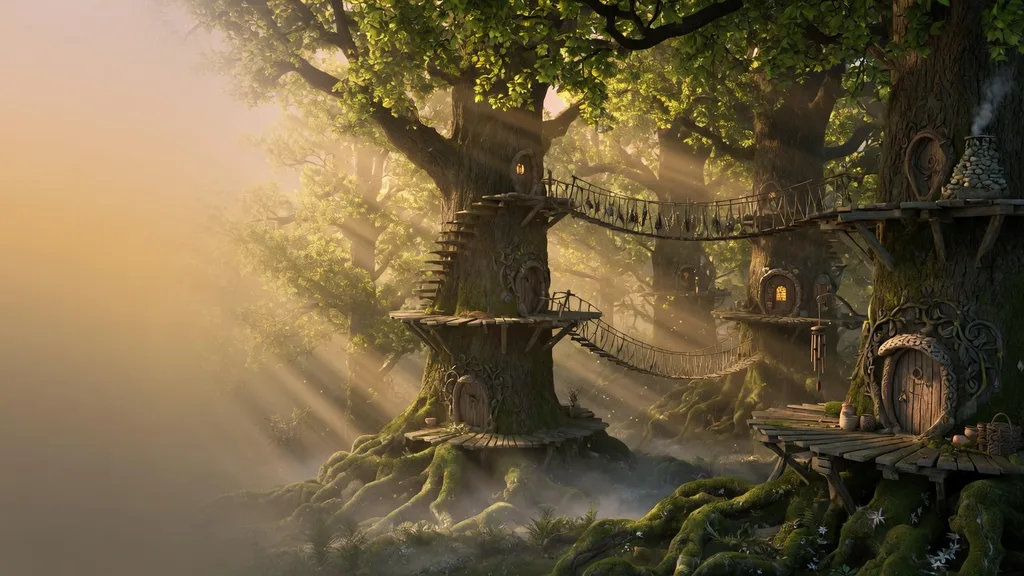
Who Wood Elves Are
Wood elves — Silvan elves in Tolkien's terms, Wood Elves in D&D 5e's — are the branch of elvenkind that never left the forest, or never wanted to. Where high elves built spires and libraries and dark elves went underground, wood elves stayed under the canopy and built a culture around what the forest actually requires: quiet movement, sharp senses, and a working relationship with everything that grows and hunts around them.
In Tolkien's Middle-earth, the Silvan elves of Mirkwood and Lothlórien are older in some ways than the High Elves who returned from Valinor, but they never adopted the same formal register — their speech and their names stayed simpler, closer to the forest floor, and proudly so. In D&D 5e, the Wood Elf subrace is built mechanically around speed and stealth, and its naming conventions follow the same instinct: names that are quick to say, easy to shout a warning with, and don't slow anyone down mid- combat.
That practicality is the whole point. A high elf name says I belong to this line. A wood elf name says I belong to this forest — and the forest doesn't care about lineage the way a royal court does.
How Wood Elf Naming Works
Wood elf names build on three optional layers, and most wood elves only ever use the first one day to day.
Given names vary by tradition. The D&D 5e pool runs soft and short — two or three syllables, softer-edged than a high elf's ceremonious phonetics (Aeron, Bellith, Corym). The Tolkien-style Silvan pool builds original combinations in that same simpler-than-Sindarin register Tolkien used for Mirkwood's folk. The Generic fantasy pool skips invented phonetics entirely and uses plain nature words — Rowan, Hazel, Fern, Sage — for anyone who just wants a name a stranger could correctly pronounce on the first try.
Grove/kin names replace the high elf's house name. Instead of a symbol of noble standing, a wood elf's second name — Oakenshade, Fernhollow, Brackenvale — marks which stretch of forest and which family line they come from. It's geography and kinship fused into one word, not a claim to status.
Forest nicknames are earned, not inherited — a name a ranger picks up for a steady aim, or a druid for a way with roots. These are the names that actually get used around a campfire, long after anyone remembers the given name that came before it.
Put the three together and you get the full arc of a wood elf's name over a lifetime: born as Aeron, raised in the Oakenshade line, and known to everyone who matters as Aeron "Swift-Arrow" by the time anyone bothers writing a story about him. Most wood elves never bother introducing themselves with all three at once — that would sound like showing off, and showing off is a very un-wood-elf thing to do.
Wood Elf Naming Roles
Not every wood elf lives the same life, and the generator's five roles shape both the flavor line and the nickname pool so the result matches what your character actually does in the forest.
| Role | Feel | Suits |
|---|---|---|
| Ranger | Quick, sure-footed, built to be shouted across a clearing | Trackers, border watchers, hunting-party leads |
| Druid | Slow, earthy, faintly rooted in the ground itself | Grove-keepers, shapeshifters, nature clerics |
| Scout | Short, silent, easy to whisper | Outriders, lookouts, first-contact runners |
| Crafter | Grounded, steady, a little proud of the work | Bowyers, carvers, fletchers, grove-builders |
| Elder | Unhurried, weighty, spoken with real patience | Grove leaders, first-generation survivors, elders |
Leave the role on Any and the generator mixes all five — a good way to browse before settling on a character concept.
Wood Elf Naming Traditions Compared
| Tradition | Sound | Best for |
|---|---|---|
| D&D 5e | Soft, short, easy to say under pressure | Tabletop Wood Elf characters |
| Tolkien-style Silvan | Simple, flowing, less formal than High Elven | Middle-earth-inspired fiction and RP |
| Generic fantasy | Plain nature words — no invented phonetics | Any setting that just needs a forest-elf name fast |
How to Use Wood Elf Name Generator
Set a tradition, choose a gender and a role, and decide whether you want a given name alone, a grove/kin name, or a forest nickname. Use the slider to pick how many names to roll, then hit Generate.
Each card shows the name, a role badge, and a short flavor line that hints at how the name would actually get used in the forest. Not happy with the batch? Roll again as many times as you like — click a card to copy it straight to your clipboard.
Example Wood Elf Name Ideas
- Ranger: Aeron Oakenshade, Rowan "Swift-Arrow", Faelor Thornvale
- Druid: Aerwyn Mossheart, Hazel the Green Whisper, Belach Fernhollow
- Scout: Corym Shadowleaf, Wren the Quick Eye, Doradir Bramblewick
- Crafter: Garwin Ashenhand, Sage the Fine Hand, Hollan Elderbrook
- Elder: Sennor Deeproot, Ivy the Grove-Keeper, Faelith Greywillow
Example Wood Elf Names
Male Wood Elf Names (D&D 5e Tradition)
- Aeron
- Bellith
- Corym
- Daelen
- Emrick
- Faelor
- Garwin
- Hollis
- Ithran
- Kaelen
- Lorin
- Merric
- Nyren
- Orvain
- Perrin
Female Wood Elf Names (D&D 5e Tradition)
- Aerwyn
- Bellara
- Corwyn
- Daelith
- Emberlyn
- Faelyra
- Garnet
- Hollan
- Ithrenna
- Kaelith
- Lorwyn
- Merrin
- Nyssara
- Orlaith
- Perrine
Generic Fantasy Wood Elf Names
- Rowan
- Ash
- Bramble
- Thorn
- Flint
- Hazel
- Wren
- Sage
- Ivy
- Willow
- Fawn
- Fern
- Juniper
- Linden
- Aster
Tips for Players and Writers
- Match the role to the story. A druid name on a border ranger creates a hook worth explaining. An elder name on a young character reads as someone who grew up faster than they should have.
- Use the grove name to anchor your setting. Oakenshade, Fernhollow, Brackenvale — each implies a specific stretch of forest the table hasn't seen yet. Let a player ask about it.
- Save nicknames for after the introduction. A forest nickname lands harder as something other characters call your wood elf, not something they announce themselves with.
- Keep the contrast visible. If your setting also has high elves or drow, make sure the wood elf names read noticeably shorter and plainer — that contrast does worldbuilding work for free.
- Pick Generic fantasy when you want speed. If you don't need invented phonetics, the plain nature-word pool gets you a usable name in one click.
- Writers, let the nickname replace the given name over time. A minor character introduced by given name can quietly become "the Root-Speaker" by the third chapter — that's how forest nicknames actually work.
About Wood Elves
Wood elves live at the practical end of elven culture, and generations spent under the canopy have shaped a people built around watchfulness, self-sufficiency, and a close working relationship with the forest rather than dominion over it.
Personality. A wood elf tends to be watchful, plainspoken, and quick to move — years spent tracking, hunting, or simply staying alive in dense forest make them sharp readers of ground and weather rather than a room full of courtiers. Many carry a dry, understated humor that reads as standoffish to outsiders and warm to anyone who's earned it. That practicality is exactly what a good wood elf name should sound like — quick, unadorned, never showy.
Naming patterns. Wood elf names tend to feature:
- A given name that's short enough to shout across a clearing without losing a syllable
- A grove/kin name, when used at all, that marks territory and family rather than status
- A role — ranger, druid, scout, crafter, or elder — that shapes both the name's flavor and the nickname it might earn
- Frequent use of earned nicknames, which often outlive the given name they replaced in everyday speech
A wood elf name is built to be used, not admired — and that usefulness is exactly what this generator is built to reproduce.
Common mistakes to avoid. The most common misstep with wood elf names is borrowing the wrong branch's phonetics — reaching for a high elf's open-vowel, house-bearing name and expecting it to read as forest-bound, or reaching for a drow's harder consonants and expecting it to read as sunlit. The second most common mistake is over-formalizing: giving a wood elf a three-part name (given, kin, title) that they'd use every day. In practice, most wood elves go by one name, and the other layers only surface when they matter — a grove name when someone asks where you're from, a nickname when someone's earned the right to use it.
Related Elf and Fantasy Generators
Wood elves are one branch of a much larger elven family. For the formal, court-bred opposite, try the high elf name generator. If your party needs someone caught between human and elven worlds, the half-elf name generator covers that split heritage. Heading toward the darker end of elvenkind, the drow name generator covers the Underdark tradition and the dark elf name generator covers the Tamriel-flavored Dunmer angle. A forest party often needs nature magic too — see the druid name generator — and if you're naming a whole culture of wood elves rather than one character, the guide on keeping names consistent for a culture is worth reading next.
FAQ for Wood Elf Name Generator
What's the difference between a wood elf and a high elf name?
High elf names are formal and court-bred — longer, house-bearing, built to be announced in a council chamber. Wood elf names are shorter, plainer, and closer to the forest floor: a single given name, a grove or kin compound instead of a house, and no ceremony behind it. If a name sounds like it belongs on a coronation guest list, it's a high elf name. If it sounds like something shouted across a clearing, it's a wood elf name. For the court-bred tradition, see the <a href="/high-elf-name-generator/">high elf name generator</a>.
Are wood elves the same as dark elves or drow?
No — they're opposite ends of the elven spectrum. Drow and dark elf names lean on harder consonants and a colder edge, built for the Underdark or a Dunmer ashland, not a forest canopy. Wood elves are surface-dwelling, sun-and-leaf creatures with a naming tradition that favors flowing, earthy sounds over anything harsh or subterranean. See the <a href="/drow-name-generator/">drow name generator</a> for the D&D Underdark tradition or the <a href="/dark-elf-name-generator/">dark elf name generator</a> for the Tamriel/Dunmer angle.
What's the difference between D&D wood elves and Tolkien's Silvan elves?
They share a family resemblance but aren't identical. D&D 5e's Wood Elf subrace is built for the game table — quick, stealthy, forest-bound, with names meant to be easy to say mid-combat. Tolkien's Silvan (Woodland) elves — the folk of Mirkwood and Lothlórien — predate D&D and use a simpler, less formal register than the High Elven Sindarin and Quenya spoken at Rivendell or Gondolin. This generator's Tradition filter keeps the two apart instead of blending them into one generic pool.
Where can I use the Wood Elf Name Generator?
It covers D&D 5e characters (the Wood Elf subrace), Tolkien-inspired fiction or RP that wants a Silvan-style name without touching Middle-earth's actual characters, and any high-fantasy setting that just needs a forest-elf name with no lore attached — that's what the Generic fantasy tradition is for. Every result is an original combination, not a name pulled from a published sourcebook or novel, so it's safe to use in homebrew or published work alike.
Do wood elves have surnames?
Not in the noble-house sense high elves use. What a wood elf carries instead is a grove or kin-line name — a compound like Oakenshade or Fernhollow that marks which stretch of forest, and which family line within it, they belong to. Some wood elves skip that entirely and are known only by a nickname earned through what they actually do: a ranger's steady aim, a druid's way with roots. The generator's Name filter lets you pick a given name alone, a given name with grove/kin compound, or a given name with an earned forest nickname.
Is there a difference between male and female wood elf names?
A light one, and tradition-dependent. In the D&D and Tolkien-style pools, male names tend to close on firmer sounds while female names favor softer, open endings — a modest pattern, not a strict rule. In the Generic fantasy tradition, most of the pool is plain nature words (Rowan, Hazel, Fern, Sage) that read as gender-flexible more often than not, which matches how a lot of real forest-themed character names actually work.
What about World of Warcraft's Night Elves — are those wood elves too?
Related in spirit, but Warcraft's Night Elves (Kaldorei) run their own naming tradition, tied to Nordrassil, the Emerald Dream, and a very specific in-game lore — different enough that we treat them separately. This generator focuses on D&D 5e Wood Elves and Tolkien-style Silvan elves. For Azeroth's races, including Night Elves, see the <a href="/world-of-warcraft-name-generator/">World of Warcraft name generator</a>.