Elf Name Generator
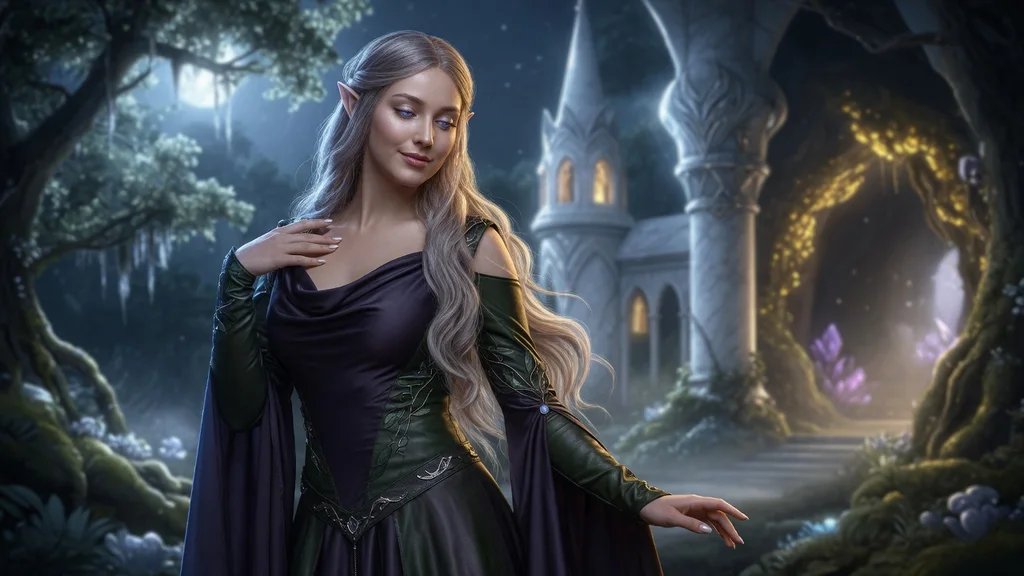
This elf name generator covers the whole elven family at once — High, Wood, Dark, Half, Sea, Snow, or a subtype-free generic elf — instead of the one flat pool most tools give you. Set a subtype, a gender, which part of the name you want (given, family, or an earned epithet), and a naming tradition — Tolkien-style, D&D 5e, or generic high fantasy — and the phonetics shift underneath you with every change. If you already know which branch you want, this page also doubles as a map: every section below points to a dedicated, deeper generator for that specific tradition.
👇 Click any name to copy it
Most searches for "elf name generator" happen before someone has settled on a subtype. Maybe the character concept is still forming, maybe the setting hasn't decided whether its elves live in forests or courts, or maybe you just want to hear a few dozen options before narrowing anything down. That's what this page is for — a wide first pass across every elven tradition, with an obvious next step once you know what you're actually building.
Every name here is an original combination, built from phonetic patterns rather than lifted from a book, game, or wiki. Click any card to copy it straight to your clipboard.
What Actually Makes a Name Sound Elvish
It isn't magic, and it isn't a specific letter showing up three times. It's a narrow, learnable set of phonetic choices that most elf names in games and fiction share, whether or not the writer could name the rule.
Liquid consonants. L, r, n, and m don't require the mouth to fully close — they let air keep moving while the sound changes. Names built around them (Elowyn, Faelaris, Sylvaren) read as smooth because they are, mechanically, smoother to say than names loaded with hard stops.
Open, connected vowels. Elvish-coded names favor vowel sounds that flow into the next syllable — ae, ia, ay, or a trailing -a or -iel — rather than short, clipped vowels boxed in by consonants on both sides. That's the difference between a name that seems to keep going after you stop saying it and one that just stops.
Absence of hard stops. K, g, b, and t work by fully closing off airflow for an instant, which is exactly what makes them useful for orc, dwarf, or goblin names — they're built to sound blunt on purpose. Strip those consonants out, or push them to the edges of a word instead of the center, and a name reads as elvish by default even without a single invented syllable.
None of this is exclusive to fantasy invention — it's the same reason "Elena" reads as softer than "Bartok" in plain English. Fantasy naming just leans on the pattern more deliberately. Our guide on why fantasy names sound fake digs into the failure mode — names that use elvish-adjacent letters (extra y's, apostrophes) without the underlying mechanism — and how we build fantasy names explains the phoneme-level approach this site's generators use instead of guessing. Naming a party with more than elves in it? The fantasy name generator covers every race in one place.
Syllable count matters too, and it's easy to overcorrect. Two or three syllables is the sweet spot for most elven names — long enough to carry the melodic quality, short enough that a table can say it under pressure mid-combat. Four-syllable names look gorgeous on a character sheet and get mangled the moment someone has to shout them across a battlefield. If a name feels like it needs a run-up before you can say it, it's usually one syllable too long for actual table use, whatever branch it belongs to.
Two Names, Sometimes Three — The D&D Naming Convention
Dungeons & Dragons doesn't leave elf naming to guesswork. The Player's Handbook spells out an actual mechanic, and it's more interesting than most character creation rules get to be.
An elf receives a childhood name from a parent shortly after birth — soft, often diminutive, the kind of name a toddler answers to. Then, somewhere around their hundredth year (barely adulthood, for a race that can live seven centuries), the elf chooses their own adult name. This isn't a footnote; it's a genuine coming-of-age ritual, a moment where the character decides who they want to be heard as for the next six hundred years. On top of both of those sits a family or clan name, carried for life and rarely dropped even when the given name changes.
Most character sheets only ever show one of these three layers, which is a shame — the mechanic hands you a built-in plot hook for free. An elf who still goes by their childhood name at two hundred years old is telling you something about them without a single line of backstory. So is one who's changed their adult name twice.
Elves Live a Long Time — What That Does to a Name
Longevity changes naming in ways that are easy to overlook until you actually sit with the math. A human gets one name for maybe eighty years. An elf who lives seven or eight centuries outlives that same name many times over — outlives the fashions that made it sound current, outlives most of the people who knew why it was chosen, sometimes outlives the language it was coined in.
That's part of why nicknames matter so much in elven fiction. A name given by shorter-lived neighbors — humans, halflings, dwarves — who never quite mastered the original pronunciation often outlasts the "real" name in everyday use. It's also why an elder elf's name can sound noticeably different in register from a young elf's: language itself drifts over centuries, and the oldest elves are, in effect, walking around with names from an earlier stage of their own culture's speech.
This generator's epithet option leans on exactly that idea — a given name paired with something earned rather than granted, the kind of secondary name that tends to stick after enough centuries of use.
Tolkien's Two Elvish Tongues — Quenya vs Sindarin
Tolkien didn't invent one elf language; he built several, and the two that matter most for naming are Quenya and Sindarin — genuinely different languages with their own grammar and sound, not two dialects of the same thing.
Quenya is the older, more formal tongue — sometimes called "Elf-Latin" by readers, since Tolkien built it with heavy Finnish influence and used it the way medieval Europe used actual Latin: ceremony, scholarship, naming conventions that outlast the spoken language around them. It's the register you'd reach for if a name needs to sound ancient and a little removed from daily use.
Sindarin is the living, everyday Elvish of Middle-earth in the Third Age — Welsh-influenced, spoken by the Grey Elves and used casually across most of the elven settlements readers actually visit in The Lord of the Rings. Legolas speaks Sindarin day to day; Quenya shows up in inscriptions, songs, and formal address, closer to how Latin survived in Church ritual long after it stopped being anyone's first language.
Neither language is reproduced here — Tolkien's actual vocabulary and grammar remain his estate's, and this generator builds original, Tolkien-style sounds rather than functioning Elvish. But the distinction matters for naming instinct: a "Quenya-feeling" name should read as older and more formal than a "Sindarin-feeling" one, even when neither is a real word in either language.
The Six Elven Branches, Compared
Every elven naming tradition on this site in one table — sound, primary source, typical length, and a quick example so you can hear the difference before picking a page.
| Branch | Sound | Primary source | Typical length | Example |
|---|---|---|---|---|
| High Elf | Formal, open-vowel, ceremonious | D&D 5e, WoW, high fantasy | 2–4 syllables + house name | Aelendir Sunspire |
| Wood Elf | Short, earthy, practical | D&D 5e, Tolkien's Silvan elves | 1–2 syllables | Aeron |
| Dark Elf | Harder consonants, colder | TES Dunmer, generic dark fantasy | 2–3 syllables + House/tribe | Ralon Redoran |
| Half-Elf | Split — human or elven, or both | D&D 5e | Varies by heritage | Joren Galanodel |
| Blood Elf | Arcane, apostrophe-marked | World of Warcraft (Sin'dorei) | 2–4 syllables + surname | Sel'anir Sunwhisper |
| Drow | Sharp, apostrophe-heavy, matriarchal | D&D 5e Underdark | 2–3 syllables + House | Zhaun Xar'tel |
Pick Your Branch
The generator above rolls names across all six branches at once, but each one has its own dedicated page with deeper filters, larger pools, and lore built for that specific tradition. Here's what actually sets them apart.
None of these six traditions is "more correct" than another — they're answers to different questions. High Elf and Wood Elf split along a formal-versus-practical axis within the same broad "surface elf" family. Dark Elf and Drow both live at the colder, harder-consonant end of the spectrum, but come from different source material (Elder Scrolls lore versus D&D's Underdark) and shouldn't be treated as interchangeable even though search engines often blur the two together. Half-Elf sits outside the axis entirely, since it borrows rather than owns a tradition. And Blood Elf is the one branch tied to a single specific franchise rather than a broad fantasy archetype — treat it differently from the rest if your project isn't World of Warcraft-adjacent.
High Elf — Court-Bred and Ceremonious
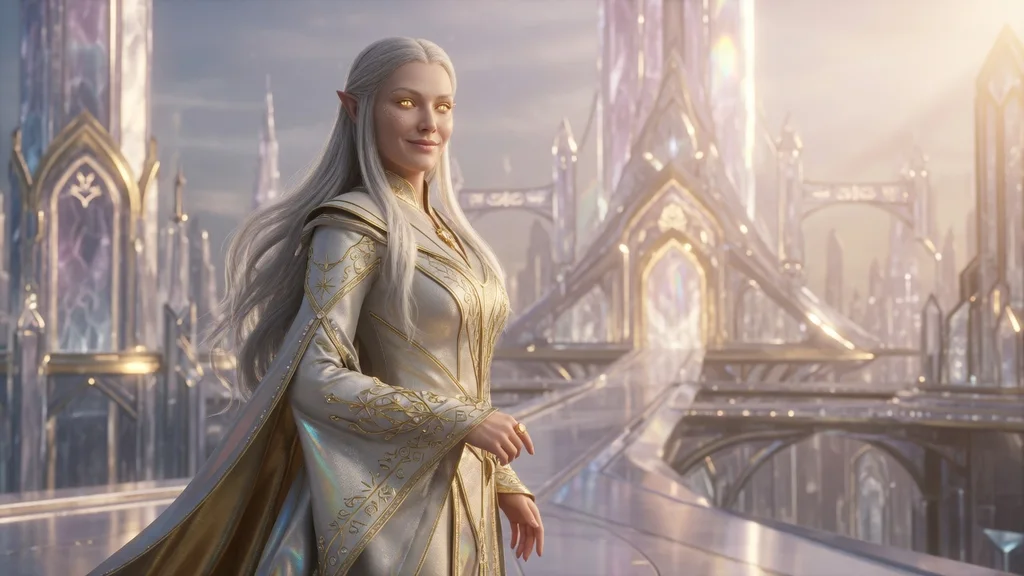
High elves sit at the formal end of elvenkind: the oldest, most institution-bound branch, built around court manners, inherited house names, and centuries of stable memory. Phonetically, that formality shows up as long, open-vowel names with liquid consonants doing most of the work — Aelendir, Sylaria, Thalorion — plus a house name (Sunspire, Starcrest) that signals lineage the moment it's spoken.
If your character is a diplomat, a mage, a council seat, or anyone whose name needs to survive being announced in a throne room, this is the branch. It's also the closest match for World of Warcraft's original high elves and shares real phonetic DNA with blood elves.
Go to the High Elf Name Generator → for a Noble/Arcane/Ancient/Martial tone filter and a full house-name system.
Wood Elf — Forest-Bound and Practical
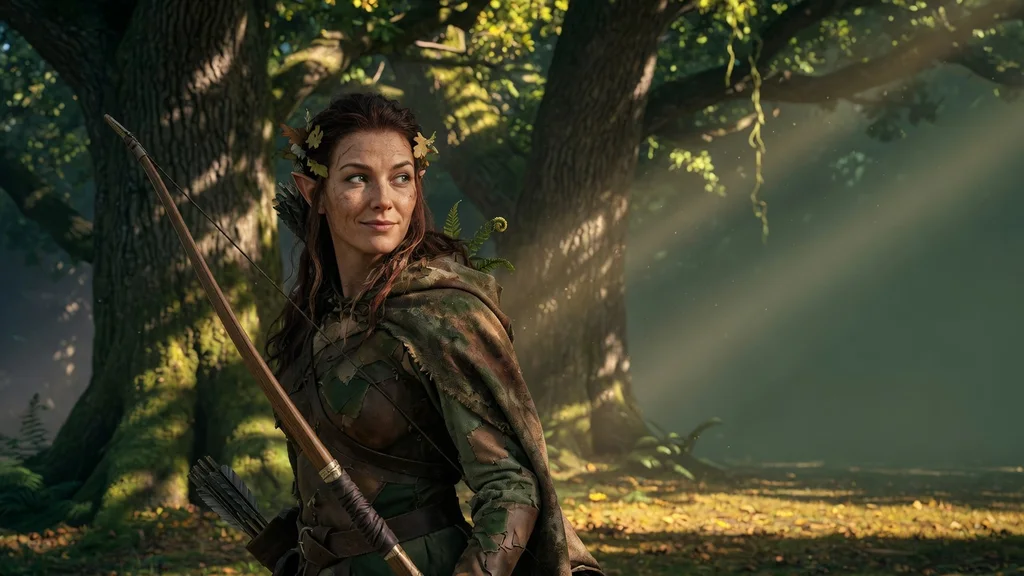
Wood elves are the opposite instinct: shorter, plainer names with no house layer at all, built to be shouted across a clearing rather than announced in a hall. D&D 5e's Wood Elf subrace and Tolkien's Silvan elves of Mirkwood and Lothlórien both sit here, alongside a generic-fantasy register that skips invented phonetics entirely in favor of plain nature words like Rowan, Hazel, or Thorn.
Instead of a noble surname, wood elves carry a grove or kin compound — Oakenshade, Fernhollow — or go by a nickname earned through what they actually do in the forest. It's the right branch for rangers, druids, and anyone whose name should read as functional rather than decorative.
Go to the Wood Elf Name Generator → for a Tradition filter (D&D 5e / Tolkien-style / Generic) crossed with five forest roles.
Dark Elf — Tamriel's Dunmer, and the Wider Umbrella
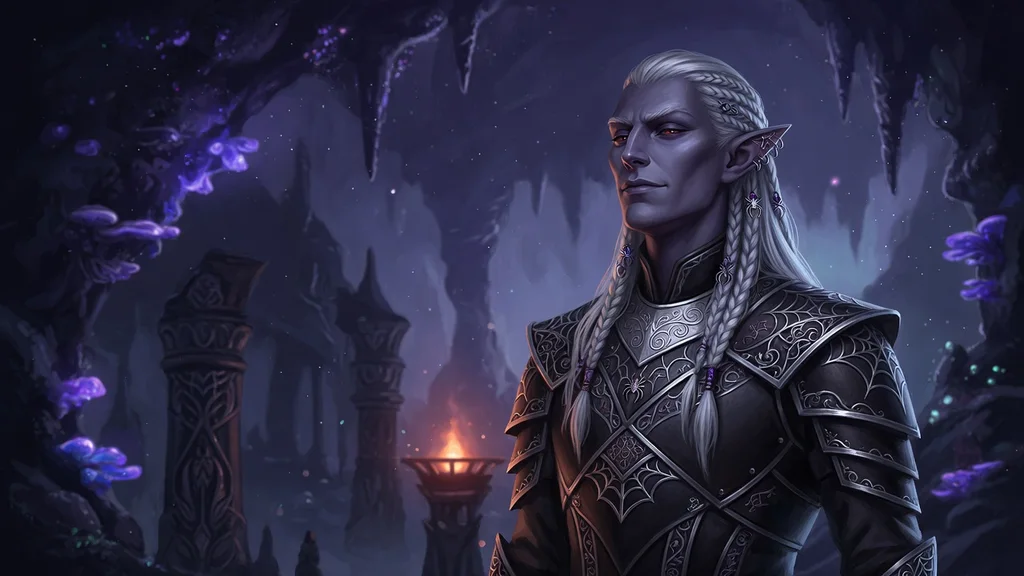
"Dark elf" is a broader label than most people expect. Our dedicated Dark Elf page leads with the Elder Scrolls' Dunmer — ash-grey skin, red eyes, five ruling Great Houses, and Ashlander clans that never joined that system — because it's the deepest, least-covered angle in the space. It also folds in lighter D&D drow-style, Warhammer-style, and generic dark-elf modes for completeness.
The phonetics run colder and harder-edged than any surface-elf branch: fewer open vowels, more consonant weight, names that sound like they could give an order rather than sing one.
Go to the Dark Elf Name Generator → for Great House and Ashlander tribe options across the Dunmer tradition.
Half-Elf — Two Worlds, One Name
Half-elves don't inherit a naming tradition of their own; they borrow one from whichever culture raised them. A human-raised half-elf usually carries a plain, grounded human name. An elf-raised half-elf carries something flowing and vowel-soft. A blended upbringing produces the most distinctive result of all — a human given name beside an elven surname, or the reverse, the mismatch itself signaling a character caught between two worlds.
This is the branch for a diplomat, a translator, or anyone whose backstory hinges on not fully belonging to either side of their heritage.
Go to the Half-Elf Name Generator → for a Human-raised / Elf-raised / Blended heritage filter.
Blood Elf — Sin'dorei, Specifically World of Warcraft
Unlike the other five branches, blood elf names aren't a generic fantasy register — they're tied specifically to World of Warcraft's Thalassian language and the Sin'dorei of Quel'Thalas. Expect apostrophe-marked cadence, arcane-leaning compounds, and surnames built in the Sunwhisper/Dawnblade style: a vivid noun welded to a second noun or verb.
If your project is specifically WoW-adjacent — a character alt, guild RP, fan fiction set on Azeroth — this branch will read as more authentic to that setting than a generic elven name ever could.
Go to the Blood Elf Name Generator → for Noble/Arcane/Fel-touched tone options and full Thalassian surname pairing.
Drow — D&D's Matriarchal Underdark Elves
Drow get their own dedicated page separate from the wider dark-elf umbrella because the lore is specific and deep enough to earn it: a matriarchal, House-bound society answering to the priesthood of a spider goddess, exiled generations ago into the Underdark. Names run short and sharp, built on hard stops and liquid consonants colliding across an apostrophe — Zhaun, Vondressa — with an optional House name (Xar'tel, Vel'ryn) carrying real political weight.
This is the branch for Underdark campaigns, exiles, and any character whose name needs to sound like it could give an order in a temple.
Go to the Drow Name Generator → for a Noble/Priestess/Warrior/Exile tone filter and an optional House name toggle.
Elves You Already Know (as Examples Only)
A few well-known elven characters help anchor these traditions in something familiar — used here strictly as explanatory examples, never reproduced by this generator or any of its six sibling pages.
- Legolas (The Lord of the Rings) — a Sindarin-speaking Wood Elf prince, and the character most people picture when they hear "elf name."
- Arwen (The Lord of the Rings) — a half-elven character whose lineage sits at the exact intersection our Half-Elf branch covers.
- Drizzt Do'Urden (Forgotten Realms novels) — the best-known drow in fiction, and the reason "drow" reads as its own recognizable naming tradition rather than a Dark Elf subcategory.
- Sylvanas Windrunner (World of Warcraft) — a high elf turned Banshee Queen whose surname is textbook Thalassian compound-naming, relevant to both the High Elf and Blood Elf branches.
This site isn't affiliated with the Tolkien Estate, Wizards of the Coast, or Blizzard Entertainment. These names exist purely as reference points for how the real traditions sound — every result the generators produce is an original combination.
How to Use This Elf Name Generator
Set a subtype — or leave it on Any subtype to browse the whole elven family — choose a gender, pick which name part you want (given name alone, a family/house name, or a given name with an earned epithet), and set a tradition (Tolkien-style, D&D 5e, or generic high fantasy). Use the slider to choose how many names to roll, then hit Generate.
Each card shows the subtype badge, the tradition it landed on, and a short flavor line. Not happy with a batch? Roll again — the pools are large enough that repeats stay rare — and click any card to copy it to your clipboard.
Tips for Choosing an Elf Name
- Start broad, then specialize. Use this page to hear a spread across branches, then jump to the matching dedicated generator once you've found a sound you like — it'll have more filters and a bigger pool.
- Match phonetics to setting, not just vibe. A high elf name in a wood elf's forest reads as a plot point (why does this ranger sound like a courtier?) unless that's intentional.
- Say it out loud. Elvish-coded names are built to flow — if you're tripping over consonant clusters, the name probably drifted toward a harder branch than you meant.
- Use the family/house layer as a hook. A house or clan name implies a history nobody at the table has heard yet. Let someone ask about it.
- Save the epithet for later. A name earned through centuries of use lands harder as something other characters call your elf, not something they introduce themselves with.
- Don't mix traditions inside one culture. If your setting has a specific elven nation, keep its names inside one tradition (all D&D 5e, or all Tolkien-style) so the culture reads as internally consistent.
Example Elf Names
High Elf (Tolkien-style)
- Aelion
- Caeladar
- Eolorn
- Faalethil
- Ilyandir
- Lornorion
- Sylwen
- Thaliel
- Quelianna
- Oroeth
Wood Elf (D&D 5e)
- Brenar
- Dornin
- Faelmael
- Garric
- Holton
- Nyra
- Perressa
- Rowewyn
- Talara
- Caelin
Dark Elf (Generic high fantasy)
- Voren
- Zethal
- Ilan
- Karor
- Nysyn
- Skarra
- Vhaelie
- Dreshana
- Moric
- Orya
Half-Elf, Sea Elf, and Snow Elf (mixed traditions)
- Anderin (Half-Elf)
- Halo Stonewood (Half-Elf)
- Corar the Tidewise (Sea Elf)
- Vasha Coralsong (Sea Elf)
- Fennion the Frostbound (Snow Elf)
- Isolde Glacierfall (Snow Elf)
Frequently Asked Questions
Straight answers to the questions people actually search alongside "elf name generator."
FAQ for Elf Name Generator
What makes a name sound like an elf name?
Mostly the consonants you leave out. Elvish-coded names lean on liquids — l, r, n, m — strung between open vowels, and they avoid the hard stops (k, g, b, t) that make orc or dwarf names sound blunt. Say Elowyn and Grondak aloud back to back and the difference isn't vocabulary, it's mouth movement: one flows, one stops. Our guide on <a href="/guides/why-fantasy-names-sound-fake/">why fantasy names sound fake</a> breaks down the mechanics further, and <a href="/guides/how-we-build-fantasy-names/">how we build fantasy names</a> covers how this site applies that logic across every generator.
What's the difference between an elf name generator and a specific one like high elf or drow?
This page is the overview — it runs across every branch at once and is the right starting point if you haven't picked a subtype yet. The six dedicated pages (High Elf, Wood Elf, Dark Elf, Half-Elf, Blood Elf, Drow) go much deeper on one branch each: more filters, more lore detail, larger name pools tuned to that specific tradition. Once you know which branch you want, jump to its page from the table below.
Do elves have one name or several over their lifetime?
Depends on the tradition, but multiple names is common. D&D 5e elves in the Forgotten Realms canonically pick up a childhood name, then choose an adult name around the century mark, and carry a family or clan name their whole life — three layers, not one. On top of that, an elf who lives for centuries often picks up nicknames from shorter-lived neighbors who never learn to pronounce the original.
What's the difference between Quenya and Sindarin?
Both are Tolkien's constructed Elvish languages, but they're not interchangeable. Quenya is the older, more formal "Elf-Latin," used ceremonially and by the High Elves who journeyed to Valinor. Sindarin is the everyday tongue of Middle-earth's Grey Elves, the language Legolas and most of the elves in The Lord of the Rings actually speak day to day. A name built on Quenya roots reads as older and more ceremonial than the same idea rendered in Sindarin.
Which elf subtype should I pick if I'm not sure?
Match the sound to the role. Court mage or noble — High Elf. Ranger, druid, or forest-dweller — Wood Elf. Anything villainous, Underdark, or Tamriel's Dunmer — Dark Elf or Drow. A character split between two cultures — Half-Elf. Coastal or seafaring campaign — Sea Elf. Arctic setting — Snow Elf. If none of that narrows it down, leave the subtype on "Any" here and let the generator show you a spread before committing to a dedicated page.
Are these names safe to use in D&D, published fiction, or a WoW guild?
Yes. Every name pool in this generator and its six sibling pages is an original combination — no canon character names, no copied lore text. This site isn't affiliated with Wizards of the Coast, Blizzard Entertainment, the Tolkien Estate, or any other rights holder; canon figures like Legolas, Drizzt Do'Urden, or Sylvanas Windrunner only appear here as explanatory examples, never as generator output.
What is the D&D full-name convention for elves?
The Player's Handbook lays it out directly: an elf receives a birth name from a parent, keeps that childhood name until they choose their own "adult" name around the century mark, and carries a family name on top of both. In practice most character sheets only show one layer, but the full convention gives you a built-in reason for a name to change mid-campaign or for an elf to go by something other than what their parents picked.
Related Elf and Fantasy Generators
This page is the hub — every branch below has its own deeper generator. Start with the high elf name generator for court-bred names, the wood elf name generator for forest-bound ones, or the dark elf name generator and drow name generator for the colder end of elvenkind. Blended heritage lives at the half-elf name generator, and World of Warcraft's specific tradition lives at the blood elf name generator. For the language all of these ultimately draw from, the Lord of the Rings name generator covers Sindarin, Quenya, and Middle-earth's other peoples in full, and the D&D character name generator rounds out a party with every other playable race.