Templar Name Generator — Orders, Ranks & Region
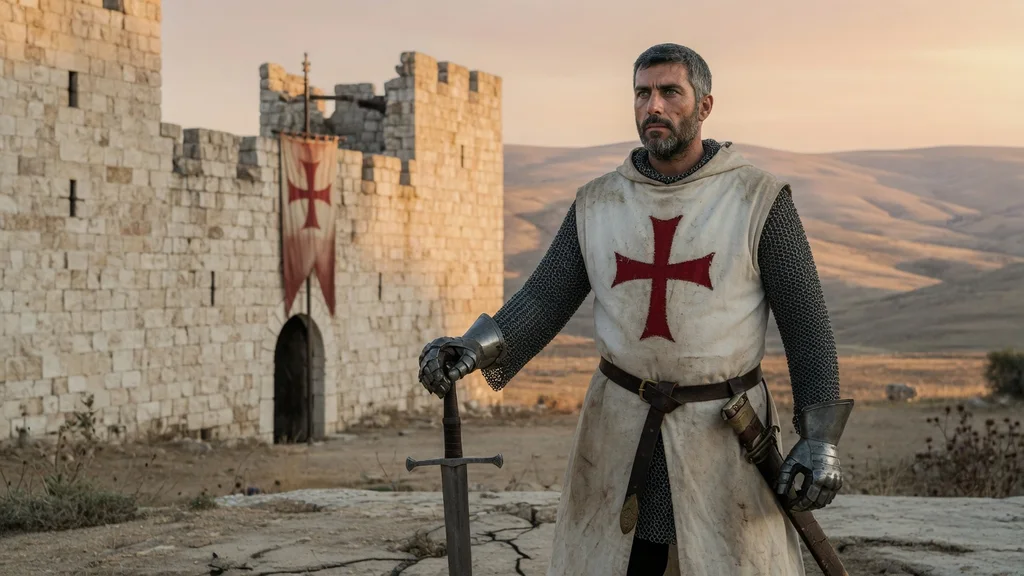
This templar name generator builds names for members of a religious-military order — Templar, Hospitaller, Teutonic, Santiago, or one you invent — combining a rank, a given name, and the territorial "de" naming that marked where a knight came from before he took his vows. It's a different animal from a feudal knight: a templar gave up land and family name at the door of the chapter house, and the name that's left reflects that.
👇 Click any name to copy it
Pick an order for the flavor — white mantle and red cross for the Templars, black mantle and white cross for the Hospitallers, the German-speaking Teutonic Order, or the married knights of Santiago. Pick a rank for the hierarchy, from Grand Master down to Sergeant. Pick a region for the given-name and toponym pool the name draws from. Set gender to Female for the fantasy branch — historical templar orders were male-only monastic institutions.
Get a batch, keep the ones that fit, generate again. Click any card to copy the name.
How to Use the Templar Name Generator
- Pick an order. Templar, Hospitaller, Teutonic, and Santiago each carry a different mission and a different set of vows — see the comparison table below. Or pick Invented Order to build something that isn't tied to real history.
- Pick a rank. Grand Master and Marshal are rare and senior; most named characters in a militant order should sit at Commander, Knight-Brother, or Sergeant.
- Pick a region of origin. This drives the given-name pool and the toponym used in the "de [place]" form — French, Norman, Iberian, German, or English.
- Set gender. Male is the historical default for every order except the fantasy branch; Female is explicitly the fantasy take, since the real orders required male celibate vows.
- Generate, and click a card to copy. Run it again with different filters to compare a French Templar Commander against a German Teutonic Marshal, or a married Santiago knight against an invented order's Grand Master.
Not a Knight: How Templar Names Actually Work
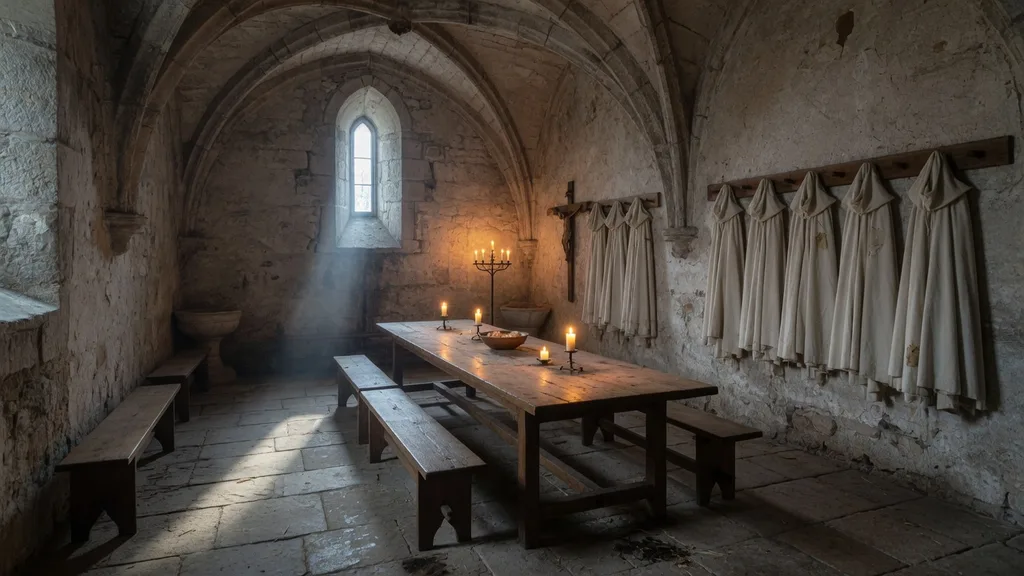
It's worth being precise about what a templar is, because the word gets used loosely. A knight, in the feudal sense our knight name generator covers, holds land from a lord in exchange for military service — his identity runs on family, holding, and title. A templar belongs to something closer to a monastery that fights: a religious order bound by vows of poverty, chastity, and obedience, governed by a Rule, answering to a Grand Master and, above him, the Pope. The two overlap — a templar was very often a knight before he took vows — but the naming logic diverges sharply once he does.
The given name stayed. Baptismal names didn't change at the vows — Hugues, Bertrand, Gerard, Konrad, Rodrigo. What changed was everything built on top of it.
The family name mostly vanished. A knight entering a militant order renounced personal property, and with it, in most documented cases, the use of an inherited family name. What replaced it was a territorial marker — de plus the place he (or his family) came from. Not a surname in the modern, hereditary sense; a geographic tag that told the Order, and everyone else, where this brother was from before he arrived.
The rank governed address. A Grand Master was addressed and recorded differently from a Marshal, a Marshal differently from an ordinary knight-brother. Rank in a militant order wasn't decorative — it carried real authority over men, money, and castles, and the records reflect that in how names were written down.
Class shaped the name too. Knight-brothers were, in most orders, drawn from minor nobility and kept the "de + toponym" pattern. Sergeant-brothers — the larger, less-studied part of every order's membership — were commonly born, often skilled tradesmen or farmers before they joined, and rarely carried a territorial "de" name at all. That distinction is why the generator's Sergeant rank drops the toponym for a trade byname instead: it's a small detail, but it's the kind of detail that separates a researched name from a generic one.
Entry into an order was itself a formal, witnessed process, not a quiet enlistment. A candidate appeared before the chapter — the assembled brothers of a commandery — and was questioned about debts, existing marriage vows, and any prior oath to another order, all of which could bar admission. He was asked, formulaically, whether he sought to join for God's sake and the sake of his own soul. Only after an unambiguous yes was the mantle brought in and the vows administered. That ceremony is why the name that follows sounds the way it does: it's not a nickname somebody picked up in the field, it's the identity the Order formally recorded at admission.
The Orders — What Each One Was and How They Differ
"Templar" gets used as shorthand for the whole category of militant religious orders, but the real orders differed in mission, dress, and rules — and those differences are worth knowing before you pick one for a character.
| Order | Founded / era | Mission & dress | Vows |
|---|---|---|---|
| Knights Templar | c. 1119, Kingdom of Jerusalem | Protected pilgrim roads; white mantle, red cross | Poverty, chastity, obedience — full monastic |
| Knights Hospitaller | Founded as a hospital c. 1099, militarized soon after | Care for the sick and pilgrims first, war second; black mantle, white cross | Poverty, chastity, obedience — full monastic |
| Teutonic Order | c. 1190, later shifted to the Baltic crusades | German-speaking; white mantle, black cross | Poverty, chastity, obedience — full monastic |
| Order of Santiago | 1170, Kingdom of León | Reconquista in Iberia; red cross shaped like a sword | Obedience and marital fidelity — married knights permitted |
The Santiago exception matters for fiction: it's the historical order where a married knight, a family lineage, and a militant religious vocation weren't contradictions. If your character has a spouse and children and still needs the gravity of a holy order, Santiago is the historically grounded choice — the Templars and Hospitallers won't fit that story without bending the facts.
Rank, from Sergeant to Grand Master
Every militant order ran on a hierarchy, and the titles below map roughly across the Templars, Hospitallers, and Teutonic Order, though exact duties and names shifted by century and by order.
| Rank | Role | Name form in the generator |
|---|---|---|
| Grand Master | Supreme authority over the whole Order, elected for life | Grand Master [given] de [place] |
| Marshal | Military commander — discipline, equipment, battle order | Marshal [given] de [place] |
| Seneschal | Deputy to the Grand Master; administration and precedence | Seneschal [given] de [place] |
| Commander | Ran a single commandery — a local estate and its knights | Commander [given] de [place] |
| Knight-Brother | Ordinary knight of the Order, usually minor nobility | Brother / Sister [given] de [place] |
| Sergeant | Non-noble fighting member, often a former tradesman | Sergeant [given] the [trade] |
| Chaplain | Ordained priest attached to the Order, said Mass and heard confession | Chaplain [given] de [place] |
Grand Master is a title people reach for automatically because it's the most famous, but it's the rarest by definition — one man held it at a time, for the whole Order, often for decades. A story with three Grand Masters wandering the same abbey has a research problem. Commander and Knight-Brother are the workhorse ranks; that's where most named characters in a militant order should actually sit.
Region of Origin — Why It Changes the Name
Militant orders recruited internationally, and a knight's region of origin shaped his given name and the sound of his toponym long before he ever took a vow. The generator's five regions reflect the orders' real recruiting grounds.
- French — the Templars' founding heartland. Hugues de Payns himself came from Champagne, and the Order's first chapter met in Troyes; French given names and toponyms dominate the earliest Templar records.
- Norman — heavy overlap with Crusade-era England and Normandy, the same stock that produced most of the English aristocracy after 1066. Harder consonants, Latin-French given names, a slightly different toponym set from mainland France.
- Iberian — the Reconquista frontier. Order of Santiago home ground, and also where the Templars and Hospitallers held major fortress-commanderies like Calatrava and Uclés, defending the shifting Christian-Muslim border.
- German — the Teutonic Order's core recruiting ground before it pushed north into the pagan Baltic in the thirteenth century, eventually carving out its own state in Prussia.
- English — Templar and Hospitaller preceptories dotted England for nearly two centuries, right up to the Order's suppression in 1312; the Temple Church in London still stands as physical evidence.
Mixing order and region freely is historically plausible, not a stretch — orders recruited across borders constantly and the surviving membership rolls show it. A German knight-brother in a Templar commandery in Iberia, or an Englishman rising to Marshal in a mostly-French chapter, both happened in the real record. Don't feel locked into the "obvious" pairing (Templar-French, Teutonic-German, Santiago-Iberian) if your story needs an outsider inside an order — that outsider status is often more interesting than the default.
Famous Order Members — For Reference, Not for Output
These are documented historical figures, useful as a reference for how real templar names were actually recorded — not names the generator will hand you, and not names to put in a character's mouth without changing something. Use them to calibrate what "sounds right," the same way a writer studies real dialogue before inventing fictional voices.
| Name | Order & role | Why the name is instructive |
|---|---|---|
| Hugues de Payns | Knights Templar, first Grand Master | Textbook given-name + territorial "de" form; Payns is a village near Troyes |
| Bertrand de Blanchefort | Knights Templar, sixth Grand Master | Shows the "de" toponym calcifying toward a hereditary noble surname over generations |
| Gérard de Ridefort | Knights Templar, tenth Grand Master | A Flemish-born knight with a French-form name — recruitment crossed borders freely |
| Jacques de Molay | Knights Templar, last Grand Master (executed 1314) | The name most associated with the Order's suppression and the myths that followed it |
| Raymond du Puy | Knights Hospitaller, second Grand Master | Wrote the Hospitaller Rule that formalized the care-of-the-sick vow ahead of the martial one |
| Hermann von Salza | Teutonic Order, Grand Master | German "von" doing the same territorial job as French "de" — same convention, different language |
Building an Invented Fantasy Order
Real orders make a strong template, but plenty of settings want something that isn't a reskin of history. The Invented Order filter is built for that — it keeps the naming structure (rank, given name, territorial marker) while freeing you from the historical constraints on mission, membership, and vows.
Three questions make an invented order feel designed rather than default:
- What is it sworn to protect? A place, a relic, a bloodline, a sealed door — the object of the vow shapes everything else about the order's culture.
- What do members give up? Property and family name is the historical default; a fantasy order could take something stranger — a true name, a memory, a season of the year.
- Who's allowed in? The historical orders were male, celibate, and largely noble by birth. An invented order can break any or all of that — mixed-gender chapters, no celibacy requirement, sergeants who outrank knight-brothers by merit. Deciding this on purpose, rather than defaulting to the historical pattern, is what makes the order feel like it belongs to your world.
For more on how titles, epithets, and earned bynames work across fantasy and history more broadly, see our guide to epithets, titles, and bynames.
Example Templar and Order Names
Knight-Brothers and Officers
- Brother Hugues de Payns
- Commander Bertrand de Blois
- Marshal Konrad de Marburg
- Seneschal Rodrigo de Toledo
- Grand Master Fulk de Vermandois
- Brother Baldwin de Bayeux
- Chaplain Étienne de Sens
- Commander Heinrich de Speyer
- Sister Alix de Provins (fantasy)
- Brother Diego de León
- Marshal William de York
- Seneschal Otto de Nuremberg
Sergeants
- Sergeant Robert the Smith
- Sergeant Girard the Mason
- Sergeant Pedro the Farrier
- Sergeant Kuno the Cooper
- Sergeant Osbert the Fletcher
- Sergeant Gonzalo the Tanner
Orders and Titles
- Grand Master
- Marshal
- Seneschal
- Commander
- Knight-Brother
- Sergeant
- Chaplain
Using Templar Names in D&D and Fiction
Paladins and oath-bound characters fit the templar naming pattern almost exactly — a paladin who belongs to a knightly order rather than acting alone gains texture from a rank and a territorial name, not just a class label. If your paladin doesn't belong to an order, our paladin name generator is built for the lone oath-taker instead.
Clerics and warlocks with an institutional backstory also benefit from a militant order rather than a vague temple affiliation. A cleric who trained as a Hospitaller-style chaplain before multiclassing into something stranger already has a built-in reason to know battlefield triage and church Latin. A warlock whose patron infiltrated a militant order generations ago gets an instant conspiracy hook, and the order's rank structure gives the DM ready-made NPCs to slot the warlock's rivals into.
Video game and campaign factions that borrow the "holy order" shape — guilds, chapters, brotherhoods — read as more designed when their internal titles are consistent. If a game's lore names a "Grand Commander" in one scene and a "High Marshal" of the same rank in the next, players notice. Pick a rank ladder from the table above, or invent one, and hold the line on it for the rest of the project.
Antagonist orders benefit from the same rigor as heroic ones. A corrupt militant order is scarier when its Grand Master has a real name and its Commanders run real commanderies, rather than a vague "Dark Templars" label with no internal structure.
Worldbuilding a crusade-era setting — for kingdoms, castles, and the wider medieval texture around a militant order, see the medieval name generator for real-world names by class and region, and read our guide on character naming by social class to keep a Grand Master, a landed knight, and a sergeant-brother sounding like they actually come from different rungs of the same world.
Don't confuse the ranks. A story where every named order member is a Grand Master or a Commander reads as flat. Let most named characters sit at Knight-Brother or Sergeant — that's where the actual membership was, and it's where the interesting, lower-stakes drama usually lives too.
Tips for Writing Militant-Order Characters
- Drop the "de" for sergeants, deliberately. If a sergeant-brother in your story suddenly gets a territorial name, make it a plot point — someone's implying he's better-born than he's let on, or he's lying about it.
- Let rank change how a character is addressed, not just what they're called. A Grand Master is "my lord" even to a king's herald; a sergeant is addressed by his given name and trade. That gap in courtesy is free characterization.
- Vows create conflict for free. A Templar or Hospitaller who broke celibacy, or a knight torn between the Order's obedience and a king's command, doesn't need an invented backstory — the vow itself is the fault line.
- Don't give every named character a rank. A commandery had far more anonymous brothers than officers. A rank-and-file Knight-Brother or Sergeant without a title in front of his name reads as more grounded than an army of Commanders.
- Match the order to the region on purpose or subvert it on purpose. A French Templar in Iberia is unremarkable. A Santiago knight born in Germany raises a question worth answering in the story.
- Reserve "Grand Master" for one character, ever, per order. It's a title people overuse because it sounds impressive. One per order, full stop — that's what makes it mean something when it appears.
A Note on the Templar Myths
No topic in medieval history attracts more speculation than the Templars, and it's worth separating what's documented from what's legend before writing either into fiction.
Documented: the Order operated a sophisticated financial network across Europe and the Levant, effectively an early international bank, letting pilgrims deposit funds in one country and withdraw them in another. King Philip IV of France, deeply in debt to the Order, orchestrated the arrest of Templars across France in 1307 on charges of heresy; Pope Clement V dissolved the Order in 1312 under pressure. The last Grand Master, Jacques de Molay, was burned at the stake in 1314.
Legend, not documented history: buried treasure that escaped confiscation, a secret bloodline connection to the Holy Grail, a direct institutional lineage into Freemasonry. These ideas make for excellent fiction — plenty of good novels run on them — but they belong in the story as legend, not as historical fact dressed up as one. If a character in your world believes the Templars hid something, that's a fine plot hook; just don't let the narration state it as settled history.
FAQ for Templar Name Generator
What's the difference between a templar name generator and a knight name generator?
A knight is a feudal title tied to land and a lord — the output is a given name plus a noble surname or holding, sometimes an epithet. A templar is a member of a religious-military order who gave up land and family name at the vows: the output is a rank, a given name, and a territorial 'de' name marking where the knight came from, not what he owns. If you want a landed noble in a royal court, use the knight name generator. If you want an oath-bound member of a militant order, use this one.
Were all Knights Templar named the same way?
No — naming followed status inside the Order. Knight-brothers, who were usually already minor nobility, kept the given-name-plus-'de'-toponym pattern from their birth region: Hugues de Payns, Gérard de Ridefort. Sergeant-brothers, who were commonly born and often skilled tradesmen, typically didn't carry a 'de' name at all — the generator's Sergeant rank reflects that by dropping the toponym for a trade byname instead.
Is the Order of Santiago the same as the Knights Templar?
No, and the difference is bigger than geography. The Order of Santiago was founded in Castile to fight in the Reconquista, and — unlike the Templars and Hospitallers — its knights were permitted to marry. The Templars and Hospitallers required full monastic celibacy. Pick Santiago in the generator for an order that fits a married knight or a family lineage; pick Templar or Hospitaller for a knight who renounced all of that at the vows.
Can women be Templars in the generator?
The generator's Female option is explicitly the fantasy branch. Historically, the Templars, Hospitallers, and Teutonic Order required male celibate vows, and no female knight-brothers are documented in their ranks. If your setting wants an all-female or mixed holy order, use the Invented Order filter — it's built for exactly that, and the generator will use 'Sister' in place of 'Brother' for the Knight-Brother rank.
What does the 'de' in a templar's name mean?
It's a territorial marker, not a family name — it points at the place a knight (or his family) held land or came from before he took vows, the same convention used across Norman and French nobility. 'Hugues de Payns' means Hugues from Payns, a village near Troyes. It's not hereditary in the way a modern surname is, though these territorial names did eventually calcify into family surnames over generations.
What rank is above a Templar Knight-Brother?
Commander, then Seneschal, then Marshal, then Grand Master at the top — though the exact hierarchy and titles varied by order and by era. A Commander ran a single commandery (a local estate and its knights); a Marshal oversaw military discipline and equipment across a province or the whole Order; a Seneschal deputized for the Grand Master; the Grand Master held supreme authority, elected by the Order's chapter for life.
How do I name a fantasy holy order that isn't based on a real one?
Pick the Invented Order filter, then decide three things before you generate: what the order is sworn to protect (a place, a relic, a bloodline), what its members give up at the vows (property, family name, or something stranger), and what its rank titles sound like — you can keep Grand Master and Commander, or invent your own. The generator's given-name and toponym pools by region give you a grounded base to invent on top of.
Were the Templars actually connected to treasure and secret societies?
That's legend, not history. The Templars' arrest in 1307 and the confiscation of their assets fed centuries of speculation — hidden treasure, secret knowledge, a bloodline connection to Freemasonry — none of which is supported by contemporary sources. The documented history is stranger and more interesting on its own: a monastic bank that financed crusades and pilgrim travel across Europe and the Levant for nearly two centuries.