Knight Name Generator — Chivalric, Medieval & Templar Names

This knight name generator builds names across four distinct traditions — Arthurian and chivalric, historical medieval, dark and villainous, and holy templar — so the name you get fits the character you're actually writing, not a generic suit of armour. Each result pairs a given name with a noble surname or holding, and you can layer on a title or earned epithet to finish the identity.
👇 Click any name to copy it
A knight's name carried real information in the medieval world. It told you who their family was, where they held land, and what they'd done on the field. The right combination of those parts — given name, surname, title, epithet — still does that work in fiction.
Get a batch, keep what sounds right, discard the rest. Generate again as many times as you need — and click any card to copy the name to your clipboard.
How Knightly Names Are Structured
Medieval European knights didn't carry one name — they carried a system. Understanding the parts makes it easier to build a name that sounds authentic, whether for historical fiction, D&D, or worldbuilding.
The given name was the personal name bestowed at birth or baptism. In Arthurian tradition: Gareth, Percival, Elaine, Igraine. In historical practice: Baldwin, Fulk, Matilda, Adelaide — names carried from continental Europe by Norman lords or drawn from Anglo-Saxon stock.
The surname or family name might be a dynastic family name (Mortimer, Plantagenet, de Montfort) or a territorial byname marking where a knight held land. A knight who held the manor of Ashford became "de Ashford" or simply "of Ashford." The de prefix was Norman and indicated territorial origin more than blood at first — it slid into hereditary family names over generations.
The title — Sir for a knighted man, Dame or Lady for a woman — preceded the given name in formal address. "Sir Gareth" not "Sir Beaumains," though a knight might carry a byname from before their knighting that stuck. The title was earned, not inherited; a knight's son was not automatically a knight.
The epithet was informal and often brutal in its honesty. "The Bold" was flattering; "the Lame" was descriptive; "Ironarm" was a battlefield compliment; "the Wolf" was something you probably didn't earn at a tourney. Enemies gave darker epithets. Allies gave better ones. Both stuck.
Name Styles and What They Signal
Each style in the generator draws from a distinct tradition. Pick the one that matches your setting's tone.
| Style | Feel | Example |
|---|---|---|
| Arthurian / Chivalric | Courtly, questing, romantic tragedy | Sir Percival du Lac, Elaine of Lyonesse |
| Historical Medieval | Grounded, dynastic, gritty and feudal | Sir Baldwin de Montfort, Dame Matilda of Ashford |
| Dark / Villainous | Grim, morally fractured, threatening | Corvin Blackmere the Betrayer, Raven of the Void |
| Holy / Templar | Devout, martial, crusading zeal | Sir Thibault de Payns the Faithful, Sister Lucia of Acre |
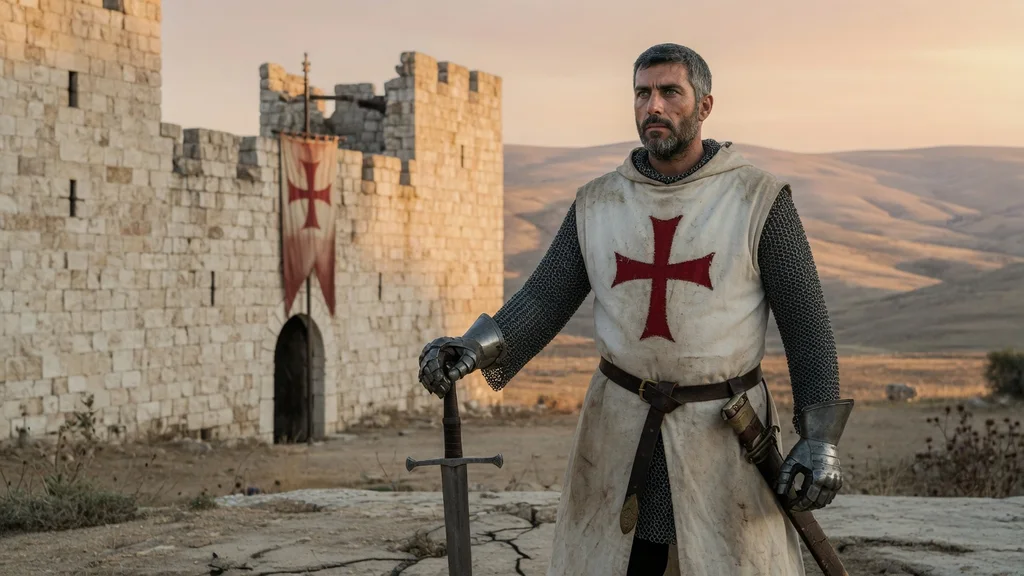
The Holy / Templar style here is a flavor — a devout, crusading tone layered onto the same "Sir/Dame + name" structure as the other three styles. If you actually need a member of a militant order with a real rank (Grand Master, Marshal, Commander) and a historically accurate "de + region" name — not just a knight who sounds pious — use the dedicated templar name generator instead. That page also covers the Hospitallers, the Teutonic Order, and the Order of Santiago, none of which map onto a feudal "knight" the way this generator's four styles do.
The "Sir" Tradition — and Its Complications
"Sir" before a knight's name is one of the most recognisable conventions in English-language fiction, but it sat atop a more complicated historical reality.
In medieval England, knighthood was a military and social rank conferred by a lord or king through the dubbing ceremony — the laying of the sword flat on the shoulder. The title "Sir" then preceded the knight's given name in direct address. "Sir William" not "Sir Longespée," though the surname would follow in full formal contexts.
For women, the picture is murkier. Historical female knights are rare but documented — several Iberian military orders admitted women in the twelfth and thirteenth centuries. In fiction and D&D, "Dame" works as the clean parallel. Some settings use "Ser" as a gender-neutral form, which is where George R.R. Martin's Westeros landed.
For Templar-style names, the title shifted depending on the order. Brothers of the Knights Templar were technically monks as much as warriors — so some used "Brother" alongside or instead of "Sir." That ambiguity is worth using in fiction for texture.
Naming Your Knight for D&D and Tabletop RPGs
In D&D, the fighter, paladin, and oath-bound warrior classes all benefit from a name that carries weight beyond "sword person." A well-named knight anchors the character in a setting and gives other players something to work with.
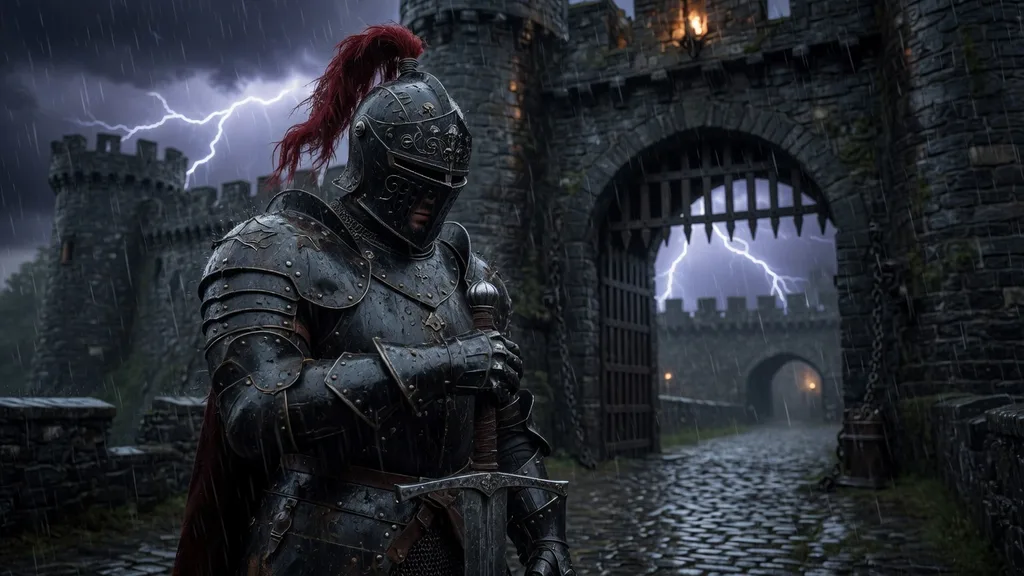
Match the name to the oath. A paladin of the Oath of Devotion fits a templar-style name — something pious, severe, with "the Faithful" or "Godsworn" attached. A paladin who broke their oath and took the Oathbreaker path is almost required to have a dark epithet. "Valen the Forsaken" tells you everything about that backstory in three words.
Use the holding form for landed characters. If your knight holds a title in the campaign setting — even a minor one — "of [place]" makes that concrete. "Sir Edmund of Thornwall" already has a home, probably a keep, possibly a secret.
Earn the epithet in play. Take a name without an epithet at session one and negotiate with your DM to earn one. "Drogo the Bear" is more satisfying if the table watched Drogo do something bear-like to get it.
Female knight names for D&D. The generator's female pool covers all four styles. Arthurian women in the generator: Elaine, Igraine, Nimue, Lunete — names with legend behind them. Medieval women: Matilda, Agnes, Sibyl, Hildegard — names that actually appear in chronicles. Dark women: Raven, Cynara, Morcara — blunt and atmospheric.
Naming Dark Knights and Fallen Paladins
The dark knight is one of the most durable archetypes in fantasy, and naming them badly kills the effect. A name that reads as cartoonishly evil ("Lord Deathmurder") is a harder sell than one that's simply cold and wrong.
Dark knight names work best when they used to sound normal. "Corvin" is a real medieval name. "Corvin Blackmere the Forsaken" is a former knight who held land at Blackmere and lost something. The epithet marks the break; the rest of the name implies what came before it.
Epithets from the dark pool — "the Betrayer," "Soulreaver," "Wraithborn," "Duskbane" — are named by someone who feared the knight in question. An antagonist who calls themselves "the Dread" is theatrical. A knight whose enemies call them that across three kingdoms is something else.
For blackguards and antiheroes: the holding form ("of the Blighted Reach," "of the Shadow Reaches") adds geography that implies the world went wrong in a specific place.
Example Knight Names
Male Knight Names
- Sir Percival du Lac
- Sir Baldwin de Montfort
- Gareth of Avalon
- Tristan the Bold
- Edmund Ironbridge
- Corvin Blackmere
- Valen the Forsaken
- Brother Thibault of Acre
- Rainier Godsworn
- Hugh Longsword
- Oswald the Wolf
- Aldric of Carbonek
Female Knight Names
- Dame Elaine of Lyonesse
- Dame Matilda de Percy
- Igraine the Steadfast
- Sister Lucia of Jerusalem
- Agnes Ironshield
- Raven of the Shadow Reaches
- Cynara the Betrayer
- Hildegard of the Holy Land
- Nimue the Fair
- Morcara Duskfall
- Sibyl of Ashford
- Beatrix the Faithful
Titles and Epithets
- the Bold
- the Faithful
- Ironarm
- the Forsaken
- the Wolf
- Godsworn
- Soulreaver
- the Valiant
- the Betrayer
- Oathbound
- Wraithborn
- Longsword
Tips for Writing Knight Names in Fiction
- Vary the weight. Not every knight in your world needs a grand double-barrelled name. A minor knight who appears once can be "Sir Hugh." The protagonist earns the full form.
- Let the epithet do work. "Walter the Red" tells you hair colour or battle temperament. "Walter Crookback" is a physical trait. "Walter Oathbreaker" is a history. One word, a lot of story.
- Use the holding to anchor the setting. A name like "Dame Agnes of Redstone Keep" implies a castle exists somewhere on your map. That's free worldbuilding.
- Match the phonetics to the culture. Arthurian names lean Celtic and romance-language. Historical names lean Germanic, Norman-French, or Anglo-Saxon. Dark names harden the consonants. Templar names go Latinate. Match the sound to the culture your setting draws from.
- The title is earned, not given. If your knight lost their knighthood — stripped, exiled, or fallen — dropping the "Sir" is a quiet way to mark it. "Sir Aldric" becomes "Aldric the Damned." The absence of the title is louder than any epithet.
- Avoid the double-villain name. "Lord Mordecai Dreadfen the Accursed" stacks too much. Pick one dark element and let it breathe. The other names carry the rest.
A Note on Historical Accuracy
The generator is built for evocative fiction, not a reenactment manual. The historical medieval pool draws on real naming conventions from the eleventh to fifteenth centuries — the Norman names (de Clare, de Burgh, de Lacy), the Anglo-Saxon substrates (Aldwin, Wulfric, Leofric), the Latinate given names that the church spread everywhere.
The Arthurian pool is deliberately semi-historical — the Matter of Britain draws on Welsh, Breton, Norman-French and Latin sources, and that mix is exactly what makes it feel timeless without feeling grounded to any one century. Use it for settings that want the feeling of legend rather than the texture of chronicle.
The templar pool mixes real historical figures' name patterns (Hugues de Payns, Gérard de Ridefort) with the Latinate given names common among clerical-military orders. It works for any holy warrior tradition: paladins, inquisitors, crusaders, and oath-bound orders in secondary-world fantasy — though for an actual militant order with ranks and a chapter hierarchy, the templar name generator goes deeper.
FAQ for Knight Name Generator
How do I give my knight a realistic medieval name?
Real medieval knights carried a given name, a family or territorial surname, and sometimes an earned epithet. Choose the Historical Medieval style in the generator, set the Name form to 'Name only' for the bare given + family name, or 'Name + of [place]' to add a holding. Both are grounded in actual Norman and Anglo-Saxon naming practice.
What is the difference between 'Sir' and 'Dame' in a knight's name?
Sir is the honorific for a knighted man; Dame (or Lady) is the equivalent for a knighted woman. In the generator, selecting 'Sir / Dame + name' automatically prefixes the correct title based on your gender choice. Use it for characters who have formally received knighthood.
Where can I use the knight name generator?
It works for D&D and Pathfinder characters, historical or fantasy fiction, LARP and cosplay personas, and NPC rosters for a campaign setting. Pick a style that matches your tone — Arthurian for a quest narrative, historical medieval for grounded fiction, dark for a villain or fallen paladin, templar for a holy order — and the result is ready to use in any personal or commercial project.
What makes a good D&D knight name?
A good D&D knight name tells you something about the character before they speak. Arthurian names suggest quests and courts; dark names signal a fallen or morally grey paladin; templar names fit oath-bound holy warriors. Pick a style that matches your alignment and backstory, then let the epithet form add a battle-earned nickname.
Can I use these names for a female knight?
Yes. Set the Gender filter to Female and every given name in the pool comes from the female side — Eleanor, Isolde, Matilda, Raven, Lucia and so on. The Sir/Dame form switches automatically to Dame. Female knights appear in historical record (notably in the Iberian peninsula) and throughout fantasy fiction.
What makes knight names sound authentically medieval rather than generic fantasy?
Real medieval identity ran on structure, not just sound: a given name, a family or territorial surname, sometimes a title, sometimes an earned epithet. A name that skips straight to something like 'Sir Darkblade' reads as invented because it's missing that structure. This generator keeps the full system intact — given name, surname or holding, and an epithet that has to be earned — so a result carries the same layered weight a real medieval name did.
What is the 'Dark / Villainous' style for?
Dark knights — blackguards, fallen paladins, shadow warriors — need names that land differently from courtly heroes. The Dark style draws on harsher sounds and grim epithets ('the Betrayer', 'Soulreaver', 'the Forsaken') to signal that this knight serves no lord you'd want to meet. Good for antagonists, antiheroes, or edgy PCs.
How do knight epithets work historically?
Epithets were descriptive bynames attached to a knight's name, either by their lord, their peers, or their enemies. They marked a deed, a physical trait, or a reputation: 'the Bold', 'Ironarm', 'the Lame', 'the Wolf'. They stuck because the culture of chivalry ran on reputation — an epithet was social shorthand for who you were on the field.