Pathfinder Name Generator — Ancestries & Heritages
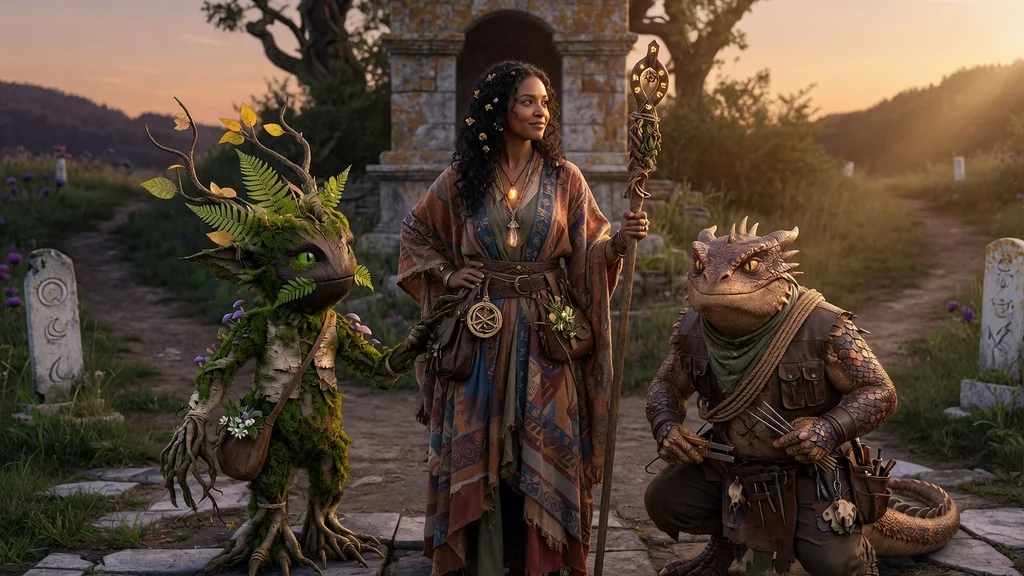
This Pathfinder name generator is built around Pathfinder 2e's own structure, not a reskinned D&D list. Pick an ancestry — Human, Dwarf, Elf, Goblin, Kobold, Leshy, Kitsune, Catfolk, Ratfolk, Tengu, Automaton, or Ghoran — and for humans, drill into one of nine Golarion ethnicities, from Varisian to Keleshite to Shoanti. Every pool is built from that ancestry's actual naming logic, not a generic fantasy default.
👇 Click any name to copy it
Golarion is a bigger, stranger world than most fantasy settings bother building, and its naming conventions reflect that. A Chelaxian noble doesn't sound like a Shoanti clan warrior, and neither sounds anything like a kobold or a leshy — because Pathfinder 2e never assumed one phonetic template could cover them all.
How to Use This Pathfinder Name Generator
- Pick an ancestry first. Ancestry drives the phonetic pool more than any other filter — settle this before touching gender or name type.
- If you picked Human, choose an ethnicity. Leave it on "Any" only if you genuinely want a random mix across all nine Golarion groups.
- Set gender if it matters for your character. Several ancestries — leshy, ghoran, automaton — don't use gendered name endings at all, so this filter has no effect on them.
- Choose Given name or Full name. Full name adds a surname, clan tag, or earned epithet where that ancestry actually uses one; some ancestries (kobold, goblin) use an epithet instead of a literal surname.
- Generate, then read the results aloud. Click any card to copy it. If nothing feels right after a batch of eight, regenerate — the pools are large enough that a second pass rarely repeats the first.
Pathfinder vs D&D Naming
Pathfinder 2e and D&D 5e share a common ancestor — both trace back to the same d20 rules lineage — but they diverged hard on ancestry design, and that shows up directly in names. D&D 5e's core Player's Handbook gives you nine races: Human, Elf, Dwarf, Halfling, Half-Elf, Half-Orc, Tiefling, Dragonborn, and Gnome, each tied to the Forgotten Realms. Pathfinder 2e's Player Core covers Dwarf, Elf, Gnome, Goblin, Halfling, Human, Leshy, and Orc as its baseline — then opens dozens of uncommon and rare ancestries through its other books, including several D&D simply never offers as playable options: kobold, kitsune, catfolk, ratfolk, tengu, automaton, and ghoran among them.
The terminology split matters too. D&D still calls the top-level choice a race. Pathfinder 2e replaced that with ancestry in 2019, specifically to separate biology and culture from any real-world racial framing — and added heritage as a second layer underneath it (see below). And where D&D's "human" is one undifferentiated pool, Pathfinder's Golarion setting gives humans nine distinct ethnic groups with their own migration histories, languages, and naming traditions — closer to how naming actually works for real-world cultures than a single catch-all "human name" list.
If you're building a D&D 5e character instead, our D&D Character Name Generator covers the Forgotten Realms race list with the same per-race phonetic approach this page uses for Golarion.
Ancestry and Heritage — How Pathfinder 2e Names Actually Work
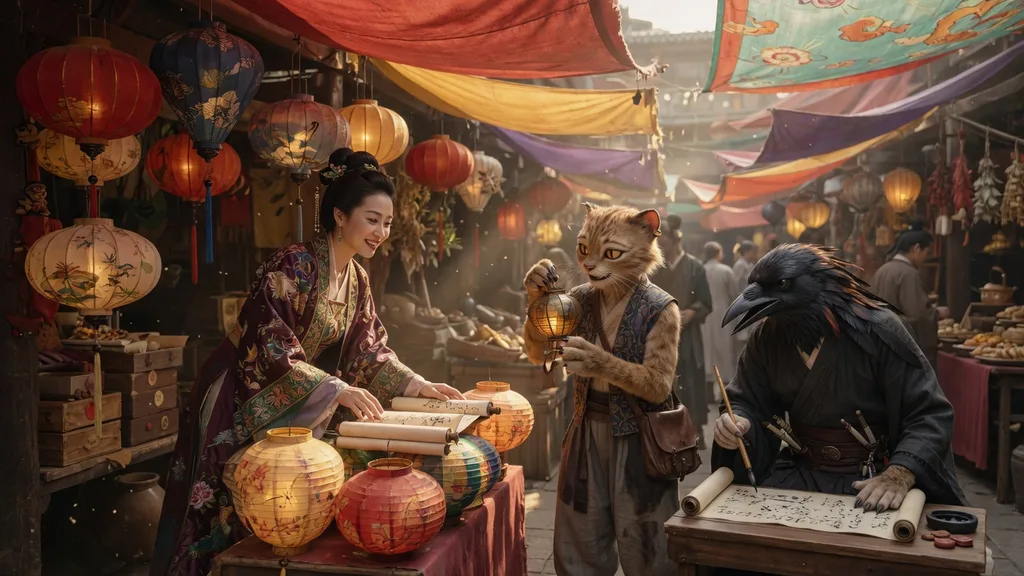
Every Pathfinder 2e character has an ancestry — the biological and cultural starting point, like Dwarf or Goblin — and a heritage nested inside it, a subgroup that adds flavor and a few rules without changing the ancestry itself. A dwarf might be Ancient-Blooded, Death Warden, Forge, Rock, or Strong-Blooded. A goblin might be Charhide, Irongut, Snow, Songful, Tailed, or Unbreakable. An elf might be Ancient, Arctic, Cavern, Seer, or Woodland. Heritage changes what a character can do more than what they're called, but it's real texture — a Forge dwarf raised in a Five Kings Mountains hold and a Death Warden dwarf raised guarding the Darklands border are going to lean on different naming instincts even sharing an ancestry, which is why the lore line on each generated name nods to that context.
There's also a third layer specific to humans: versatile heritages, for characters with mixed or unusual ancestry — Aiuvarins (elf-blooded), Dromaars (orc-blooded), and a handful of rarer options. This generator focuses on the nine ground-level Golarion human ethnicities rather than versatile heritages, since those are the naming traditions with the deepest, most distinct cultural roots.
Non-Human Ancestries — Why the Sound Is So Different
Dwarf names run hard and short — consonant clusters built to survive being shouted down a mine shaft, closed off with clan surnames like Ironforge or Stonebeard. Elf names from Kyonin run the opposite direction: unhurried, vowel-heavy, built for a lifespan measured in centuries rather than decades. Orc names, tied to the Hold-Scarred heritage and the Hold of Belkzen, are blunt on purpose — no wasted syllables, earned as much as given.
Goblins and kobolds sound closer to each other than to anything else on this list — quick, sharp, a little chaotic — but the cultural logic underneath differs. Goblin names in Golarion shift fast and get shouted more than spoken; kobold names carry a debt to whatever dragon the warren claims descent from, and stay short enough to double as trap-call signals. Leshy names break the syllable-pool pattern entirely: a leshy picks a plain, literal name at waking — Mossy, Bramble, Pip, Acorn — because the ancestry is young and prefers calling a thing what it is over inventing something ornamental.
Kitsune, catfolk, tengu, and ratfolk each carry a Tian Xia or Mwangi-borderland inflection — catfolk (Amurrun) names run warm and flowing, tengu names land sharp and corvid-quick, and kitsune keep a private fox-name behind whatever human alias they wear day to day. Automatons, Numeria's sentient constructs, are the outlier: their names start as a factory designation and end with a chosen nickname the automaton picked for itself — the only part of the name that's really theirs.
Ghoran — Plant Ancestry, Not the Same as Leshy
Ghorans are easy to mix up with leshies because both are plant-based ancestries, but their naming conventions land nothing alike. A leshy's name is a literal object word picked at waking. A ghoran's name is a scent-title given at blooming — ornamental, evocative, closer to a title than a label: Nightbloom, Sorrowscent, Duskpetal, often paired with an honorific like "of the Sodden Lands" or "the Late-Blooming." Where a leshy name says what the leshy is, a ghoran name says what the ghoran smells like in the moment it first opened.
Golarion's Human Ethnicities — Not One Generic "Human"
D&D's human race gets one undifferentiated name pool. Golarion splits humans into ethnic groups tied to real regions, migration histories, and — for several of them — naming traditions that echo real-world cultures without copying them wholesale. The table below covers the nine this generator supports.
| Ethnicity | Homeland | Naming tradition |
|---|---|---|
| Varisian | Varisia (nomadic across the region) | Lyrical, migratory, caravan-clan surnames tied to fortune-telling traditions |
| Chelaxian | Cheliax | Old-money, aristocratic, House surnames carrying centuries of political weight |
| Taldan | Taldor | Formal, Latin-flavored, echoes an empire that once ruled half the Inner Sea |
| Ulfen | Lands of the Linnorm Kings | Patronymic — a parent's name folded directly into the child's |
| Garundi | Northern Garund (Osirion, Thuvia, Rahadoum) | River-valley roots, ancient desert-kingdom cadence |
| Tian | Tian Xia (Minkai, Shokuro, etc.) | Family name first, quiet formality, ancestor-honoring |
| Keleshite | Qadira and the Padishah Empire | Ibn/bint patronymics, poetry-inflected syllables |
| Mwangi | Mwangi Expanse | Nation- and lineage-specific, rarely generic |
| Shoanti | Storval Plateau | Clan (Quah) name first, often descriptive of a deed |
Set Ancestry to Human and Ethnicity to one of the nine above to get names built from that specific tradition. Leave Ethnicity on "Any" and the generator rotates across all nine — useful if you're populating a Golarion city where several ethnicities plausibly mix.
Varisian
Varisians trace back to Golarion's oldest surviving bloodlines and still carry a migratory, caravan-based culture in much of Varisia — reading harrow cards, running trade routes, working the fortune-telling trade the region is famous for. The names lean lyrical and quick, built to be shouted across a camp or read off a wagon's side, with family lines often tied to a specific harrow-reading tradition rather than a fixed town.
Chelaxian
Cheliax is the Inner Sea's diabolist nation — a former empire that struck infernal contracts to survive its own collapse — and Chelaxian names carry that old-money weight. House surnames matter more here than almost anywhere else on Golarion; a Chelaxian name is often a political statement before it's anything else, especially for a family that remembers what it cost to keep the House name intact.
Taldan
Taldor was the empire that once ruled most of the Inner Sea region, and its citizens' names still echo that faded grandeur — formal, Latin-flavored, built for a duelist's calling card as much as a birth certificate. The Aldori swordlords, Taldor's famous fencing dynasty, are the clearest cultural touchstone for how a Taldan name is meant to sound: proud, precise, a little theatrical.
Ulfen
The Ulfen hail from the Lands of the Linnorm Kings, Golarion's northernmost human nation, and their naming convention is unmistakably patronymic — a father's or mother's name folded directly into the child's, the same structural logic real-world Norse naming used. It's a culture that doesn't hide lineage inside a name; it puts the lineage right in the middle of it.
Garundi
Garundi humans span the northern reaches of the Garund continent — Osirion, Thuvia, Rahadoum — and their names carry river-valley roots older than most Avistani kingdoms. Osirion in particular leans on its Ancient Osiriani heritage, so a Garundi name can sound like it belongs on a temple wall as easily as a modern census.
Tian
Tian humans originate from Tian Xia, the continent across the Obari Ocean, and bring a family-name-first order and quiet formality that stands apart from every other Avistani ethnicity here. A Tian name typically honors an ancestral line the way other cultures might honor a patron saint — the family name isn't just identification, it's a small act of respect said out loud every time the name is used.
Keleshite
Keleshites trace back to Qadira and the wider Padishah Empire, a culture built on trade, astronomy, and poetry in roughly equal measure. Their names commonly use an ibn/bint patronymic structure — "son of" or "daughter of" folded directly into the name — and the syllables themselves often carry a lyrical, star-chart cadence that fits a merchant and a court poet equally well.
Mwangi
The Mwangi Expanse is a vast, ecologically and culturally diverse region on Garund, home to dozens of distinct nations rather than one unified culture — which is why Mwangi names resist generic treatment more than any other ethnicity here. A real Mwangi name is specific to a nation, river system, or lineage; this generator's pool leans on that specificity rather than flattening it into one generic "African-inspired" template.
Shoanti
The Shoanti are Varisia's plains-dwelling clan culture, descended — like the Varisians — from Thassilon's fall, but organized around seven Quah (clans) on the Storval Plateau rather than a caravan tradition. Shoanti names put the Quah first and are frequently earned rather than simply given at birth, tied to a specific deed, hunt, or moment that defined the person carrying it.
Pathfinder Ancestries by Role — Name Inspiration
Frontline Fighters and Paladins
Dwarf, orc, and Ulfen-human names carry the right blunt weight for a front-line martial character — short, hard-edged, easy to shout mid-combat. Chelaxian and Taldan names work well for a more formal knightly or paladin archetype, especially one tied to a noble house or a fading empire's ideals.
Spellcasters and Scholars
Elf, Tian, and Keleshite names lean naturally scholarly — unhurried, precise, built for a character who's spent decades or centuries on their craft. Gnome names add a chaotic-genius edge that suits an inventor or an unconventional caster better than a straight-laced wizard.
Rogues, Scouts, and Wildland Characters
Halfling, Varisian, catfolk, and tengu names all carry a light, quick-footed quality that fits a scout or skirmisher. Shoanti and Mwangi names work well for a character defined by their homeland — clan pride, ancestor memory, a real relationship to a specific place.
Unusual and Non-Humanoid-Feeling Characters
Leshy, ghoran, kitsune, and automaton names are the ones to reach for when you want a character whose name itself signals "this isn't a standard humanoid." A leshy named Pip Barleyseed or a ghoran named Nightbloom the Late-Blooming reads as non-human before a single trait gets described.
Famous Pathfinder Characters and Their Names
These are canon Paizo characters — the Pathfinder Roleplaying Game's iconic pregenerated heroes and a few well-known Golarion NPCs — included strictly as naming examples. None of them are generator output, and this generator will never reproduce them.
| Character | Ancestry / ethnicity | Why the name works |
|---|---|---|
| Seelah | Human, iconic paladin | Short, clean, easy to say under pressure — fits a front-line holy warrior |
| Ezren | Human, iconic wizard | Plain and unadorned on purpose, letting the character's deeds carry the weight |
| Merisiel | Elf, iconic rogue | Flowing and quick, matching an elf built for speed over ceremony |
| Harsk | Dwarf, iconic ranger | Blunt, one-syllable-feeling despite two — classic dwarven economy |
| Sajan | Human (Vudrani), iconic monk | Reflects a real-world-inspired human ethnicity outside the nine core Golarion groups |
| Ameiko Kaijitsu | Human, Tian ethnicity | Family name (Kaijitsu) carried with the formality typical of Tian naming order |
Tips for Choosing a Pathfinder Character Name
- Start with ancestry, not aesthetics. A name that sounds cool but ignores the ancestry's actual pattern reads as a mismatch to anyone who knows the setting.
- For humans, pick an ethnicity and commit. Mixing Chelaxian syllables with a Shoanti surname reads as a mistake, not a choice — unless you're deliberately building a mixed-heritage backstory, in which case say so.
- Let heritage inform tone, not just the sheet. A Death Warden dwarf and a Forge dwarf can share an ancestry but shouldn't necessarily share a naming vibe — one leans grim, the other leans industrious.
- Don't borrow named NPCs. Naming your character Seelah or Ameiko doesn't transfer their reputation — it just makes the table think of the canon version instead of yours.
- Say it out loud. Keleshite and Ulfen names especially can look fine on paper and trip on the tongue in play. Read your shortlist aloud before locking one in.
- Leshy and ghoran names can be genuinely simple. You don't need to over-engineer a plant ancestry's name — "Pip" is a complete, correct leshy name on its own.
Example Pathfinder Names
Static examples across the ancestries and ethnicities this generator covers — read them aloud to hear how differently each tradition lands.
Human — by Ethnicity
- Belaska Amentiel (Varisian)
- Cassorius Aldenar (Chelaxian)
- Octavia Marivosk (Taldan)
- Bjornar Ragnvaldsson (Ulfen)
- Amenet of Sothis (Garundi)
- Meilin Amatatsu (Tian)
- Zahira bint Kalabuz (Keleshite)
- Ombeka of the deep jungle (Mwangi)
- Ashenquah of the Skoan-Quah (Shoanti)
Dwarf, Elf, Gnome, Halfling, Orc
- Durokan Ironforge (Dwarf)
- Ialoria of Kyonin (Elf)
- Sprockibus the Fey-Touched (Gnome)
- Perrila Goodbarrel (Halfling)
- Krughok of the Hold-Scarred line (Orc)
Goblin, Kobold, Leshy
- Chitnix the Songful (Goblin)
- Drasik Scaleward (Kobold)
- Pip Barleyseed (Leshy)
- Mossy the Bramble-born (Leshy)
Kitsune, Catfolk, Ratfolk, Tengu, Automaton, Ghoran
- Amashiro (Kitsune fox-name)
- Ilaora Sunwhisker (Catfolk)
- Nibix of the Sightless College (Ratfolk)
- Akaraz the Sharp-eyed (Tengu)
- Frame-214 "Wren" (Automaton)
- Nightbloom, the Late-Blooming (Ghoran)
FAQ for Pathfinder Name Generator
What's the difference between a Pathfinder name generator and a D&D name generator?
Pathfinder 2e uses 'ancestry' and 'heritage,' not 'race,' and its playable list includes ancestries D&D 5e simply doesn't have — goblin, kobold, orc, leshy, kitsune, catfolk, ratfolk, automaton, and ghoran among them. Pathfinder's setting, Golarion, also gives human characters a real ethnicity — Varisian, Chelaxian, Taldan, Ulfen, Garundi, Tian, Keleshite, Mwangi, or Shoanti — instead of one generic human pool. This generator builds names from that structure specifically; our D&D Character Name Generator covers the separate Forgotten Realms race list instead.
What is a heritage in Pathfinder 2e, and does it change the name?
Heritage is a layer inside an ancestry — a dwarf might be Ancient-Blooded, Death Warden, Forge, Rock, or Strong-Blooded; a goblin might be Charhide, Irongut, Snow, Songful, Tailed, or Unbreakable. Heritage mostly changes rules (resistances, senses, abilities), not the name pool directly — but it's real texture worth knowing when you're naming a character, and this page's lore lines nod to it where it fits.
Are these names lore-accurate to Golarion?
The naming logic is built from real Pathfinder 2e ancestry and Golarion ethnicity conventions — Ulfen patronymics, Keleshite ibn/bint patronymics, Shoanti Quah clan names, Tian family-name-first order, and so on. The syllables themselves are original combinations, not names lifted from Paizo sourcebooks or NPC rosters. Named canon characters (Seelah, Ezren, Ameiko Kaijitsu, Ulf, and the like) appear on this page only as explanatory examples, never as generator output.
Is this generator affiliated with Paizo?
No. Pathfinder, Golarion, and all associated ancestries, deities, and characters are the intellectual property of Paizo Inc. This is an independent fan tool for naming original characters — it has no official connection to Paizo.
Can I use these names in my Pathfinder campaign or published work?
Yes for personal and home-game use — these are original name combinations, not reproductions of copyrighted NPC names. If you're publishing under the Open Game License or Pathfinder's community-use rules, check Paizo's current licensing terms for what you can and can't reuse, especially around ancestry and setting names themselves.
Which Pathfinder ancestry has the most distinct naming pattern?
Leshy and ghoran stand out the most, because neither builds names from syllables the way most ancestries do. Leshies pick a plain, literal name at waking — Mossy, Bramble, Pip — often paired with a nature noun. Ghorans get an ornamental scent-name at blooming, closer to a title than a label. Kobold, goblin, and orc names are the closest to D&D's equivalents but still run through Golarion-specific tribal and clan flavor.
Does Pathfinder 1e use the same ancestry names as 2e?
Mostly the same setting (Golarion), but Pathfinder 1st Edition used 'race' rather than 'ancestry/heritage' — that terminology split arrived with 2e in 2019. Some 2e-only ancestries (automaton, several versatile heritages) either didn't exist or worked differently in 1e. This generator is built for 2e's ancestry/heritage structure; where a term is 1e-specific, treat it as legacy rather than current rules.
Where can I find dedicated generators for specific Pathfinder ancestries?
This page is a Pathfinder-wide hub. For deeper, ancestry-focused tools, see the Kobold Name Generator, Goblin Name Generator, and Kitsune Name Generator — all three cover naming traditions that overlap with (but aren't identical to) the Golarion versions here, plus the Tabaxi Name Generator for a related D&D cat-folk ancestry if you're comparing systems.
Related Pathfinder & Ancestry Generators
Several of the ancestries covered here have their own deeper, dedicated generators:
- Kobold Name Generator — four naming styles (Yipping, Draconic, Trap-maker, Tribal) beyond the Golarion-specific pool used here.
- Goblin Name Generator — a wider set of goblin naming flavors than this page's Pathfinder-focused pool.
- Kitsune Name Generator — the fuller fox-spirit tradition (nine-tail power scale, zenko/yako types) that Pathfinder's kitsune ancestry borrows from.
- Tabaxi Name Generator — D&D 5e's cat-folk ancestry, a useful side-by-side comparison with Pathfinder's catfolk.
- D&D Character Name Generator — the Forgotten Realms race list, for the D&D side of the same naming problem.