Demon Name Generator — Infernal Names for Fiction & D&D

This demon name generator builds infernal names ranked from gutter-spawn lesser demons to world-breaking archfiends. Pick a rank, choose a domain of ruin, and set a gender — the engine returns harsh, guttural names with hard consonants and dark titles, each tagged with a lore note about what the creature commands. Built for D&D, tabletop RPGs, dark fantasy fiction, and any project that needs names the tongue trips over on purpose.
👇 Click any name to copy it
A weak name flattens a demon into a stat block. A name with the right weight — something that costs the speaker a moment of hesitation — makes the creature real before the description even starts. The phonetics of infernal names are not accidental. They are built to intimidate.
Use the rank filter to set the creature's place in the hierarchy. Use the domain to give it a portfolio. Use the title form to see the name paired with an infernal honorific. Generate as many batches as you need — click any card to copy it.
How Demon Names Sound — Infernal Phonetics
Harsh consonant clusters are the defining feature of a convincing demon name. Hard stops — K, G, X — paired with fricatives like V, Z, and TH create the guttural, cutting quality that signals something dangerous. Short, blunt syllables work for lesser demons; longer, compound names with internal weight suit lords and archfiends.
Vowels serve the consonants here rather than the other way around. A tight "ax" or "orn" ending lands like a door slamming. Softer endings — "ara," "iva," "exa" — appear in female-leaning names but still carry an edge. The infernal tongue, across fantasy traditions, never lets a name get comfortable.
Some patterns to listen for: doubled hard consonants ("Grax," "Thraknor"), front-loaded stress ("MAL-a-gor," "VORN-eth"), and suffixes that clip rather than trail ("—ax," "—oth," "—ix"). These are the sounds that make a tavern go quiet when the name is spoken aloud.
The Hierarchy of the Pit — Demon Ranks Explained
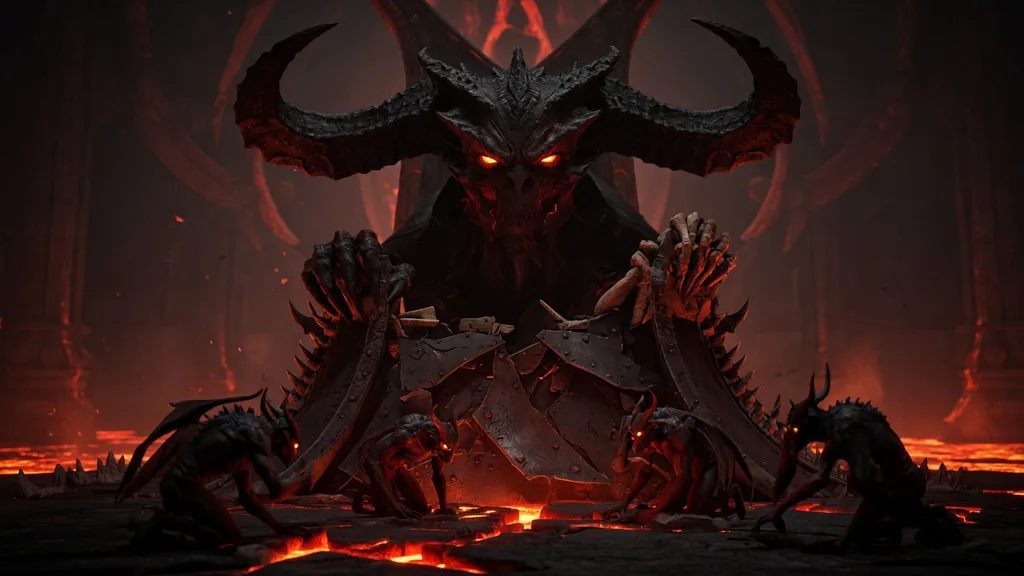
Rank matters in the abyss. The distance between a lesser demon and an archfiend is not a question of degree — it is a question of kind. Knowing the hierarchy helps you place the creature correctly in your story and pick a name that carries the right weight.
| Rank | Feel | Example Name |
|---|---|---|
| Lesser Demon | Feral, expendable, sharp and short — a gutter-spawn | Graxul |
| Greater Demon | Earned authority, heavy and scarred — commands lesser wretches | Malagorath |
| Demon Lord | Monumental, ruling a circle of the pit — spoken like a warning | Zar'ulnavar |
| Archfiend | Primordial, ancient, world-shaping — a name that outlasts empires | Karrath'gothael |
Domains of Ruin — What the Demon Commands
Every significant demon holds a domain — a portfolio of destruction it has claimed and cultivated. The domain is not just flavour; it shapes how the creature operates, what it wants, and what mortals fear it for. Use the domain filter in the generator to focus results and pair a name with an infernal title.
- Wrath — Commands fury and martial devastation. Its legions fight until nothing stands. The name should land like a war cry.
- Despair — Feeds on grief, hopelessness, and broken will. Subtle and patient. Often mistaken for melancholy until too late.
- Plague — Carries pestilence in its wake. Every step poisons. Entire cities have been emptied by a single passage.
- Shadow — Moves between darkness and thought. Wards of light slow it; nothing stops it permanently. Information is its true weapon.
- Fire — Born of the deepest furnace pits. Its words burn stone. A domain of purging and consumption.
- Deceit — Has worn a thousand faces. Its truest name is unknown even to its lieutenants. Pacts with it are traps.
Example Demon Names
Lesser Demons
- Graxul
- Skavorn
- Throkesh
- Vornax
- Krevik
- Brakith
- Nyxark
- Dasketh
- Shraxurn
- Kethox
- Zarvirk
- Grixoth
- Khalen
- Morzak
- Drexon
Greater Demons
- Malagoreth
- Vaxthoron
- Korraxul
- Dravetha
- Zornathis
- Skolvaxa
- Thraknorak
- Gorthexos
- Veskarorn
- Razgulon
- Mordrekath
- Karrvexis
- Xolvathur
- Skarmuleth
- Grothakos
Demon Lords
- Zarulnavar
- Malexorath
- Vorethorn
- Khorizoth
- Drakivrath
- Xanethulvex
- Gravornath
- Valornak
- Skorthaegoth
- Tharaxan
Archfiends
- Karrathgothael
- Zaraeulnavar
- Malarethrax
- Vortexxaveth
- Draven'izoth
- Xolvarixthorel
- Molvaegoth
- Thazoruvrakhar
Demon Names for D&D and Tabletop RPGs
D&D 5e organises fiends across two main factions: demons (chaotic evil, Abyss) and devils (lawful evil, Nine Hells). This generator focuses on demonic — chaotic, brutal, driven by appetite rather than hierarchy. The ranks map naturally onto challenge ratings: Lesser Demons sit in the CR 1–5 range, Greater Demons around CR 6–12, Demon Lords at CR 13–20, and Archfiends beyond that.
For DMs: use the domain filter to build instant backstory. A Greater Demon of Deceit becomes a lieutenant who has been impersonating a trusted NPC. A Lesser Demon of Plague is the source of the village sickness. The lore tag on each card is a ready-made hook.
For players running warlocks or dark-pact characters: an archfiend patron needs a name that sounds like a secret. Something the character was told once, in a dream they barely remember. Heavy syllables, long compound construction, a title that describes what it does to the world.
Looking for one specific, named function within the demonic hierarchy rather than a generic rank-and-domain fiend? Succubi and incubi are the seduction-and-shapechanging specialists — D&D reclassified them as devils in 4th edition before reverting to a neutral fiend type in 5e. See the succubus name generator for that dedicated true-name/use-name system.
Naming Demons for Fiction and Dark Fantasy Writing
Some writers prefer a demon whose name means something in a real language rather than one built for sound alone. Our lists of names that mean shadow and names that mean fire collect those with the root word behind each — including the underworld names from Greek and Latin, and an honest note on which famous ones do not mean what everyone assumes.
In fiction, demon names carry a double burden: they must sound inhuman, and they must be memorable enough that readers track them across chapters. Short, sharp names work for creatures that appear briefly. Long, compound names — with internal stress and a hard ending — signal something that will be back.
A few practical rules from dark fantasy that have proven out: keep lesser demons to two syllables maximum (three feels like a lord); give female demons a clipped vowel sound rather than a soft trailing one ("Dravetha," not "Draventhi"); and never give an archfiend a name that is easy to say on the first read. The hesitation is the point.
Titles compound the effect. "Gorthexos the Merciless" is a name. "Gorthexos, Soulreaver, Corruptor of the Faithful" is a reputation. Use the Name + Title form in the generator to get both in one result.
Demons vs. Other Dark Traditions
Not every dark, shapeshifting, or "demon-like" name belongs here. This generator is built around invented infernal phonetics — no single mythology, no real religious tradition, pure fantasy-hierarchy naming for D&D fiends and dark fantasy villains. If you're after a specific real-world folklore instead — for example, Japanese kitsune, who yako-type foxes are sometimes loosely called "fox demons" in English despite being a wholly separate tradition with its own rules (nine tails, not nine hells) — see the kitsune name generator.
Tips for Using Your Demon Name
- Say it aloud first. A name that trips the tongue has the right quality for a demon. If it rolls out too smoothly, add a hard consonant.
- Match syllable count to rank. Two syllables for lesser; three or four for greater and lords; five or more for archfiends. Length signals power.
- Use the domain to anchor the character. A Despair demon should feel patient and slow. A Wrath demon should feel explosive. Let the domain steer the personality, not just the title.
- Pair name and title deliberately. "The Deceiver" suits Deceit domain. "Lord of Ruin" suits Wrath or Fire. Cross-wiring them (a Plague demon titled "the Deceiver") creates a character with a secret.
- Avoid apostrophes in dialogue-heavy fiction. They read well on a stat block; they slow readers mid-sentence. Save them for titles and formal references, not what NPCs say under pressure.
- Test with a non-fantasy reader. If they can read it aloud without guessing at pronunciation, the name is accessible. If they stumble badly, it might need one fewer consonant cluster.
FAQ for Demon Name Generator
What makes a demon name sound convincing?
Harsh consonant clusters — K, V, R, X, Z, TH — paired with abrupt syllable breaks. The name should feel like something that cuts the air when spoken. Softer vowels can thread through, but they should be outnumbered. The best infernal names land like a threat before you know what they mean.
Can I use these demon names in D&D 5e?
Yes. The generator builds names that fit seamlessly as D&D demons, devils, and fiends. Each result is tagged by rank — Lesser Demon through Archfiend — which maps naturally onto the CR tiers in the Monster Manual. The domain tags (Wrath, Shadow, Deceit, etc.) also help you frame a creature's portfolio in-game.
Where can I use the Demon Name Generator?
It covers D&D and Pathfinder fiends, warlock patrons, original dark fantasy fiction, horror game bosses, and any tabletop villain that needs a name with real weight behind it. Because every result is an original construction rather than a name pulled from religious texts, it's safe to hand straight to a character sheet or a manuscript.
What is the difference between a demon lord and an archfiend?
In most fantasy fiction and D&D lore, a Demon Lord rules a layer or region of the abyss — powerful enough to command armies and resist gods but still within the hierarchy. An Archfiend sits above that: primordial, often ancient beyond reckoning, and capable of reshaping the pit around its will. Archfiends are rarely fought; they are survived.
How do I pick the right demon name for my story?
Match the rank to the creature's role in your narrative. A lesser demon should sound feral and expendable — short, sharp, almost animal. A demon lord needs gravity; the name should feel heavy when your characters say it. An archfiend's name should read like a word of power — something that survives the creature itself.
What makes demon names sound different from other fantasy names?
Demon names lean harder into consonant density than elf, dwarf, or human fantasy names — doubled hard stops, fricative clusters, and abrupt syllable breaks that make the name physically harder to say smoothly. That difficulty is deliberate across the genre: a name that costs the speaker effort reads as more dangerous than one that flows easily. This generator's phoneme pools are built around that same principle rather than borrowed from any single mythology.
Are these demon names from actual religious texts?
No. Every name in this generator is an original construction built from infernal phoneme pools. We deliberately avoid copying names from Abrahamic demonology, Goetia, or any specific religious tradition. The goal is menacing fantasy fiction, not religious reference.
What are demon domains and how do they affect the name?
Each domain — Wrath, Despair, Plague, Shadow, Fire, Deceit — gives the demon a portfolio of ruin. In the generator, choosing a domain adds a title (e.g., 'the Emberlord' for Fire) and a lore note describing what the demon commands. It is a fast way to anchor a creature in your world without writing a full backstory from scratch.