Witch Name Generator — Dark, Mystical & Cottage Witch Names

This witch name generator builds names across five distinct styles — from sharp, wicked dark names to warm cottage-witch names steeped in dried herbs and quiet knowledge. Pick a style, set a gender, choose between a bare name or one with an epithet attached, and hit Generate. Each result comes tagged with its register and a line of lore.
👇 Click any name to copy it
A name does a lot of work before a character speaks a word. For a witch, it announces which side of the craft they practice — the thornwood darkness or the garden warmth — and sets the reader's expectations before the first spell is cast.
Get a batch you don't like? Generate again. The pools are large and every run is randomized. Click any card to copy it straight to your clipboard.
Witch Name Styles — What Each One Sounds Like
The five styles cover different corners of the witch archetype. Use this as a quick reference when you're deciding which filter fits your character.
| Style | Feel | Example |
|---|---|---|
| Wicked / Dark | Sharp, cruel, heavy consonants — the classic sinister witch | Morvetha the Hollow, Hexara the Fell |
| Mystical | Lunar, flowing, vowel-rich — moons and veils and starlight | Lyrawyn the Veilwalker, Selaith of the Aether |
| Nature / Green | Earthy, rooted — forests, herbs, stones, old standing water | Fernbrook of the Old Wood, Briarvale the Thorn-Keeper |
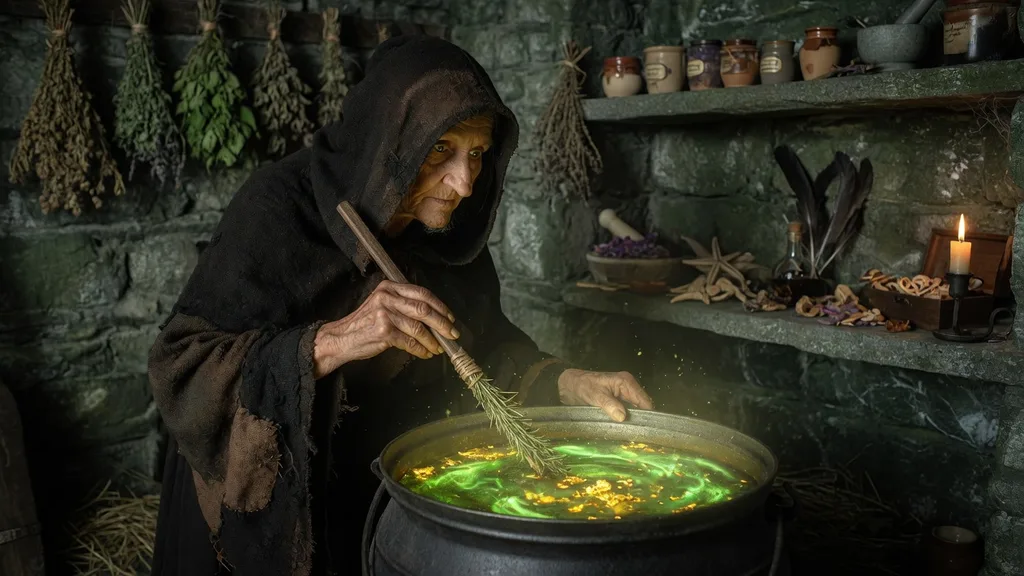
| Cottage | Warm, worn, old English — candles, jam jars, hedge magic | Bessa the Hearthkeeper, Tom the Root-Reader |
| Gothic | Aristocratic, Victorian-dark — vaults, veils, mourning dresses | Morverine of the Black Veil, Edgarmond the Forsaken |
Tips for Picking a Witch Name
- Match the register to the power level. A village hedge-witch who cures coughs and reads cards wears Cottage names well. A coven high priestess who binds spirits needs something darker or more mystical.
- Say the name aloud. Witch names with hard stops (Hexara, Morvetha) feel aggressive. Names with open vowels and soft endings (Lyrawyn, Selaith) feel dreamy. Both are right — for different characters.
- Add an epithet for older, more powerful characters. "Briarwick of the Old Wood" carries more history than "Briarwick" alone. The Form filter does this automatically.
- Consider the story's tone. A horror story wants Wicked or Gothic names. High fantasy prefers Mystical. A cosy witch novel lands best with Cottage or Nature names.
- Male witch names exist. Set gender to Male and pick any style — you'll get warlock-appropriate names that aren't just feminized names with a consonant swapped.
- Avoid overcomplicating. A name with six syllables looks impressive on a character sheet and impossible at the table. Two to three syllables is the sweet spot.
Example Witch Names
Below are handpicked names from each style to show the register in action.
Wicked / Dark Witch Names
- Morvetha the Hollow
- Hexara the Fell
- Rothina the Cursed
- Noxwyn the Black
- Vexoria the Pale
- Maulessence
- Keldeth the Unbound
- Scarixa of Ash
- Duskara the Wretched
- Craving the Shrouded
Mystical Witch Names
- Lyrawyn the Starborn
- Selaith the Veilwalker
- Aelysith of the Aether
- Miraiel the Dreaming
- Calxara the Farseer
- Virienne the Glasswalker
- Eoswith of Twilight
- Nyssawyn the Eternal
- Calaen the Unseen
- Sephoria the Liminal
Nature / Green Witch Names
- Fernbrook of the Old Wood
- Briarvale the Thornkeeper
- Wrenshaw the Herb-Singer
- Ashfen of the Fen
- Hazelwick the Rootwarden
- Sorrelwood of the Green
- Heathermoor the Stormcaller
- Nettlehurst of the Stone Circle
- Rowanmere the Seedkeeper
- Thorngrove the Rain-Named
Cottage Witch Names
- Bessa the Wise
- Megith the Hearthkeeper
- Prunna of the Crossroads
- Elspet the Kitchen-Witch
- Milwyn the Candle-Lighter
- Maevna the Knot-Tier
- Clemith of Bramble Cottage
- Tom the Root-Cutter
- Will the Herb-Man
- Hob the Quiet One
Gothic Witch Names
- Morverine of the Black Veil
- Isabeldelia the Mourning
- Sephone the Grave-Marked
- Coratrix the Forsaken
- Ophelia the Pale Lady
- Edgarmond the Undying
- Mortulfas of the Vault
- Albanius of Wychwood
- Celatrix the Midnight-Named
- Cornelius the Hollow-Eyed
What Makes a Witch Name Sound Like a Witch Name
Sound is one route; meaning is the other. If you would rather the name say something outright — a moon witch actually called the crescent, a hedge witch named for shadow — see names that mean moon and names that mean shadow, where every entry carries its real etymology instead of a vibe.
Certain sounds carry weight across cultures. Hard plosives — K, X, G — read as dangerous. Sibilants — S, Z — hiss with hidden knowledge. Long open vowels and soft endings sound lunar and mysterious. These aren't rules so much as tendencies that every writer and game designer has been pattern-matching to since childhood.
The wicked and gothic styles lean hard on plosives and monosyllabic roots that get extended with ominous suffixes. The mystical style uses vowel clusters and liquid consonants. The nature style borrows from real Old English place-name construction — compound nouns pressed together from terrain words. Cottage style names are genuinely old: worn-down English names from the sixteenth and seventeenth centuries, the same names that appear in actual witch trial records.
Epithets change the calculation entirely. A bare name is a person. A named epithet is a legend. "Thornbrook" is a place. "Thornbrook of the Stone Circle" is someone the village doesn't talk about directly.
A witch is a human being who practices magic — the historical witch trials happened to real mortal people, and even a fictional witch generally lives, ages, and dies like the rest of us. That's the core difference from fae folklore: fae aren't human and were never treated as such, which is why their naming tradition includes something witches don't have — a true name that grants power over the creature who owns it. If you're naming an Otherworldly being rather than a human spellcaster, the fae name generator covers that system, with Seelie, Unseelie, and Wild courts. A demon runs on the same true-name logic from a different tradition entirely — see the succubus name generator for the grimoire version, with its own rank hierarchy and D&D history.
Witch Names in History and Fiction
Historical witch names are often mundane — because historical witches were ordinary people accused under extraordinary pressure. Agnes Sampson. Bridget Bishop. Joan Flower. Tituba. Alice Kyteler. These are workaday names worn by women (and some men) whose trials generated most of our received folklore about what a witch is supposed to be.
Fictional witches reach for something stranger. Circe and Hecate come from Greek mythology, names that carry divine origin and divine range. Baba Yaga is Slavic — a name that sounds like what it is. Elphaba (the Wicked Witch of the West's canonical name, from Gregory Maguire's novel) is a phonetic mangling of L. Frank Baum's initials. Sabrina Spellman is deliberately bland — a suburban name for a suburban witch.
The point is that there is no single register. A name signals a character's context. This generator offers five separate registers so the name fits the story rather than the other way around.
How to Use the Witch Name Generator in Your Writing or Game
A witch name is a first impression. Readers and players form opinions instantly, and a name that doesn't match the character's power level or temperament creates low-grade friction that's hard to diagnose but easy to feel.
Use the style filter as a shortcut. If your character is warm and practical, Cottage. If she's terrifying and bound to something old and wrong, Wicked. If he's a scholar of lunar cycles and astral charts, Mystical. Let the name carry information so your prose doesn't have to.
The epithet form is useful for named NPCs, established coven leaders, or characters whose reputation precedes them. A newly initiated witch might be Fernbrook. After thirty years and a few incidents, she becomes Fernbrook of the Stone Circle.
For tabletop RPGs: generate a batch of eight, read them aloud, and notice which one catches. That's the one. Trust the instinct; it's usually right.
FAQ for Witch Name Generator
What makes a good witch name?
A good witch name has a distinct sound that matches the character's power and temperament. Dark witches need hard consonants and heavy syllables — Morvetha, Hexara. Nature witches wear softer, earthier names — Fernbrook, Briarwick. The style filter in this generator handles that for you.
Where can I use the Witch Name Generator?
It works anywhere you need a witch identity: original fiction, D&D or Pathfinder characters, a Halloween costume tag, a streaming persona, or a coven roster for a campaign. Every name is an original combination, so you're free to use it in published work without worrying about copyright.
What are traditional witch names?
Historically, accused witches often had ordinary names: Agnes, Bridget, Joan, Sarah. The familiar fantasy witch names — Circe, Hecate, Baba Yaga — come from mythology and folk legend. This generator draws on both traditions, depending on which style you pick.
Can I use these names for D&D or tabletop RPGs?
Yes. The Wicked, Gothic, and Mystical styles produce names well suited to D&D witches, warlocks, and hags. The Nature and Cottage styles work well for druids and village hedge-witches. All names are original combinations, not copied from any sourcebook.
What is a cottage witch name?
Cottage witch names are warm, old, and slightly worn — names that belong to someone who knows which herbs to pick before rain and which knots to tie at the full moon. Think Bess Meadow, Meg the Wise, or Tom the Root-Cutter. Practical magic, not theatrical.
What makes witch names authentic?
Authentic witch names lean on sound as much as history — hard plosives and sibilants for dark magic, long open vowels for lunar mysticism, and worn Old English roots for cottage traditions grounded in real witch-trial records. The generator's five styles map onto real linguistic patterns instead of randomly stringing spooky syllables together, so each result reads as belonging to a specific tradition.
What is the difference between a witch and a warlock name?
Traditionally, warlock was the male counterpart to witch — though modern usage varies. In this generator, you can set gender to Male and choose a Wicked or Gothic style to get names that read as warlock-appropriate: Mordis, Keldrath, Edgar von the Forsaken.
What are some famous witch names from history and fiction?
Historical: Agnes Sampson, Bridget Bishop, Joan Flower, Tituba, Alice Kyteler. Fictional: Hermione Granger, Elphaba, Circe, Maleficent, Baba Yaga, Sabrina Spellman, the Sanderson Sisters. This generator creates original names in similar registers without copying any of these.