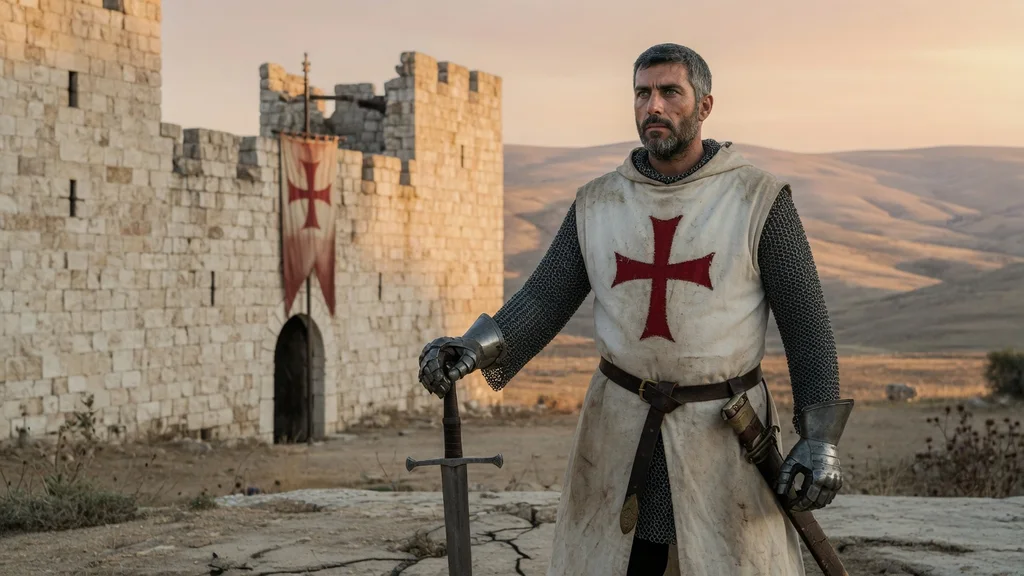
Character Naming by Social Class

A three-part name with a territorial surname is doing different work than a one-syllable nickname. How names encode class, and how to wield it.
Give a reader two names — Aldric Thornevale of Marrowgate and Nub the plowman's boy — and nobody has to tell them who bows to whom. That read happens in about half a second, before the plot has offered a single clue. Names carry status the way a coat carries weather: quietly, constantly, and mostly without anyone commenting on it. This guide breaks that trick down into its parts — length, origin, formality, the presence or absence of a surname — so you can use it on purpose instead of by accident.
We'll walk through a real historical case (the Norman Conquest, handled carefully — no Walter Scott dressed up as a linguistics textbook), then hand you a system for building the same kind of class divide inside a world that owes nothing to medieval England. Along the way we'll name three characters from scratch and show our work.
What Names Actually Signal About Class
"Sounds noble" and "sounds common" feel like vibes, but they're not — they're a stack of countable features doing the persuading. Strip any status-coded name down and you'll usually find some combination of: how many parts it has, where its sounds come from, whether it carries a surname or territorial marker, how formally people address the bearer, and whether a private, softened version of the name exists at all.
A one-part name reads as folk. A three-part name — given name, surname, territorial tag — reads as someone with land, a lineage, and a scribe on payroll to write it all down. Origin matters too: in English-language fiction, names built from Romance roots (soft consonants, open vowels, French or Latin cadence) still carry an aristocratic charge centuries after the reason why has faded from most readers' conscious memory. None of this is universal law, but it's a real, learnable pattern, and readers absorb it fast because English itself absorbed it the same way, over roughly a thousand years.
The rest of this guide unpacks each signal individually, then reassembles them into a table you can use like a checklist when you're stuck deciding whether "Bram Kestrel" or "Bram of Kestrel Hollow" is the character you actually want.
One more thing worth saying up front: none of these signals work in isolation, and none of them are absolute. A name is a bundle of small cues stacked together, and readers respond to the bundle, not any single feature. A short given name doesn't automatically mean peasant — plenty of real aristocrats went by short names in private, and plenty of invented royal houses favor blunt, one-syllable names precisely because brevity itself can read as old-money confidence rather than poverty. What matters is which cues travel together and which ones you're choosing to isolate. That's also why this is a genuinely useful tool for writers rather than a trivia fact: once you can name the individual signals, you can dial them independently instead of reaching for a vague sense of "this sounds fancy enough."
The Status Table — Reading a Name Like a Social Ledger
Here's the compressed version. Read down any column and you'll notice the pattern tightens as you climb — more parts, more formal origin, a fixed right to a place name, and a public form that nobody shortens without permission.
| Class | Name parts | Root origin | Surname / territorial tag | Form of address | Example |
|---|---|---|---|---|---|
| High nobility | 3+ (given, house, title) | Romance / courtly | Territorial, inherited, exclusive | Full title, rarely shortened in public | Isolde of House Ashworth |
| Knights / gentry | 2–3 | Romance-leaning, mixed | Territorial or granted ("of," "de") | Formal by rank ("Sir") | Sir Roland de Vantry |
| Wealthy merchants | 2 | Mixed, often local-flavored | Occupational or civic surname, no "de" | Formal in trade, familiar at home | Master Corwin Fell |
| Craftsmen / artisans | 2 | Local / Germanic-leaning | Occupational surname (Smith, Wright) | Given name plus trade | Tom Wright |
| Peasants / servants | 1, sometimes 1.5 | Local, plain, short | Patronymic or descriptive, rarely fixed | Given name or diminutive only | Wat, Nell |
Treat that table as a ledger, not a cage. It tells you what a reader's ear expects by default — which matters most when you're about to violate it deliberately, a move we cover in the Reverse Signals section below.
The Norman Conquest — When Language Became a Class Uniform
The clearest real-world case study for this whole guide happened in England after 1066. When William, Duke of Normandy, took the English throne, he didn't just replace a king — he installed an entire French-speaking aristocracy on top of an existing, Anglo-Saxon-speaking population. For roughly two centuries, the ruling class in England spoke Norman French at court and in law; English kept going in the villages, the fields, and eventually the church.
Names sorted themselves along the same line. Anglo-Saxon given names — Wulfstan, Æthelred, Godwin, Eadric — had been entirely normal before the conquest. After it, the names that stuck around and eventually became "ordinary" English names were overwhelmingly the imported ones: William, Robert, Richard, Henry, Geoffrey. Walk through any list of English kings after 1066 and you'll see the pattern instantly — the Anglo-Saxon names essentially stop, and the Norman ones become the default, so thoroughly that modern readers don't register William as "the foreign one" anymore. It absorbed into English so completely it became invisible, which is exactly what a successful class marker eventually does.
That's the mechanic worth stealing for fiction: a conquest or a court doesn't just change who holds power, it resets which sounds count as prestigious. The elite import their own naming convention, hold onto it for generations, and it quietly becomes "how a proper name sounds" — even after nobody remembers why.
It's worth being precise about what actually happened, since this case gets flattened a lot. The conquest didn't erase English — it created a long period of what linguists call diglossia, where French ran the court, the law, and the church hierarchy, while English kept functioning as the spoken language of daily life for the vast majority of the population. Naming didn't flip on a single date any more than vocabulary did. Norman-origin names spread down through the social ranks gradually, generation by generation, as intermarriage, land grants, and simple prestige-copying did their slow work. By the thirteenth century, names like William and Robert had become so common among ordinary English families that they'd stopped signaling anything at all — which is the natural endpoint of any successful prestige marker: it eventually gets copied by everyone and loses its exclusivity. That's a useful warning for worldbuilding too. An elite naming convention that never gets imitated by anyone below it usually means your class system is either brand new or unusually rigid, and either one is worth deciding on purpose rather than by accident.
Same Split, Different Word — Beef, Pork, and the Animals Behind Them
The same French-over-English pattern shows up outside names too, and it's the version most people already half-know: a cow in the field is English (cow, from Old English cū), but the meat on a lord's table is French (beef, from Old French buef). Same animal, two words, split along exactly the line you'd expect — the English-speaking peasant tends the animal, the French-speaking household eats it. Pig and pork, sheep and mutton, calf and veal all follow the same shape.
Here's the honest caveat, and it matters: the popular version of this story usually comes from a specific scene in Walter Scott's 1819 novel Ivanhoe, where the jester Wamba spells the theory out almost as a lecture. Scott wrote that thirty-five decades after the conquest, as historical fiction, not as a linguist reporting a finding. The underlying split is real — those word pairs and their French/English origins check out — but it didn't snap into place the day William landed. Vocabulary like this settles in gradually, over generations of bilingual households, trade, and intermarriage, and the animal/meat split we quote today reflects centuries of slow layering, not a single administrative decree. Use the beef/cow pair as illustration, not as proof that language flips overnight — because it doesn't, in your fiction either, if you want the shift to feel earned rather than declared.
Surnames, Territorial Suffixes, and the Right to a "De"
A territorial surname is a name that says: I am attached to a place, and that place is mine by right, not by residence. "De Montfort," "of Ashworth," "-ville" endings — these all encode land tenure. Only someone who holds a fief, a manor, or a granted title gets to fold that place into their name. It's not decorative; historically, it was closer to a legal claim written in prose.
Peasant and tradesman surnames worked on a completely different axis. They described what you did (Miller, Smith, Wright, Cooper), what you looked like (Long, Brown, Short), or whose son you were (Johnson, Richardson). None of that required land — it required a trade, a body, or a father, all of which a person without property still has. That's why a fantasy blacksmith named "Tomas Ironhand" reads as working-class even with an evocative surname: the surname describes a job or a trait, not a holding.
Our knight name generator leans hard on this exact distinction — its territorial suffixes ("of Ashenmoor," "de Rothvale") are doing the same legal-sounding work a real medieval charter would have done, which is why a knight's name from that tool reads as landed even before you've written a single line about the character's actual holdings.
Formality and Diminutives — How Address Reveals Rank
Who gets called by their full name, and who gets shortened, is one of the fastest status signals available and one of the easiest to control on the page. "Lady Isolde Ashworth" in a public scene versus "Izzy" in a private one isn't a contradiction — it's the whole point. Aristocrats have pet names too; they just keep them locked to family and childhood friends, while the public form stays rigid. A servant, by contrast, often only ever has the one name, and everyone uses it, because there's no formal register to protect.
Watch for the direction of familiarity as a status tell in dialogue. If a stranger shortens a noble's name without invitation, that's either an intimacy claim or an insult, and the scene should register it as one or the other — a character correcting "it's Lord Ashworth" is doing real social work, not just being fussy. Meanwhile a peasant character rarely gets that kind of pushback available to them at all; "Wat" is just Wat's name, full stop, with no formal version hiding behind it to invoke.
This is also where you can plant class tension cheaply. Have one character address another by a diminutive one rank too familiar, and you've written subtext without a line of exposition.
Building Your Own Class Divide (Without Copying Medieval Europe)
You don't need a Norman Conquest of your own to get this effect — you need two consistent naming traditions and a reason one of them sits on top. Here's a working method:
- Pick two root traditions, not necessarily Romance versus Germanic. Maybe it's a coastal trading language versus an inland farming one, or a conquering desert dynasty versus the river-valley people it absorbed. What matters is that the two sound genuinely different from each other, not that they map onto real-world Europe.
- Assign one tradition the territorial/formal marker — the equivalent of "de," "-ville," or a house name — and reserve it for the ruling line. Nobody else gets to use that suffix structure, on pain of looking like a fraud or a rebel.
- Give the other tradition occupational and diminutive patterns — names built from trades, traits, or affectionate short forms. This is the tradition most of your speaking cast will actually come from, so make sure it's rich enough to generate variety, not just a handful of "peasant-sounding" throwaway names.
- Keep the two traditions internally consistent. If your elite line uses soft, vowel-heavy syllables, don't let a random elite character break pattern without a story reason — consistency is what lets readers learn the code in the first place.
Our medieval name generator is a good sandbox for testing this: run it a few times and you'll see occupational surnames (Miller, Cooper, Long) surface naturally next to plainer given names, which is exactly the "народна" register you'd want to build out for the lower half of an invented class system.
Reverse Signals — When a Name Breaks the Rule on Purpose
Every code is more interesting once you know how to break it. An aristocrat who insists on being called by a plain, almost coarse name — dropping the title, refusing the family surname — is telling you something before they say a word: shame about their house, a deliberate renunciation, or a disguise while traveling incognito. Readers who know the table above will feel the wrongness immediately, which is exactly the reaction you want.
The inverse works too. A peasant-born character who adopts a grand, territorial-sounding surname they have no legal right to is either a con artist, a social climber staking a claim early, or the product of parents with more ambition than sense for their newborn. None of that needs a paragraph of backstory — the name alone raises the question, and the plot can answer it later.
Criminal and underworld naming traditions run almost entirely on this kind of deliberate rewrite. A street name isn't inherited, it's chosen — often specifically to erase whatever class origin the birth name implied. Our gangster name generator is built around exactly that idea: a pseudonym that overwrites background rather than reflecting it, the opposite move from everything else in this guide. Where a knight's suffix says "here is my land," a gangster alias says "forget where I came from."
Applying It — Three Characters, Three Classes
Theory earns its keep at the workbench. Here are three characters, one per class tier, built with the signals above and pulled from the logic of our own generators.
Ser Aldric de Rothvale — knight, minor gentry. Three parts: given name, the formal "de" prefix, and a territorial surname tying him to a specific holding (Rothvale). "Aldric" leans Romance-adjacent in sound — soft consonant cluster, no harsh stops — and the title "Ser" locks his public register in place. Nobody in his world calls him "Al" without consequences.
Wat Cooper — village craftsman, one tier above bare peasantry. One-syllable given name, occupational surname describing his actual trade (barrel-making), no territorial claim anywhere in sight. "Wat" is also his only name — there's no formal "Walter" hiding behind it that anyone in the village would bother using.
"Ledger" Marsh — underworld fixer, born into the merchant class and running from it. Real surname (Marsh) suppressed in favor of a chosen alias that describes a function ("Ledger," for a man who remembers every debt owed) rather than a bloodline. The name is doing reverse-signal work: it erases the respectable trade background and replaces it with a reputation earned on the street, which is precisely the move our gangster generator is built to produce.
Notice how each name answers a different question. Aldric's answers "whose land is this." Wat's answers "what does he make." Ledger's answers "what does he want you to believe about him" — and that gap between the three questions is most of what class-coded naming is for.
Quick Reference — Class Signals by Trope
If you just need a fast lookup while drafting, here's the trope-to-structure cheat sheet.
| Trope | Name structure to use | Example source |
|---|---|---|
| Ruling dynasty | Given name + house/title, formal only, rarely shortened | medieval name generator, royal-register picks |
| Knight-vassal | Given name + "Sir"/"Ser" + territorial suffix | knight name generator |
| Wealthy merchant | Given name + civic surname, no "de," formal in trade | medieval name generator, guild-flavored picks |
| Master craftsman | Given name + occupational surname | medieval name generator |
| Peasant / servant | Single given name or diminutive, no fixed surname | medieval name generator, plain picks |
| Criminal authority | Chosen alias describing reputation, birth name suppressed | gangster name generator |
Try it
Pick a class tier from the table above, then generate three names with the matching tool — the medieval name generator, the knight name generator, or the gangster name generator — and check whether each result actually hits the structure it's supposed to. If one doesn't, that's usually where the interesting exception in your story lives.
FAQ
Why do noble names sound French and peasant names sound English?
Because of the Norman Conquest of 1066, which put a French-speaking aristocracy on top of an
English-speaking population for roughly two centuries. The Norman-origin names (William,
Robert, Richard) stuck around as the default "proper" English names; most Anglo-Saxon given
names (Wulfstan, Godwin, Æthelred) fell out of everyday use. The pattern is specific to
English history, not a universal rule about all languages.
Do fantasy names need real-world class rules to work?
No — what they need is internal consistency. You can build an entirely invented pair of
naming traditions (see the section above) as long as the elite line and the common line each
sound distinct and stay that way across the cast.
What makes a name sound aristocratic without an explicit title?
Length, a territorial or house-linked surname, and a formal register that resists shortening
usually do the job without needing "Lord" or "Lady" attached at all.
Can a name have too many status signals?
Yes. Stacking title, territorial suffix, and an overly ornate given name on every noble
character flattens them into interchangeable nobility. Save the full three-part treatment
for characters whose rank actually matters to the plot; let minor nobles carry just one or
two signals.
How do diminutives work for adult noble characters?
They usually survive only in private — parents, siblings, or a childhood friend might still
use one, while the public-facing form of the name stays formal. A diminutive used by an
outsider without invitation is a deliberate breach worth writing as one.
Is the beef/cow example historically accurate?
The word pairs and their French/English origins are real, but the popular version of the
story — that the split happened instantly after 1066 — is a simplification traceable to a
scene in Walter Scott's 1819 novel Ivanhoe. The actual vocabulary split settled in
gradually over generations, not overnight.
Sources and further reading
- The Norman Conquest of 1066 and its long-term effect on English vocabulary and naming — a well-documented case in the history of the English language, covered in most standard histories of English.
- Walter Scott, Ivanhoe (1819) — the novel responsible for popularizing the beef/cow illustration of the French/English class split; read as literature that dramatized a real linguistic pattern, not as a primary historical source.
- General surveys of English surname history, particularly the distinction between Norman-introduced territorial surnames ("de," "-ville") and native occupational or patronymic surnames (Smith, Miller, Johnson).
Generators from this guide
Put any of this into practice — every tool below is free and needs no sign-up.