Game of Thrones Name Generator — Westerosi Names by Region
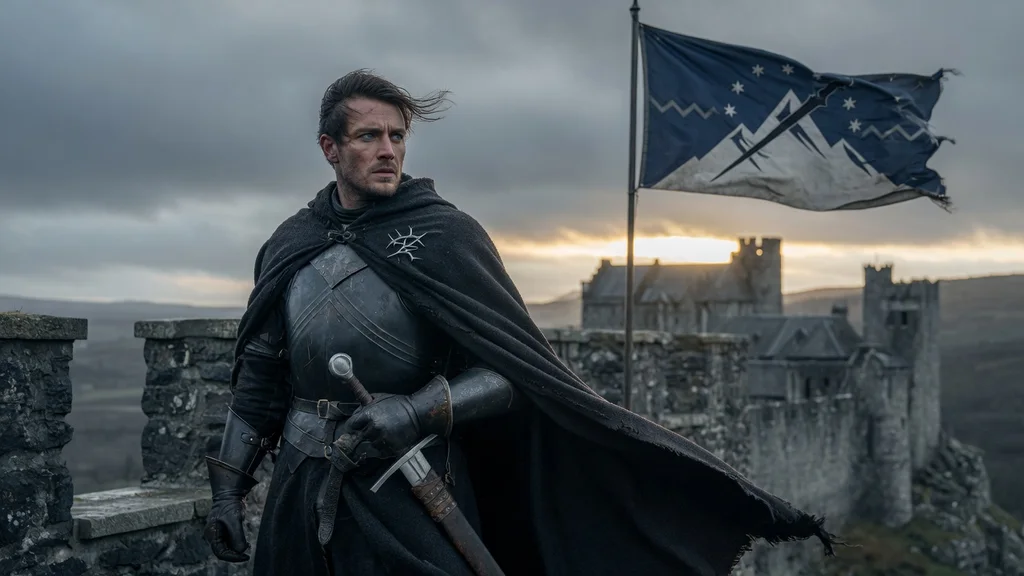
This Game of Thrones name generator builds original names for the Seven Kingdoms of Westeros — not one generic medieval-fantasy pool, but seven distinct regional traditions, the bastard-surname system, and the doubled-syllable Valyrian bloodline. Pick a region, a status (noble, bastard, commoner, or Valyrian blood), a gender, and optionally generate a house and its words alongside the name. Every result is an original combination. None are canon Stark, Lannister, or Targaryen names — this is a fan project, unaffiliated with HBO or George R.R. Martin.
👇 Click any name to copy it
George R.R. Martin didn't invent a single naming style for Westeros — he built a naming system, one that tracks region, class, and bloodline the way real medieval Europe did. A name from the North sounds nothing like a name from Dorne, and a highborn child's surname isn't the one their baseborn half-sibling gets. That system is the whole point of this generator: pick the axis that matters for your character, and the result should feel like it belongs to that specific corner of the Seven Kingdoms.
If you're specifically after the Dothraki — the horse-lord nomads from across the Narrow Sea — this page isn't the one you want. Westeros and the Dothraki sea are different cultures with different phonetics, and this generator only covers Westeros and its Valyrian-descended bloodlines. Head to the Dothraki name generator for khalasar names by rank instead.
How to Use This Game of Thrones Name Generator
Pick a region to set the phonetic flavor — the North's blunt Anglo-Saxon feel is nothing like the Reach's softer Romance-influenced names. Choose a status: noble names come with no surname baggage, bastards get a regional byname, commoners get an occasional trade nickname, and Valyrian blood switches the whole name to the doubled-syllable Valyrian pattern regardless of region. Set gender, then toggle Form to add an invented house and a one-line house motto under the name. Adjust the count slider and hit Generate — click any card to copy it.
Why Region-Based Naming Beats One Generic Fantasy Pool
Most "medieval fantasy" name generators run everything through a single undifferentiated pool — a few hard consonants for "grim" names, a few soft vowels for "noble" ones, done. That's not how Westeros actually works, and it's not how real naming traditions work either. English, French, and Iberian names sound different from each other for historical reasons — invasion, trade, isolation, religion — and Martin borrowed that same logic wholesale. A name from the North should never accidentally read as Dornish, the same way a name from Yorkshire shouldn't accidentally read as Andalusian. This generator keeps the seven regional pools genuinely separate rather than blending them into one "fantasy medieval" mush, which is also why the bastard-surname and Valyrian-bloodline mechanics sit on top of region rather than replacing it.
Westerosi Naming Conventions — Region, Status and Bloodline
A Song of Ice and Fire earns its reputation for grounded worldbuilding partly because its names aren't random. Martin roots each region's names in a real-world naming tradition, the same way medieval Europe's regions each had their own dominant sounds and roots. Get the region right and a character's name does half the worldbuilding before a reader learns anything else about them.
The North — Plain, Anglo-Saxon, Unpolished
Northern names lean on the same short, blunt roots as Old English — think Ned, Robb, and Arya in the source material: names that could belong to any English village a thousand years ago. No flourish, no Latinate polish. The North prizes plainness as a virtue, and its names reflect that directly. It's a region that distrusts anything that sounds like it was chosen to impress someone, and the naming tradition is a direct expression of that distrust — a Northern lord's name should sound exactly like a Northern farmer's, just with more land attached to it.
The Vale — Andal and Aristocratic
The Vale sits closer to the Andal invasion's cultural core, and its names carry a bit more chivalric polish than the North's — still recognizably English-rooted, but dressed for a court rather than a hall. The Vale's mountain isolation (the Eyrie is famously reachable only by a single narrow path) also gives its noble houses a reputation for old, unbroken lines, and the names lean toward that same sense of settled, undisturbed pedigree.
The Riverlands — Soft, Watery, Anglo-French
Sitting at the crossroads of half the continent, the Riverlands blends English and French influences into names that feel a touch softer and more ornamental than the North's, without tipping fully into the Reach's floral register. It's a region defined by being fought over constantly — every war in Westerosi history seems to cross it — and its names carry a kind of weary elegance that fits a land used to hosting other people's battles.
The Reach — Chivalric, French, Floral
Home to Highgarden and the wealthiest farmland in Westeros, the Reach's names lean French and Occitan — the aesthetic of troubadours and tournaments. Names here read as courtly and a little decorative, matching the region's reputation for song, wine, and knightly display. Where the North names for plainness, the Reach names for impression — length and vowel count both do more work here than they do anywhere else in Westeros.
Dorne — Romano-Moorish, Mediterranean
Dorne stands apart from the rest of Westeros the same way it does culturally in the books — settled by Rhoynar migrants and shaped by centuries of contact across the Summer Sea, its names carry a distinctly Iberian and Mediterranean sound (Oberyn, Arianne, and Nymeria are the show's clearest examples). This generator's Dorne pool leans into that same Romano-Moorish register rather than the Anglo-Saxon default of the North. Dorne is also the only region that never fully bent to Andal customs after the invasion, and its naming tradition is one of the clearest markers of that independence.
The Iron Islands — Harsh, Norse-Adjacent
The Ironborn are explicitly modeled on Norse raiders and reavers, and their names follow suit — short, hard-consonanted, closer to Old Norse than to the softer sounds of the mainland. Balon, Euron, and Asha all carry that same clipped, salt-hardened feel. Names here rarely run past two syllables; a culture that measures a man by what he's taken rather than what he's inherited doesn't waste breath on ornament.
The Crownlands — Mixed and Cosmopolitan
Built up around King's Landing after Aegon's Conquest, the Crownlands don't have one deep regional tradition the way older kingdoms do — they're a newer, blended capital region, and their names reflect a bit of everywhere: Andal roots with a more polished, court-facing edge. It's the region where ambition and lineage matter more than deep local roots, since most of its great families arrived within a few generations of the Conquest rather than holding land since the Age of Heroes.
Valyrian Blood — Doubled Syllables and -ys/-ion Endings
Valyrian is a different tradition entirely, inherited from the Valyrian Freehold across the Narrow Sea rather than from any Westerosi region — the bloodline behind the show's dragon-riding families. Linguist David J. Peterson built consistent rules for the language: doubled vowel sounds, and endings like -ys, -ion, -erys, and -aryon. Selecting "Valyrian blood" as the status swaps in this pattern regardless of which region you've picked, since the bloodline outlasts geography — a Valyrian-descended family that has lived in Westeros for three hundred years still names its children in the old tongue, the same way a real diaspora will hold onto naming customs long after the original homeland is gone or, in Valyria's case, sunk beneath the sea entirely.
Bastard Surnames by Region — Westeros's Unique Naming Rule
This is the single most distinctive mechanic in ASOIAF naming, and most generic fantasy name tools miss it entirely: a baseborn child of a nobleman in Westeros does not take their father's house name. Instead, they're given a regional surname that marks their status at a glance — a system with real medieval precedent (illegitimate children in actual medieval Europe were sometimes styled "Fitz-" plus the father's name, for the same reason). Every person in the Seven Kingdoms can read a bastard's origin off their surname instantly.
| Region | Bastard surname | Feel |
|---|---|---|
| The North | Snow | Cold, plain, unmistakably Northern |
| The Vale | Stone | Hard, mountain-rooted |
| The Riverlands | Rivers | Fluid, tied to the water-crossed heartland |
| The Stormlands | Storm | Violent, elemental |
| The Reach | Flowers | Soft, floral, ironic against a bastard's status |
| The Westerlands | Hill | Plain, understated, mining country |
| Dorne | Sand | Arid, Mediterranean-adjacent |
| The Iron Islands | Pyke | Named for the Ironborn seat itself |
| The Crownlands | Waters | Capital-adjacent, King's Landing born |
Note that the Stormlands and the Westerlands aren't selectable regions in this generator's filter (the given-name pools focus on the seven traditions listed above), but their bastard surnames — Storm and Hill — are included here for reference, since they're part of the same system and worth knowing if you're building a full-Westeros character roster.
The system has real narrative teeth, too. A bastard can petition to be legitimized by royal decree — which trades the regional byname for the father's actual house name, and with it, a shot at inheritance — but until that happens, the byname follows the child everywhere, through every hall and every introduction, regardless of how their father actually feels about them. Jon Snow is the clearest example in the source material: raised alongside his trueborn half-siblings, trained the same way, and still introduced as "Snow" his entire childhood, because a surname in Westeros is a legal fact, not a feeling. That's also why the bastard byname rarely disappears even after death — gravestones, songs, and family records all keep using it, the same way a real medieval parish register would keep calling an illegitimate child "Fitzwilliam" long after anyone remembered the details of the birth.
Status in Westeros — Noble, Bastard, Commoner, Valyrian
Noble / Highborn
A noble name carries no surname baggage on its own in this generator — highborn characters are usually introduced by given name plus house name, which is exactly what the "Name + House & words" form produces: an invented house and a one-line motto to go with it.
Bastard
A regional byname instead of a house name, per the table above — carried for life whether or not the child is ever acknowledged or legitimized by royal decree.
Commoner
Most of Westeros isn't lords and ladies. Commoner names in this generator sometimes carry a simple trade or place byname — the smallfolk equivalent of a surname, and a detail most competing generators skip entirely in favor of one flat "peasant" bucket.
Valyrian Blood
Reserved for characters descended from the old Freehold — the doubled-syllable naming pattern regardless of where in Westeros (or Essos) the character actually lives.
House Names and Words
Toggle the Form filter to "Name + House & words" and the generator pairs your noble or Valyrian-blooded name with an invented house — never a canon one — plus a one-line house motto in the same rhetorical shape as the show's own house words. Use this for a quick NPC lord, a background family for your protagonist, or a full noble house for your own homebrew corner of Westeros.
Famous Game of Thrones Names (Reference Only — Not Generator Output)
These are mentioned here purely as explanatory reference points for the naming traditions above — this generator never outputs any of them:
| Character | Region / bloodline | What it demonstrates |
|---|---|---|
| Eddard "Ned" Stark | The North | Plain Anglo-Saxon given name and diminutive |
| Sansa Stark | The North | Simple, unadorned Northern feminine name |
| Petyr Baelish | The Vale (by upbringing) | Andal-flavored courtly given name |
| Catelyn Tully | The Riverlands | Softer Anglo-French Riverlands register |
| Margaery Tyrell | The Reach | French-influenced, courtly and floral |
| Oberyn Martell | Dorne | Romano-Moorish, Mediterranean phonetics |
| Euron Greyjoy | The Iron Islands | Hard, Norse-adjacent name |
| Jon Snow | The North (bastard) | Regional given name + bastard byname |
| Daenerys Targaryen | Valyrian blood | Doubled syllables, -erys ending |
| Rhaegar Targaryen | Valyrian blood | -ar/-aegon-family Valyrian construction |
Tips for Choosing the Right Westerosi Name
- Match the region to the character's home, not just the vibe. A Dornish name on a Northern-raised character reads as a worldbuilding error unless you're doing that on purpose.
- Bastard doesn't mean unimportant. Some of the setting's most consequential characters are bastards — use the byname to signal backstory, not to signal a minor character.
- Save Valyrian blood for characters where it matters. The doubled-syllable pattern is distinctive — overusing it across a full cast flattens the effect it's meant to have.
- Pair status with region deliberately. A commoner from the Iron Islands and a commoner from the Reach shouldn't sound the same — regenerate if the flavor feels generic.
- Use the house form sparingly. Not every named character needs a full house and motto — save it for family heads and characters whose lineage matters to the plot.
- Read it aloud. Westerosi names are meant to be spoken in dialogue and shouted across battlefields — if it trips on the tongue, regenerate.
Example Names by Region and Status
North — Male & Female (Noble)
- Aldric
- Bramwell
- Cedmund
- Dunstan
- Eldric
- Aldyth
- Branwen
- Ceinwen
- Edda
- Freya
Dorne — Male & Female (Noble)
- Adrio
- Belasco
- Dorian
- Estevan
- Fadrique
- Adalia
- Belisa
- Carenza
- Esperanza
- Fiorenza
Iron Islands — Male & Female (Noble)
- Aldor
- Bregan
- Corvic
- Grimwald
- Rurik
- Aesa
- Brynhild
- Dagna
- Ingrid
- Sigrid
Bastards by Region
- Fenwick Snow
- Bertrand Stone
- Everard Rivers
- Bellamy Flowers
- Belasco Sand
- Korvath Pyke
- Alden Waters
Valyrian Blood
- Vaerys
- Rhaenerys
- Aeryon
- Daenarys
- Zhaelys
- Naerion
- Maegorys
- Draeqerys
Using These Names for Fan Fiction, RPG and Original Worldbuilding
For ASOIAF fan fiction, the region + status combination is the fastest way to build a believable minor character or an original noble house without touching canon names. For tabletop campaigns using a Thrones-adjacent setting, pair the status filter with a character's actual social role — a hedge knight reads differently as a noble's bastard than as plain commoner stock, even with the same given name. And if you're building an entirely original medieval fantasy world that simply borrows this system's logic (region-based naming, class-based bynames, a distinct high-status bloodline), swap out the flavor text and the phonetic bones will carry the feel without the franchise attachment — the same approach covered in more general terms in our guide on naming a fictional kingdom and our guide to character naming by social class.
If you want a name with no ASOIAF association at all — same medieval-Europe naming logic, none of the Thrones flavor — the medieval name generator covers English, French, and German/Frankish traditions by social class, and the knight name generator covers chivalric, dark, and holy-order knight names with titles and epithets.
For a full roster — say, a Thrones-style political campaign with multiple noble houses in play — generate a batch per region with the house form switched on, keep the ones that fit, and regenerate the rest. Because each region's given-name pool and each house-name pool are kept genuinely separate rather than blended, you can build eight or nine "houses" back to back without any of them sounding like reskins of each other, which is the exact failure mode of single-pool fantasy name generators.
FAQ for Game of Thrones Name Generator
Is this generator affiliated with HBO or George R.R. Martin?
No. This tool is an unofficial fan project, not affiliated with, endorsed by, or sponsored by HBO, George R.R. Martin, or any rights holder for A Song of Ice and Fire or Game of Thrones. It generates original names inspired by the series' documented naming conventions — it never outputs Stark, Lannister, Targaryen or any other canon character or house name.
What's the difference between this generator and the Dothraki name generator?
They cover two separate cultures. This page covers Westeros as a whole — the regional naming traditions of the Seven Kingdoms, bastard surnames, and Valyrian bloodlines. The Dothraki name generator is a distinct culture from across the Narrow Sea, with its own harsh guttural phonetics and khalasar rank system. If you want horse-lord names specifically, use the Dothraki page instead.
Why do bastards in Westeros have different surnames?
It's one of the setting's most consistent worldbuilding details. A baseborn child of a nobleman doesn't take their father's house name — they're given a regional byname instead: Snow in the North, Sand in Dorne, Stone in the Vale, Rivers in the Riverlands, Storm in the Stormlands, Flowers in the Reach, Hill in the Westerlands, Pyke in the Iron Islands, and Waters in the Crownlands. It marks status at a glance, the same way a real medieval byname would.
What makes a name sound Valyrian instead of Westerosi?
Valyrian names — the old Freehold bloodline the show's dragon-riding families descend from — lean on doubled vowel sounds and endings like -ys, -ion, -erys and -aryon. Linguist David J. Peterson built out the fictional High Valyrian language for the show with consistent rules, and Westerosi-born characters of that bloodline still carry names shaped by it centuries later.
Can I use these names for my own fantasy world or D&D campaign?
Yes. Every name is an original combination built from regional phonetic patterns — not copied from the books or show — so it's safe for fan fiction, tabletop characters, and original writing. If you want a name with zero Thrones association at all, the medieval name generator and kingdom name generator use unrelated data.
Does the region filter matter if I pick Valyrian blood as the status?
No — Valyrian is treated as its own bloodline rather than a Westerosi region, since it originates from the old Valrian Freehold in Essos, not from any of the Seven Kingdoms. Selecting it overrides the region filter and always pulls from the doubled-syllable Valyrian pool.
What's the House option in the Form filter?
Switching Form to "Name + House & words" adds an invented house name and a one-line house motto underneath the generated name — useful if you're building out a noble character and want a family and a saying to go with them, not just a first name.
Are the regions in this generator based on real Game of Thrones geography?
The region categories — North, Vale, Riverlands, Reach, Dorne, Iron Islands, Crownlands — mirror the real geographic and cultural divisions of Westeros as described in the books and show. The specific given names generated within each region are original inventions, built to match that region's documented phonetic feel rather than lifted from canon.
Can a bastard's surname change later in the story?
Yes — legitimization by royal decree replaces a regional bastard byname with the father's actual house name, which is one of the few ways a character's official surname changes mid-story in Westeros. Until that happens, though, the byname is treated as a legal fact everyone uses, regardless of how the family privately feels about the child.
Why doesn't this generator include the Stormlands or Westerlands as region options?
The given-name filter focuses on the seven regional traditions with the clearest distinct phonetic identity in the source material. The Stormlands and Westerlands are still covered for their bastard surnames — Storm and Hill — in the reference table on this page, since that mechanic applies setting-wide even though those two regions don't have a dedicated given-name pool here.