Dothraki Name Generator — Horse-Lord & Khalasar Names

This Dothraki name generator builds original horse-lord names — guttural, hard-consonant, built for warriors who ride rather than walk. Filters let you pick gender, rank (Warrior, Bloodrider, Khal, Khaleesi, or Crone), and output form: bare name or full title with khalasar affiliation. Every result is original. None are pulled from the show.
👇 Click any name to copy it
A name in Dothraki culture carries rank. A Khal's name alone is enough to scatter a city's defenders. A Bloodrider's name means a sworn oath exists somewhere behind it. Even a single warrior's name is a story about what they have survived and who they have beaten to earn the right to say it aloud.
The generator reflects that. Each result comes tagged with rank and a line of lore that places the character in the khalasar. Generate as many batches as you need — click any card to copy it.
Note that the Dothraki are a separate culture from the Seven Kingdoms of Westeros — different continent, different phonetics, different naming rules entirely. If you're after Northern, Valish, Dornish or Valyrian-blooded names instead, use the Game of Thrones name generator, which covers Westeros's regional naming traditions and its bastard-surname system.
Tips for Picking a Dothraki Name
A strong name lands before the character opens their mouth. A few things worth keeping in mind:
- Match the rank — A Khal's name needs weight. A Warrior's can be shorter and blunter. Use the rank filter to tune the pool.
- Say it aloud — Dothraki sounds are made to be shouted across a steppe. If it trips on the tongue, try another batch.
- Embrace the apostrophe — Names like Qo'thar or Dra'zho have that guttural break that signals the culture. Use the "title" form to see them in context.
- Keep it short — Two or three syllables at most. The phonetics do the work; you don't need length.
- Pair with a khalasar — "Zhorak, rider of the Black Wind Khalasar" tells more story than a name alone. Use the title form.
- Consider the arc — A Warrior who rises to Khal mid-campaign gets a name that predates the title. Let the name stay; let the rank catch up.
Dothraki Naming Conventions — How the Phonetics Work
The sound of a Dothraki name is not accidental. The fictional language built for the Game of Thrones setting was designed by linguist David J. Peterson to feel genuinely alien to Western ears while remaining speakable. The phonetic rules that shape character names in the show are consistent, and this generator follows them.
The key sounds: kh (a hard velar fricative, like the Scottish "loch"), zh (like the "s" in "measure"), q (a deep back-of-throat stop), and dr/gr clusters. These give names their signature roughness. Vowels are short and clipped — no soft drawl. The result is a name that sounds like it comes from someone who spends their life outdoors in harsh terrain, not from a throne room.
Apostrophes in compound names mark a glottal break — a brief stop between syllables. They show up in longer warrior names that have been extended by deed-names or clan markers over time.
Ranks in the Khalasar — What Each Title Means
| Rank | Feel / Phonetics | Example |
|---|---|---|
| Warrior | Short, blunt, all consonants up front | Drotho, Qorak, Zharash |
| Bloodrider | Hard stops, no softening — sworn and severe | Khorakh, Mhogas, Drakozh |
| Khal | Weight in the opening syllable; a name that announces itself | Khal Rhakot, Khal Jhovar |
| Khaleesi | Slightly longer, still sharp-edged — power through sound | Khaleesi Dhaeneri, Khaleesi Rhiaya |
| Crone / Elder | Open endings, earned over decades — sounds like age | Qhaeliira, Zhaennesse |
Example Dothraki Names
Male Warrior & Khal Names
- Drotho
- Qorak
- Zharash
- Khorakh
- Mhogar
- Rhakot
- Jhovak
- Drakozh
- Thagos
- Bhorakh
- Grhalot
- Zhorak
- Qothar
- Dothak
- Mhorash
Female Warrior, Khaleesi & Crone Names
- Dhaeneri
- Qhaeliira
- Rhiaya
- Zhielle
- Khiosa
- Jhaeliri
- Dhaenna
- Zhaennesse
- Ghaela
- Vhiraya
- Mhieli
- Thaeniri
- Rhiossa
- Bhaenaya
- Qhiela
Bloodrider Names (Male & Female)
- Drakhozh
- Khorat
- Zharakh
- Qhothar
- Mhoras
- Jhaqar
- Rhokaen
- Grhotash
- Vhaeliri
- Dhairos
The Dothraki Sea — Culture Behind the Names
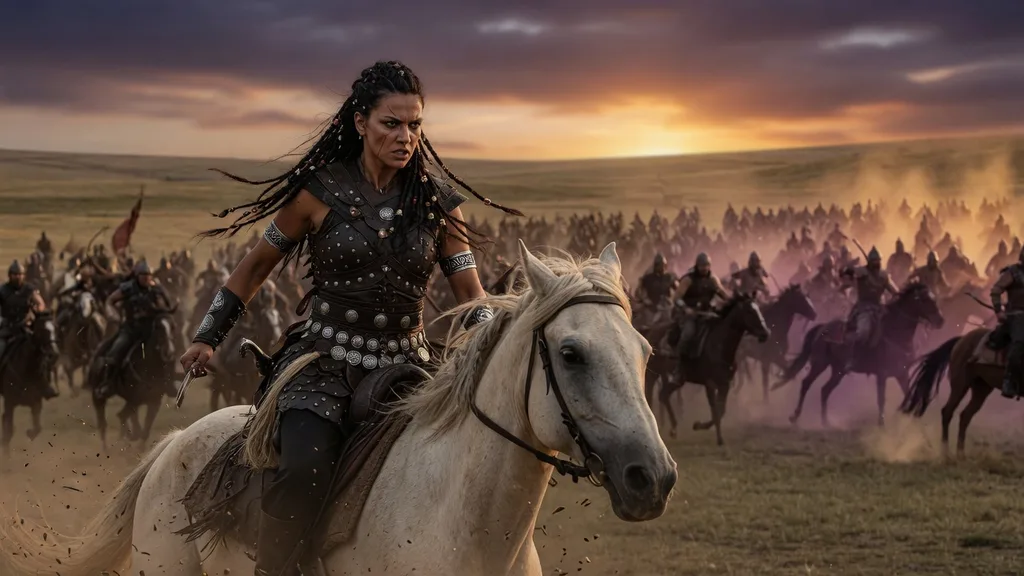
The fictional Dothraki are horse-lord nomads who never build cities and consider stone walls a kind of cowardice. They live on horseback across a vast central steppe called the Dothraki sea — a grassland so wide it moves like water in the wind. Everything in their culture relates to riding, conquest, and the khalasar.
A khalasar is not just an army. It is a moving city — warriors, families, slaves, horses, and livestock all in motion together. The Khal leads it, the Khaleesi holds political weight within it, and the Bloodriders are bound to it by oaths older than the individual members. The dosh khaleen — a council of elder Khaleesis — govern the sacred city of Vaes Dothrak, the only permanent Dothraki settlement, and their word carries enormous spiritual authority.
Names in this culture are earned and witnessed. A warrior's braid is never cut while they are undefeated — its length is a public record of victories. A Khal with a braid that reaches the saddle has never lost. Names track alongside that: they can be extended, augmented by deed, or stripped by defeat.
Using These Names for RPG Characters and Fan Fiction
The Dothraki aesthetic maps cleanly onto tabletop nomad cultures — any game that has steppe warriors, horse-lord factions, or raiders from the plains benefits from this phonetic style. The generator's rank filter lets you build a full party: Khal as the faction leader, Bloodriders as his sworn guard, Warriors as rank-and-file, a Khaleesi as political counterweight, and a Crone as the advisor who has seen it all before.
For fan fiction set in Essos or similar settings, the "title" form is especially useful — "Drotho, rider of the Black Wind Khalasar" gives a character immediate context without needing three paragraphs of backstory. The lore note on each card gives you a starting character sketch to build from.
If you are creating an original nomadic culture inspired by (but distinct from) the Dothraki, use the raw name form and swap the khalasar titles for your own culture's terminology. The phonetic bones will carry the feel without the franchise attachment.
Dothraki Name Meanings — Reading the Phonetics
Dothraki has no official dictionary for fan use, but the phonetics do carry weight. The sound-feel of a name maps loosely to these interpretations:
| Sound pattern | Feel / implied meaning | Example |
|---|---|---|
| Kh- opening | Authority, rank, command | Khorak, Khavel |
| Zh- or Zha- | Speed, edge, a blade in motion | Zharash, Zhokho |
| Qo- or Qoth- | Deep, heavy, immovable | Qothar, Qhovar |
| Dra- / Dro- | Fierce, forward, driven | Drotho, Drakozh |
| Apostrophe mid-name | Compound history — a name extended by deed | Zho'rak, Dra'ash |
| -eri / -aya ending (F) | Earned dignity; warrior or leader | Dhaeneri, Rhiaya |
| -akh / -ozh ending (M) | Blunt finality — the name ends like a weapon | Khorakh, Drakozh |
How to Use Dothraki Name Generator
Set Gender to filter male or female phonetic patterns. Pick a Rank to shape the lore tag on each card — note that Khal always generates male names and Khaleesi always generates female names, regardless of the gender filter. The Form toggle switches between bare names and the full title format ("Khal Drotho" or "Zharash, rider of the Storm Plains Khalasar").
Adjust the count slider for more or fewer results per batch. Hit Generate and click any card to copy it to clipboard. Every batch is freshly randomized — run it as many times as needed.
FAQ for Dothraki Name Generator
What makes a good Dothraki name?
Dothraki names lean on hard consonants — kh, zh, qo, dr — and short punchy syllables. Apostrophes appear in compound forms and add a guttural break mid-name. The best names feel like they could be shouted across a steppe: short, blunt, impossible to soften. Think less vowel-heavy, more jaw-forward.
What is the difference between a Khal and a Khaleesi?
A Khal is the leader of a khalasar — a mounted war-horde that can number in the tens of thousands. The title is earned through conquest and the length of an uncut victory braid. A Khaleesi is the wife of a Khal, but in practice holds real power within the khalasar as a political and spiritual figure. The dosh khaleen — the crones — are former Khaleesis who advise and prophesy from the sacred city of Vaes Dothrak.
What is a Bloodrider?
A Bloodrider is a sworn companion to a Khal, bound by a sacred oath. They ride at the Khal's side, guard his life before their own, and are expected to die in battle if the Khal falls — or, failing that, to avenge him. The bond is considered closer than blood family. Betraying a Khal as a Bloodrider is among the worst acts in Dothraki culture.
Where can I use the Dothraki Name Generator?
It's built for Game of Thrones fan fiction, tabletop nomad or horse-lord characters, and any RPG campaign that needs a steppe-warrior culture. Every name is an original combination inspired by the show's phonetic style, not lifted from the books or series, so it's safe to use freely in fan and homebrew work.
Can I use these names for D&D, RPG or fan-fiction characters?
Yes. Every name this generator produces is an original combination built from Dothraki-style phonetic patterns — not lifted from the show. They're built for exactly this: tabletop nomad characters, fantasy war-band leaders, OC fan-fiction, homebrew cultures inspired by steppe warrior societies. Use them freely.
What is a khalasar?
A khalasar is the full moving nation of a Khal's followers: warriors, their families, slaves, horses, and livestock. They travel the Dothraki sea — the vast central steppe — raiding, trading, and following seasonal patterns. Khalasars range from a few hundred to over a hundred thousand strong. A Khal's status is measured partly by how large his khalasar grows.
Where do Dothraki names come from?
The Dothraki language was constructed for the Game of Thrones TV adaptation by linguist David J. Peterson, expanding on the handful of words George R. R. Martin used in the novels. He built consistent phonetic rules — hard consonants, guttural clusters, short vowels — specifically to sound plausible as a real nomadic warrior tongue. This generator follows those same rules rather than inventing new sounds.
Are Dothraki names gendered?
Broadly yes. Male names tend to end in harder, more clipped sounds — -go, -tho, -ak, -akh. Female names lean toward longer, slightly more open endings — -eri, -aya, -elle — though both genders still carry harsh opening consonants. The generator sorts results by gender and rank, so a Khaleesi or Crone will always get names with the right feel.