World of Warcraft Name Generator

This World of Warcraft name generator builds original names for every playable race on both factions — Alliance and Horde, core races and allied races alike — each phonetically true to its lore. Pick a faction, a race, a gender, and a name style, set how many names you want, and generate a list with a race badge, a faction tag, and a short lore note on every card. Click any card to copy the name straight to your clipboard.
👇 Click any name to copy it
A WoW character name does more work than most players realize. It's the string everyone in your raid sees on the kill screen. It's what your guild leader types when they're looking for you mid-pull. It sits on your armory page for years. Get it wrong and you're stuck with it — or paying for a rename.
Getting the race right matters even more than getting the sound right. An Orc named "Aelindra" reads as a mistake. A Mechagnome named "Ragnar" looks copy-pasted from the wrong browser tab. This generator is built around one principle: this is not a fantasy-name template with a race label slapped on it. Every one of the 22 races below has its own pool, built from its own in-universe language, so a Tauren name and a Gnome name never sound like siblings.
Alliance vs Horde — Two Sound Worlds
The faction split isn't just political — it maps onto naming aesthetics almost as sharply as it maps onto architecture. Alliance races tend toward names that read as legible, familiar, melodic, or (in the case of the newer allied races) gothic and radiant. Horde races skew harsher, more percussive, more rooted in nature or the deep past, or more deliberately alien.
That's the throughline, not a hard rule — Kul Tiran names sound as weathered as any Horde clan name, and Nightborne names are as ornate as anything on the Alliance side. Pick a faction in the generator and it'll pull from every race that fights under that banner; pick a specific race and it locks to that race's phonetics exactly.
Alliance Races
Eleven races fight for the Alliance, from founding kingdoms to recent allies. Six are core races available since launch or the early expansions; five are allied races unlocked through reputation and a short quest chain.
| Race | Type | Sound profile | Example names |
|---|---|---|---|
| Human | Core | Medieval European, clear consonants | Aldric, Maren, Sybelle |
| Dwarf | Core | Norse-edged, stone-carved | Torvald, Brynja, Dagrik |
| Night Elf | Core | Flowing Darnassian, nature-touched | Thalion, Aelindra, Moonfell |
| Gnome | Core | Whimsical compound, inventor-coded | Fizzwick, Sprocket, Tinkbell |
| Draenei | Core | Eredun-inflected, alien-melodic | Vaelyx, Daenei, Kyros |
| Worgen | Core | Victorian Gilnean, gothic-feral | Ambrose, Cordelia, Crowley |
| Void Elf | Allied | Thalassian twisted by the Void | Vor'thalen, Umbrathia, Ny'vorak |
| Lightforged Draenei | Allied | Eredun + Holy Light, radiant | Radiel, Lumara, Solvaar |
| Dark Iron Dwarf | Allied | Dwarf base, molten and grim | Balgrun, Emberhold, Shadowforge |
| Kul Tiran | Allied | Salt-worn, seafaring British | Bramwell, Harlow, Saltmarsh |
| Mechagnome | Allied | Gnomish, mechanical, clockwork | Bytewrench, Gearoid, Torquil |
Humans use medieval European conventions: two or three syllables, clear consonants, names that could sit in any Arthurian legend. Stormwind and Lordaeron produced names like Arthas, Uther, Jaina — serious, legible, historically flavored. This generator's Human pool keeps that same register without lifting any canon name.
Dwarves borrow from Norse and old Germanic roots. Short vowels, runic consonants (Gn, Dr, Rg), and names that feel like they were carved into stone before they were spoken aloud. Ironforge dwarves run traditional; Wildhammer dwarves go wilder. For a deeper dive into dwarven naming across fantasy settings generally — not just Azeroth — see the Dwarf name generator.
Night Elves draw from Darnassian, a language shaped by ten thousand years in the forests of Kalimdor. Names run longer, with flowing L and N sounds, and often reference nature (moon, star, wind, weave). The rhythm is legato — syllables that slide into each other rather than snap apart.
Gnomes get whimsical compound constructions that sound like engineering accidents: Fizzwick, Cogsworth, Sprocket. The humor is deliberate. Gnome culture prizes invention and eccentricity, and the names match.
Draenei carry Eredun-inflected names from Argus — alien, melodic, often ending in vowel clusters or hard X sounds. These are names that predate most of Azeroth's civilizations.
Worgen keep their Gilnean roots: Victorian, gothic, mannered names that sound like they belong in a fog-bound English novel — because Gilneas was built as exactly that. The feral curse doesn't change the naming convention; it just adds an edge to how the name gets said.
Void Elves share Thalassian roots with Blood Elves but the sound has been pulled toward something colder — harsher consonant clusters, unfamiliar vowel combinations, names that feel like a courtly language spoken with a mouth that isn't quite human anymore.
Lightforged Draenei keep the Eredun bones but add radiant, almost liturgical suffixes — the sound of a people who walked through the Prime Naaru's light and came back different.
Dark Iron Dwarves take the same Norse-runic dwarf base and drag it through molten shadow — expect harder consonants, fire and forge imagery, and a grimmer register than their Ironforge cousins.
Kul Tirans sound like a British sailing town: weathered surnames, nautical roots, names built to survive salt spray and generations of harbor gossip.
Mechagnomes run gnomish whimsy through a mechanical filter — circuits, pistons, and ohms stand in for the usual sprockets and fizz, reflecting a people rebuilt in Mechagon's image.
Horde Races
Eleven races fight for the Horde, plus Pandaren, who can join either side. Five Horde races are core; six (counting Pandaren once) are allied.
| Race | Type | Sound profile | Example names |
|---|---|---|---|
| Orc | Core | Guttural, percussive, Orcish | Thrax, Gorka, Urgha |
| Undead (Forsaken) | Core | Grim dark, death-compound or Human | Mortem, Cryptus, Wraithborn |
| Tauren | Core | Earthy nature-compound, totem-rooted | Stonehoof, Windwalker, Ironmane |
| Troll | Core | Apostrophe cadence, Sen'jin tradition | Vol'zax, Jin'kra, Taz'jin |
| Blood Elf | Core | Thalassian elegant, arcane-precise | Sylvar, Theron, Quel'dran |
| Goblin | Allied | Bilgewater tinker, brash and buzzy | Bizzwick, Fizzbang, Grindle |
| Nightborne | Allied | Arcane Suramar, Shal'dorei | Shal'dorin, Thessaryn, Umbrindria |
| Highmountain Tauren | Allied | Mountain-clan, sky and stag | Skyhorn, Cloudpetal, Frostpeak |
| Mag'har Orc | Allied | Uncorrupted Draenor orc, clan-rooted | Kelgar, Turgash, Zulgar |
| Zandalari Troll | Allied | Ancient regal Zandalari | Zan'jal, Rezan'kai, Talan'do |
| Vulpera | Allied | Short, chirpy, desert-fox | Kip, Zuli, Tumble |
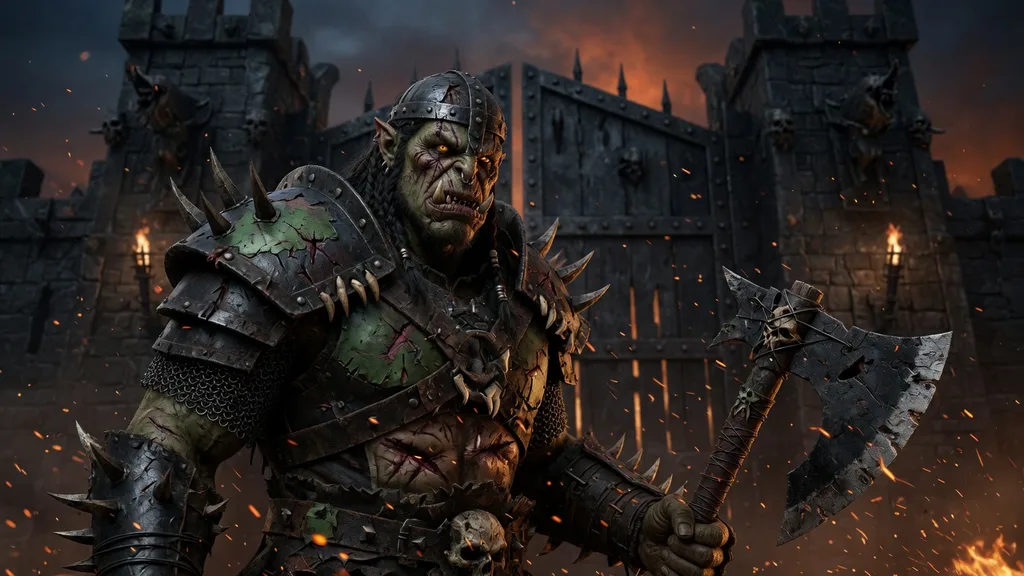
Orcs use guttural consonant clusters from the Orcish language: hard Gs, Ks, Rs, and Vs that hit like a fist. Short or medium names dominate. Think of the clans — Frostwolf, Warsong, Blackrock — and the names that fit inside them. The generator's Orc pool keeps that register: no soft syllables, no trailing vowels. For a broader fantasy Orc naming toolkit beyond WoW's specific phonetics, see the Orc name generator.
Undead/Forsaken split two ways. Some keep their Human names as a reminder of what they were. Others adopt darker compound names that lean into death: Wraithborn, Cryptus, Vexara, Mortem. Both fit the Forsaken identity — one path grieves the past, the other owns the present.
Tauren names are compound earthy words drawn from nature — plains, animals, weather, earth. They read more like titles than personal names, and that's intentional: Tauren culture ties identity to the land. Stonehoof, Windwalker, Ironmane — these names describe something real about the character before you even meet them.
Trolls use a cadence built on apostrophes and short punchy syllables. Vol, Zul, Hex, Jin — these roots recur across troll naming because they carry meaning in the old tongue. The apostrophe isn't decorative; it marks a glottal stop, a hard break between syllables. Removing it flattens the name. This page keeps the WoW troll pool compact and game-specific; for trolls across other traditions entirely — Norse folklore, Tolkien, D&D, and Discworld, alongside a WoW-style mode — see the dedicated Troll name generator.
Blood Elves share the elven root with Night Elves but Thalassian pulled toward arcane precision after the Sundering. Names are sharper, slightly shorter, and carry the elegant weight of Silvermoon's noble houses. This page keeps the Blood Elf pool compact — for tone filters (Noble, Arcane, Fel-touched) and surname options, see the dedicated Blood Elf name generator.
Goblins get brash, buzzy, tinker-shop names — the sound of a trade prince's business card. This page keeps the Goblin pool short; for a deeper set built around sneaky, tinker, and fairytale registers, see the Goblin name generator.
Nightborne carry the arcane elegance of ten thousand years hidden behind Suramar's shroud. Shal'dorei names are ornate, layered, and precise — think Blood Elf formality pushed even further into ceremony and magic.
Highmountain Tauren split from the plains tribes generations ago to settle Highmountain's peaks. The names keep Tauren's earthy compound structure but swap plains and rivers for sky, ridge, and stag — Skyhorn instead of Stonehoof, Frostpeak instead of Dustmane.
Mag'har Orcs come from Draenor, spared the demonic corruption that shaped the orcs who first marched through the Dark Portal. Their names keep the guttural Orcish base but read cleaner and more clan-rooted, without the harsher edge that crept into Horde-orc naming over generations of war.
Zandalari Trolls hail from Zuldazar, the oldest troll empire on Azeroth. Their names use the same apostrophe cadence as Darkspear names but land more regal and ancient — longer roots, more syllables tied to loa-worship and old-empire formality.
Vulpera are the newest addition to this list and sound like it — short, chirpy, playful names built for a desert-fox nomad culture that travels light and talks fast. Where most WoW races stretch toward two or three syllables, Vulpera names often land in one.
Pandaren — the Faction-Neutral Race
Pandaren are the one race that sidesteps the Alliance/Horde split entirely: after the starting experience on the Wandering Isle, players choose a faction, but the name itself doesn't change. Pandaren names are short, soft, and Chinese-inflected — usually a single syllable given name, sometimes paired informally with a virtue-themed nickname players invent themselves. Select Pandaren in the race filter and the generator ignores the faction filter, since the pool works for either side.
Unlocking Allied Races — What It Takes to Play One
If a race in the tables above is tagged "Allied," you can't just click it at character creation the way you can a core race. Each allied race requires reaching Exalted reputation with a specific faction and completing a short unlock quest chain first — usually an hour or two of content, sometimes tied to a questline from a past expansion. Once unlocked, the race stays unlocked account-wide.
| Allied race | Unlock path (general) |
|---|---|
| Void Elf | Exalted with the Argussian Reach + a short campaign questline |
| Lightforged Draenei | Exalted with Army of the Light + a short campaign questline |
| Dark Iron Dwarf | Exalted with the Council of Three Hammers + Battle for Lordaeron scenario |
| Kul Tiran | Complete the Kul Tiras war campaign, then Exalted with Proudmoore Admiralty |
| Mechagnome | Complete the Mechagon storyline, then Exalted with Rustbolt Resistance |
| Goblin (Horde allied path) | Complete the Zandalar war campaign, then Exalted with the appropriate Horde faction |
| Nightborne | Complete the Suramar questline, then Exalted with The Nightfallen |
| Highmountain Tauren | Complete the Highmountain storyline, then Exalted with Highmountain Tribe |
| Mag'har Orc | Complete the Warlords of Draenor Draenor questline, then Exalted with Vol'jin's Spear |
| Zandalari Troll | Complete the Zandalar war campaign, then Exalted with Zandalari Empire |
| Vulpera | Complete the Vol'dun storyline, then Exalted with the Voldunai |
Unlock requirements shift slightly across expansions as Blizzard streamlines old content, so treat the table above as a general shape rather than a step-by-step guide — check current patch notes before grinding a specific reputation. The naming conventions in this generator don't change with patches, though; they're built from each race's lore, not from whatever reputation currently gates them.
Common Naming Mistakes to Avoid
- Mixing phonetics across races — the single most common mistake. A Tauren with a Gnome-style compound name, or a Human with a Zandalari apostrophe, reads as an accident rather than a choice. Lock the race filter above and stay inside its pool.
- Overusing "Xx" and leetspeak — it was a trend two decades ago and it dates a character on sight now. None of the pools in this generator use numbers or repeated symbol gimmicks, on purpose.
- Ignoring realm-uniqueness — a name being available in the generator doesn't mean it's available on your realm. Popular short names on high-population servers get claimed fast; generate a batch instead of committing to one.
- Forgetting apostrophe rules — Troll, Blood Elf, Void Elf, Zandalari Troll, and Nightborne names sometimes use an apostrophe as a genuine phonetic marker, not decoration. Some third-party tools and older realm rulesets strip it; know your realm's behavior before you commit.
- Naming an allied race before you've read its lore — allied races carry a specific cultural identity (Kul Tiran maritime tradition, Nightborne's hidden-city formality, Vulpera's nomadic humor). A name that ignores that context can feel generic even if it's phonetically correct.
In-Game Naming Rules You Can't Ignore
| Rule | What it means |
|---|---|
| 2–12 characters | Shorter names are punchier in chat; longer names get truncated in some UI elements. |
| Letters only (plus apostrophe) | No numbers, no symbols. An apostrophe is allowed for races whose language uses one — Troll, Blood Elf, Void Elf, Zandalari Troll, Nightborne, Mag'har Orc, Mechagnome names in this generator avoid it by design. |
| One name per realm | Names are unique per realm, not per account or region. A popular name on a high-population realm may already be taken — generate a few backups. |
| No offensive or copyrighted names | Blizzard's naming policy blocks slurs, real celebrity names, and (in most cases) direct copies of canon character names like Thrall or Jaina. Every name here is original for exactly this reason. |
Because names are realm-unique rather than globally unique, the same generated name might be free on one realm and taken on another. If your first pick is gone, the generator's re-roll gives you a fresh batch in the same race and style instantly — no need to start over from a blank filter set.
Roleplay Servers vs Normal Servers
Roleplay (RP) realms enforce a stricter naming policy than standard PvE or PvP realms: names have to sound plausible for the race and setting, and GMs will occasionally rename characters that clearly break immersion — think keyboard-mash strings, real-world brand names, or a Tauren named after a Warcraft joke. Standard realms are far more permissive; as long as a name clears the profanity filter and character limits, almost anything goes.
If you're rolling on an RP realm, lean on the Roleplay / lore-length style filter in the generator above — it favors the longer, more flavorful end of each race's pool, which reads better in a server that expects names to hold up to in-character scrutiny. If you're on a standard realm and just want something that reads well in a raid frame, the Short tag filter biases toward the compact end of the same pool instead.
Why a Generic Fantasy Generator Doesn't Cut It Here
Most "WoW name generator" tools online run a single fantasy-syllable engine and slap a race dropdown on top — the underlying name pool barely changes when you switch from Orc to Gnome. That's the gap this page is built to close. Every race here, core or allied, draws from a pool built around that race's actual in-universe language family: Norse-Germanic for Dwarves, Sino-inflected monosyllables for Pandaren, Victorian-Gothic English for Worgen, mechanical compounding for Mechagnomes. Switching the race filter doesn't just relabel a badge — it changes the consonant clusters, the syllable count, and the rhythm of what comes out.
The faction and style filters exist for the same reason: real players don't search for "a fantasy name," they search for a name that fits a specific race, a specific side of the war, and a specific practical constraint — short enough for a raid frame, or long enough to hold up on an RP realm. This generator answers all three at once instead of making you filter through irrelevant results by hand.
Naming for Your Class — a Few Thematic Angles
WoW doesn't enforce class-specific naming rules, but a lot of players quietly pick a name that leans into their class fantasy. A few patterns worth borrowing:
- Warriors, Death Knights, Paladins — favor harder consonants and shorter names; they read well shouted across a battlefield. Orc, Dwarf, and Human pools skew this way naturally.
- Mages, Priests, Nightborne of any class — longer, more melodic names carry an arcane or holy feel. Blood Elf, Void Elf, Nightborne, and Lightforged Draenei pools lean here.
- Hunters, Druids, Shaman — nature-rooted names fit the class fantasy of working with the wild. Tauren, Highmountain Tauren, and Troll pools are built for this.
- Rogues, Warlocks — darker or sharper names suit the shadow-adjacent classes. Undead and Void Elf pools carry that tone by default.
- Engineers and tinkerers (any class, flavor-wise) — Gnome and Mechagnome names read like invented gadgets, which is exactly the point if you're leaning into a tinker-flavored roleplay identity.
None of this is a hard rule — a guttural Orc name on a healer is perfectly fine — but if you're picking a name specifically to reinforce your class fantasy, the race pool you choose in the generator matters more than any suffix trick.
Naming a Main vs an Alt
The stakes are different. A main name should be short enough to read in raid frames and distinctive enough that guildmates recognize it without the class tag. Three to eight characters is the sweet spot. Avoid names that look like they autocorrected from something else.
Alt names can afford more personality. You're less worried about recognition and more free to commit to a full lore-accurate name, a long compound Highmountain Tauren name, or a deliberately ridiculous Gnome compound. Some players name alts after the role they'll play — a healer gets a softer name, a tank gets something that hits harder.
Race consistency is the one rule that applies to both. A Blood Elf named "Grogbash" isn't funny once you're 60 levels in. Pick the name for the character you're going to play, not the character you think might be funny for five minutes.
Example WoW Names by Race
Human Names
- Aldric
- Edric
- Gareth
- Leofric
- Torvin
- Alysse
- Brenna
- Elara
- Maren
- Sybelle
Orc Names
- Bolgur
- Drok
- Gorka
- Karg
- Malgra
- Skrag
- Thrax
- Urgha
- Borgra
- Drakka
Night Elf Names
- Aelindris
- Celindor
- Moonfell
- Starweave
- Thalion
- Aelindra
- Celindra
- Dawnveil
- Silvara
- Sylvara
Tauren Names
- Dustmane
- Earthpaw
- Ironmane
- Stonehoof
- Windwalker
- Dawnpelt
- Earthsong
- Moongrazer
- Riverbend
- Silvergrass
Troll Names
- Hex'dar
- Jin'kra
- Taz'jin
- Vol'zax
- Zul'ara
- Aza'kra
- Jin'ara
- Kaz'ara
- Taz'ara
- Zul'ara
Dwarf Names
- Bjorn
- Dagrik
- Grimheld
- Ragnar
- Torvald
- Astrid
- Brynja
- Ingrid
- Sigrid
- Sigrun
Gnome Names
- Cogsworth
- Fizzwick
- Screwsworth
- Sprocket
- Tinkbell
- Fizzella
- Glimmer
- Sparkella
- Tinkwick
- Zippwick
Draenei Names
- Aruun
- Jovaak
- Kyros
- Sorvak
- Vaelyx
- Aelyx
- Daenei
- Eledra
- Laedra
- Soredra
Undead/Forsaken Names
- Cryptus
- Mortem
- Shade
- Vexara
- Wraithborn
- Ashveil
- Bonewail
- Cryptwail
- Shadewail
- Vexilia
Worgen Names
- Ambrose
- Crowley
- Gideon
- Killian
- Thackeray
- Adelaide
- Cordelia
- Griselda
- Seraphina
- Winifred
Void Elf & Nightborne Names
- Vor'thalen
- Umbrathia
- Ny'vorak
- Shaeldor
- Threnvael
- Shal'dorin
- Thessaryn
- Umbrindria
- Zeraphine
- Suramir
Mag'har Orc & Zandalari Troll Names
- Kelgar
- Turgash
- Zulgar
- Rathok
- Vraknor
- Zan'jal
- Rezan'kai
- Talan'do
- Mol'zani
- Kra'shal
Vulpera & Highmountain Tauren Names
- Kip
- Zuli
- Tumble
- Rasp
- Nabu
- Skyhorn
- Cloudpetal
- Frostpeak
- Ridgeflower
- Stagmane
Tips for Picking a Character Name with the World of Warcraft Name Generator
- Match the race's phonetics — even a non-lore name reads better when it sounds like it belongs to the right race.
- Say it aloud — if it trips over your tongue, it'll trip over your guildmates' too.
- Check the armory first — common names get taken fast on high-population realms. Generate a few options and have backups.
- Keep mains short — three to eight characters reads cleanly in raid frames and chat. Long names get abbreviated anyway.
- Apostrophes in Troll, Blood Elf, Void Elf, or Zandalari names — some realms block special characters at creation. Have a version without the apostrophe ready.
- Match RP realm expectations — use the Roleplay style filter if you're rolling on an RP server, since it favors longer, more lore-consistent names.
- Skip the numbers and X's — naming a character "Legolas123" or "Xxthraxxx" ages badly. Original names built on the right phonetics last longer.
This generator is an independent fan tool and is not affiliated with, endorsed by, or sponsored by Blizzard Entertainment. World of Warcraft, its factions, and its races are trademarks of Blizzard Entertainment; canonical character names like Thrall, Jaina Proudmoore, or Sylvanas Windrunner are mentioned here only as explanatory lore examples, never as generator output.
FAQ for World of Warcraft Name Generator
How do WoW race names differ from each other?
Each race has a distinct phonetic identity rooted in its lore. Orcs use harsh guttural sounds from the Orcish language; Night Elves draw on flowing Darnassian syllables shaped by millennia in the forest; Trolls use a cadence built on apostrophes; Gnomes build whimsical compound names. Allied races push this further — Void Elves twist familiar Thalassian sounds into something alien, Mechagnomes run gnomish phonetics through a mechanical filter. This generator keeps every race's sound profile separate, tagging each result with its race, faction, and a short lore note.
What's the difference between core races and allied races?
Core races — Human, Dwarf, Night Elf, Gnome, Draenei, Orc, Undead, Tauren, Troll, Blood Elf — have been playable since launch or the early expansions. Allied races — Void Elf, Lightforged Draenei, Dark Iron Dwarf, Kul Tiran, Mechagnome, Worgen on the Alliance side; Nightborne, Highmountain Tauren, Mag'har Orc, Zandalari Troll, Vulpera, Goblin on the Horde side — were added later and usually require unlocking a reputation or completing a quest chain before you can create one. Both types get full phonetic treatment in this generator.
Where can I use the World of Warcraft Name Generator?
Beyond character creation, it's useful for guild rosters, WoW fan fiction, cosplay tags, forum and Discord handles, or any tabletop campaign that wants Warcraft-flavored names without copying Blizzard's canon cast. Every result is an original combination built from each race's phonetic rules, not a lifted character name.
Can I use these names in World of Warcraft?
Yes. The names are original — not canon character names — and follow each race's phonetic conventions. They also fit the rules WoW enforces at character creation: 2–12 characters, letters only (plus an apostrophe for races that use one), no numbers or symbols, and unique on your realm. Troll, Blood Elf, Void Elf, and Zandalari Troll names with apostrophes may need the apostrophe dropped depending on your realm's character-creation settings — most modern realms allow it.
What names work for Alliance vs Horde characters?
Alliance races — Human, Night Elf, Dwarf, Gnome, Draenei, Worgen, Void Elf, Lightforged Draenei, Dark Iron Dwarf, Kul Tiran, Mechagnome — tend toward medieval European, Norse, flowing elven, gothic, or alien-melodic sounds. Horde races — Orc, Tauren, Troll, Blood Elf, Forsaken, Goblin, Nightborne, Highmountain Tauren, Mag'har Orc, Zandalari Troll, Vulpera — lean guttural, nature-rooted, regal, or grimly dark. Pandaren sit outside the split entirely, since they can join either faction with the same short, soft naming style. Select a faction or a specific race in the generator and the sound profile follows automatically.
What is a good WoW name for a main character?
A strong main name is short enough to recognize in chat and raid frames (2–8 characters plays cleanest), distinct from generic fantasy words, and phonetically consistent with the race. Use the generator's "Short tag" style filter to bias toward compact names. One-syllable Orc names punch hard; two-syllable Human names read quickly; longer Night Elf or Nightborne names reward the lore investment but abbreviate awkwardly in party frames.
Where do World of Warcraft names come from?
Blizzard built each race's naming convention out of a distinct in-universe language or cultural tradition — Orcish for Orcs, Darnassian for Night Elves, Thalassian for Blood Elves and Void Elves, Zandalari for Trolls, Eredun for Draenei. The generator mirrors those phonetic patterns rather than pulling random fantasy syllables, so a Tauren name still sounds earthy, a Mechagnome name still sounds like a spec sheet, and a Highmountain Tauren name still leans toward mountain and sky rather than open plains.
Do Forsaken characters use human names?
Many do — Forsaken were once Human and some keep their old names as a deliberate anchor to who they were. Others adopt darker, death-touched names that reflect their new existence. This generator offers both styles under the Undead (Forsaken) pool, mixing grim compound words with names that sound like corrupted Human ones.
How is a Void Elf name different from a Blood Elf name?
Both share Thalassian roots — Void Elves are exiled Blood Elves who bonded with the Void instead of the Sunwell — but the sound has been pulled toward something colder and more alien. Where Blood Elf names read courtly and precise (Quel'dran, Sylara), Void Elf names lean into harsher consonant clusters and unfamiliar syllables (Vor'thalen, Umbrathia) that hint at what they became. For the classic Thalassian register, see the dedicated Blood Elf name generator.
Do I need to unlock a race before I can generate names for it?
No — the generator works for every race regardless of whether you've unlocked it in-game yet. It's just as useful for planning ahead (picking a name before you finish the Nightborne or Kul Tiran unlock chain) as it is for naming a race you can already play.
What character limit does WoW enforce for names?
Names must be 2 to 12 characters, made only of letters (with an apostrophe allowed for races whose language uses one, like Trolls or Blood Elves). No spaces, numbers, or other symbols. Every name is also realm-unique — if another player already claimed it on your server, you'll need a variant. Generate a few options here so you have backups ready.