Samurai Name Generator — Clan, Rank & Life-Stage Names
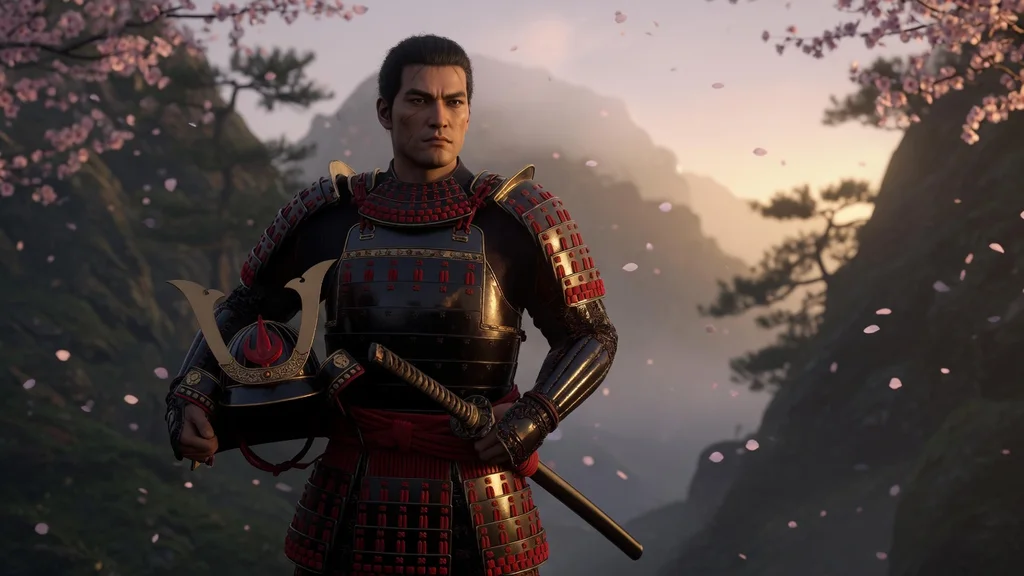
This samurai name generator is built around the one thing almost every other samurai generator gets wrong: a real samurai didn't carry one name for life. Pick an era, a rank, a gender — including onna-musha / onna-bugeisha for the samurai class's documented women warriors — and, most importantly, a life stage: the childhood name a boy or girl carried before coming of age, the adult name taken at the genpuku rite, or the posthumous Buddhist kaimyō conferred after death. Three names, one person, in sequence.
👇 Click any name to copy it
Every result also carries the right structural detail for its era — a clan name joined with the possessive particle no for the old Heian form, or a territorial surname standing alone for the form that became standard from the Sengoku period on. Roll the slider, hit Generate, and click any card to copy it.
One honesty note up front: this generator builds original names from documented naming patterns — clan names, surnames, nanori-register readings, and kaimyō structure. It does not, and will not, output the name of an actual historical person. Every real figure mentioned on this page (Oda Nobunaga, Tomoe Gozen, and so on) is there purely to explain how the system worked.
How to Use This Samurai Name Generator
Choose an Era — Heian, Sengoku, or Edo — to set the historical backdrop and which clan or surname pool the generator draws from. Set Gender, then pick a Life stage: childhood name, adult name, or posthumous kaimyō. Leave it on "Any" to see the full sequence mixed across a batch, which is the fastest way to feel how differently the same person could be addressed at three different points in their life.
Rank shapes the adult name's context — daimyō, hatamoto, gokenin, rōnin, or an ordinary retainer — and Form controls whether the result uses the old "clan no given-name" structure or the later "surname given-name" structure. Leave Form on its default and it'll match whatever's standard for the era you picked.
A Name for Every Stage of Life — Why This Mechanic Is the Whole Point
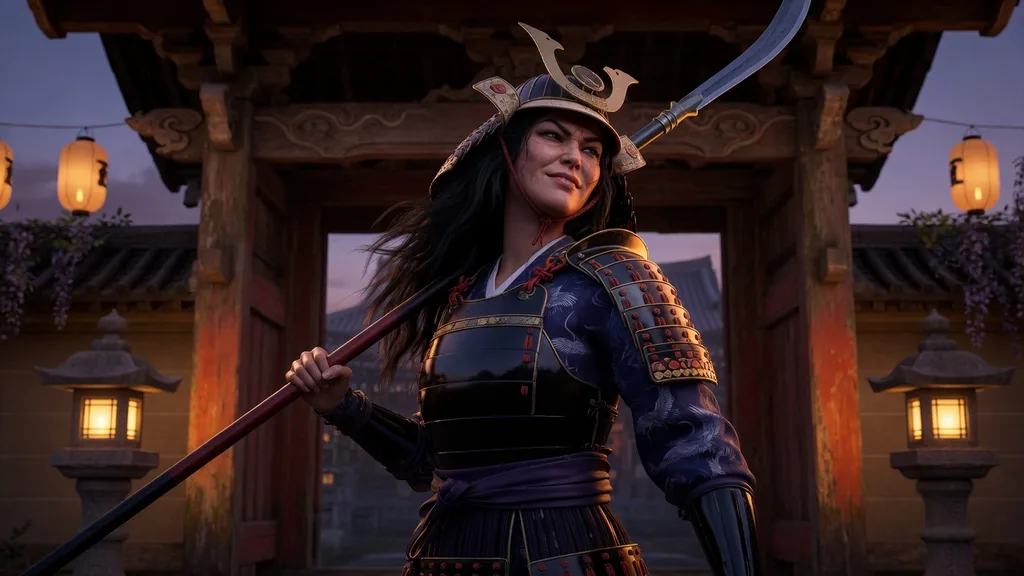
Most fantasy-warrior generators — samurai included — hand you one name and call it done. Real samurai naming didn't work that way, and treating it as a single fixed identity flattens the most interesting part of the system.
Yōmyō — The Childhood Name
A child in a samurai household was given a use-name at birth, often written in kana rather than kanji and frequently ending in a recognizable pattern: -maru for boys (a suffix with roots in words for "round" or, by another reading, protection — think of the historical convention behind names like Ushiwakamaru, the boyhood name of the general later known as Minamoto no Yoshitsune) or -chiyo for either gender, carrying a wish for a long life ("a thousand generations"). This name was temporary by design — a placeholder until the child was old enough for the identity that would follow them into adulthood.
Genpuku and the Adult Name
Genpuku was the coming-of-age rite — typically held somewhere between age eleven and seventeen depending on period, family, and status — that marked a boy's formal entry into samurai adulthood. It usually came with a change of hairstyle, sometimes a change of dress, and, centrally, a new adult name built from a two-character nanori-register given name. That adult name was the one the samurai would use in formal address, on documents, and in the historical record — unless it changed again. A samurai who took a new lord, entered a monastery, or was granted an honorary character from a superior (a real, documented practice — see the note on the nanori register below) might carry more than one adult name across a career.
Kaimyō — The Posthumous Name
When a samurai died, the family's temple conferred a Buddhist posthumous name — a kaimyō — used on the memorial tablet (ihai) and in the temple's death registry from that point forward. The full structure, for someone of real standing, layers several parts: an optional in-gō (a temple-rank prefix, historically reserved for the wealthy or the pious, ending in -in), a dōgō ("way name," the personal core of the posthumous identity), the two-character kaimyō proper, and an igō — a closing rank marker, most commonly koji (居士) for a man of standing or daishi (大姉) for a woman, with grander in-den forms reserved for daimyō-level families. This generator builds an original version of that structure rather than a real temple record — set Life stage to "Posthumous name" to see it.
Clan, Surname and the "No" Particle — How a Samurai Name Was Built
Strip a samurai's formal identity down to its parts and you get three or four pieces stacked in order: the clan (uji), sometimes a household or territorial surname (myōji), and the personal given name (nanori), joined in one of two structural patterns depending on era.
The Old Form — Uji + No + Nanori
In the Heian period, aristocratic and early warrior lineages identified themselves by clan first: Taira no Kiyomori, Minamoto no Yoritomo, Fujiwara no Michinaga. The particle no functions as a possessive — read it as "Kiyomori, of the Taira." A relatively small number of great clans (the four most cited being Minamoto, Taira, Fujiwara, and Tachibana) supplied most of the era's warrior and court elite, which is exactly why the same handful of clan names recur constantly in Heian-era chronicles.
The Later Form — Myōji + Given Name
By the time the Sengoku period's warring domains had reshaped the social order, a territorial surname (myōji) — usually rooted in the land a family held or administered — had become the standard identifier, used directly before the given name with no particle: Oda Nobunaga, not "Oda no Nobunaga." That pattern carried through the Edo period largely unchanged, even as the samurai class's day-to-day work shifted from the battlefield to the ledger. This generator's Form filter reproduces both patterns and defaults to whichever fits the era you've selected.
Nanori — The Reading Register Built Specifically for Names
Here's the detail almost no naming guide gets into: Japanese given names of this period don't just use kanji — they use a special reading of those kanji, called nanori, that applies only in personal names and doesn't match the character's everyday pronunciation. A kanji that means "faith" or "trust" might be read one way in a sentence and an entirely different way — nobu, say — the moment it's part of someone's given name. Real adult samurai names are built from a documented set of these nanori elements, typically two per name: Nobu-naga, Masa-mune, Yoshi-tsugu. This generator's adult given-name pool draws from that same register, combining two authentic nanori elements per result rather than inventing sounds with no linguistic basis.
One more real convention worth knowing: a lord would sometimes grant a loyal retainer the right to use one character from the lord's own name — an honor called henki (偏諱). It's part of why certain nanori syllables cluster inside a single domain's roster of vassals across a generation; the shared character was a visible mark of favor, not a coincidence.
Samurai Ranks and Titles
Rank determined a samurai's obligations, privileges, and — by the Edo period — even their access to the shogun in person. Here's the ladder this generator models, plus the one adjacent role that isn't samurai at all.
| Rank | What it means | Notes |
|---|---|---|
| Daimyō | Lord of a domain (han) | Commands vassals down to the lowest retainer; answers to the shogunate alone |
| Hatamoto | Direct vassal of the shogun | Holds the right of formal audience (o-me-mie); often an administrator by the Edo period |
| Gokenin | Lower direct vassal of the shogun | No right of formal audience — the rank below hatamoto |
| Rōnin | A samurai without a lord | Kept rank and swords, lost stipend and standing; "wave person" |
| Retainer (bushi) | Ordinary samurai in a lord's service | The broad base of the samurai class, of any era |
| Ashigaru (not samurai) | Commoner foot soldier | Levied or hired in large numbers from the Sengoku period on; no hereditary samurai status, no right to the daishō |
That last row matters more than it might look. Ashigaru filled out Sengoku-era armies by the thousands and were essential to how those wars were actually fought, but they were commoners under arms, not samurai — a real and often-blurred distinction that's worth getting right if you're building a cast with any social texture to it.
Onna-musha and Onna-bugeisha — Women Who Bore Arms
Onna-musha and onna-bugeisha are the terms used for women of the samurai class trained in combat, and — contrary to a common assumption — this isn't a modern invention layered onto the historical record. Tomoe Gozen is described in the Heike Monogatari as a commander in the Genpei War of the 1180s, credited with taking enemy heads in battle. Hangaku Gozen led troops during the Kennin uprising of 1201. Centuries later, in 1868, Nakano Takeko led a unit of women fighters at the Battle of Aizu and died in the fighting. None of these three names are ever output by this generator — they're historical figures, referenced here as evidence for a naming category the generator does support directly.
Set Gender to "Female (onna-musha / onna-bugeisha)" and the generator's adult and childhood pools draw from period-appropriate women's naming patterns: short, typically two-mora given names, often written in kana rather than kanji, with an honorific o- prefix in daily address and, for daughters of higher-ranking families, an optional -hime ("princess") suffix marking status.
Three Eras, Three Different Samurai
"Samurai" spans roughly a thousand years of Japanese history, and the word means something different depending on which century you land in. Here's the shape of each era this generator covers.
| Era | Years | What the samurai was |
|---|---|---|
| Heian | 794–1185 | Provincial warrior lineages emerging alongside court aristocracy; uji-clan identity, "no" naming form |
| Sengoku | 1467–1615 | Warring states — the samurai's peak as an active battlefield role; daimyō rise, territorial myōji surnames standard |
| Edo | 1603–1868 | Tokugawa peace — samurai increasingly serve as administrators and bureaucrats; rank hierarchy (hatamoto/gokenin) formalizes, swords rarely drawn in anger |
That last row is worth sitting with if you're writing an Edo-era samurai character: peacetime samurai spent far more time on ledgers, land registers, and court etiquette than on the battlefield. A story that treats every Edo samurai as an active warrior is working against the actual social history of the period.
Famous Samurai Names and What They Show
A short reference table of real historical figures — included purely to illustrate how the naming patterns above actually played out. None of these names are ever produced as generator output.
| Name | Era | What it shows |
|---|---|---|
| Taira no Kiyomori | Heian | Clan + no + given name, the old aristocratic-warrior form |
| Minamoto no Yoritomo | Heian → Kamakura | Founder of the Kamakura shogunate; same clan-form naming |
| Oda Nobunaga | Sengoku | Myōji + nanori given name, no particle — the later standard form |
| Tokugawa Ieyasu | Sengoku → Edo | Founder of the Edo shogunate; adopted the "Tokugawa" myōji after starting life under a different family name |
| Date Masamune | Sengoku | Nanori given name built from two meaningful readings, masa + mune |
| Tomoe Gozen | Heian | "Gozen" functions as an honorific title for a woman of rank, not a surname |
Samurai Names vs. Other Japan-Rooted Generators on This Site
Japan-themed name searches tend to land on the wrong page constantly, so here's an explicit map. This generator covers historical samurai naming specifically — real conventions, real periods, real rank structure. If you actually need modern real Japanese names with verified meanings for a contemporary character, that's the Japanese name generator, not this page — samurai naming conventions are centuries out of step with how Japanese people are actually named today. For Japanese folklore rather than human history — fox spirits that age a tail per century and live under a second, human alias — see the kitsune name generator. For Kishimoto's invented shinobi phonetics (clan-style surnames, hidden-village ranks, food-and-plant given names) rather than documented history, see the Naruto name generator. And if you want a contrast piece — a European warrior-order tradition built on the same "person changes names/titles over a career" logic but from an entirely different culture — the knight name generator and the templar name generator cover chivalric and monastic-military naming respectively.
Tips for Naming a Samurai Character
- Pick the era before the name. A Heian courtier-warrior and an Edo-period administrator are different characters wearing the same word, "samurai." Let the era decide the clan/surname form and the tone.
- Use the life-stage mechanic on purpose. A character introduced by their childhood yōmyō and revealed to have taken an adult name later is a real structural beat you can build a scene around — genpuku is a natural coming-of-age moment in fiction, not just history.
- Match rank to obligation, not just vibe. A rōnin's whole narrative situation — no lord, no stipend, rank intact — is baked into the title. Don't give a rōnin character a daimyō's confidence unless that's the point.
- Don't skip ashigaru in a battle scene. If your story has a real Sengoku-scale battle, the numbers are mostly ashigaru, not samurai. Naming a few of them as commoners (not with the samurai given-name system) adds real texture.
- Let a kaimyō close a character's arc. If a samurai character dies on the page, a posthumous name is a quiet, historically grounded way to mark the moment — the family's living name is retired, and a new one takes its place on the tablet.
- Naming a whole household or domain? Our guide to consistent names for a culture covers locking a sound inventory so a lord, his retainers, and his rivals all read as one coherent naming system rather than random rolls.
Example Samurai Names
Childhood Names (Yōmyō)
- Takemaru
- Torachiyo
- Umewakamaru
- Senchiyo
- Manmaru
- O-Ichi
- O-Toku
- O-Waka
- O-Tsuru
- O-Sugi
Adult Names (With "No" — Heian Form)
- Minamoto no Terumune
- Taira no Kanetsugu
- Fujiwara no Yasuchika
- Tachibana no Norisada
- Ono no Mitsuaki
- Abe no Shigeteru
Adult Names (Without "No" — Sengoku/Edo Form)
- Kuroda Masatsugu
- Sanada Toshinaga
- Maeda Yoshimune
- Uesugi Kagenobu
- Naito Haruaki
- Sakai Kunitomo
Posthumous Names (Kaimyō)
- Kōun-in Shun'yo Koji
- Zuiun-in Genkō Daishi
- Enju-in Ryūtan Koji
- Toku-ō Daishi
- Sei-rin Koji
- Myōshin-in Kai-gen Daishi
About Samurai Naming — Accuracy and Limits
The system on this page is real: the uji/myōji distinction, the "no" particle, the nanori reading register, genpuku, kaimyō, and the daimyō-to-ashigaru rank ladder are all documented features of samurai-era Japan, not invented flavor text. Where this generator does invent something, it's the specific combinations — original given names built from real nanori elements, original kaimyō built from real structural parts — never a real person's actual identity.
It's also worth being precise about what this page isn't. It doesn't generate names in modern use in Japan today (see the Japanese name generator for that), and it doesn't attempt to transliterate historical kanji with full linguistic rigor — nanori readings in particular could vary by family, region, and period in ways a single generator can't fully capture. Treat the output as evocative and pattern-accurate for fiction, tabletop characters, and worldbuilding, not as a scholarly reconstruction of a specific historical individual's name.
FAQ for Samurai Name Generator
Did samurai really have more than one name in their lifetime?
Yes — this is the most misunderstood part of samurai naming, and it's real. A samurai boy was given a childhood name (yōmyō) at birth, which was set aside at the genpuku coming-of-age ceremony (usually the early-to-mid teens) for an adult name. Some samurai took another name after a change of lord, a retirement, or entering the priesthood, and after death the family commissioned a posthumous Buddhist name (kaimyō) used on the memorial tablet from then on. This generator's Life stage filter lets you pull any point in that sequence directly.
What does the "no" in names like Taira no Kiyomori mean?
It's a possessive particle — "Taira no Kiyomori" reads closer to "Kiyomori of the Taira [clan]." This "clan + no + given name" form was the standard way to state identity among Heian-era aristocratic and warrior clans (uji). By the Sengoku and Edo periods, most samurai had shifted to a territorial surname (myōji) used directly before the given name, with no "no" — Oda Nobunaga, not "Oda no Nobunaga." The generator's Form filter switches between the two, and defaults to whichever was standard for the era you pick.
What is nanori, and why does it matter for names?
Nanori is a special reading register used specifically for personal names — the same kanji character can be read one way in ordinary vocabulary and a completely different way when it appears in someone's given name. A samurai's two-character adult name (like Nobu-naga or Masa-mune) draws its readings from this nanori pool rather than standard dictionary pronunciation, which is part of why old Japanese names can look deceptively simple but aren't reliably guessable from the kanji alone. This generator's adult given names are built from real, documented nanori-register elements combined in the same two-part pattern.
What's the difference between daimyō, hatamoto, gokenin and rōnin?
They're a rough ladder of samurai standing, most precisely defined in the Edo period. A daimyō governed an entire domain and commanded vassals beneath him. A hatamoto was a direct vassal of the shogun with the right of formal audience. A gokenin was also a direct shogunal vassal, but ranked below hatamoto and without that audience right. A rōnin (literally "wave person") was a samurai without a lord — the domain that retained him was gone, or the bond was broken — who kept the rank and the right to carry swords but not the stipend.
Is ashigaru the same thing as a samurai?
No, and mixing the two up is a common mistake. Ashigaru were foot soldiers — commoners levied or hired to fight in large numbers, especially from the Sengoku period onward, when armies grew too large to staff with samurai alone. They wore lighter, mass-produced armor, didn't hold hereditary samurai status, and weren't entitled to a surname or the daishō (paired long and short swords) the way a samurai was. This generator's rank filter covers samurai ranks specifically; ashigaru sit outside that class entirely, which is exactly why they're worth naming here.
Were there real female samurai warriors — onna-musha?
Yes. Onna-musha (or onna-bugeisha) is the term for women of the samurai class trained in combat, and the historical record backs it up: Tomoe Gozen fought as a commander in the Genpei War, Hangaku Gozen led troops during the Kennin uprising, and centuries later Nakano Takeko died leading a unit of women fighters at the Battle of Aizu in 1868. None of those names are generator output — they're referenced here as documented historical figures, not as randomized results.
How does the naming system change between the Heian, Sengoku and Edo eras?
Heian-era (794–1185) samurai identity leaned on the uji-plus-no clan form, tied closely to court rank and hereditary lineage. The Sengoku era (1467–1615) is the age of the daimyō and territorial myōji surnames, with names carrying real weight as reputation on the battlefield. By the Edo period (1603–1868), Japan was largely at peace under the Tokugawa shogunate, and most samurai spent their careers as administrators and bureaucrats rather than active soldiers — the rank system (hatamoto, gokenin) hardened, while the swords stayed mostly sheathed. The generator's Era filter shapes which clan/surname pool and titles come up.
Where can I use these samurai names?
D&D and other tabletop campaigns, historical or wuxia-adjacent fiction, jidaigeki-style game NPCs, and any worldbuilding project that wants a warrior naming system with real logic behind it rather than invented syllables. Every result is an original combination built from documented naming patterns — clan names, myōji surnames, nanori-register given names, and kaimyō structure — checked against a list of real historical figures so none of them slip out as output.