Aeldari Name Generator — Craftworld, Drukhari & Harlequin
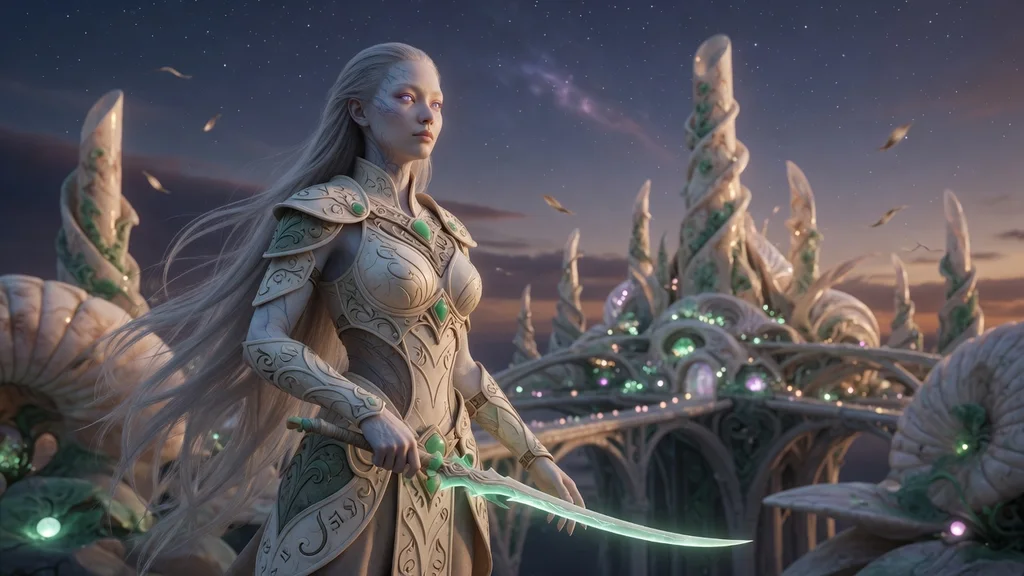
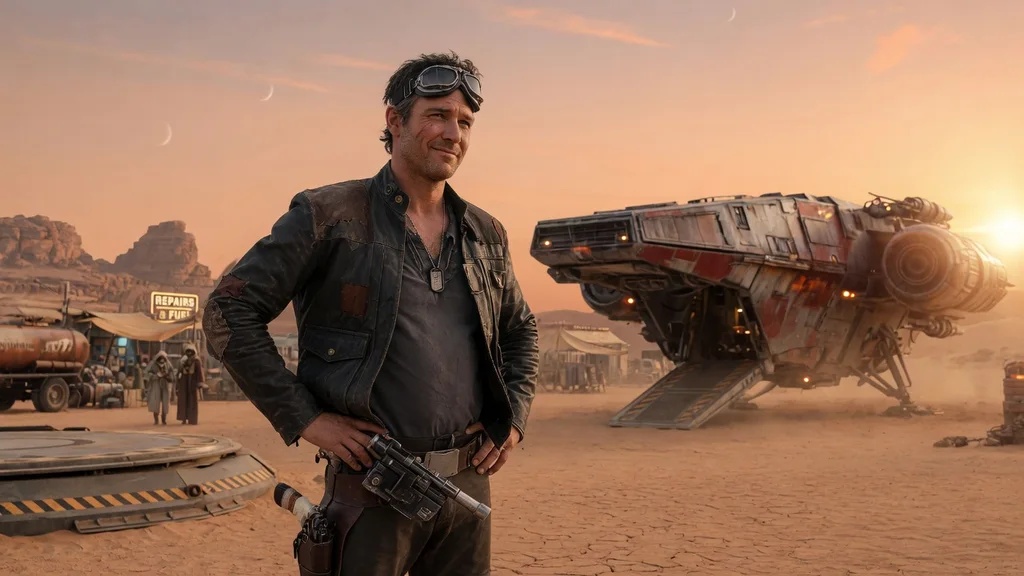
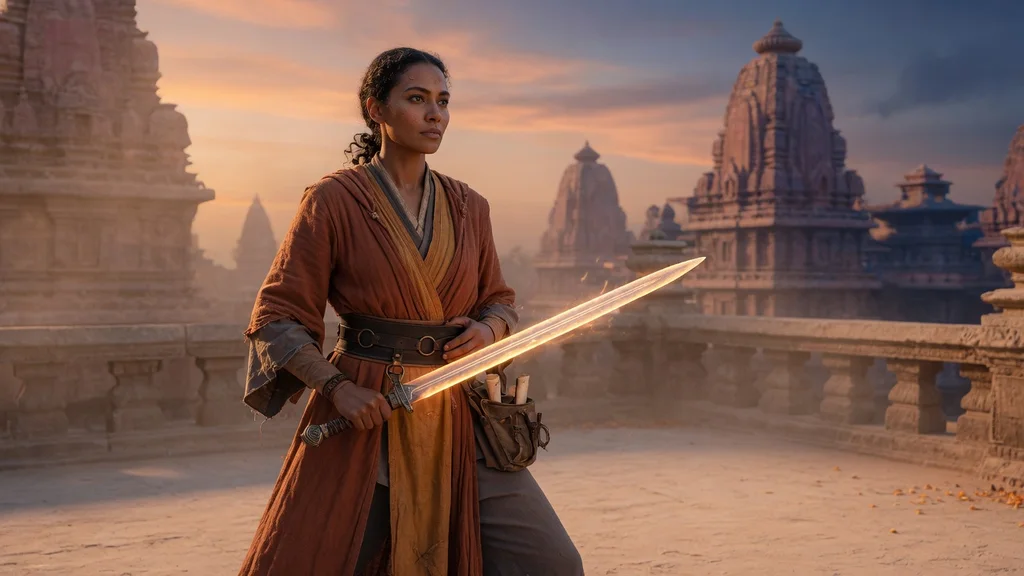
This Aeldari name generator builds names for the whole species, not just one corner of it — Craftworld Aeldari walking their Path, Drukhari carving out rank in Commorragh, Harlequins serving the Laughing God, Exodites tending maiden worlds, and Corsairs who renounced the Path for a raiding ship of their own. Pick a faction, set a Craftworld origin and a Path, and generate as many names as your roster, campaign, or fiction needs.
👇 Click any name to copy it
Each result comes with a faction badge, a role or title drawn from that faction's own naming logic, and a short lore caption — the kind of line a Seer Council record or a Kabal ledger might carry beside a name. Set the Craftworld Origin filter and Craftworld Aeldari, Harlequin, and Corsair names pick up a matching heritage note; Drukhari and Exodite results treat it as a looser ancestral echo, since neither branch is native to the Craftworlds in the source lore.
Every name is an original phonetic construction built in the style of the setting. This site is not affiliated with, sponsored by, or endorsed by Games Workshop — see the FAQ below for the full disclaimer.
Who the Aeldari Are
The Aeldari are the oldest starfaring civilization still standing in the Warhammer 40,000 setting — an empire that spanned the galaxy millennia before humanity left Terra, and that tore itself apart from the inside through a slow-motion collapse into hedonism so total it birthed a new Chaos God and swallowed most of their species whole. What's left is scattered: Craftworlds drifting between the stars, a pleasure-city of the damned called Commorragh, wandering troupes of masked performers, a handful of hidden agrarian worlds, and loose bands of raiders who answer to no one.
None of that history is decorative. It's the reason Aeldari naming conventions read so differently from a generic "elf" name generator. A Craftworld Aeldari's name is tied to a discipline meant to hold their emotions in check. A Drukhari's name is a scoreboard of Kabal rank. A Harlequin's name might not even be the one they were born with. The split isn't cosmetic — it's the whole point of building this generator with five separate factions instead of one shared pool.
Aeldari Naming Conventions — What Makes a Name Work
Aeldari names are long, flowing, and vowel-heavy compared to almost anything human or Imperial in the setting — Aeliel, Vaelorien, Thalessa — but the melody isn't the only thing doing the work. Two structural features carry real meaning, and getting them right is what separates a name that reads as authentically Aeldari from one that's just a generic fantasy elf name with the serial numbers filed off.
Why the Apostrophe Actually Belongs Here
A lot of fantasy naming conventions treat the apostrophe as pure decoration — drop one in the middle of a word and it reads "exotic," no linguistic logic required. Aeldari names use it for something specific: marking an elided lineage-word or honorific that's been contracted into the name rather than spoken in full. Think of it the way English compresses "of the" into a possessive 's — the apostrophe is standing in for a piece of grammar that got swallowed, not just breaking up syllables for flavor.
That's why this generator's apostrophes always sit between a given-name root and a short lineage particle — Ael'thoriel, not A'e'l'th'oriel — and why they show up more often on Seer and Artisan names (formal, ceremonial callings) than on Warrior or Outcast ones (blunter, faster-spoken roles). Drukhari names mostly drop the apostrophe altogether, which fits: Commorragh has little patience for ancestral formality when rank can be seized instead of inherited.
Long, Open, Flowing — and Never Accidental
Where a High Gothic Imperial name lands like a boot on stone, an Aeldari name arrives like something older and sadder — soft consonants, open vowels, trailing endings like -iel, -ath, and -orien that let the sound drift rather than stop. It's a deliberate contrast with every other major faction in the setting: Orks are blunt and guttural, Imperial names are heavy and ceremonial, and Aeldari names are built to sound like they've had ten thousand years to wear smooth.
How to Use This Aeldari Name Generator
Four controls shape each result. Pick a faction — Craftworld, Drukhari, Harlequin, Exodite, or Corsair — or leave it on Any Faction to let the generator roll across all five. Set a Craftworld Origin if you want a specific heritage note attached; leave it Unspecified and Craftworld Aeldari results will still pick up a random Craftworld automatically, since a Craftworld Aeldari without a home Craftworld doesn't really make sense.
Choose a Path / Calling — Warrior, Seer, Artisan, or Outcast — to steer the role and title on each card, and set a gender. Use the slider to pick how many names to roll, hit Generate, and click any card to copy it. Don't like a batch? Roll again — the pools are large enough that repeats stay rare even across a full army list or party roster.
Famous Aeldari in Warhammer 40,000 Lore
A quick note before the names: everything generated on this page is an original phonetic construction. The names below are canon Games Workshop characters, included only as explanatory reference so you can see how the naming logic plays out in published material — they are never produced as generator output.
| Character | Faction / Role | Notable For |
|---|---|---|
| Eldrad Ulthran | Craftworld — Farseer of Ulthwé | One of the most powerful psykers in the setting, obsessed with steering fate itself |
| Asurmen | Craftworld — Phoenix Lord | The Hand of Asuryan, first and greatest of the Aspect Warriors |
| Jain Zar | Craftworld — Phoenix Lord | Leader of the Howling Banshees, "the Storm of Silence" |
| Illic Nightspear | Craftworld Alaitoc — Ranger | Legendary Path of the Outcast marksman |
| Yvraine | Drukhari-born, later Craftworld-aligned | Emissary of the reborn Aeldari god Ynnead |
Notice the pattern: every one of these names pairs a flowing given name with a role or Craftworld affiliation, exactly the structure this generator reproduces — just with original syllables instead of published ones.
The Path System and How It Shapes a Name
Craftworld Aeldari society runs on the Path — a structured system of disciplines designed to let an Aeldari master an intense pursuit (war, prophecy, artistry) for a time without falling permanently into it, the way their ancestors fell permanently into pleasure-seeking before the Fall. A given name doesn't change when someone switches Paths. What changes is the role and title riding alongside it.
- Path of the Warrior — Aspect Warrior shrines: Dire Avengers, Striking Scorpions, Fire Dragons, Dark Reapers, Shining Spears, Swooping Hawks, Howling Banshees.
- Path of the Seer — Farseers and Warlocks, who read the future through runes at a psychic cost most other species can't survive.
- Path of the Artisan — Bonesingers who grow wraithbone architecture and craft the Infinity Circuit that houses a Craftworld's dead.
- Path of the Outcast — Rangers who leave the Craftworld's structure behind entirely, sometimes for years, sometimes for good.
This generator's "Path / Calling" filter follows that same four-way split — Warrior, Seer, Artisan, Outcast — but applies faction-appropriate analogues where a literal Path doesn't exist. Drukhari don't walk Paths; they climb through Kabal, Wych Cult, or Coven roles that map onto the same four broad archetypes. Harlequins serve the Great Harlequin instead, with Shadowseers standing in for the Seer role and Troupe blade-dancers for the Warrior. Exodites and Corsairs each keep a looser, homegrown version of the same discipline.
Craftworld vs Drukhari vs Harlequin vs Exodite vs Corsair
"Aeldari" covers five branches that split apart at different points in the species' history and now barely recognize each other as kin. Picking the right faction filter matters more here than in most name generators, because the naming logic genuinely diverges.
Craftworld Aeldari
The largest and most familiar branch — survivors who fled the Fall aboard massive wraithbone city-ships and rebuilt a culture around discipline instead of indulgence. Names carry Path titles and, often, a Craftworld of origin worn like a second surname. Aeliel of Ulthwé, Vaelorien of Biel-Tan — the Craftworld isn't just geography, it's a whole cultural inheritance packed into a place-name.
When a Craftworld Aeldari dies, their spirit stone is placed into the Infinity Circuit — the Craftworld's living psychic network — so their memory and skill can be drawn on by the living for generations afterward. That's part of why names in this branch carry so much weight: an Aeldari isn't just naming a person, they're naming someone who will eventually become part of the Craftworld's collective memory.
Drukhari
The Aeldari who leaned into the Fall's hedonism instead of fleeing it, and who now survive in the webway-city of Commorragh by feeding on the suffering of others to hold off the same slow spiritual death that claimed their ancestors. Names share the Craftworld root tongue but shed most of the ceremony — harder endings, fewer lineage particles, titles earned through Kabal, Wych Cult, or Haemonculus Coven rank rather than inherited discipline.
Standing in Commorragh is never permanent. A Kabal's Archon can fall to a rival's knife tomorrow, and every Kabalite beneath them falls with it — which is why Drukhari names in fiction and roleplay work best when they're treated as provisional. The name that opens a scene might not be the one that closes it.
Harlequin
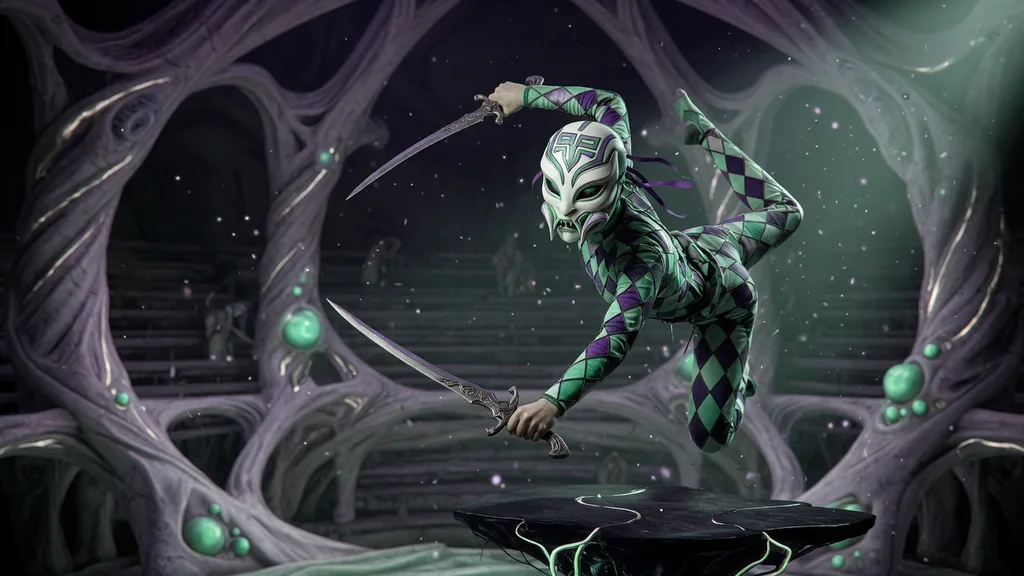
Masked servants of the Laughing God who move freely between Craftworlds — and even into Commorragh — performing the Great Harlequin, a ritual dance-drama that retells the Aeldari's entire history, Fall included. Harlequins often carry a mask-epithet layered over a birth name, since the role they play in the performance can matter more than the name they were given.
Harlequin troupes travel the webway using routes no one else can navigate, arriving at a Craftworld or a battlefield exactly when their performance is needed and vanishing just as suddenly. Their masks aren't costume — each one represents a role in the Great Harlequin, and a Harlequin who has played the same role for centuries can start to blur with the mask itself, which is where the epithet-heavy naming style comes from.
Exodite
Aeldari who left their ancestral homeworlds before the Fall even happened, settling quiet agrarian maiden worlds directly rather than building or boarding a Craftworld. Their culture runs closer to dragon-riding, saurian-herding clans than to wraithbone cities, and most Exodites have never set foot on a Craftworld in their lives.
Exodite names still draw on the same root tongue as their Craftworld cousins, but the cultural texture around them is different — homestead names, beast-rider titles, and a Spirit-speaker tradition that talks to a world's old psychic echoes instead of a Craftworld's Infinity Circuit. It's the branch of the Aeldari that feels least touched by the grimdark weight pressing on everyone else in the setting.
Corsair
Craftworld Aeldari who walked away from the Path system entirely, trading Seer Council oversight for a raiding voidship, a Prince's flag, and a crew that answers to nobody but them. Corsair fleets range across the galaxy taking what they need and reporting to no one — the closest thing the Aeldari have to freelance pirates.
A Corsair fleet is built around loyalty to its Prince rather than loyalty to any Craftworld's Seer Council, which means Corsair crews often mix Aeldari from several different Craftworld backgrounds — and occasionally, cautiously, Exodites or exiled Drukhari too. It's the one branch of Aeldari society where origin genuinely stops mattering as much as who you fight alongside now.
Craftworlds — Quick Reference
Set the Craftworld Origin filter to color your results with one of these five — remember it's an ancestry tag on the name's lore caption, not a literal syllable in the name itself.
| Craftworld | Cultural Trait |
|---|---|
| Ulthwé | Haunted by prophecy — home to the largest concentration of Seers and a grim sense of foreboding |
| Biel-Tan | Purist and militant, still dreaming of the Aeldari empire reborn |
| Saim-Hann | Wild, clan-bound, jetbike-riding — closer to a biker gang than a temple |
| Iyanden | Grief-worn and wraith-guarded, its population diminished by war |
| Alaitoc | Reclusive and watchful, with more of its people walking the Path of the Outcast than any other Craftworld |
Aeldari Naming by Faction — Quick Reference
| Faction | Sound | Example |
|---|---|---|
| Craftworld Aeldari | Flowing, melodic, lineage particles common | Aeliel, Vael'thoren, Thalessa |
| Drukhari | Same root tongue, sharper endings, ceremony stripped away | Aelesh, Vaelorax, Thalivra |
| Harlequin | Flowing given name plus a mask-epithet | Aeliel the Silent Tear, Vael'thoren who Laughs at Grief |
| Exodite | Flowing root tongue, homestead and beast-rider flavor | Elania, Orathiel, Naerielle |
| Corsair | Flowing root tongue, voidship and raider flavor | Bryniel, Cielessa, Xaelador |
Naming for Tabletop, RPG, and Fiction
The five branches suit different use cases in practice, which is worth thinking about before you start rolling names.
Tabletop army commanders want a name that reads cleanly across a battle report and doesn't trip anyone up mid-turn. A two- or three-syllable given name plus a faction badge does the job better than a name loaded with unpronounceable apostrophe clusters.
RPG characters in Wrath & Glory or a homebrew 40K campaign benefit from the Path/role pairing this generator produces — a name and a title ready to drop straight onto a character sheet, whether that's a Dire Avenger fresh off her shrine or a Kabalite Warrior clawing up the ranks of a Commorragh gang.
Fiction writers get the most mileage out of the Craftworld Origin and lore caption together — a single generated line can seed a whole character backstory without you having to invent the cultural texture from scratch.
Tips for Choosing an Aeldari Name
- Match the faction to the character's role in your story. A Craftworld Seer and a Drukhari Kabalite Warrior shouldn't share a naming register even if the raw syllables overlap.
- Use Craftworld Origin as backstory, not decoration. Pick Alaitoc for a loner Ranger, Iyanden for someone shaped by loss, Saim-Hann for a reckless jetbike rider.
- Say it aloud before committing. Aeldari names are meant to flow — if it trips your tongue on the second syllable, roll again.
- Let the Path/role tell you who this person is. A generated title like "Dark Reaper" or "Haemonculus Adept" is a character hook, not just flavor text.
- Save the apostrophe-heavy results for formal names. Reserve the lineage-particle forms for Seers, nobles, and named NPCs; keep Warrior and Outcast names leaner.
- Give Drukhari names room to be replaced. If a character is climbing Commorragh's ranks, roll a fresh name when their status changes — a demotion or a rival's blade is a legitimate in-fiction reason to swap it.
- Don't force a Craftworld origin on Drukhari or Exodite characters. Leave the origin filter on Unspecified unless you specifically want that ancestral-echo flavor text; both branches read more naturally without it.
Example Aeldari Names
Craftworld Aeldari Names
- Aeliel
- Vael'thoren
- Thalessa
- Ithior
- Naeth'silar
- Or'renath
- Phaeith
- Rael'velor
- Sael'thalan
- Ulathorn
- Elania
- Gwenalwen
- Kelaris
- Mala'nornia
- Zar'yelith
Drukhari Names
- Aelesh
- Vaelorax
- Thalivra
- Belor
- Kaelyx
- Ora'fenessa
- Sela'yssa
- Xaelun
- Zaraivar
- Gwynivar
Harlequin Names
- Aeliel the Silent Tear
- Vael'thoren who Laughs at Grief
- Thalessa the Masked Verse
- Rael'velor of the Painted Sorrow
- Ithior the Bladed Smile
- Naeriia the Veiled Punchline
Exodite Names
- Elania
- Orathiel
- Naerielle
- Bela'vashith
- Tael'fenor
- Ciela
- Bryn
- Fael'orien
- Jorydor
- Selorien
Corsair Names
- Bryniel
- Cielessa
- Xaelador
- Yorien
- Zael'renor
- Wynessa
- Quorath
- Aeria
- Danessyn
- Itharis
About Aeldari Naming Patterns
Zoom out across all five branches and a few patterns hold steady, even as the culture around them diverges hard. Naming isn't decorative anywhere in Aeldari society — it's one more way an ancient species tries to hold its identity together after losing most of its history to a single catastrophic mistake.
- A given name built from open, flowing root-tongue syllables — the one constant across every branch, since they all descend from the same pre-Fall language
- An optional lineage particle, marked with an apostrophe, that's more common in formal Craftworld and Seer-adjacent names than in Warrior or Outcast ones
- A role or title tied to Path, Kabal rank, Troupe role, homestead standing, or Corsair crew — rarely a name on its own, almost always paired with a function
- A Craftworld or origin note that means something different depending on branch: literal homeland for Craftworld Aeldari, an ancestral echo for Drukhari and Exodites, a touring history for Harlequins
Gender balance. Unlike some fantasy naming traditions where one gender gets a narrower or more restrictive pool, Aeldari naming doesn't skew hard in either direction — male and female given names share the same phonetic rules and the same access to every Path, Kabal rank, Troupe role, and Craftworld title. The split in this generator is cosmetic (different vowel-ending pools for variety), not a reflection of any in-universe restriction.
Why the split matters for you. If you're building a single character, picking the right faction from the start saves you from a name that reads as Craftworld-noble when the character you actually have in mind is a scrappy Drukhari climbing a Kabal from nothing, or a Harlequin whose birth name barely matters anymore next to the mask she's worn for three centuries.
For the wider grimdark roster — Imperial, Ork, and Chaos names alongside these — the Warhammer 40K name generator covers the rest of the 41st Millennium. If you're building a broader elven cast, branch out to the high elf name generator for something closer to classic noble-elf phonetics, or the drow name generator for a darker, harsher elven register that plays well as a tonal contrast to the Drukhari results above.
FAQ for Aeldari Name Generator
What is the difference between Aeldari and Eldar?
They're the same species. "Eldar" was the term used in older editions of the tabletop game; Games Workshop shifted the setting's own terminology to "Aeldari" as the umbrella name for the whole species, with Eldar increasingly reserved for the Craftworld branch specifically. This generator treats Aeldari as the umbrella and lets you pick which branch — Craftworld, Drukhari, Harlequin, Exodite or Corsair — you actually want a name for.
How does the Path system affect an Aeldari name?
Craftworld Aeldari walk a Path — a structured discipline like the Path of the Warrior or the Path of the Seer — meant to keep their intense emotions from tipping into the same self-destruction that doomed their ancestors. A name doesn't change when someone switches Paths, but the title or role attached to it does, which is why this generator's "Path / Calling" filter changes the badge and role text on a card rather than the name itself.
Why do Aeldari names have apostrophes?
In Aeldari, an apostrophe usually marks an elided syllable — a contracted lineage-word or honorific fused into the name rather than spoken out in full, the way Low Gothic transliterations tend to compress older, longer words. That's different from a lot of generic fantasy elf names, where the apostrophe is decorative punctuation with no linguistic job to do. This generator uses apostrophes the same way — as a real contraction, not a random insert.
What's the difference between Craftworld Aeldari and Drukhari names?
Both branches speak the same root Aeldari tongue, so the raw phonetics overlap more than most fans expect. What splits them is culture: Craftworld names carry ceremonial lineage particles and Path-based titles, while Drukhari of Commorragh mostly discard that formality in favor of harder, more clipped endings and titles earned through Kabal rank rather than spiritual discipline.
Are Harlequins part of the Craftworlds?
Not exactly. Harlequins serve the Laughing God and move freely between Craftworlds, performing the Great Harlequin — a ritual dance-drama that retells the Aeldari's own history — wherever they're needed. They aren't bound to a single Craftworld's Path system, which is why this generator can layer a Craftworld "once performed at" note onto a Harlequin name instead of a birth-origin claim.
What are Exodites and Corsairs?
Exodites are Aeldari who left their ancestral homeworlds before the Fall and settled maiden worlds directly, skipping the Craftworlds entirely — their culture runs closer to dragon-riding agrarian clans than to the wraithbone cities. Corsairs are Craftworld Aeldari who renounced the Path system for a raiding voidship and a captain of their own choosing, answering to no Seer Council.
Is this generator affiliated with Games Workshop?
No. This site is an independent fan tool and has no affiliation with, sponsorship from, or endorsement by Games Workshop. Warhammer 40,000, Aeldari, Eldar, Drukhari and all related names are trademarks of Games Workshop Limited. Every name here is an original phonetic construction built in the style of the setting — not a canon character, Craftworld, or place name.
Can I use these names for my own tabletop army or fiction?
Yes. Nothing generated here is pulled from Games Workshop publications, so there's nothing to clear before you use a result for a Wrath & Glory or Warhammer 40,000 character sheet, a fan fiction project, or an online handle. Generate as many as you like and copy any card with a click.