Ship Name Generator

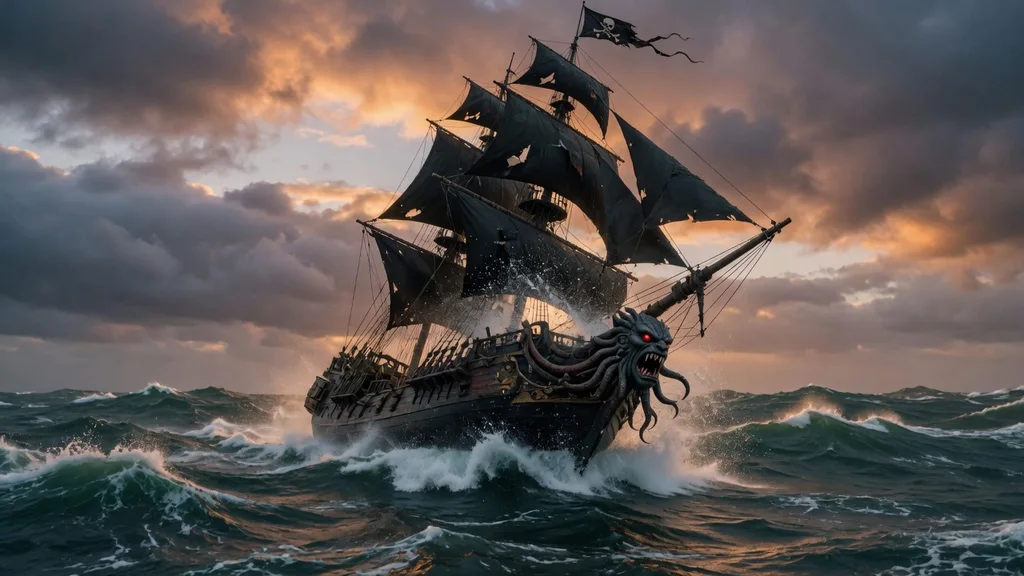
This ship name generator builds names for vessels of any kind — a Royal Navy frigate, a black-sailed pirate raider, a battered fishing trawler, a colony ship two centuries from home. Pick a vessel type and era first; they change which words the generator reaches for, not just the label printed on the card. Add a naming pattern and a tone, and each result arrives with the prefix a vessel of that kind would actually carry, decoded right on the card.
One honest note before you generate: if you landed here hoping to smash two people's names together — a couple name, a ship name for a fandom pairing like Brangelina — this isn't that tool, and our shipping name generator is. This page builds names for actual vessels: boats, warships, starships, the things that float or fly. A portmanteau generator for celebrity or fan-fiction couples solves a completely different problem, and we don't have one live yet.
👇 Click any name to copy it
How to Use the Ship Name Generator
Six filters shape a result before you generate anything.
- Vessel type. Naval warship, pirate ship, sailing or merchant vessel, fishing boat, yacht or pleasure boat, exploration or research ship, cargo ship, submarine, sci-fi starship, or fantasy vessel. Each pulls from its own word pool and its own formation rules — a fishing boat and a warship never share a naming logic, even set in the same decade.
- Era. Age of sail, 19th-century steam, world-war era, modern navy, near-future, or far-future. Era doesn't just relabel a result; it rewires the vocabulary and the prefix options, so a far-future starship and an age-of-sail galleon draw from almost nothing in common.
- Naming pattern. Virtue, animal, mythological, place, person, natural force, or compound. This narrows the word pool further, toward one specific naming instinct rather than the type's full range.
- Tone. Heroic, menacing, elegant, ominous, or homely. Tone picks the adjectives and the mood of the core noun without touching the underlying pattern.
- Prefix. Toggle a period-correct prefix on or off — HMS, USS, SS, MV, and the rest, matched to the type and era you chose so the generator never puts a modern container ship under a Royal Navy commission.
- Batch size. How many names to roll at once.
Set the filters, hit generate, and click any card to copy the name. Each card also shows what its prefix stands for, so you're not left guessing what USNS or RFA means on the vessel you just named.
How Ships Are Actually Named
Real naval and maritime naming runs on rules more particular than "sounds cool," and knowing a few of them is what makes an invented name land instead of just sounding vaguely nautical.
Before any of that, there's the launch itself. The ceremony where a ship first touches water — a bottle broken across the bow, a sponsor's name attached to the christening — is old enough that it predates most of the naming conventions built on top of it, and the tradition of smashing champagne against the hull is really a softened, secularised version of older sacrificial launch rites. A ship's name is spoken publicly for the first time at that moment, which is part of why sailors treat the name as fixed from then on rather than a label that can be casually swapped later.
The Royal Navy reuses its best names for centuries. A name like Ark Royal, Victory, or Illustrious gets retired when a hull is broken up and handed straight to the next ship built to carry it, so a later HMS Ark Royal inherits the reputation of the ships that wore the name before her. The Admiralty effectively keeps informal "classes" of names — virtues (Valiant, Dauntless, Indomitable), places, and the names of admirals — recycled generation after generation rather than invented fresh each time.
The US Navy runs several conventions at once, split by ship class. Aircraft carriers have largely carried the names of presidents and major statesmen since the Nimitz class entered service in the 1970s — Eisenhower, Carl Vinson, Theodore Roosevelt, George H.W. Bush, Gerald R. Ford. Submarines have shifted rules more than once: World War II boats were named after fish and sea creatures (Nautilus, Skipjack, Wahoo), the Cold War Los Angeles class switched to American cities, and the Virginia class switched again, to states. Destroyers are named for US Navy and Marine Corps figures — the Arleigh Burke class takes its own name from an admiral, and each new hull in the class honors another sailor or Marine.
Merchant shipping runs on different logic again. Owners have long named vessels after people (a founder's wife, a company patriarch), after places their trade served, or in a themed series that branded an entire fleet — Cunard's transatlantic liners mostly took names ending in -ia (Lusitania, Mauretania, Aquitania), so a passenger could recognize a Cunard ship by her name alone before she'd even read the funnel colours.
One superstition survives across almost every seafaring culture: renaming a vessel is bad luck unless it's done properly. Tradition holds that a ship's name is logged with the sea itself, and swapping it without formally un-naming the old one first invites bad weather and worse. Boat owners who buy a used hull and want a new name still run a denaming ceremony — the old name struck from a log, an offering made, the new name spoken only once the sea has been asked to forget the last one. It's mostly theatre today, but it's theatre almost nobody actually skips.
Decommissioning has its own quiet ceremony too, and it runs the launch tradition in reverse. A navy "pays off" a ship at the end of her service — crew mustered, colours lowered for the last time, the name struck from the active list rather than simply left to rust. The name itself doesn't die with the hull; it goes back into the pool the Admiralty or the Navy draws from when the next worthy ship needs a name with history already attached to it.
A name, once it sticks, tends to survive everything done to the hull underneath it. A vessel can be rebuilt plank by plank, re-engined, rearmed, and repainted end to end, and the name on her stern carries straight through the whole process — an old philosophical puzzle, solved in practice by simply not thinking about it too hard.
Ship Prefixes, Decoded
A prefix does more work than it looks like doing. It tells a reader who owns the vessel, what she's for, and — if you get it wrong — which era or navy the name doesn't actually belong to.
| Prefix | Stands for | Belongs on |
|---|---|---|
| HMS | His/Her Majesty's Ship | A commissioned Royal Navy warship — never a trawler or a private yacht |
| USS | United States Ship | A commissioned US Navy vessel, warship or support ship, with a naval crew |
| USNS | United States Naval Ship | A US Navy-owned vessel with a civilian Military Sealift Command crew, not USS |
| RFA | Royal Fleet Auxiliary | A civilian-crewed Royal Navy support ship — tankers, supply vessels |
| HMCS / HMAS | His/Her Majesty's Canadian / Australian Ship | Commissioned warships of the Canadian or Australian navies |
| SS | Steamship | A steam-powered vessel — an anachronism on anything built after steam left commercial service |
| MV / MS | Motor Vessel / Motor Ship | A diesel-engined merchant ship — the modern default for cargo and passenger hulls |
| MT | Motor Tanker | A diesel-engined tanker carrying liquid cargo |
| FV | Fishing Vessel | A commercial fishing boat |
| RV | Research Vessel | An oceanographic or scientific survey ship |
| SV | Sailing Vessel | A yacht or ship under sail, recreational or working |
| RMS | Royal Mail Ship | A vessel under contract to carry Royal Mail, historically the grandest ocean liners |
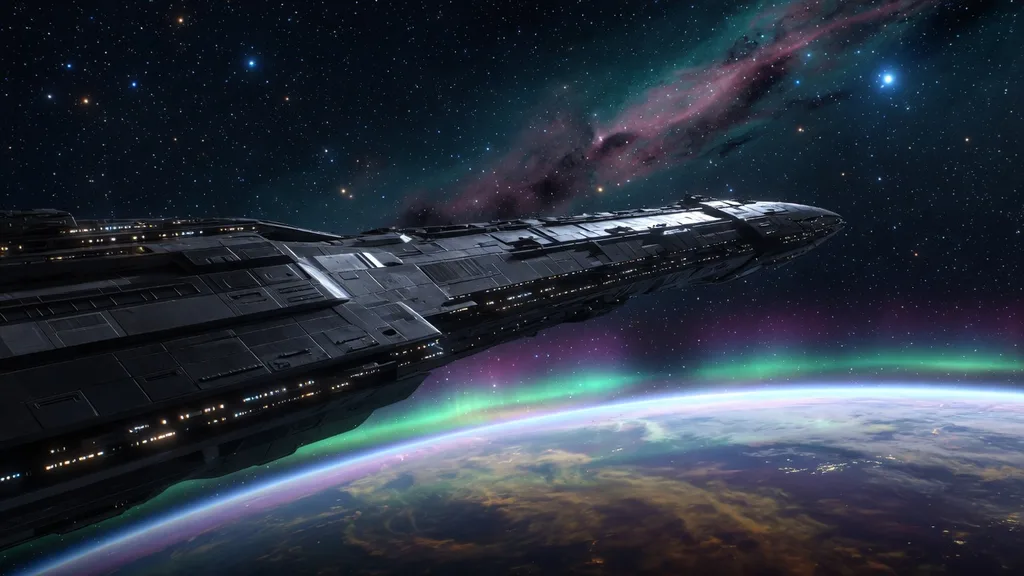
| ISV / UNS | Interstellar Vessel / United Nations Ship (invented) | Sci-fi fleet registries — conventions borrowed from naval prefixes, not official designations |
The trap worth knowing: SS marks a steamship specifically, so it's wrong on a modern diesel vessel even though people reach for it as a generic "ship" prefix out of habit — that's MV or MS instead. HMS marks a commissioned warship with a naval crew; put it on a fishing boat or a private yacht and you've written a small, avoidable lore error. The generator matches prefix to type and era automatically, but the rule is worth knowing if you're building a name by hand.
Naming by Era
Era changes more than the setting dressing on a ship name. The dominant naming logic of each period draws from different sources entirely, and the generator's era filter rewires the word pool to match rather than just swapping a costume.
| Era | Dominant naming logic | Invented examples |
|---|---|---|
| Age of sail | Virtues, monarchs, saints and hopeful sentiments — a ship was a huge investment, and her name was half prayer | HMS Providence, The Fair Constance, HMS Steadfast |
| 19th-century steam | Industrial pride and empire — engineering feats and distant colonies get named alongside the usual virtues | SS Britannic Star, RMS Coronet, SS Vulcan's Pride |
| World-war era | National resolve and battle honours — grim, blunt words built to survive a casualty list | HMS Resolute, USS Endurance, HMS Grim Sentinel |
| Modern navy | Class conventions by role — presidents for carriers, honoured individuals for destroyers, cities or states for submarines | USS Harlan Whitfield, USS Savannah, USNS Meridian |
| Near-future | Corporate registries and mission code names bolted onto still-recognizable naval habits | ISV Kestrel-9, MV Halcyon Reach, UNS Tenacity |
| Far-future | Vast, abstract, half-mythic names built for ships that may outlive the crews who named them | The Longest Dawn, ISV Occulus Veil, The Fifth Meridian |
The shift from age-of-sail to steam is really a shift from hope to pride: a wooden ship's name asked the sea for safe passage, while an ironclad's name announced what her owners had built. World-war naming strips both back down to something a sailor could say without irony under fire. Modern navies split into class-specific conventions strict enough that spotting a ship's role from her name alone becomes a fair guessing game. Fiction set in the near and far future tends to keep just enough of that naval structure to feel earned, then lets the vocabulary drift toward the abstract as the setting itself gets stranger.
Naming Patterns, and What They Signal
Every naming pattern is a small window into who commissioned the vessel and why. Recognising the pattern is often enough to guess the rest of the ship's backstory.
- Virtue. Valiant, Resolute, Steadfast, Indomitable. This is the navy's default register — a name meant to be lived up to, chosen by an institution that expects the ship to outlast any single crew.
- Animal. Kestrel, Wolverine, Albatross, Barracuda. Fast, predatory or reliably migratory creatures signal speed and instinct — a favourite for scouts, sloops, and anything built to outrun trouble rather than absorb it.
- Mythological. Prometheus, Nemesis, Erebus, Valkyrie. Borrowed from gods and monsters, these names promise scale — a ship meant to feel older and stranger than the people sailing her.
- Place. A hometown, a battle site, a region the ship is meant to represent — Savannah, Trafalgar, Meridian. Place names tie a vessel to a specific loyalty, and navies use them to spread civic pride across a fleet.
- Person. A founder, a hero, an admiral, a lost captain's widow. Naming for a person is the most personal choice available and usually means someone specific insisted on it — a shipping-line owner's wife, a fallen officer, a saint.
- Natural force. Tempest, Cyclone, Undertow, Wildfire. These names borrow the sea's own violence, useful for anything that wants to be feared before it's seen — raiders and warships both reach for this pool.
- Compound. Stormcaller, Wavebreaker, Nightrunner. Two ordinary words fused into one invented noun, common in fantasy and sci-fi where a "real" naval name would feel out of place. Compounds let a writer coin something that sounds instantly familiar without belonging to any real registry.
Type and pattern interact rather than stack neatly. A pirate ship pulling from natural force reads as a threat; the same pattern on a research vessel reads as a hazard warning; on a fantasy ship it reads as a blessing invoked in the name itself. Same word pool, three completely different ships. If you want pirate names built specifically around vessel class, crew and a captured-and-renamed backstory, see the Pirate Ship Name Generator; for the crew standing on deck, there's the Pirate Name Generator.
Boat Names Are Their Own Genre
Pleasure boats and fishing boats don't play by naval rules at all, and treating a "boat name generator" search the same as "ship name generator" misses what people actually want here. A twenty-two-foot bass boat and a Royal Navy frigate have nothing in common except that both float.
Pun is the dominant mode. Boat owners have turned punning into a minor art form — Seas the Day, Knot on Call, Reel Therapy, Aquaholic — and the pun doesn't need to be subtle. A boat name is meant to make the next slip over grin, not to sound dignified on a plaque. Fishing boats lean the same way but darker, closer to gallows humour about the job itself: Reel Estate, Codfather, Fintastic.
Family names show up constantly, and they mean something different from a navy's person-names. A boat called Sweet Caroline or The Judy Ann usually carries a wife's or a daughter's name, chosen the way you'd name a first pet — sentimental, a little private, and completely unbothered by whether it sounds imposing. Retirement boats skew toward names that announce the escape itself: Second Wind, No Worries, Sea You Later.
There are practical limits worth knowing if you're naming a real boat rather than a fictional one. Registration systems cap name length — US documentation and most state titling land somewhere around 30-odd characters including spaces, so a name that reads perfectly on paper can get rejected once you actually count the letters. The name goes on the transom, and often both bows too, in lettering large enough to read from a passing boat, which is its own argument for keeping it short: a joke that needs six words to land won't fit the available hull.
A documented boat in the US also has to carry its hailing port lettered below the name — the city and state the boat calls home, in smaller type under the name itself. That second line is part of why a lot of boat names are short on their own: the name and the hailing port have to balance visually on a transom that isn't getting any bigger. None of that paperwork applies to a fictional boat, but knowing the convention exists is useful if you want a scene to feel observed rather than invented.
None of this makes boat names lesser. It means the whole genre is optimising for a different feeling — the boat is a toy, a family object, a stress release, not an institution — and a generator that only knows how to sound dignified will never produce a name that actually belongs painted on a stern.
Naming Ships in Fiction
A fictional ship's name does narrative work before the vessel appears on the page. Readers see a name and quietly infer who built the thing, who's captaining it, and what kind of story they're in for.
Age-of-sail fiction leans on the real conventions above almost unchanged — a merchantman called something hopeful, a warship called something proud — because readers of the genre already know the code and expect it followed. Patrick O'Brian's Aubrey-Maturin novels give their hero a real string of Royal Navy commands, HMS Surprise chief among them, and part of the series's texture comes from how precisely those names and ranks track actual period practice. C.S. Forester's Hornblower novels do the same work a generation earlier. Naval thrillers set in the present modernise the same instinct: a submarine named for a state or a destroyer named for a hero signals institutional weight, a chain of command behind the captain rather than a lone adventurer.
Space opera has the most range, and also the most famous outlier. Iain M. Banks's Culture novels named their sentient starships with a deliberate, near-comic excess — ships called things like Of Course I Still Love You or Just Read the Instructions — and the joke is the point: an effectively godlike, post-scarcity civilisation can afford to be flippant about something a navy would treat as sacred. It's the extreme case that proves the rule: a name style tells you who's in charge and how seriously they take themselves. For a fleet built inside one specific, established galaxy, see the Star Wars Ship Name Generator.
Military science fiction usually pulls back toward naval seriousness — hull classes, registry numbers, hero or president names transplanted a few centuries forward — because the genre's appeal is institutional competence under pressure, and a silly ship name undercuts that on first contact. Pirate fiction, whether nautical or spacefaring, goes the opposite direction on purpose: a name is a threat display, and outlaws don't answer to a naming board.
A few pitfalls come up often enough to flag. A name that fights the story's tone reads as a mistake rather than a choice — a grim war novel with a jokey ship name breaks the reader's trust in the same paragraph it's introduced. An unpronounceable name, strings of apostrophes and consonant clusters no one can sound out, gets silently skipped every time it appears, which is a real cost spread across a few hundred pages. And an over-clever name, a pun so dense it needs a footnote, usually lands worse than a plain one; readers rarely reread a proper noun to catch a joke buried inside it.
Example Ship Names
Three short batches — naval, pirate and sailing, and sci-fi — as a taste of what the generator turns out. All of them are invented combinations, not names lifted from a real registry or franchise.
Naval Warships
- HMS Adamant
- USS Meridian
- The Unbroken Line
- HMS Grey Sentinel
- USS Harlan Reyes
- HMCS Ironward
- The Vigilant Oath
- USS Northgate
Pirate & Sailing Ships
- The Hollow Tide
- The Widow's Ledger
- The Gallows Wind
- The Lucky Cormorant
- The Salt Prophet
- The Drowned Oath
- The Steady Harvest
- The Last Bargain
Sci-Fi Starships
- ISV Farthest Ember
- UNS Quiet Reckoning
- The Colder Light
- ISV Vantage Bloom
- The Fifth Meridian
- UNS Ashfall Halo
- ISV Deep Constant
- The Patient Horizon
Building a whole fleet or crew around a starship? The Space Marine Name Generator covers the boarding party, and the Planet Name Generator covers where the ship is actually headed.
Tips for Writers and GMs
- Match name to institution, not just genre. Ask who actually named this ship — a navy, a smuggler, a grieving widower — and let that answer choose the pattern before you choose the words.
- Read it out loud, twice. Once as narration, once as something a character shouts across a bridge or a deck in a crisis. Names that only work on the page fail in dialogue.
- Keep a faction consistent. If one destroyer in your fleet is named for a hero and the next is a compound fantasy word, the fleet stops feeling like one organisation.
- Let the prefix carry information, not decoration. A prefix should tell the reader who owns the ship. If it doesn't change how a reader understands the vessel, cut it.
- Don't spend a rare name too early. Save your best, most evocative names for ships that matter to the plot — a name this good on a one-scene transport is wasted.
- Build a spares list. A destroyed flagship needs a believable replacement, and a rival needs a vessel that out-menaces the hero's. Generate more than you need and bank the extras.
A ship's name is the fastest character sketch available to a writer — one proper noun, and a reader already knows something about who built her and what she's for. Spend it carefully.
FAQ for Ship Name Generator
What does a ship prefix like HMS or USS actually mean?
It's a short code marking who owns and crews the vessel. HMS is His/Her Majesty's Ship (a commissioned Royal Navy warship), USS is United States Ship, USNS is a Navy-owned vessel with a civilian crew, and RFA is Royal Fleet Auxiliary. Merchant hulls carry their own codes — MV for a diesel motor vessel, SS specifically for a steamship. Each card in the generator shows what its prefix stands for.
Is it really bad luck to rename a boat?
It's a long-standing maritime superstition rather than a rule anyone enforces, but it's taken seriously in boating culture. The idea is that a ship's name gets logged with the sea itself, and swapping it without a proper denaming ceremony — striking the old name, making an offering, only then speaking the new one — invites bad luck. Most owners who rename a used boat still run the ceremony, just in case.
How are real navy ships actually named?
It varies by class and by navy. The Royal Navy reuses proud names like Victory or Ark Royal across centuries of hulls. The US Navy currently names aircraft carriers largely after presidents and statesmen, destroyers after naval and Marine Corps heroes, and submarines after cities or states depending on the class — a convention that has itself changed more than once since the fish-and-sea-creature names of World War II.
What should I name my boat?
Boat naming runs on a completely different logic from naval or fantasy names — puns (Seas the Day, Reel Therapy), family names (a wife's or a daughter's), or a wry line about the escape a boat represents (Second Wind, No Worries) all work well. Keep it short: registration systems cap name length, and it has to fit on the transom in letters big enough to read from another boat.
Do the generated names come with a vessel type attached?
Yes. Every result is generated for the vessel type, era, pattern and tone you set — naval, pirate, sailing, sci-fi, fantasy and the rest — so a name arrives already matched to a prefix and a tone that actually fits that kind of ship, rather than a generic name you have to reassign yourself.
Can I use these ship names commercially?
Yes. Every name is an original combination generated from themed word pools, not copied from a real registry, a franchise, or an existing vessel. Use them in novels, tabletop campaigns, video games, model kits or a real boat's paperwork. It's still worth a quick search before you commit a flagship or franchise name to print.
What makes a good pirate ship name?
Threat and superstition, mostly. The strongest pirate names promise violence before a shot is fired — The Gallows Wind, The Drowned Oath — or lean on dark luck and the sea's old terrors. Short, hard syllables carry across open water and stick in a victim's memory better than anything elegant. Anything that sounds like a yacht is a miss.
How do I name a spaceship so it doesn't sound silly?
Decide who commissioned it first. A military or corporate vessel wants naval-style seriousness — a hull class, a registry code, a name that could belong to a real fleet. A found ship or a smuggler's freighter can carry something plainer and more personal. Avoid apostrophe-heavy names no one can pronounce out loud, and avoid a pun so dense it needs explaining — both break a reader's trust faster than a plain name ever would.
Are these ship names real ships?
No. Every name is an invented combination built from themed word pools for each vessel type and era. Real ships and real naming conventions are referenced on this page purely to explain how naming actually works — none of the generator's output is copied from an existing registry or vessel.
How long can a boat name be?
For a real boat, registration systems set the limit — US documentation and most state titling systems cap it at roughly 30-odd characters including spaces. Beyond the legal cap, practical space matters too: the name has to fit on the transom in letters large enough to read from a passing boat, which is why most working boat names stay short.
What's the difference between a ship and a boat?
Size and independence, roughly. A ship is generally large enough to carry smaller boats and operate on the open ocean unsupported; a boat is smaller and often works inshore, on a lake, or launched from a larger vessel. The line is fuzzy in casual use — plenty of big fishing "boats" are ship-sized — which is exactly why this generator treats vessel type as its own filter rather than guessing from the word alone.
I actually wanted a couple name or a fandom ship name — is that here?
Not on this page. "Ship" in fandom slang means a romantic pairing, and a name like Brangelina is a portmanteau of two people's names, not a vessel name. This generator only builds names for actual ships and boats. For the fandom sense, we have a separate tool: the shipping name generator at /shipping-name-generator/ takes two names and blends them into pronounceable portmanteaus.