One Piece Name Generator
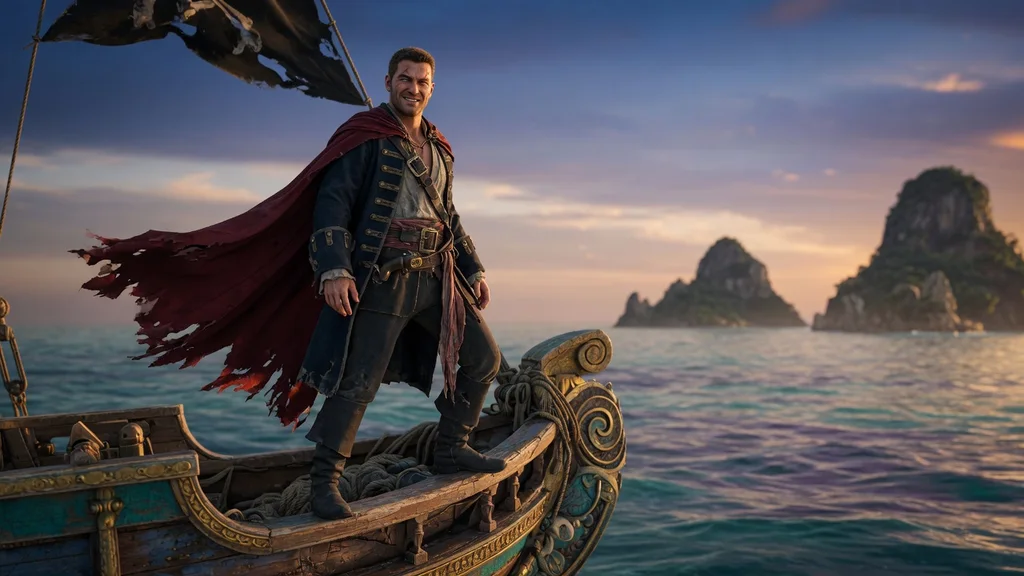
This one piece name generator builds names the way a wanted poster does: epithet first, given name second, a faction stamped underneath, and — for pirates, at least — a bounty large enough to make a Marine captain sweat. Flip the mode and it becomes a second tool entirely, generating original Devil Fruit names in the series' own reduplicated "no Mi" formula. Nothing here is lifted from the manga or anime; it's all new material built on the patterns Eiichiro Oda actually uses.
👇 Click any name to copy it
Pick a mode first. In Character mode, set a faction, a crew role and a gender, then roll — pirates and revolutionaries get a bounty, marines get a rank, sky islanders get a native title. In Devil Fruit mode, pick a type — Paramecia, Zoan or Logia — and each card comes with an invented, type-appropriate power line. Click any card to copy it.
How to Use the One Piece Name Generator
- Choose a mode. Character builds a person; Devil Fruit builds a fruit. They don't share filters, so pick one first.
- Set the faction (Character mode). Pirates, Marines, Revolutionary Army, Independent, or Sky Islander — this changes the whole sub-line, not just a badge.
- Pick a crew role. Captain, Navigator, Cook, Sniper, Doctor, Shipwright, Swordfighter, Musician or Archaeologist — each nudges the epithet pool and, for bounty-bearing factions, the payout range.
- Set gender, and for Devil Fruit mode, a type — Paramecia, Zoan or Logia.
- Slide the count and generate. Read the sub-line: it's doing real work, not decoration.
The Epithet-First Naming System
Most name generators treat a nickname as an afterthought — a suffix, a tag, something bolted on after the "real" name. One Piece flips that. A bounty poster reads "Straw Hat" Luffy, not "Luffy the Straw Hat," and that ordering isn't an accident. The World Government wants sailors to recognize the threat before the person. The epithet is the headline; the given name is the fine print underneath it.
That's why this generator quote-marks the epithet and puts it first, every time. It's a small structural choice that does a lot of the work — read the results out loud and they sound like they were pulled off a dock wall, because that's the format they're built to imitate. A captain doesn't introduce themselves with their epithet; the sea does that part for them.
Where Epithets Come From
In the series, an epithet almost always points at one concrete thing: a signature item ("Straw Hat"), a fighting style ("Black Leg"), a specialty ("Cat Burglar"), or a reputation earned the hard way ("Pirate Hunter"). The generator's word pools follow the same four shapes:
- Possession tags — an adjective plus a wearable or carried object, the way a description on a poster would fixate on the one thing a witness remembers.
- Predator tags — a beast plus a hunting role, for anyone whose reputation reads as an animal let loose.
- Elemental compounds — two blunt syllables welded together, hinting at a power without naming the fruit outright.
- Grand titles — "the [Adjective] [Noun]," reserved for names big enough to survive being shouted across a bar.
Crew role matters too. A doctor's epithet leans toward something clinical and quiet — a steady hand, a locked door — while a sniper's leans toward distance and patience. The generator weights the pool by role so a captain and a cook don't come out sounding interchangeable.
Bounty as a Storytelling Device
A number does more narrative work than most writers give it credit for. In this universe, the bounty on a wanted poster isn't just a reward — it's a public ranking of how dangerous the World Government believes someone to be, updated as they cause more trouble. A low bounty on a genuinely strong character reads as "underestimated"; a huge bounty on someone barely out of their first fight reads as "the world just noticed something everyone else missed." Both are more interesting than a number that simply matches the character's raw power, which is why the generator deliberately adds some randomness rather than a clean formula.
That's also why the rare "Legendary" multiplier exists as a distinct, occasional event rather than a filter you can toggle on demand. Nobody plans to become a legend on schedule — it happens because of one specific, unplanned act, and the story is usually about that act, not about the number itself.
Given Names — East Blue to New World
One Piece is deliberately, gleefully multinational: a single crew can carry names that read Japanese, French, Italian, Spanish and English side by side, with nobody batting an eye. This generator's given-name pool does the same — Kaito next to Wesley, Marguerite next to Sayuri — because that mash-up is part of the setting's identity, not a bug to smooth over. Every sea in the story has its own flavor, and the crews sailing between them end up sounding like it.
On rare rolls (about 1 in 12) you'll see a middle initial appear — Kaito D. Marchetti, say. That's a deliberate, occasional homage to the "D." naming trope the series made famous, dropped in sparingly as a flourish rather than a rule. It doesn't tie your generated character to any canon bloodline; it's just a wink at a naming convention fans already recognize.
Factions — Who's Wearing the Name
The faction filter isn't cosmetic. It rewrites the sub-line under the name, because each faction identifies its people differently in the setting's own logic.
| Faction | What the sub-line shows | Vibe |
|---|---|---|
| Pirates | A bounty in Berries | Self-declared, flag of their own, no permission asked |
| Marines | A rank (Ensign to Vice Admiral) | World Government enlisted, hunts bounties rather than carrying one |
| Revolutionary Army | A bounty in Berries | Wanted for treason, not plunder — works in cells, not fleets |
| Independent | A bounty in Berries | No flag, no navy — a broker or bounty hunter trading on reputation alone |
| Sky Islander | A native title | From the high sky-isles above the Blue Sea; runs on a title, not a price |
Notice that Marines and Sky Islanders never get a bounty — that's intentional. A bounty is a price the World Government puts on someone it wants stopped. Its own enforcers don't get priced, and a sky-isle native isn't operating inside that economy at all. Small detail, but it's the kind of detail that makes a generator feel like it understands the setting instead of just reskinning "pirate" four different ways.
Crew Roles — What Each One Signals
A pirate crew in this universe isn't a mob; it's a small, specialized company, and each seat carries its own naming flavor. Set the role filter to steer the epithet toward what that job actually looks like from the outside.
| Role | Epithet leans toward | Bounty tier (Pirates) |
|---|---|---|
| Captain | Command, weight, "the one who decides" | Highest — 40M to 900M+ Berries |
| Swordfighter | Edge, precision, a blade's reputation | High — 20M to 250M Berries |
| Navigator | Bearing, weather-sense, the sea itself | Mid — 8M to 120M Berries |
| Sniper | Distance, patience, a long reach | Mid — 8M to 120M Berries |
| Cook | Fire, blade-work in the galley sense | Lower — 3M to 90M Berries |
| Doctor | Quiet competence, a steady hand | Lower — 3M to 90M Berries |
| Shipwright | Hulls, iron, the ship as an extension of self | Lower — 3M to 90M Berries |
| Musician | Sound, performance, a crowd-facing gimmick | Lower — 3M to 90M Berries |
| Archaeologist | Old languages, ruins, things best left buried | Lower — 3M to 90M Berries |
The tiers are original and for flavor — they mirror how the story generally treats combat-forward roles as bigger threats on paper, not any character's real number. About one roll in ten hits a rare "Legendary" multiplier that pushes a bounty into the front-page range, badge and all.
Devil Fruit Mode — The "No Mi" Formula
Switch the mode chip and the generator becomes a second tool: an original Devil Fruit name builder. The series' own fruits follow a tight, recognizable pattern — a short Japanese-flavored word, usually doubled, followed by "no Mi" ("fruit of"). Canon examples like Gomu Gomu no Mi or Mera Mera no Mi follow exactly this shape; we mention them here only to explain the formula, never as generator output. Everything this tool produces is a brand-new invented word pair, not a real fruit name.
Pick a type and the power line matches the flavor of that category — a Paramecia gets a weird, personal ability; a Zoan gets a hybrid transformation, sometimes with a "Model:" tag naming the invented creature; a Logia gets full elemental-body control.
| Type | What it grants | Example shape |
|---|---|---|
| Paramecia | One weird, personal ability tied to the eater's body or surroundings | Vezu Vezu no Mi |
| Zoan | A full hybrid animal transformation, occasionally with a named "Model" | Kolzu Kolzu no Mi, Model: Storm Petrel |
| Logia | A body that becomes and commands a raw element | Firun Renzu no Mi |
About 1 in 10 fruits rolls "Awakened" — a rare badge that adds a line about the power spreading beyond the eater's own body, mirroring the story's own late-game power escalation without describing any specific canon awakening.
Why Epithet-First Naming Works for Writers and GMs
Borrow the structure even outside a One Piece-flavored story and it still does work. Leading with a description forces you to decide what a stranger notices first about your character — before you decide their actual name, even — and that's a genuinely useful writing exercise. It also front-loads tension: "the Silent Reckoning" walks into a scene and the reader already has questions before dialogue starts.
For a tabletop table, epithet-first naming solves a real problem: players forget NPC names constantly, but they remember a vivid tag. Drop "Cinderfang" into three scenes and your table will recall exactly who that is, long after they've lost the actual given name in their notes. Use the generator to stock a whole crew of NPCs this way — roll a captain, then two or three crew members with the same faction, and you've got a believable ship's roster in under a minute.
One Piece Names vs. Historical Pirate Names
If you've used our pirate name generator, this page will feel related but not interchangeable. That tool builds Golden Age names — 1700s Caribbean given names paired with historically-flavored bynames, no fantasy elements, no bounties in the modern sense, no Devil Fruits. This page exists because One Piece invented its own naming grammar on top of that pirate tradition: the epithet leads, factions outside piracy exist (Marines, Revolutionaries, Sky Islanders), and a whole second naming system covers superpowers. Use the historical generator for a 1700s buccaneer; use this one for anything set in a Grand Line-style world. Need a ship to go with your crew? Try the ship name generator for a general-purpose vessel, or the pirate ship name generator for something built specifically to sail under a black flag.
Example One Piece-Style Names
Pirate Captains
- "Iron Compass" Kaito Kurogane
- "the Roaring Ledger" Wesley Vasquez
- "Shark Warden" Ranko Halloway
- "Cinderfang" Bastiano Marchetti
- "the Silent Reckoning" Sayuri D. Windmere
Marines
- "Golden Lantern" Otto Ashworth — Lieutenant Commander
- "Frost Herald" Michiko Solberg — Commander
- "Storm Mask" Corwin Devereux — Rear Admiral
Revolutionary Army
- "Obsidian Anchor" Emeric Baptiste
- "the Unbroken Horizon" Kikue Farrow
Devil Fruit Names
- Vezu Vezu no Mi (Paramecia)
- Kolzu Kolzu no Mi, Model: Storm Petrel (Zoan)
- Firun Renzu no Mi (Logia)
- Talko Ushika no Mi (Paramecia)
- Sebira Sebira no Mi, Model: Coral Wyrm (Zoan)
- Wynak Grethu no Mi (Logia)
Tips for Building a One Piece-Style Character
- Let the epithet do the introducing. If a stranger could guess your character's whole deal from the epithet alone, it's working.
- Pick a bounty tier that matches your story, not your ego. A rookie with a 900-million bounty needs an explanation; a captain with 8 million needs one too.
- Match the Devil Fruit to the role, not the other way round. A cook with a fire-adjacent Logia writes itself; a doctor with the same fruit needs a reason.
- Keep faction consistent with backstory. A Marine who "used to be" a pirate captain is a whole arc — don't accidentally imply it with mismatched filters.
- Use the "D." flourish sparingly in your own writing, the way the source material does — it should feel like a rare reveal, not a default.
- Say the full poster line out loud — epithet, name, bounty. If it reads like something a Marine would tack up on a board, you've got it.
Building a Whole Crew
A single captain rarely tells a full story — it's the crew around them that does. Roll a captain first to set the tone (menacing? comical? tragic?), then generate three or four more names under the same faction with different roles: a navigator to carry the plot forward, a doctor to give the crew a reason to trust each other, a shipwright to explain how the ship itself keeps surviving. Keep the bounty gaps believable — a crew of five 200-million-Berry monsters reads as implausible; a captain at 140 million backed by crew in the 10-40 million range reads like an actual up-and- coming threat, which is usually the more interesting story to tell anyway.
If your crew needs an enemy, don't reroll the same faction — pull a Marine officer instead. The rank system gives you an instant chain of command: a Lieutenant Commander answers to someone, which means your antagonist has a boss who can show up later and raise the stakes. That's a free plot hook the bounty-only factions can't give you on their own.
About This Generator
This is a fan-made tool, not an official product. One Piece and all its characters, Devil Fruits, factions and terminology are the creation of Eiichiro Oda, published by Shueisha and animated by Toei Animation — this site has no affiliation with either. Everything the generator produces — names, epithets, bounty figures, faction titles and Devil Fruit names — is original material built from scratch to sound at home in that world. Canon characters and fruits appear on this page only as explanatory examples of the naming pattern, never as generator output.
A good epithet still does the same job it always did on a wanted poster: it tells a room who just walked in before the name gets a chance to. Roll a few above, read the whole line out loud, and pick the one that already sounds like trouble worth a bounty.
FAQ for One Piece Name Generator
Why does the epithet come before the name in this generator?
Because that's how the source material actually does it. A bounty poster leads with the description the World Government wants sailors to fear — the epithet — and the given name comes second, almost as a footnote. This generator mirrors that order by default: quote-marked epithet, then the name, the way a wanted poster would print it.
What is the Devil Fruit mode and how does it work?
Switch the mode chip to "Devil Fruit" and the generator builds an original fruit name using the real naming formula: a doubled (or paired) invented syllable plus "no Mi" — the same pattern behind the series' own fruits, just with brand-new words. Pick Paramecia, Zoan or Logia and you'll get a type-appropriate one-line power description. Every fruit here is invented; none of them are the actual canon fruits.
Are any of these names taken from the actual manga or anime?
No. The given names, epithets, faction titles and Devil Fruit names are original combinations built from word pools designed to sound at home in the setting. We reference a handful of famous canon examples in the text below purely to explain the naming pattern — the generator itself never outputs them. This site isn't affiliated with Eiichiro Oda, Shueisha, or Toei Animation.
What's the difference between the faction options?
Pirates, Revolutionaries and Independents get a bounty in Berries, because the World Government prices a threat rather than names it politely. Marines get a rank instead — they're the ones handing out bounties, not carrying one. Sky Islander swaps both for a native title, since the high sky-isles run on their own reputation system entirely.
How is the bounty amount decided?
It scales with the crew role you pick — a captain clears tens of millions at minimum and can climb past 900 million Berries, while a cook or musician tends to sit lower, since threat assessments (fictionally) weigh command and combat exposure over support roles. About 1 in 10 rolls hits a rare "Legendary" multiplier for an absurd, front-page number. These figures are original and for flavor only — they don't reference any character's actual canon bounty.
What's the "D." flourish I sometimes see in a name?
On rare rolls (roughly 1 in 12) the generator inserts a middle initial between the given name and surname — a nod to the mysterious middle-initial naming trope that One Piece itself popularized, treated here purely as a fun, occasional flourish. It doesn't imply any connection to the manga's actual bloodline mystery; it's just a naming quirk borrowed as homage.
How is this different from your Pirate Name Generator?
Our pirate name generator (/pirate-name-generator/) builds historical Golden Age pirate names — Blackbeard-style bynames rooted in 1700s Caribbean naming conventions, no fantasy elements. This page is built specifically for One Piece's own system: epithet-first construction, Devil Fruits, bounty-as-identity, and faction types like Marines and the Revolutionary Army that don't exist in real pirate history. If you want a ship to go with either crew, try the ship name generator (/ship-name-generator/) or the pirate ship name generator (/pirate-ship-name-generator/).
Can I use these names for my own writing or a fan project?
Yes. Every name, epithet, bounty figure and Devil Fruit here is an original combination, not lifted from the source material, so it's yours to use freely in fan fiction, tabletop games, cosplay badges, or original pirate-adjacent stories. Just remember: if your project touches recognizable One Piece characters or terms, that's fan content and subject to the usual fan-work norms — this generator only hands you the raw materials.