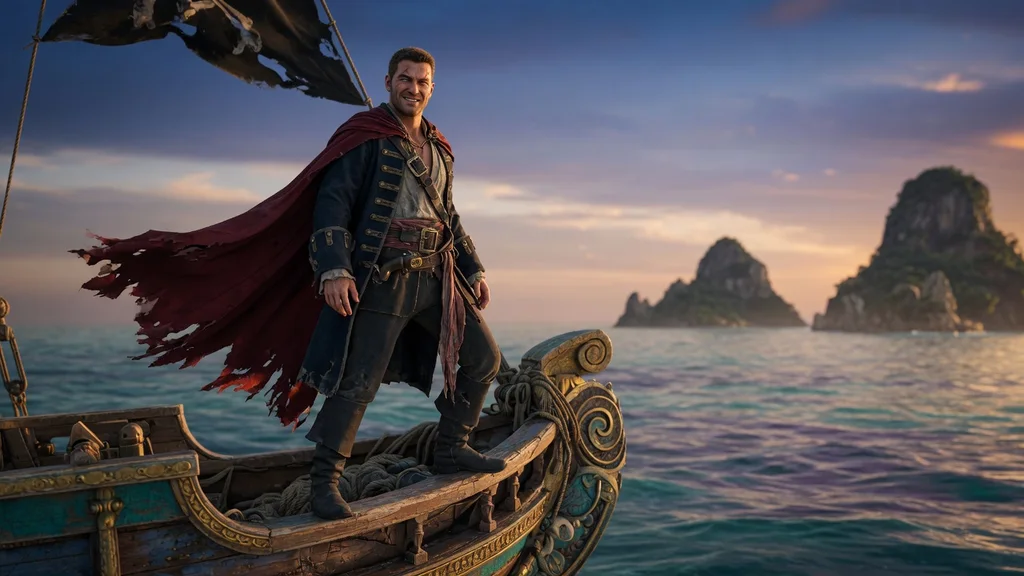
Pirate Ship Name Generator
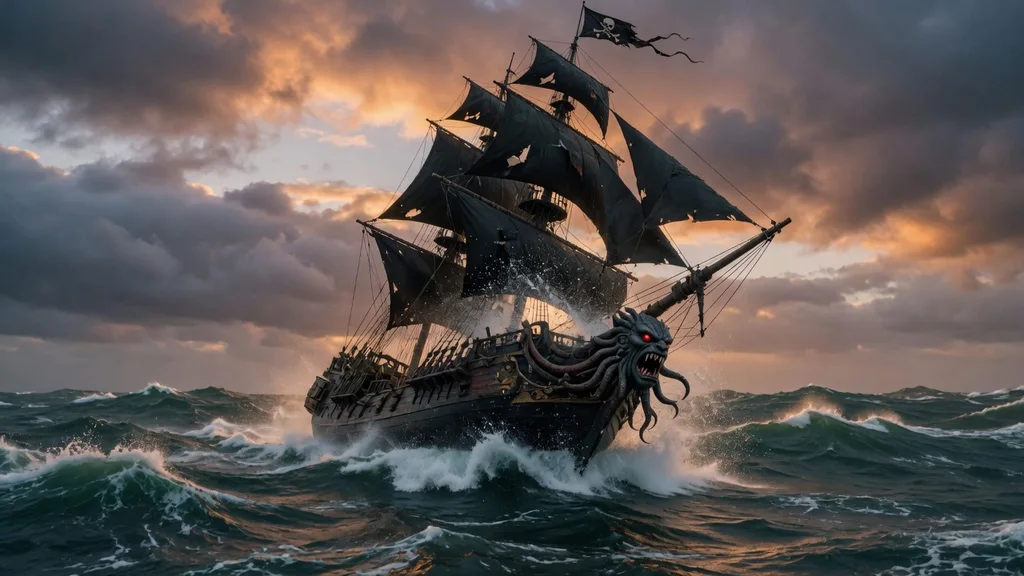
This pirate ship name generator builds names for the vessel, not the captain — sorted by class, tone and the waters she sailed. Pirates almost never launched a ship of their own. They took one, stripped the old name off her stern, and painted on a new one that was half threat and half advertisement. That's the system this tool follows: pick a sloop or a captured frigate, set a mood, and every card comes with a short note on how she probably got her name.
👇 Click any name to copy it
A pirate ship's name did work before a single shot was fired. The Bloody Vengeance flying up on the horizon told a merchant crew exactly how this was going to go, and plenty of captains struck their colours rather than find out. Pick a class that matches your story, a tone that matches your crew, and a region that matches your setting — the generator keeps those choices honest to how real Golden Age crews actually named their ships.
Why Pirates Renamed Their Ships
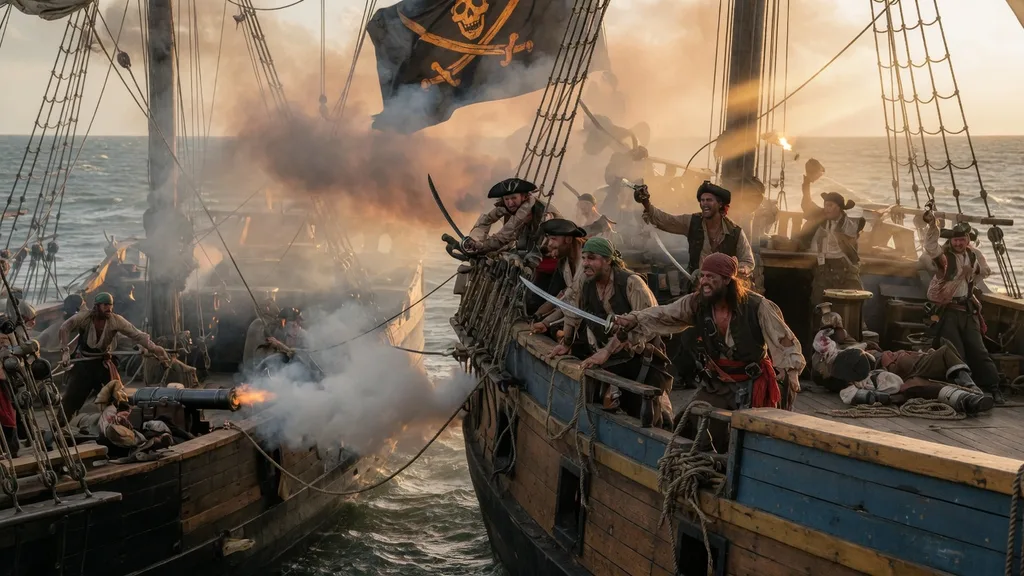
Building a ship took a shipyard, capital and time — three things a pirate crew rarely had. So they took one instead. A merchant sailer, a slave ship, a lightly-crewed transport: board it, keep what floats, and sail away with a prize. The old name went with the old owners. What replaced it was a statement, chosen by the new captain or voted on by the crew, and it said who they were now.
The renaming itself was fast and unceremonious, which is part of what makes it interesting. There was no admiralty office to notify, no registry to update. A crew hauled down the previous flag, ran up their own, and someone with a steady hand and a pot of paint covered the old name on the transom. Word passed through the ship by mouth. Within a day, sometimes within hours of the boarding party securing the deck, the vessel had a new identity — and everyone aboard, willing crew and pressed prisoners alike, was expected to use it.
That speed mattered because the old name was a liability. A merchantman's original name was tied to a home port, an owner, an insurer, a paper trail — everything a pirate crew wanted to shed. Sailing under the old name invited recognition by anyone who'd traded with her before, and recognition invited a navy patrol asking pointed questions. A new name broke the chain. It also broke something psychological: the hull that had hauled sugar or human cargo under a merchant's flag was, by the act of naming, declared to be a different thing now — answerable to nobody's ledger but the crew's own.
The most famous case makes the whole pattern plain. In 1717, Edward Teach — Blackbeard — captured a French slave ship called La Concorde off the coast of Martinique. He refitted her with extra guns and rechristened her Queen Anne's Revenge, turning a vessel built for one of history's cruelest trades into the flagship of his own short, violent career. Samuel Bellamy's Whydah Gally followed the same arc — launched as a slave ship, captured, and sailed under a new flag until she sank off Cape Cod in 1717. Henry Every's Fancy and Bartholomew Roberts's Royal Fortune (he ran through several ships under that same name, renaming each new prize as the last one was lost or abandoned) round out the pattern: take the hull, keep the good bones, replace the identity, and do it again the next time you need a bigger one.
Renaming also cut both ways. A pirate crew that lost a fight or ran a ship aground had nothing left to salvage but a name, and a captain who kept reusing one — Roberts and his string of Royal Fortunes — was building a brand that outlived any single hull. The name, not the timber, was the actual asset.
The Flag and the Name: One System of Fear
A pirate ship's identity worked in two stages, and the name generator on this page is only half of the real system — the other half was flying overhead. At range, before anyone could make out lettering on a transom, the flag did the talking. Black, most famously, though red "no quarter" flags saw real use too, each stitched with a captain's own symbol: a skeleton, an hourglass, a raised cutlass, a bleeding heart. That flag was the first move in a negotiation pirates wanted to win without firing a shot — the message being simple: strike your colours now, and this ends quietly.
The name confirmed what the flag promised. As a target ship closed the distance, or as a hail carried across the water, the name arrived as the second half of the threat — proof that this wasn't an empty flag flown by an amateur, but a specific, known, remembered crew. A captain who'd heard of the Ravenous Shark or the Wrathful Reckoning by reputation had already half-decided to surrender before a gun was run out. That's the real function this generator is modelling: not decoration, but a working part of how piracy actually operated as a business built on intimidation being cheaper than combat.
Vessel Classes and What They Actually Meant
The class of ship dictated the kind of crew that sailed her, the kind of prey she could realistically catch, and how likely she was to have started life under someone else's flag. Set the class filter to match the story you're telling — the differences below aren't cosmetic, they're the actual operational trade-offs a real captain weighed.
Sloop
Single-masted, fore-and-aft rigged, and shallow-drafted, the sloop was the Golden Age workhorse for a reason: she could carry a crew of anywhere from a dozen to seventy-five men, mount somewhere between four and twelve small guns, and still outrun almost anything that outgunned her. Shallow draft meant a sloop could duck into a river mouth, a mangrove creek or a sandbar-guarded cove that a heavier warship simply couldn't follow into — and Golden Age pirates spent as much time hiding from navies as they spent chasing merchants. Cheap to crew, cheap to careen and re-hull, and fast enough to pick the terms of every fight, the sloop was less a compromise than the ideal pirate vessel.
Brigantine
A step up in size, the brigantine carried two masts — one square-rigged forward for speed running with the wind, one fore-and-aft aft for handling close to the wind — giving a crew real flexibility in a chase. She typically mounted somewhere between eight and eighteen guns and carried seventy-five to a hundred men, enough for a proper broadside and a boarding party in the same hull. A brigantine split the difference between a sloop's speed and a frigate's firepower, which made her a favourite for captains who'd outgrown small raiding and wanted the option of a real fight without giving up the ability to run from one.
Schooner
Fore-and-aft rigged on two or more masts, a schooner needed a smaller crew to sail than a square-rigger of the same size — a genuine advantage for a pirate captain who couldn't always recruit up to full complement. Schooners were common merchant and fishing vessels before capture, which is exactly why so many of them ended up repurposed: an easy prize to take, and an easy prize to keep running with a skeleton crew. A captured schooner rarely needed much refitting to go raiding; she just needed new guns bolted on and a new name painted over the old one.
Frigate
A true warship — three-masted, square-rigged, carrying anywhere from twenty to over forty guns on one or two decks, and needing a crew of two hundred or more to fight her properly. Almost no pirate crew built or bought a frigate; they took one, usually from a navy that had just lost a fight it should have won, or from a state that had decommissioned her. A captured frigate turned a raiding operation into something closer to a private navy, and captains who kept one — even briefly — used the extra guns and the sheer visual authority of a warship's silhouette to force surrenders without firing. The catch was upkeep: a frigate needed a huge crew, deep-water ports for careening, and enough plunder to keep both fed. Most pirate crews that captured one sold her, stripped her, or lost her to a real navy within a season.
Galleon
Broad-beamed, high-sided and built to haul cargo — bullion, spices, trade goods — across ocean crossings rather than to fight for it, the galleon is the class most people picture when they think "pirate ship," and it's the least accurate picture of all. A galleon was slow, poorly suited to close-quarters manoeuvring, and armed mainly to deter, not to duel. She was far more often the victim of a pirate raid than the raider — the exact kind of treasure-laden target a fast sloop or brigantine was built to run down. On the rare occasion a pirate crew captured and kept one, it was for the hold space and the prestige of a flagship, not because she made a good pirate ship. Most captured galleons were looted, stripped of anything valuable, and abandoned or sold rather than sailed into a second career of raiding.
| Class | Guns (typical) | Crew (typical) | Usually captured? |
|---|---|---|---|
| Sloop | 4–12 | 12–75 | Sometimes; also bought or built cheaply |
| Brigantine | 8–18 | 75–100 | Sometimes |
| Schooner | 4–10 | 20–75 | Often — former traders |
| Frigate | 20–44 | 150–250+ | Almost always — rarely built by pirates |
| Galleon | 20–60 (defensive) | 200–500 (as merchant crew) | Almost always, and rarely kept long |
Most Golden Age crews lived and died in a sloop or a small schooner. They were cheap to crew, fast enough to run down a merchantman, and shallow enough to vanish into a river mouth a Royal Navy frigate couldn't follow. A captured frigate or galleon made a spectacular flagship for a season — more guns, more cargo, more reputation — but they were hard to crew, hard to hide, and exactly the kind of prize a real navy went looking for.
Tone: What a Pirate Ship's Name Was Trying to Say
Every pirate ship name was, in some sense, an argument aimed at whoever read it off the horizon. The tone filter covers the five moods that argument actually took.
- Vengeful — a name built on a grudge, real or performed. Revenge, Reckoning, Retribution. This is the most common flavour in the historical record, and Queen Anne's Revenge is the archetype.
- Lucky — a bet that the name itself keeps the crew alive. Fortune, Fancy, Providence. Piracy was a short career with terrible odds; a hopeful name was half prayer.
- Predatory — animal names built for menace. Shark, Kraken, Viper. Simple, hard-consonant words that travel across open water and stick in a lookout's memory.
- Regal — grandeur a working pirate ship rarely earned honestly. Sovereign, Crown, Majesty. Bartholomew Roberts's Royal Fortune leaned exactly this way — a raider's name with a king's vocabulary.
- Ironic — the darkest joke in the toolbox. A raider called Mercy or Providence was daring a victim to believe it, right up until the guns ran out.
Here's why each pattern actually worked as intimidation, with the kind of names that fit each one.
| Pattern | Example names | Why it worked |
|---|---|---|
| Revenge / vengeful | Revenge, Reckoning, Retribution, Reprisal | Implies a wrong already committed against the crew — the violence to come reads as justice, not appetite. |
| Luck / fortune | Fortune, Fancy, Providence, Windfall | A hopeful name for the crew, and a taunt for the victim: this ship's luck is about to become your bad luck. |
| Predator / animal | Shark, Kraken, Viper, Falcon | Short, hard-consonant words that read fast at a distance and describe exactly how the ship intends to behave. |
| Regal / royal | Sovereign, Crown, Majesty, Dominion | Borrowed authority — a raider claiming the vocabulary of kings makes the threat sound institutional, not opportunistic. |
| Ironic / pious | Mercy, Charity, Providence, Grace | A gentle word on a violent hull is a joke aimed at the victim — it signals the crew is confident enough to be funny about it. |
Era and Region: Caribbean, Barbary, East Indies, Fantasy
Piracy's Golden Age wasn't confined to one sea, and the naming traditions — and the ships themselves — shifted with the water they sailed. The setting filter mixes region-flavoured words into whatever tone you've chosen.
Caribbean, Golden Age is the default of the genre for good reason: it's the best-documented piracy wave in history, running roughly from the 1650s through the 1730s and peaking in the years just after 1715, when peace treaties threw thousands of trained naval sailors out of paid work. This is Teach, Roberts, Bonny and Read's era, sailed mostly in sloops and schooners through the reef-choked, trade-wind-driven waters between the Spanish Main and the Atlantic approaches. Names here leaned hard into English, French and Spanish vocabulary mixed freely, because the crews themselves were multinational.
Barbary Coast piracy ran on a different logic and a much longer timeline — corsairs operating out of North African ports raided Mediterranean shipping for centuries, often with at least loose state sanction, blurring the line between piracy and privateering in a way the Caribbean crews rarely bothered with. Vessels here were frequently oar-and-sail galleys built for the calmer Mediterranean, and naming drew on Levantine and crescent imagery rather than the animal-and-revenge vocabulary of the Caribbean.
East Indies piracy preyed on a different kind of prize: East India Company convoys, regional trading dhows and junks moving spice, textiles and bullion across the Indian Ocean's monsoon-driven trade routes. Some of the most successful Atlantic pirates — Every and his Fancy among them — actually crossed oceans specifically to hunt this route, because a single captured Mughal treasure ship could outweigh a season of Caribbean raiding. Naming here draws on monsoon and spice-route vocabulary, reflecting a hunting ground defined by weather and trade winds as much as by coastline.
Fantasy setting steps outside history on purpose, for stories that want a ghost ship, a cursed hull, or a crew that can't quite die. It borrows the vocabulary of dread — spectral, phantom, drowned — without claiming any of it as a historical record.
| Setting | Flavour | Historical note |
|---|---|---|
| Caribbean — Golden Age | Trade-wind, reef and strait words; the default of the genre | Roughly 1650s–1730s, the era of Teach, Roberts, Bonny and Read |
| Barbary Coast | Levant, crescent and corsair words | North African corsairs raided Mediterranean shipping for centuries, often under state sanction |
| East Indies | Monsoon, spice-route and Indiaman words | The Indian Ocean had its own pirate traffic, preying on East India Company and regional shipping |
| Fantasy | Ghost, phantom and cursed words | For invented settings that trade history for legend — ghost ships and cursed hulls |
The Origin Story: Captured or Built
Every card the generator produces carries a short, fictional line about how that particular ship supposedly got her name — captured from another flag and rechristened, or fitted out fresh and never called anything else. This isn't a claim about a real ship; it's flavour for the one the generator just built, and it exists because that choice — take her, or build her — was the first real decision behind every historical pirate ship's name. Set the Origin story filter to Auto and the generator weights it by class, the way history actually did: a captured frigate is a near-certainty, a purpose-rigged sloop much less so.
For Writers and Game Masters
A ship name is doing narrative work whether you intend it to or not, so it's worth matching the tone to the story on purpose. A grim, high-stakes novel earns a vengeful or predatory name — Reckoning, Ravenous Shark — that a reader takes at face value. A pulpier adventure or a comedic tabletop campaign can lean ironic or lucky without breaking tone, the way a real crew sometimes did: a joke name aboard a genuinely dangerous ship is its own kind of characterization. Regal names suit a captain with delusions of grandeur, or a crew that's actually built something close to a private navy. Match the name to what the ship — and the captain — actually believe about themselves.
A few mistakes come up often enough to flag. Anachronistic vocabulary is the biggest one — a Golden Age pirate ship called something with a distinctly modern or corporate ring (anything that sounds like a product name, an acronym, or borrows 21st-century slang) breaks the illusion instantly, even for readers who couldn't say why. Overly modern grammar is a quieter version of the same problem: three-word taglines and punchy modern phrasing read as marketing copy, not as something painted on a stern in 1718. Stacking adjectives is the third trap — a name like The Grim Bloody Vengeful Reckoning tries too hard and undercuts itself; the real historical examples are almost always one strong word, occasionally two. And ignoring class breaks plausibility for readers who know the period: a crew of a dozen deckhands captaining a forty-gun frigate, or a legendary flagship that's somehow still a two-gun sloop, are both worth a second look before you commit them to the page.
Example Pirate Ship Names
Vengeful
- The Wrathful Reckoning
- The Grim Retribution
- The Undying Vengeance
- Voss's Reprisal
- The Bitter Requital
Predatory
- The Ravenous Shark
- The Silent Kraken
- The Prowling Viper
- Kestrel's Wolf
- The Circling Falcon
Regal & Ironic
- The Sovereign Crown
- The Gilded Majesty
- The Merciful Charity
- The Blessed Providence
- Ardwen's Grace
Real Pirate Ships That Show How This Worked
A short list of well-documented cases, since nothing teaches the pattern faster than the real thing. These are historical vessels, not generator output — use them as reference, not as names to reuse.
| Ship | Captain | Origin |
|---|---|---|
| Queen Anne's Revenge | Edward Teach (Blackbeard) | Captured French slave ship La Concorde, 1717 |
| Whydah Gally | Samuel Bellamy | Captured slave ship, taken 1717 |
| Fancy | Henry Every | Formerly the Charles II, mutinied and renamed |
| Royal Fortune | Bartholomew Roberts | Name reused across several captured ships |
Tips for Picking a Pirate Ship Name
- Match the class to the crew. A jumped-up cabin boy with six men doesn't captain a galleon. Small crews get sloops and schooners; only an established captain with a real reputation ends up on a captured frigate.
- Say it across open water. Ship names were shouted between decks and read off a horizon. Short, hard words carry; anything fussy gets shortened by the crew anyway.
- Let the tone match the threat you want to make. Vengeful and predatory read as menace on sight. Ironic and regal make a victim hesitate — which can be worse.
- Use the origin story as backstory, not decoration. A captured-and-renamed ship implies a whole first act — who owned her before, and how that ended.
- Don't over-load the name. One vivid word usually beats three stacked adjectives. The best real examples — Revenge, Fancy, Fortune — are single words doing all the work.
- Let the flag and the name agree. A ship called The Merciful Charity flying a skull-and-crossbones is a deliberate joke; the same name flying a plain merchant flag is just confusing. Decide which effect you want.
About Pirate Ship Names
A pirate crew's ship was its whole world — home, weapon and getaway car in one hull — and the name painted on her stern was the first thing anyone learned about the people aboard. Unlike a naval warship, which inherited its name from a registry and a chain of command, a pirate ship's name came from the deck up: chosen, voted, or simply declared by whoever had just taken her. That's why the names still read so vividly three centuries later. They weren't assigned. They were claimed.
Roll a few names above, read the class and origin note on each card, and pick the one that already sounds like it's flying toward you with the gunports open.
FAQ for Pirate Ship Name Generator
How does the pirate ship name generator work?
Pick a vessel class — sloop, brigantine, schooner, frigate or galleon — set a tone (vengeful, lucky, predatory, regal or ironic) and an era or region. Each class shifts the odds of getting a captured-and-renamed origin story instead of a freshly fitted-out one, because that's how it actually worked: bigger prizes like frigates and galleons were taken, not built. Set how many names you want and hit Generate. Click a card to copy it.
Did pirates really rename the ships they captured?
Yes, constantly. It was the normal way a pirate crew got a ship at all — they rarely built their own. The best-known case is Edward Teach's Queen Anne's Revenge, originally a French slave ship called La Concorde before he took it in 1717 and refitted it as his flagship. Sam Bellamy's Whydah Gally started life as a slave ship too, built for one trade and captured into a much darker one.
What's the difference between this and the Ship Name Generator?
The Ship Name Generator covers every kind of vessel — naval, sailing, sci-fi, fantasy and a general pirate option — with one shared word pool per type. This generator does one thing: pirate ships of the age of sail, with filters for real vessel classes (sloop, brigantine, schooner, frigate, galleon), tone, and region, plus the capture-and-rename backstory this page is built around.
What's the difference between this and the Pirate Name Generator?
The Pirate Name Generator builds names for pirates — the people, with given names and epithets like Blackbeard or Calico Jack. This generator builds names for their ships. A crew needs both: a captain called something fearsome, sailing something called The Vengeful Reckoning.
Why does vessel class matter for a pirate ship name?
Class shaped what a ship actually was for. A sloop was small, fast and shallow-drafted — built to outrun trouble, not survive a fight. A frigate was a real warship, almost always taken from a navy rather than built by pirates. A galleon was slow and broad-beamed, prized for cargo space more than speed, and rarely kept as a raider's main ship. The generator uses class to weight how likely a name comes with a capture story.
Were pirate ship names always menacing?
No. Menace was common but not universal. Some crews leaned into dark luck — Fancy, Fortune, Happy Delivery — betting the name itself would keep them alive. Others used religious or ironic names, the kind a merchant would never expect on a raider's stern. The tone filter here covers all of that: vengeful, lucky, predatory, regal and ironic.
Are the ship names on this page real historical ships?
No. Every name the generator produces is an original combination from themed word pools — real ships like Queen Anne's Revenge, Whydah, Fancy and Royal Fortune appear only as explanatory examples in the text, never as generator output. Use the generated names freely in fiction, games or campaigns.
What ship class did most Golden Age pirates actually sail?
Sloops and small schooners, by a wide margin. They were cheap to crew, fast enough to catch a merchantman and shallow enough to hide in the same coves and river mouths the Royal Navy's bigger ships couldn't follow. A captured frigate or galleon was a prize a crew might keep for a season, not a lifetime — hard to crew, hard to hide, and a magnet for a real warship.
How fast did pirates actually rename a captured ship?
Often within days, sometimes hours. Renaming didn't require a ceremony — just fresh paint on the transom, a hauled-down flag replaced with the crew's own, and word passed to every hand aboard that this hull now answered to something else. A ship might be renamed again a few months later if she changed captains, sank a rival's reputation, or simply because a new commander wanted his own mark on her.
Did the pirate flag and the ship name work together?
Yes — they were one system, not two. The flag delivered the threat at a distance, before a name could even be read off the stern; the name confirmed it once a victim was close enough to make it out, or heard it shouted across the water during a hail. A ship called The Ravenous Shark flying a black flag with a weapon-wielding skull was making the same point twice, so nobody aboard the target vessel could talk themselves out of believing it.