Na'vi Name Generator — Real Phonology, Clan Names & Grammar
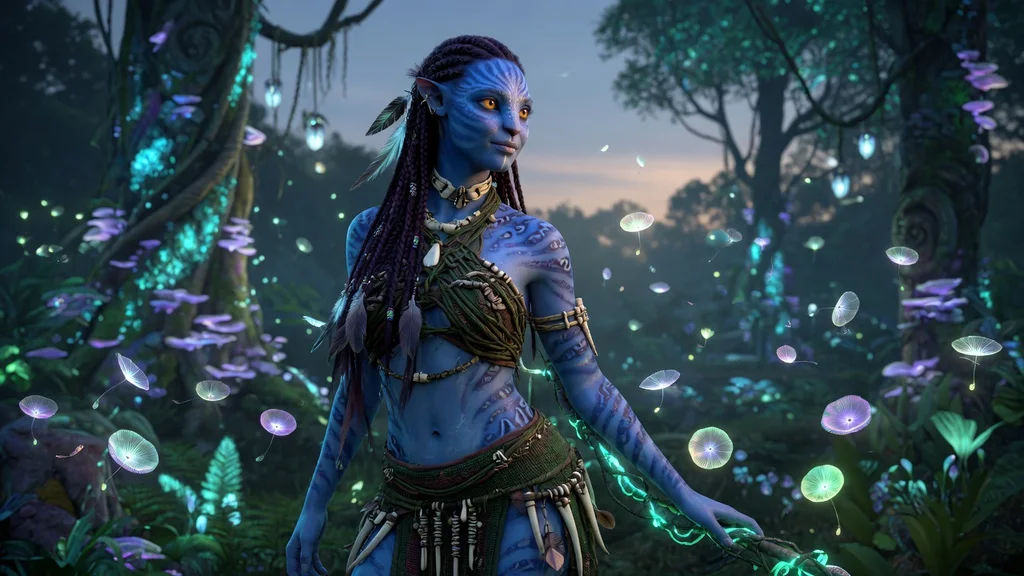
This Na'vi name generator is built directly on the sound system Dr. Paul Frommer designed for Avatar — ejective consonants, a phonemic glottal stop, open flowing syllables — instead of guessing at what "alien" ought to sound like. Pick a clan, choose a short given name or a full ceremonial name with the real te / 'itan / 'ite grammar, and generate as many as your roster or story needs.
👇 Click any name to copy it
Every result comes with a clan badge, a rough pronunciation guide, and a short lore caption. Switch to Full Ceremonial Name and the generator builds an actual Na'vi-style lineage name — given name, clan, and a parent's name closed out with 'itan (son) or 'ite (daughter) — the same structure canon names like Neytiri te Tskaha Mo'at'ite follow.
Every name is an original construction that follows Na'vi's documented sound rules. This site is not affiliated with, sponsored by, or endorsed by 20th Century Studios or Disney — see the FAQ below for the full disclaimer.
A Note on Avatar vs. Avatar: The Last Airbender
Two unrelated franchises share the word "Avatar," and it trips people up constantly. James Cameron's Avatar — the one with the Na'vi, Pandora, and the blue forest-dwellers this page covers — has nothing to do with Avatar: The Last Airbender, the Nickelodeon animated series about elemental bending in an East Asian-inspired world. Different studios, different languages, different naming conventions entirely. If you landed here looking for Aang, Katara, or Fire Nation-style names, head to the Avatar: The Last Airbender name generator instead — this page is Na'vi-only.
Why Na'vi Naming Actually Has Rules
Most alien or fantasy name generators fake a language: pick some consonant clusters that look exotic, sprinkle in an apostrophe, done. Na'vi is different because it isn't fake in that sense — it's a real constructed language with a documented phoneme inventory, syllable structure, and grammar, built by a working linguist and refined with input from the production. That gives us actual rules to follow instead of vibes, which is the whole edge this generator leans on.
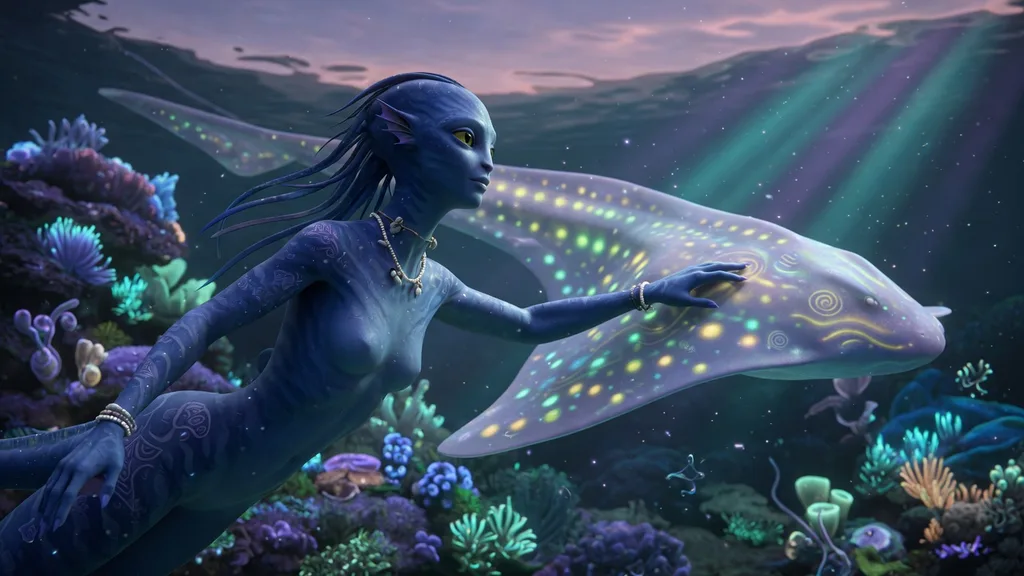
Na'vi Phonology — What Makes a Name Sound Right
Two features do most of the work in making a name read as authentically Na'vi rather than generic sci-fi gibberish: the ejective consonants, and the phonemic apostrophe. Get those two right and the rest — the open, flowing syllables — mostly falls into place on its own.
Ejective Consonants: px, tx, kx
Na'vi has three ejective stops, written px, tx, and kx. They're built from the same mouth positions as English p, t, and k, but instead of pushing air from the lungs, the sound is popped out using air trapped at the glottis — it comes across as a sharp, percussive burst rather than a soft puff. The "x" in the spelling isn't a separate sound; it's just Frommer's way of marking "this is the ejective version" in writing, since the more standard linguistic notation (an apostrophe after the letter) was already needed for something else in Na'vi.
Ejectives are rare across the world's languages and essentially absent from English, which is exactly why they read as convincingly alien to an English-speaking audience. This generator seeds them into roughly a third of onset consonants, the same rough density they carry in documented Na'vi vocabulary.
The Apostrophe Is a Real Consonant, Not Decoration
Here's the detail almost every other "alien name generator" gets wrong: in most invented naming systems, an apostrophe is pure typography — dropped into a word to make it look exotic, with no sound attached. In Na'vi, the apostrophe represents the glottal stop, a genuine consonant (the same catch-in-the-throat sound English speakers make in the middle of "uh-oh"). It behaves like any other consonant: it can open a word, sit between two vowels, or combine with other sounds in a cluster. "Na'vi" itself contains one.
This generator treats the apostrophe as that real sound throughout — in given names, in clan links like te, and in the 'itan / 'ite endings of a full ceremonial name — rather than sprinkling it in for looks.
Open Syllables and No Voiced Stops
Na'vi favors open syllables — a name like Neytiri breaks cleanly into Ney-ti-ri, each piece ending in a vowel — though closed syllables with a final consonant do occur, as in skxawng. One quieter but telling detail: Na'vi has no voiced stops at all — no b, d, or g sounds — despite having voiced fricatives like v and z. That absence is part of what gives the language its particular texture, soft and flowing without ever landing on those heavier consonants.
How to Use This Na'vi Name Generator
Set a Clan Origin — Omatikaya, Metkayina, or Unspecified — to color the lore caption on each result, or leave it on Any Clan to roll across all three. Choose a Name Form: Short Given Name for a quick, casual result, or Full Ceremonial Name to get the complete given name + te + clan name + parent's name + 'itan/'ite structure.
Set a gender — this mainly determines whether a full name closes with 'itan (son) or 'ite (daughter); Na'vi given-name phonetics themselves aren't documented as strictly gendered, so short names lean on the filter mostly for variety. Use the slider to pick how many names to roll, hit Generate, and click any card to copy it. Each result also shows a simplified pronunciation guide — helpful since ejectives and the glottal stop aren't always obvious from spelling alone.
Famous Na'vi Characters and Their Names
A quick note before the table: everything this generator produces is an original construction. The names below are canon characters from the films, included only as explanatory reference so you can see the naming grammar at work in published material — they're never produced as generator output.
| Character | Full Name (where known) | What It Shows |
|---|---|---|
| Neytiri | Neytiri te Tskaha Mo'at'ite | Given name + clan (Tskaha) + matronym with 'ite ("daughter of Mo'at") |
| Tsu'tey | Tsu'tey te Rongloa Ateyo'itan | A name containing the glottal stop, plus a patronym with 'itan ("son of Ateyo") |
| Mo'at | — | Tsahìk (spiritual leader) of the Omatikaya, another glottal-stop example |
| Eytukan | — | Omatikaya clan leader — closed final syllable, no glottal stop |
| Ronal | — | Tsahìk of the Metkayina reef clan, from The Way of Water |
Notice the pattern across the ones with full names on record: given name, then te, then the clan name, then a parent's given name closed out with 'itan or 'ite. Short names — the ones people actually call each other day to day — drop everything after the given name.
The Full Name Grammar: te, 'itan, and 'ite
A complete Na'vi ceremonial name follows a documented pattern: [given name] te [clan name] [parent's given name]'itan for a son, or the same structure ending in 'ite for a daughter. Te functions roughly like "of" or "of the clan" — it's the piece that links a person's given name to their clan identity. The final element isn't a surname in the English sense; it's a patronym or matronym, naming the parent directly rather than inheriting a fixed family name across generations.
In everyday use, most Na'vi go by the short given name alone — the full ceremonial form comes out for formal introductions, records, and moments where lineage matters. This generator's Full Ceremonial Name mode builds the complete structure so you can see (and use) both registers.
Omatikaya vs. Metkayina vs. Unspecified Clans
"Clan" in this generator is a cultural and lore tag, not a separate invented dialect — the films don't document distinct phonology for each clan, so we don't fabricate one. What does differ is the culture behind the name.
Omatikaya
The forest clan from the first film, built around a Hometree that towers over the surrounding jungle. Omatikaya culture centers on the forest canopy, ikran (banshee) bonding, and a deep spiritual connection to Eywa channeled through sacred sites like the Tree of Souls.
Metkayina
The reef clan introduced in The Way of Water, living among coral reefs on Pandora's Eastern Sea. Metkayina Na'vi have adapted to marine life — broader tails, more paddle-like hands and feet — and their culture centers on tulkun (whale-like companions), skimwing bonding, and reading the sea the way Omatikaya read the forest.
Unspecified Clan
Pandora implies far more clans than the films have named on screen. This option generates an original, clearly-invented clan-style name for results where you don't need — or don't want — an Omatikaya or Metkayina tag specifically.
Na'vi Sound Patterns — Quick Reference
| Feature | What It Is | Example |
|---|---|---|
| Ejective stops | px, tx, kx — sharp, popped p/t/k sounds unique to few world languages | Txewì, Pxul |
| Glottal stop | Written as an apostrophe — a real consonant, not decoration | Na'vi, Tsu'tey |
| Affricate | ts — a single consonant sound, like the "ts" in "cats" but at the start of a syllable | Tsahìk, Tseyk |
| No voiced stops | No b, d, or g sounds anywhere in the language | — |
| Open syllables | Most syllables end in a vowel, giving the language its flowing feel | Neytiri, Ney-ti-ri |
Tips for Choosing a Na'vi Name
- Say it out loud before committing. The pronunciation guide on each card will flag the ejectives (px/tx/kx) and glottal stops that are easy to misread from spelling alone.
- Use Full Ceremonial Name for formal moments. If your character is introducing themselves to a clan council or you're writing a naming ceremony scene, the te/'itan/'ite structure adds real texture.
- Match clan to backstory. Pick Omatikaya for a forest-raised character, Metkayina for someone shaped by the reef, and lean on the lore caption for a quick hook.
- Keep short names for daily dialogue. Even canon characters with full names on record go by the short form in conversation — save the full form for records and introductions.
- Don't over-cluster consonants. If a roll produces something genuinely hard to say aloud, reroll — even a constructed language should stay pronounceable for your table or your readers.
Example Na'vi Names
Short Given Names
- Txewì
- Pxul
- Vawmey
- Sarìk
- Zeytan
- Kexä
- Molun
- Fewtsì
- Rä'ang
- Layun
- Etxu
- Nìvor
- Hawke
- Wutsan
- Ìlpo
Full Ceremonial Names (invented, in the canon grammar)
- Txewì te Omatikaya Sarìk'ite
- Zeytan te Metkayina Molun'itan
- Kexä te Omatikaya Vawmey'ite
- Fewtsì te Metkayina Etxu'ite
- Rä'ang te Omatikaya Layun'itan
About Na'vi Naming Patterns
Zoom out and a few things hold steady across everything this generator produces. A given name is built from open, flowing syllables drawn from the documented Na'vi phoneme set — ejectives, the glottal stop, and the rest sitting alongside plain consonants and seven vowels plus four diphthongs. A full ceremonial name layers clan identity and parentage on top through te and the 'itan/'ite pair, without ever changing the given name itself.
On honesty and limits. Real Na'vi stress placement is lexically contrastive — it can distinguish meaning between otherwise identical words — and isn't fully predictable from spelling alone. The pronunciation guide here uses a simplified first-syllable-stress convention for readability, not a claim about how the real language actually stresses every word. Likewise, we don't fabricate real Na'vi vocabulary or "meanings" for generated names; the lore captions describe clan culture, not invented dictionary definitions.
If you're building out an original species for your own worldbuilding rather than working within Avatar specifically, our guide to building a naming language walks through the same kind of process Frommer used — sound inventory, syllable shapes, and word-formation rules — so you can design a language for a species that's entirely your own.
For more alien and sci-fi options, branch out to the alien name generator for a broader range of extraterrestrial styles, or the species name generator if you're naming a whole fictional race rather than an individual character.
FAQ for Na'vi Name Generator
Is Na'vi a real language?
Yes — Na'vi is a fully constructed language (a conlang) built by linguist Dr. Paul Frommer for 20th Century Studios ahead of the first Avatar film. It has a documented sound system, grammar, and a growing vocabulary maintained by a fan and academic community, which puts it in different territory than most "fantasy language" name generators that are really just vibes with an apostrophe.
Why do some Na'vi words have an apostrophe in them?
In Na'vi the apostrophe isn't decoration — it represents the glottal stop, a real consonant sound (like the catch in the middle of "uh-oh"). It can start a word, sit between vowels, or appear in a cluster, the same way any other consonant can. That's different from a lot of fantasy name generators, where an apostrophe is just inserted for an "alien" look with no sound behind it.
What do px, tx, and kx sound like?
They're ejective consonants — p, t, and k pronounced with a sharp, popping burst of air from the throat instead of the lungs. English doesn't use them, which is part of why Na'vi sounds distinct from typical English-based conlangs. The "x" isn't a separate sound; it's just the spelling convention Frommer used to mark the ejective versions of p, t, and k.
What does the 'te' in a Na'vi name mean?
"Te" links a person's given name to their clan name in a full ceremonial name — roughly "of" or "of the clan." A canon example: Neytiri's full name is Neytiri te Tskaha Mo'at'ite, meaning Neytiri of the Tskaha clan, daughter of Mo'at.
What's the difference between 'itan and 'ite?
They're the two endings that close out a full Na'vi name after the parent's given name: 'itan marks "son of," 'ite marks "daughter of." Tsu'tey te Rongloa Ateyo'itan is a canon example on the male side. This generator's "Full Ceremonial Name" mode applies the correct ending automatically based on the gender you pick.
What's the difference between Omatikaya and Metkayina?
They're two of the Na'vi clans shown on screen: Omatikaya is the forest clan from the first film, centered on a massive Hometree; Metkayina is the reef clan introduced in The Way of Water, living among coral reefs and bonded to sea creatures called tulkun and skimwings. Canon doesn't document a separate phonology for each clan, so this generator uses clan as a cultural and lore tag rather than inventing a fake reef dialect.
Is this the same as the Avatar: The Last Airbender name generator?
No, and this is a common mix-up. Avatar (2009) with the Na'vi is a James Cameron film franchise set on the moon Pandora. Avatar: The Last Airbender is an unrelated Nickelodeon animated series about elemental bending set in an East Asian-inspired world, with its own naming conventions entirely. If you want names for that franchise, use the Avatar: The Last Airbender name generator instead — this page is Na'vi-only.
Is this generator affiliated with 20th Century Studios or Disney?
No. This site is an independent fan tool with no affiliation, sponsorship, or endorsement from 20th Century Studios, Disney, James Cameron, or Lightstorm Entertainment. Avatar, Na'vi, Pandora, and all related names are trademarks of their respective owners. Every name generated here is an original construction built from documented Na'vi phonology and grammar rules — not a canon character name, and none of the pools contain one.
Can I use these names for my own OC, RP, or fan fiction?
Yes. Nothing here is pulled from the films or official sourcebooks, so there's nothing to clear before you use a generated name for a roleplay character, fan fiction, or online handle. Generate as many as you like and click any card to copy it.