
Dinosaur Name Generator
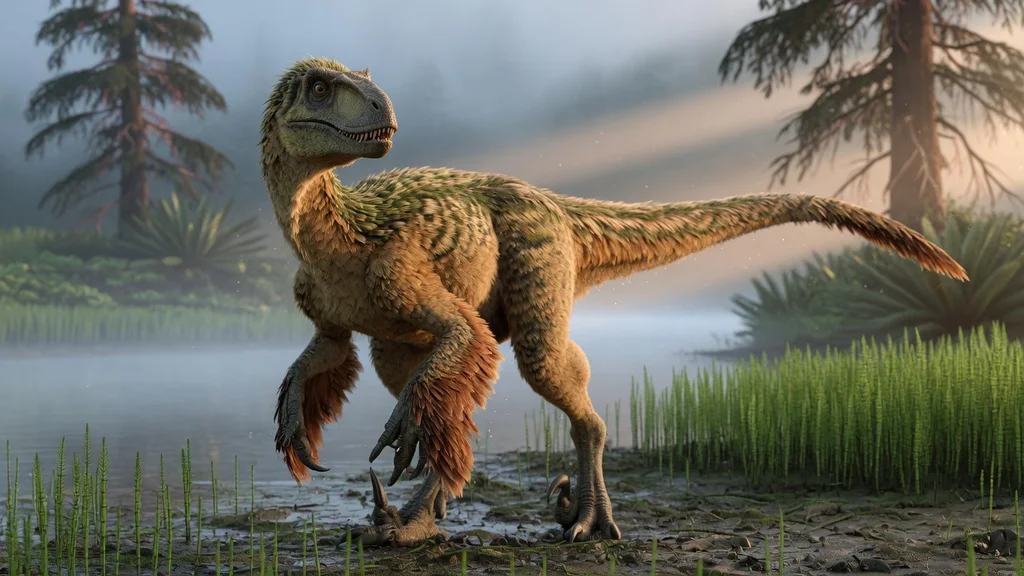
This dinosaur name generator does two different things, and it's worth picking the right one. In Scientific mode, it builds a real binomial name — genus and species — out of Latinized Greek and Latin roots that actually mean something, and shows you the translation, the same way "Triceratops" breaks down into "three-horned face." In Character mode, it drops the Latin and hands you a fun, sayable name for a dinosaur pet, mascot, or story character instead. Pick a type, pick how the name should be formed, and generate.
👇 Click any name to copy it
Scientific mode picks a suffix root appropriate to the creature type you chose — theropods lean on -raptor and -venator, sauropods on -titan and -docus, ceratopsians on -ceratops — then combines it with either a descriptive trait root, a fossil-location root, or an invented honorific, depending on the "Named for" filter. Every result shows its literal translation underneath, so you can see the mechanism rather than just the output. Character mode skips all of that and returns a short, kid-friendly name instead, still tagged by creature type and era.
How to Use This Dinosaur Name Generator
- Pick a mode. "Scientific species name" for a Latin binomial with a real translation, or "Character / pet name" for something simpler and more sayable.
- Choose a type. Theropod, sauropod, or ceratopsian if you want a genuine dinosaur; pterosaur or marine reptile if the story calls for a flying or swimming reptile from the same era — both are clearly flagged as not actually dinosaurs.
- Set "Named for." A trait or feature, the discovery location, or a person being honored — this changes how both the genus and species parts of the name get built.
- Pick an era, if it matters to you. Triassic, Jurassic, or Cretaceous adds a period-appropriate note to the result.
- Generate, then read the meaning line under each name. That's the part most generators skip — here it's the point.
Dinosaur Naming Conventions — What Makes a Scientific Name Work
Every dinosaur species has exactly one valid scientific name, governed by the International Code of Zoological Nomenclature (ICZN) — the same rulebook that governs naming for every animal, not just extinct ones. The system is binomial: a capitalized, italicized genus followed by a lowercase, italicized species epithet. Tyrannosaurus rex is a genus-species pair, not one long word — "Tyrannosaurus" covers a group of closely related animals, and "rex" (Latin for "king") narrows it to this specific one.
Almost every genus name is a compound built from two or more Greek or Latin roots, each carrying real meaning. That's not decoration — it's how the animal gets described before anyone has agreed on a common name for it. Triceratops breaks into tri- (three) + cerat- (horned) + -ops (face): three-horned face, describing the brow horns and frill in one word. Velociraptor is veloci- (swift) + -raptor (thief, plunderer): swift plunderer.
Three ways a genus name gets formed
This generator's "Named for" filter mirrors three real patterns paleontologists actually use, not an arbitrary made-up split:
- By trait. The most common pattern — a physical feature becomes the name. Stegosaurus ("roofed lizard") described the bony plates before anyone understood what they were for. Pachycephalosaurus ("thick-headed lizard") is literally just a description of its skull.
- By location. The genus names the place the fossil was found. Utahraptor was found in Utah. Argentinosaurus — one of the largest land animals ever identified — was found in Argentina. Mongolarraptor-style names, built the same way, point straight at the Gobi Desert.
- By person (honorific). The genus or species honors a researcher, fossil-hunter, or funder. Lambeosaurus honors Canadian paleontologist Lawrence Lambe. The species epithet often carries this instead — -i for a man's name, -ae for a woman's, -orum for a group, all Latin genitive endings meaning "belonging to."
Species epithets follow their own smaller set of patterns: a Latin adjective describing a trait (rex = king, giganteus = gigantic, horridus = rough or formidable), a place-adjective ending in -ensis or -icus (sinensis = "from China," used for the many species found in Sichuan), or the honorific -i/-ae pattern above. The generator's scientific mode always picks a species epithet that matches whichever pattern the genus itself was built from.
Root Meanings — The Reference Table
This is the part worth bookmarking. Below are the most common combining forms that show up across real dinosaur genus names, with what each one actually means — this is the table most dinosaur name generators skip entirely.
| Root | Meaning | Real example |
|---|---|---|
| -saurus / -saur | lizard | Stegosaurus — "roofed lizard" |
| -raptor | thief, plunderer | Velociraptor — "swift plunderer" |
| -don / -odon | tooth | Iguanodon — "iguana tooth" |
| -ceratops | horned face | Triceratops — "three-horned face" |
| -pteryx | wing | Archaeopteryx — "ancient wing" (not a dinosaur genus, but the classic root) |
| -mimus | mimic | Gallimimus — "chicken mimic" |
| -venator | hunter | Megaraptor namunhuaiquii-style hunters use this root, e.g. Australovenator |
| -titan | titan, enormous | Argentinosaurus-scale sauropods often carry this instead, e.g. Patagotitan |
| -nychus | claw | Deinonychus — "terrible claw" |
| Tyranno- | tyrant | Tyrannosaurus — "tyrant lizard" |
| Deino- | terrible | Deinonychus — "terrible claw" |
| Micro- / Macro- | small / large | Microraptor — "small plunderer" |
| Pachy- | thick | Pachycephalosaurus — "thick-headed lizard" |
| Veloci- | swift | Velociraptor — "swift plunderer" |
| -ensis | from (a place) | Yutyrannus huali-style species use -ensis more often, e.g. sinensis, "from China" |
| -i / -ae | belonging to (a person) | Lambeosaurus lambei — honors Lawrence Lambe |
Real Dinosaur Discoveries by Era
The era filter isn't just flavor text — which period a dinosaur lived in shapes what kind of animal it plausibly was. Dinosaurs existed for roughly 165 million years, and the difference between the start and end of that span is enormous: early dinosaurs were small and quick, competing with other reptile groups that hadn't died out yet, while late-Cretaceous dinosaurs included some of the largest and most specialized animals ever to walk the planet.
| Era | Approximate range | What defined it | Real example |
|---|---|---|---|
| Triassic | 252–201 million years ago | Dinosaurs first appear, small and outnumbered by other reptile groups | Eoraptor — "dawn plunderer," one of the earliest known dinosaurs |
| Jurassic | 201–145 million years ago | Dinosaurs diversify and reach extreme sizes, especially sauropods | Brachiosaurus, Diplodocus, Allosaurus |
| Cretaceous | 145–66 million years ago | Peak diversity — feathered theropods, horned ceratopsians, armored ankylosaurs — ending in the mass extinction | Tyrannosaurus, Triceratops, Velociraptor |
A name built with the era filter set to "Triassic" leans toward smaller-sounding roots in this generator's flavor text, while "Cretaceous" results lean into the scale and specialization that defined the period's most famous animals. It's a detail most quick-and-dirty generators skip, but it's the same detail a paleontologist would sanity-check before taking a name seriously.
Character and Pet Dinosaur Names
Not every search behind "dinosaur name generator" wants Latin. A lot of people typing that phrase are naming a plush toy, a birthday-party mascot, a pet gecko with dinosaur energy, or a character in a story being read out loud to a kid — and for that audience, a binomial like Ferrodontosaurus giganteus is the wrong tool. Character mode drops the Latin entirely and returns a short, easy-to-say name instead, still organized by the same five creature types so a "friendly plant-eater" and a "scary hunter" don't end up sounding the same.
The "Named for" filter still applies here, just in a lighter form: trait pairs the base name with a simple descriptive word ("Mighty Rex," "Speedy Fang"), location ties it to a real-sounding place ("Stretch of Patagonia"), and person nods at the honorific pattern real science actually uses ("Buttercup, Amara's dino") without any of the Latin grammar. It's a small detail, but it means a kid generating a "location" name is quietly absorbing the same naming logic that produced Utahraptor — just without needing to know what a genitive case is.
If you're naming something that's going to stick around — a pet's actual name, a recurring story character, a classroom mascot — favor short, one- or two-syllable options that are easy to shout across a playground. If you're naming something one-off, like a party activity or a worksheet prompt, the sillier combinations work fine too.
Common Dinosaur Naming Mistakes
- Calling a flying or swimming reptile a dinosaur. The single most common error — see the section below. Pterosaurs and marine reptiles are close relatives, not dinosaurs.
- Treating the genus name as the whole name. "Tyrannosaurus" alone identifies the group, not the specific animal; "rex" is what narrows it to one species. Skipping the species epithet is like introducing someone by surname only.
- Getting the capitalization backwards. Genus is capitalized, species is not — Tyrannosaurus rex, never "tyrannosaurus Rex." Both words are italicized in formal writing.
- Assuming "-saurus" means dinosaur. It means "lizard-like" and shows up in pterosaur and marine-reptile names too — it's a description of appearance, not a taxonomic guarantee.
- Inventing a name that collides with a real one. If you're writing fiction and want a genus that reads as original, check it against a resource like the Paleobiology Database before publishing — new dinosaur genera are still being named regularly, and a real one might already exist.
Where Dinosaur Naming Rules Actually Get Used
This isn't only trivia. Every peer-reviewed paper describing a new dinosaur species has to register a name that follows ICZN rules, and museums, textbooks, and databases like the Paleobiology Database rely on that name being unique and stable — it's how a fossil found in one country gets correctly matched to a related one described decades earlier on another continent. Natural history museums label specimens with the full binomial for the same reason a hospital uses a patient ID instead of just a first name: it removes ambiguity. Once you can read a name like Utahraptor ostrommaysorum and immediately know it was found in Utah and honors two specific paleontologists, museum placards stop being a wall of unfamiliar Latin and start being a small, readable story.
Pterosaurs and Marine Reptiles Are Not Dinosaurs
This is the single most common mistake in dinosaur media, merchandise, and — frankly — other name generators, so it gets its own section instead of a footnote. Dinosauria is a specific clade defined by particular hip and limb anatomy. Pterosaurs (flying reptiles like Pteranodon and Quetzalcoatlus) and marine reptiles (ichthyosaurs, plesiosaurs, mosasaurs) lived at the same time, often in the same regions, and are frequently drawn, sold, and written about as if they were dinosaurs. They aren't — they're separate reptile lineages that happen to share the Mesozoic Era with actual dinosaurs.
That's why this generator's type filter includes pterosaur and marine reptile as options, but labels every result from either one clearly: "not a dinosaur." If you're building a species name for a flying or swimming Mesozoic reptile, this generator will still give you a naming system that fits that animal's real root vocabulary (-pteryx, -dactylus for pterosaurs; -pterygius for marine reptiles) — it just won't pretend the result is a dinosaur.
Dinosaur Types — Naming Roots by Group
Theropods
Bipedal, mostly carnivorous — Tyrannosaurus, Velociraptor, Allosaurus. Names in this group lean hardest on aggressive or agile-sounding roots: -raptor, -venator (hunter), -nychus (claw), and -mimus (mimic) for the more bird-like, ostrich-mimic branch.
Sauropods
The long-necked giants — Brachiosaurus, Diplodocus, Argentinosaurus. Scale dominates the naming: -titan, Giganto-, and -docus ("beam," describing the tail or neck vertebrae) show up constantly, because size is usually the most striking thing about the fossil.
Ceratopsians
Horned, frilled plant-eaters — Triceratops, Styracosaurus. The -ceratops root ("horned face") is close to universal here, sometimes swapped for -cephale ("head") in the dome-headed relatives like Pachycephalosaurus.
Pterosaurs (not dinosaurs)
Flying reptiles from the same era — Pteranodon, Quetzalcoatlus. Naming leans on flight and anatomy: -pteryx (wing), -dactylus (finger, for the elongated wing-finger their wing membrane stretched from).
Marine reptiles (not dinosaurs)
Sea-dwelling reptiles — ichthyosaurs, plesiosaurs, mosasaurs. Naming often still borrows -saurus ("lizard-like"), which is part of why the confusion with actual dinosaurs persists, alongside -pterygius ("flipper" or "fin").
Worked Example: Building a Name from Scratch
Here's the actual mechanism, walked through by hand, so the generator above doesn't feel like a black box.
- Pick a type. Say theropod — a bipedal hunter. That narrows the suffix pool to roots like -raptor, -venator, -odon, and -mimus.
- Pick a formation approach. Trait-based, this time — the genus will describe a physical feature rather than a place or a person.
- Choose a trait root. "Spino-" (spine, thorn) — describing unusually tall neural spines along the back, the same feature that defines the real genus Spinosaurus.
- Choose a suffix. "-venator" (hunter) reads well with a spine-based trait: Spinovenator — "spine hunter."
- Add a species epithet. Trait-formed genera pair with a Latin descriptive adjective — "robustus" (sturdy): Spinovenator robustus, "sturdy spine hunter."
- Read the translation back. That's the whole point of scientific mode — the name isn't just a plausible-sounding string, it's a claim about what the animal looked like, exactly like Spinosaurus aegyptiacus (spine lizard, from Egypt) is a real one.
Location-based and person-based names follow the same logic with a different starting ingredient — a place name instead of a trait root for location, an invented surname instead of a Greek combining form for the honorific pattern — but the shape of the process is identical every time: pick a meaningful piece, attach a type-appropriate suffix, translate the result.
Famous Dinosaur Names and What They Mean
| Name | Breakdown | Meaning |
|---|---|---|
| Tyrannosaurus rex | tyranno- + -saurus + rex | "Tyrant lizard, king" |
| Triceratops horridus | tri- + cerat- + -ops + horridus | "Three-horned face, rough/formidable" |
| Velociraptor mongoliensis | veloci- + -raptor + mongoliensis | "Swift plunderer, from Mongolia" |
| Stegosaurus stenops | stego- + -saurus + sten- + -ops | "Roofed lizard, narrow face" |
| Brachiosaurus altithorax | brachio- + -saurus + alti- + thorax | "Arm lizard, deep chest" (front legs longer than back) |
| Deinonychus antirrhopus | deino- + -nychus + antirrhopus | "Terrible claw, counterbalancing" (its stiff tail) |
| Utahraptor ostrommaysorum | Utah + -raptor + ostrommaysorum | "Utah's plunderer," species honors two paleontologists |
| Pteranodon longiceps | pter- + an- + -odon + longiceps | "Toothless wing, long-headed" — a pterosaur, not a dinosaur |
Tips for Picking a Dinosaur Name
- Decide which mode you actually want first. A scientific-style binomial reads as expert and precise; a character name reads as friendly and easy to say out loud to a five-year-old. They serve different purposes — don't force a "-saurus" name onto a plush toy.
- Match the root to the animal's real traits. If you're inventing a species for a story, pick roots that describe something the creature actually does — armor, speed, size — the same way real names do. It reads more convincing than a random Latin-sounding string.
- Keep it pronounceable. Real paleontologists do this too — a genus name that nobody can say out loud doesn't get repeated, cited, or remembered.
- Use the location pattern for worldbuilding. If your story has an invented region, naming a species after it (the -ensis pattern) instantly signals "this was found here" without extra exposition.
- Double-check "not a dinosaur" before you commit. If your character is airborne or aquatic, it's almost certainly a pterosaur or marine reptile by real classification — worth knowing before a sharp-eyed reader points it out.

Example Dinosaur Names
Scientific — theropod
- Ferrovenator giganteus — "iron hunter, gigantic"
- Xenoraptor gracilis — "strange plunderer, slender"
- Utahvenator utahensis — "Utah's hunter, from Utah"
- Brennickraptor davidi — honorific, two names
- Terato-odon rex — "monstrous tooth, king"
Scientific — sauropod
- Baryttitan magnus — "heavy titan, great"
- Patagonititan patagonicus — "titan of Patagonia"
- Dolichodocus longus — "long beam, long"
- Ackrotitan armatus — "topmost titan, armored"
Scientific — ceratopsian
- Ceratoceratops horridus — "horned, horned face, formidable"
- Gobiceratops gobiensis — "horned face of the Gobi"
- Platycephale elegans — "flat head, elegant"
Character names
- Mighty Rex (theropod)
- Stretch of Patagonia (sauropod)
- Buttercup (Amara's dino) (ceratopsian)
- Skye (pterosaur — not a dinosaur)
- Riptide of the Sahara (marine reptile — not a dinosaur)
Dinosaur Names vs. Other Creature Name Generators
This site has a few other generators that sound adjacent, so it's worth being clear about the split. The dragon name generator builds names for fictional, fire-breathing fantasy dragons — invented phoneme pools tied to an element (fire, ice, storm), not a real naming system, because dragons aren't real animals with a taxonomic code. The species name generator is for inventing an entire fictional alien or fantasy race from scratch — worldbuilding scale, no binomial structure. Neither one uses actual Greek/Latin roots or the genus-species format; this page is the only one on the site doing real paleontological nomenclature. If you want a name for a living, present-day animal instead — a pet, specifically — the dog name generator and horse name generator cover that territory with real, usable names rather than invented Latin.
FAQ for the Dinosaur Name Generator
How are dinosaurs actually named?
Every dinosaur gets a two-part scientific name — genus and species — under the same binomial system Carl Linnaeus set up for all of life, administered today by the International Code of Zoological Nomenclature (ICZN). The genus is capitalized, the species is lowercase, and both are italicized in print: Tyrannosaurus rex. Names are almost always built from Latinized Greek or Latin roots that describe a trait, name the discovery site, or honor a person.
What does 'saurus' mean and why is it in so many dinosaur names?
"-saurus" comes from the Greek sauros, meaning "lizard." It became the default dinosaur suffix because Richard Owen, who coined "Dinosauria" in 1842, was working from that same root — "terrible lizard." Dinosaurs aren't lizards in the scientific-classification sense, but the naming habit stuck, and it's still the most common ending in the fossil record.
Is a pterosaur a dinosaur?
No. Pterosaurs — pterodactyls, Pteranodon, Quetzalcoatlus — were flying reptiles that lived alongside dinosaurs and shared a common ancestor with them, but they belong to a separate reptile group, not Dinosauria. This mix-up is common enough that it shows up in most "dinosaur" media and merchandise. The type filter above marks pterosaur results clearly as "not a dinosaur" for exactly this reason.
Are marine reptiles like Plesiosaurus dinosaurs?
No — the same logic applies. Ichthyosaurs, plesiosaurs, and mosasaurs swam the Mesozoic seas at the same time as the dinosaurs on land, but none of them are classified inside Dinosauria. Their names often end in "-saurus" too, which is part of why the confusion is so persistent — the suffix describes "lizard-like," not "dinosaur."
What's the difference between a genus and a species name?
The genus is the broader group — Tyrannosaurus covers a cluster of closely related animals — and the species narrows it to one specific kind within that group: rex. Together they identify one organism precisely, the way a first and last name identify one person, except read in the opposite order.
Can I actually name a newly discovered dinosaur?
Only the scientist who formally describes the species in a peer-reviewed paper gets to propose its name, and the ICZN has real rules about it — the name can't already be in use, has to be properly Latinized, and needs to be published following the Code's requirements. Names honoring a funder or an amateur fossil-hunter do happen, but the naming right itself belongs to whoever does the formal description.
Why do some dinosaur names end in '-i' or '-ae'?
That's the honorific pattern for a species epithet named after a person — the Latin genitive case, meaning "belonging to." "-i" is used for a man's name (or a name treated as masculine), "-ae" for a woman's, and "-orum" when honoring a group of people. Lambeosaurus lambei, for instance, uses "-i" to credit the specific researcher the species is named for.
Is this generator's scientific mode actually accurate?
It builds names the same way real taxonomists do — combining Latinized Greek/Latin roots with real meanings into a genus, then attaching a species epithet formed by an actual naming convention (a descriptive Latin adjective, a place-based "-ensis" ending, or an honorific "-i"). It won't ever hand you a genuinely published species name by accident, and it always shows you the translation, so you can see exactly how the name was built rather than trusting a black box.
What's a good dinosaur name for a pet or a story character?
Switch to Character mode and pick the creature type that matches the personality you're going for — theropod-flavored names read fast and fierce (Rex, Razor, Dash), sauropod names read gentle and easy-going (Stretch, Meadow, Fern), and ceratopsian names read sturdy and a little stubborn (Buttercup, Rocky, Thistle). Short, one- or two-syllable options tend to stick better for an actual pet name than anything longer.