
Victorian Name Generator — Real 1837–1901 British Names
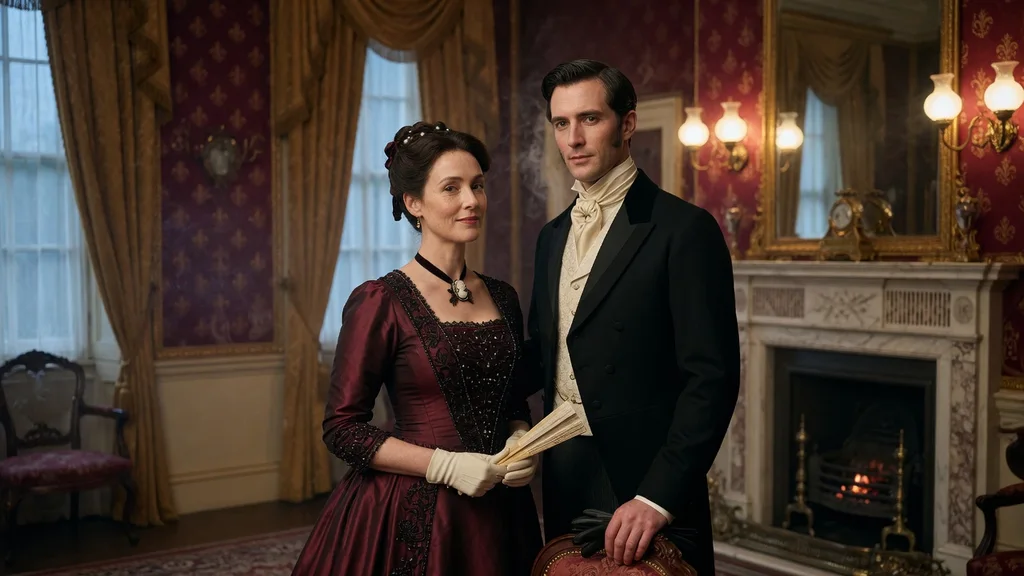
This Victorian name generator builds names from the real naming record of England and Wales between 1837 and 1901 — Queen Victoria's reign — rather than from a generic "old-timey" word list. Set a gender, a period, and a social class, and it hands you a name that a real registrar could plausibly have written down: William Carter in 1845, Ethel Woodhouse in 1892, Lady Cordelia Cavendish at any point in between.
👇 Click any name to copy it
No two decades of the Victorian era sounded quite the same, and no two classes named their children the same way. This generator treats both of those facts as real filters, not flavour text. Click any card to copy the result.
How to Use This Victorian Name Generator
Four controls, one Generate button. Each filter changes a genuinely different part of the name's texture, so it's worth trying more than one combination.
- Pick a gender — Male, Female, or Any for a mixed batch.
- Choose a period — Early, Mid, or Late Victorian. This shifts which names are actually in fashion, not just the decoration around them.
- Choose a class — Working, Middle, or Upper class / aristocracy. This changes both the given-name register and the surname pool.
- Pick a name type — a plain given name and surname, a version with a second name, or a full name with a period-correct title.
- Hit Generate, adjust the slider, and run it again — the pools are deep enough that a second batch rarely repeats the first.
What the Census Actually Says About Victorian Names
England and Wales kept birth registers through the entire Victorian period, which means the "most popular Victorian names" claim isn't guesswork — it's a matter of record. Across the 64 years of Victoria's reign, William, John, George, and Thomas were consistently among the most common names given to boys, and Mary, Elizabeth, Sarah, and Ann were consistently among the most common for girls. Any Victorian name generator that doesn't lean on that data first is starting from a costume-drama guess instead of a real record.
Still, "consistently common" doesn't mean "unchanging." A boy christened in 1840 and a boy christened in 1895 were both plausibly named William — but the names sitting just below William on each list looked different. Early in the reign, Henry, Charles, Joseph, and Richard filled out the rest of a typical boys' cohort. By the 1880s and 90s, Arthur, Ernest, Herbert, Percy, and Harold had pushed into common use, and Albert had climbed sharply after 1840. This generator's Period filter exists because a name pool built as one flat list across 64 years quietly gets a third of its results wrong for whichever decade you actually meant.
Class and the Sound of a Victorian Name
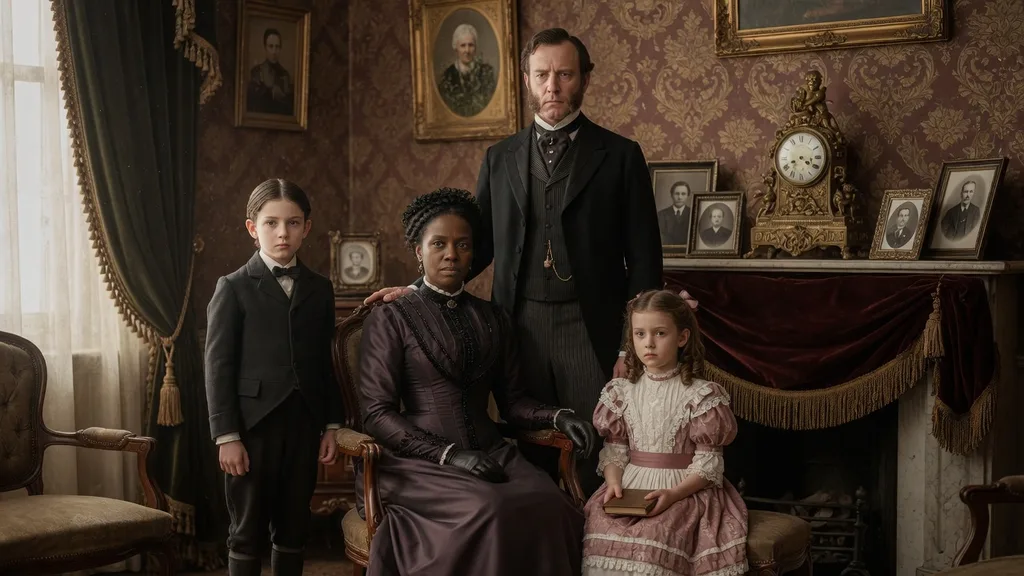
Social class shaped Victorian naming as much as decade did, and arguably more visibly. Three registers ran side by side through the entire era, and a listener at the time could place a stranger's background almost the moment a name was said aloud.
A working-class household reached for plain, familiar names — Jack, Bill, Tom, Nellie, Polly, Betsy — names that got shortened in daily use almost from the christening onward. A middle-class household leaned toward biblical names and slightly grander, "improving" choices meant to read well on a calling card or a Sunday-school register: Arthur, Herbert, Ernest, Beatrice, Constance, Gertrude. The upper class did something neither of the other two did: it recycled family surnames as given names. Percy, Neville, Stanley, Sidney, Beauchamp — names that started life as somebody's surname and got promoted to a christening font because the family wanted the name of an estate, a mother's maiden line, or a grandfather's title carried forward.
None of this was absolute. A working-class family could and did occasionally give a child a grander name borrowed from a novel or a newspaper story about the aristocracy, and a landed family sometimes named a younger son something perfectly ordinary. The class filter here shifts the odds heavily in one direction — it doesn't lock a single class into a single narrow list.
The Queen Victoria Effect
Victoria wasn't a common English given name before 1837. It existed, but it sat well down any popularity list. That changed once a young queen with that name took the throne, and it changed again in 1840, when she married Prince Albert of Saxe-Coburg and Gotha — a name that was, before that marriage, almost unheard of among the English-speaking public. Albert usage climbed noticeably through the 1840s and stayed elevated for decades, driven partly by the marriage itself and partly by Albert's later prominence as Prince Consort and, after his death in 1861, by a wave of public mourning that turned his name into something closer to a tribute.
This generator treats that as a real, documented naming effect rather than a gimmick — Albert and Victoria appear with a small added weight in the mid and late period pools, not in the early band (before the effect existed) and not flooding every single result the way a lazier "royal-themed" generator might.
Flower Names — A Late-Victorian Fashion, Not a Victorian One
Rose, Lily, Violet, Daisy, Ivy, and Myrtle read as quintessentially "Victorian" to most people today, and most Victorian name lists online drop them across the entire 19th century without a second thought. That's an anachronism hiding inside a period-accurate word list. Flower names became genuinely fashionable in England specifically in the late Victorian period — roughly the 1880s and 1890s — as part of a broader turn toward sentimental, nature-inspired naming that continued into the Edwardian era. A girl christened Violet in 1845 would have been a genuine outlier; a girl christened Violet in 1895 was following a real trend.
Set the Period filter to Early Victorian here and you won't see a single flower name — the pool simply doesn't include them for that band. Set it to Late Victorian and they show up as one thread among several, weighted the way the fashion actually sat: present and recognisable, not dominant.
Second Names and the Mother's Maiden Name Tradition
Middle names weren't universal in the earlier part of the Victorian period, but by the mid-to-late 1800s a documented convention had taken hold in many families, especially the middle and upper classes: giving a daughter her mother's maiden surname as a second name. It served a real purpose — a way to preserve a family name through the female line when a household had no son to carry the surname forward, or simply a way to honour both sides of a marriage in one christening.
Set the Name type filter to "With second name" and the generator reflects this directly. Roughly half the results will flag the middle element as a mother's-maiden-name pairing; the rest use a second class-appropriate given name instead — itself a common Victorian pattern, especially for sons meant to carry a grandfather's or godfather's name forward alongside their own.
Victorian Surnames — Occupational, Toponymic, and Aristocratic
English surnames had mostly stopped changing by the Victorian era — the naming system had solidified centuries earlier — but the surname stock a Victorian person carried still split cleanly by the same logic that built it in the first place: what your ancestors did, where they were from, or which estate they belonged to.
| Surname type | Where it came from | Example |
|---|---|---|
| Occupational | An ancestor's trade — the most common surname category in England | Smith, Cooper, Thatcher, Baker, Turner, Weaver |
| Toponymic | A place or landscape feature an ancestor lived by | Hill, Wood, Marsh, Ford, Brook, Fields |
| Aristocratic | A landed family name, often carrying a title or estate | Cavendish, Fitzgerald, Grosvenor, Fairfax, Sinclair |
Working and middle-class Victorians overwhelmingly carried occupational or toponymic surnames, since that's simply what most English surnames were by the 19th century. The generator's aristocratic surname pool is reserved for the upper-class filter, which is also where you'll see those surnames doing double duty as given names — the same surname-recycling habit covered above.
Victorian Nicknames — How a Formal Name Actually Got Used
Almost nobody went by their full christened name in daily life. A Victorian name existed in layers: the formal register on the birth certificate, and a household form that could differ sharply from it. William became Will, Bill, or Billy depending on who was talking and how old he was. Elizabeth splintered into Eliza, Liza, Bess, Betsy, Betty, and Libby — genuinely different nicknames in different households, sometimes within the same family for different daughters named Elizabeth after the same grandmother. Margaret became Peggy or Maggie; Sarah became Sally; Mary became Polly or May.
Which form got used said almost as much as the name itself. A working-class child answered to a nickname from birth and might never hear the full form outside a church register or a court appearance. A middle-class child grew into the formal name gradually — nursery nicknames giving way to the full name for school, then for good among adult company. In an upper-class household, formality could run the other way entirely: staff addressed a child by title and surname from an early age, and a nickname was something only family used, and only in private. If you're naming a character rather than just generating one, deciding which nickname they answer to — and who's allowed to use it — does real characterization work that the bare given name can't.
Naming Patterns Inside the Family
Victorian parents weren't picking names in isolation — a handful of real conventions shaped the choice before fashion or class ever entered the picture. An eldest son was very often named after his father or paternal grandfather, and an eldest daughter after her mother or maternal grandmother, which is why the same handful of names recur across three or four generations in a single family's parish records. Godparents carried real weight too: naming a child after a godparent was common practice and sometimes came with an unspoken expectation of future patronage or inheritance, especially among the middle and upper classes.
One pattern worth knowing, and handling carefully in fiction: with Victorian infant mortality running high, it wasn't unusual for a family to give a later-born child the same given name as an earlier sibling who had died in infancy. It wasn't sentimentality so much as practicality — a family had settled on a name it wanted carried forward, and a parish register from the period will sometimes show two children with the same first name and different birth years under the same parents. It's a detail that can add real weight to a historical-fiction family tree if you use it deliberately rather than as a plot twist.
Victorian Names by Period
A quick reference for how the dominant names actually shifted across the reign. This isn't a complete list — it's the shape of the change, decade to decade.
| Period | Boys leaning in | Girls leaning in |
|---|---|---|
| Early Victorian (1837–60) | William, John, George, Thomas, James, Charles | Mary, Elizabeth, Sarah, Ann, Jane, Hannah |
| Mid-Victorian (1861–80) | William, John, Albert, Arthur, Frederick, Walter | Mary, Elizabeth, Emma, Alice, Florence, Edith |
| Late Victorian (1881–1901) | William, Arthur, Albert, Ernest, Percy, Harold | Florence, Edith, Ethel, Mabel, Gertrude, Winifred |
Victorian Names by Class
| Class | Register | Example |
|---|---|---|
| Working class | Plain, everyday, often shortened at home | Bill Carter, Nellie Marsh |
| Middle class | Biblical, "improving," respectable | Herbert Woodhouse, Beatrice Hill |
| Upper class / aristocracy | Family surnames recycled as given names | Percy Cavendish, Lady Evelyn Fairfax |
Tips for Choosing a Victorian Name
- Pick the period before the name. Decide what decade your character or ancestor was born in first — it rules out whole clusters of names (no Violet before the 1880s, no Albert before 1840).
- Match class to surname type. A working-class character with an aristocratic surname reads as a plot point, not a mistake — use it on purpose or not at all.
- Say it with a formal address in mind. Victorians used first names sparingly outside the family. If your character would be "Mr. Carter" to most people, write the name with that in mind.
- Don't over-flower an early character. Rose and Lily read as anachronistic on anyone born before the 1880s — save them for late-Victorian or Edwardian characters.
- Keep the surname steady across a family. Generate once, keep the surname, and re-roll the given name for siblings or a family tree that reads as one household.
- Use the title filter for dialogue and letters. "Mr. Turner" or "Lady Fairfax" does narrative work that a bare first name can't.
Example Victorian Names
Handpicked results across period and class, to show the range.
Early Victorian (1837–60)
- William Smith
- Sarah Cooper
- Thomas Baker
- Mary Turner
- Charles Weaver
- Ann Fisher
- John Carter
- Hannah Mason
- James Thatcher
- Eliza Wright
Mid-Victorian, Middle Class (1861–80)
- Herbert Woodhouse
- Beatrice Hill
- Arthur Ashby
- Constance Overton
- Ernest Church
- Florence Fenwick
- Albert Fields
- Edith Bridge
- Frederick Lane
- Gertrude Stone
Late Victorian, Upper Class (1881–1901)
- Percy Cavendish
- Lady Evelyn Fairfax
- Sidney Grosvenor
- Cordelia Sinclair
- Neville Montgomery
- Rosamund Beaumont
- Stanley Villiers
- Griselda Wynford
- Beauchamp Pemberton
- Ottilie Harewood
Victorian Names vs. Other Historical and Gothic Generators
This site has a few generators that touch the 19th century or a Victorian aesthetic, and they solve different problems. Worth being precise about which one to reach for.
The Hogwarts Legacy name generator uses these same real 1890s British given-name patterns, since the game is set in 1890 and 1891, but pairs them with invented wizarding surname traditions and a heritage mechanic (pure-blood, half-blood, Muggle-born) for a fictional magical society. Reach for that page when you're naming a character inside the wizarding world; reach for this one when you want a name that could belong to a real historical person from the same decades.
The gothic name generator's "Victorian Gothic" style is a fictional dark-aesthetic register — estate surnames and mourning-culture names pushed toward horror and melodrama (Blackmoor, Ravencroft, Gravehollow). It's built for gothic fiction and horror-adjacent characters, not historical accuracy. This page stays inside the real record; the gothic generator deliberately steps outside it for atmosphere.
The medieval name generator reaches much further back — roughly 900 to 1400 — for English, French, and German names sorted by social class and byname type. It's the right tool for a character or ancestor centuries before Victoria ever took the throne, with a completely different naming system (bynames rather than fixed surnames) behind it.
FAQ for Victorian Name Generator
Are these real Victorian names, or invented ones that just sound old?
Real. Every given name in the pool comes from documented English naming patterns of 1837–1901 — the names that actually topped birth registers, split by early, mid, and late Victorian bands because the ranking shifted across those 64 years. The surnames are drawn from genuine occupational (Smith, Thatcher) and toponymic (Hill, Ford) English naming traditions, plus a separate aristocratic-surname pool for the upper-class filter.
Did Victorian names really change that much between 1837 and 1901?
Yes, more than most naming tools admit. William, John, George, and Thomas held the top boys' spots across the whole reign, and Mary and Elizabeth stayed dominant for girls, but the names clustered around them shifted — Albert rose after 1840, Florence and Edith gained ground mid-reign, and Ethel, Gladys, and Winifred are a distinctly late-Victorian cluster. That's why this generator has a period filter instead of one flat 64-year list.
What's the difference between working-class, middle-class, and upper-class Victorian names?
Working-class households favoured plain, frequently shortened names — Bill, Jack, Nellie, Polly. Middle-class households leaned toward biblical or 'improving' names that read well on a calling card — Arthur, Herbert, Beatrice, Constance. The aristocracy recycled family surnames as given names — Percy, Neville, Stanley, Beauchamp — a habit that had nothing to do with religion or aspiration and everything to do with signalling which estate you came from.
Were flower names like Rose, Lily, and Violet used throughout the Victorian era?
No — this is one of the most common misconceptions the generator corrects. Flower names became fashionable specifically in the late Victorian period, roughly the 1880s and 1890s, not across the whole 19th century. Set the period filter to Early Victorian and you won't see Violet or Daisy in the results; they only enter the female late-Victorian pool.
Did Queen Victoria's name actually influence Victorian baby names?
Yes, documented and specific. Victoria wasn't a common English name before her reign; usage picked up after 1837 and again after her 1840 marriage to Prince Albert, when Albert saw a real uptick of its own. This generator reflects that as a small added weight in the mid and late period pools rather than flooding every result with Victoria and Albert, which is what most competitors do.
What is a Victorian second name, and why does the generator mention 'mother's maiden name'?
Giving a daughter her mother's maiden surname as a middle name was a real and fairly common Victorian convention, used to preserve a family name through the female line when there was no son to carry it. Set Name type to 'With second name' and roughly half the results will flag exactly that — the rest use a second class-appropriate given name instead, which was also common practice.
How is this different from the Hogwarts Legacy name generator?
They share an era but not a world. The Hogwarts Legacy name generator uses these same real 1890s British given-name patterns but pairs them with three invented wizarding surname traditions and a heritage mechanic (pure-blood, half-blood, Muggle-born) built for a fictional magical society. This page stays entirely in the real historical record — real given names, real surname traditions, real social class, no fiction layered on top.
Is 'Victorian Gothic' from the gothic name generator the same thing as this page?
No. Victorian Gothic on the gothic name generator is a fictional dark-aesthetic style — mourning culture and estate surnames pushed toward horror and melodrama (Blackmoor, Ravencroft, Gravehollow). This generator produces names a real person could have been christened with in 1870s Manchester or London, without the invented gothic surnames.
What Victorian nickname would a character named William or Elizabeth actually use?
William commonly shortened to Will, Bill, or Billy depending on household and class; Elizabeth splintered into Eliza, Liza, Bess, Betsy, or Betty. Which form a person answered to varied by family, not by any fixed rule, so pick the one that fits your character's household — a working-class Bill and a formally-raised William with the same birth name would read very differently on the page.
Can I use this for historical fiction, genealogy, or a tabletop campaign?
Yes, all three. For historical fiction and genealogy research, the period and class filters help you land on a name that's plausible for a specific decade and background rather than a generic 'old-fashioned' guess. For tabletop campaigns set in a low-fantasy Victorian or steampunk world, the same filters give you period texture without requiring you to research census data yourself.


