
Band Name Generator

This band name generator spins up stage-ready names across 16 genres and 10 themes — pick a sound, lock a structure, and roll until one sticks. Every card links straight to a Spotify, Bandcamp, and Google search, so you can check whether the name is already taken without leaving the page. The name is the first thing on the poster and the last thing the crowd shouts back, so it earns a little care before a single note plays.
👇 Click any name to copy it
A name does quiet work. It tells a stranger scrolling a lineup, in a fraction of a second, if you sound like crunching distortion or three-part harmony. Get it right and the name becomes a hook of its own — easy to say, easy to find, easy to chant when the lights come up.
That is the whole job. A good band name plants you in someone's memory before they have heard you, and it keeps you there once they have.
What Makes a Great Band Name
The best names share a handful of traits. None of them are about being clever for its own sake — they are about being found, remembered, and shouted.
- Memorable – A stranger hears it once at a show and can still type it into a search bar the next morning. Short, vivid, and sound-driven beats long and abstract every time.
- Fits the genre – A name carries an expectation. "Velvet Tigers" promises guitars; "Necrotic Throne" promises down-tuned riffs. When the name and the music agree, the listener trusts you faster.
- Easy to say and spell – If a fan has to ask how it is spelled, you lose them on the way to the search box. Clever misspellings feel smart in your head and cost you streams in the wild.
- Easy to chant – Say it as a crowd would, three times, fast. A name with a strong rhythm and a hard consonant lands; a mushy one dissolves into noise.
- Available – The cleverest name in the world is useless if another act already owns it. Room to claim a handle, a domain, and a clean search result matters more than the perfect pun.
- Room to grow – Avoid boxing yourself in. A name that only fits your first EP becomes a cage by the third album. Pick something that can age with the music.
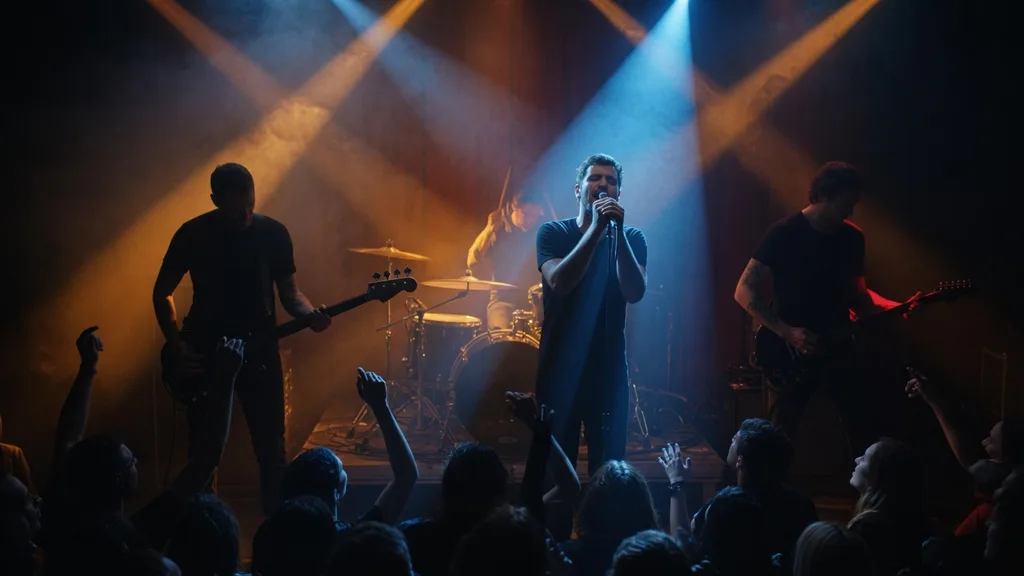
Naming by Genre
Genre is the loudest signal a name can send. Each scene has its own vocabulary, built up over decades, and listeners read it without thinking. The generator leans into that — flip the genre and the entire word pool changes underneath you, so a metal result and a pop result barely share a letter.
Rock wants motion and grit: engines, highways, wolves, thunder. The words feel lived-in and a little dangerous. Metal reaches for dread and weight — iron, tombs, abyss, scourge — names that look right carved into a back patch. For subgenre-level metal names — death, black, doom, and the rest — the dedicated metal band name generator goes deeper than the genre filter here. Punk is fast, rude, and proud of it: rejects, vandals, gutter, spit. Polish is the enemy.
Pop goes bright and sweet — hearts, neon, sugar, stars — built for a chorus you hum without meaning to. Indie trades on soft, specific imagery: paper boats, antlers, rooftops, tangerines, the kind of name that fits a hand-screened tote. Hip-hop carries authority — kings, empire, syndicate, crown — names that hold weight on a bill. Naming a solo MC rather than a crew? The rapper name generator works on stage names instead.
Electronic reads cold and futuristic: circuit, signal, chrome, mirage, glowing on a 2 a.m. flyer. Country keeps it honest and dusty — backroads, whiskey, pines, saddle — a name that rings true on a porch. Jazz goes smoky and slow: blue, velvet, midnight, brass, a name whispered over a late set.
R&B and Soul leans into intimacy — velvet, honey, candlelight, devotion — words built for a slow chorus. Funk keeps it loud and physical: groove, brass, sweat, the pocket. Blues stays plain and worn — crossroads, levee, whiskey glass — names that sound like they have been on the road a while.
Reggae draws on roots, tide, sunlight, and unity — warm words with a horizon in them. Folk and acoustic acts favor homespun images: hearth, wagon wheel, riverbend, the kind of name printed on a hand-lettered poster outside a coffeehouse. Match the vocabulary to your sound and the name does half your marketing for you.
K-pop and Christian / Worship both play by different rules again — different enough that each gets its own section further down the page.
| Genre | Feel | Example |
|---|---|---|
| Rock | Grit, motion, swagger | The Velvet Tigers |
| Metal | Dread, weight, menace | Necrotic Throne |
| Punk | Fast, rude, raw | Plastic Rejects |
| Pop | Bright, sweet, hooky | Neon Hearts |
| Indie | Soft, specific, wistful | Paper Antlers |
| Hip-hop | Authority, weight | Golden Syndicate |
| Electronic | Cold, futuristic, neon | Static Circuit |
| Country | Honest, dusty, warm | Whiskey Roads |
| Jazz | Smoky, slow, mellow | Blue Sevenths |
| R&B / Soul | Intimate, warm, devoted | Truelove |
| Funk | Loud, physical, groovy | Funky Get-Down |
| Blues | Plain, worn, weary | Backporch |
| Reggae | Warm, rooted, rhythmic | Island Dub |
| Folk / Acoustic | Homespun, gentle, plain | Riverbend |
| K-pop | Bright, stylized, bold | VELXIA |
| Christian / Worship | Reverent, steady, hopeful | Faithkeeper |
Band Names by Theme
Themes cut across genre. Pick one and the noun in your results is pulled from that world instead of the genre's default pool, while the adjective still matches your sound — a metal band with the ocean theme still sounds like metal, just soaked.
Themes are optional. Leave the filter on "No theme" for the genre's own vocabulary, or stack a theme on top of any genre and structure to see how the two combine.
| Theme | What It Signals | Example |
|---|---|---|
| Animals | Instinct, pack, danger | Restless Foxes |
| Colors | Mood, identity, simplicity | Threadbare Maroon |
| Space | Scale, distance, wonder | Wistful Nova |
| Mythology | Legend, weight, drama | The Gentle Sphinx |
| Weather | Mood swings, force | The Electric Downpour |
| Ocean | Depth, motion, danger | Chanting Deep |
| Food | Comfort, warmth, home | Midnight Cobbler |
| Gems | Precision, shine, rarity | Hushed Jasper |
| Darkness | Menace, mystery | The Bold Nightshade |
| Machines | Precision, industry, cold | Blighted Sprocket |
Structures and Patterns
Beyond the words, the shape of a name carries meaning of its own. The generator gives you seven patterns to test, plus an "any" option that mixes them, weighted so the natural shapes show up more often than the odd ones. Each one reads differently on a poster.
- "The ___" – The classic band shape. The single word that follows reads instantly as a group, not a solo act. It feels established before you have played a note — "The Comets," "The Vandals."
- Two words – An adjective plus a noun. The most flexible pattern, and the one most acts land on. It pairs a mood with an image — "Burning Engine," "Velvet Notes."
- One word – Compact and modern. Easy to chant, easy to search, and impossible to confuse with a phrase. These read clean on streaming — "Voltage," "Driftwood," "Nocturne."
- "___ of the ___" – The epic shape. Longer, grander, and at home in metal and rock, where a little theatre suits the music — "Gallows of the Wyrm."
- "X & the Y" – Names the singer separately from the group, in the old frontperson-plus-backing-band tradition. It turns the act into a story with a lead character — "Perrin & the Rockets."
- Name with a number – A date, a room, a digit that means something only to the band. Numbers read as code, not decoration, and people remember what they cannot quite explain — "Highway 22."
- Full-phrase name – A whole clause standing in for a name, the way plenty of emo and post-hardcore bands have done it. It reads like a text message, not a logo, and promises a story before the first chord — "The Van Broke Down Again."
Try the same genre across all seven structures before you decide. Often the words are fine and the pattern is the thing that was holding a name back.
How Famous Bands Got Their Names
Real band names rarely come from a naming session. Most started as an inside joke, a borrowed lyric, or a small act of spite that stuck around longer than anyone expected.
- The Beatles – A nod to Buddy Holly's band the Crickets, with "beat" worked into the spelling as a pun.
- The Rolling Stones – Lifted from Muddy Waters' song "Rollin' Stone."
- Radiohead – Started out as On a Friday. After signing with EMI in 1991, the band renamed itself after the Talking Heads song "Radio Head."
- Led Zeppelin – Grew out of a joke that the band would go down like a "lead balloon." The "a" was dropped so nobody would mispronounce it "leed."
- Pink Floyd – Built from two blues musicians' first names: Pink Anderson and Floyd Council.
- Lynyrd Skynyrd – A mocking tribute to a high-school gym teacher named Leonard Skinner.
- Foo Fighters – Borrowed WWII pilots' slang for unidentified flying objects.
- Metallica – Lars Ulrich spotted the name while a friend, Ron Quintana, was brainstorming titles for a metal fanzine, and kept it for his own band.
A pattern shows up fast: a borrowed song title, a private joke, a tribute nobody outside the room would get. None of it was decided by committee. The generator can't know your inside jokes, so use it the same way: roll a batch, and when a result nudges a memory or a lyric of your own, follow that instead.
Is Your Band Name Taken? How to Check
A name you love means nothing until it is clear. Run these checks before you get attached, in this order — the cheap ones first.
- Streaming and search – Every card the generator produces carries Check: Spotify · Bandcamp · Google links underneath it, pre-filled with the exact name. Click through before you decide you love one — a crowded result page is a quiet no.
- Social handles – Check the username on the platforms you actually plan to use. A consistent handle across two or three is worth more than the name with no room left to claim it.
- Domain – See if a clean domain is free. You do not need an exact match, but you want something close and easy to spell aloud at a show.
- Trademark database – Search the registry that covers you: the USPTO in the US, the UK IPO in Britain, EUIPO across the EU. Two acts with the same name in the same genre is the kind of clash that ends in lawyers, not handshakes.
If a name clears all four, claim the handles the same day. Good names move fast, and the window to lock one in is shorter than it looks.
Bands That Had to Change Their Names
Even acts that made it big did not always clear this the first time.
- Blink-182 – Started out as just Blink. An Irish band already using that name objected, so the trio added "-182."
- Dinosaur Jr – Started as Dinosaur, then added "Jr" after a legal threat from a group of 1960s musicians called The Dinosaurs.
- Suede – Released records in the US as The London Suede, because an American singer already performed under the name Suede.
- The Charlatans – Known as The Charlatans UK in the US, since a 1960s American band had already used the plain name.
This is practical advice, not legal advice — for anything you plan to build a career on, talk to a trademark lawyer before you press a single shirt.
K-pop Group Names
K-pop group names run on different rules than a garage rock band. They favor tight, stylized shapes: one word, an acronym that spells out something bigger, a number worked into the spelling, or two clean words. The genre filter here draws from its own pool, capitalized the way the scene actually writes its names.
Acronyms carry real weight in the genre — BTS, for instance, stands for Bangtan Sonyeondan, often translated as "Bulletproof Boy Scouts." The generator builds acronyms the same way, pairing a short form with what it stands for: A.R.I.A. — Anthem Rising In Aurora. Roll a batch and you will also see plain stylized names like VELXIA and 8LOOM, plus two-word combinations like Halcyon Spectrum.
Christian and Worship Band Names
Worship music has its own vocabulary, built around grace, light, and steadiness rather than edge or spectacle. The genre filter here keeps that tone — no number-drop names, no irony, just words that hold up in a sanctuary.
Expect one-word names like Faithkeeper and Everlight, two-word pairings like Steadfast Kingdom, and phrase-style names such as Let The Mountains Sing for bands that want something closer to a lyric than a label.
Make a Band Name From Your Own Name or Word
Type a word or a first name into the Your word field and the generator works it into the result instead of pulling a random noun. It can stand on its own, pair with a genre-appropriate adjective, or trail a suffix like "Collective" or "Effect" when the structure is set to one word.
Drop in "Juniper" with Structure set to Two words and you get results like Juniper Renegades and Bright Juniper. Switch to "The ___" and it becomes The Electric Juniper; switch to One word and you get plain options like Juniper or The Juniper Effect. The same field fills the "X & the Y" pattern too — "Marcus" turns into Marcus & the Horns.
Funny Band Names
Set Vibe to Fun / funny and about half of every batch swaps in a dedicated pool of joke names instead of the usual genre vocabulary — the other half still respects your genre and structure, so you get a mix rather than a wall of punchlines.
Expect results like Vaguely Threatening Birds, Accidental Casserole, Two Guys One Kazoo, and Definitely Not A Cult. It suits a school band, a cover act, or anyone who would rather earn a laugh than a mosh pit.
How to Use the Band Name Generator
Five controls shape every batch. Pick a genre to set the base vocabulary — the biggest lever, and the one that changes everything downstream. Add a theme if you want the noun pulled from somewhere specific, like space or gems, while the adjective still matches your genre.
Choose a structure to lock the shape — one word, "The ___," a full phrase — or leave it on "Any" to mix patterns. Set a vibe (Edgy, Dreamy, or Fun) to nudge the tone, and type your own word into Your word if you want it worked into every result.
Drag the slider to choose how many names to roll, then hit Generate. Click any card to copy the name to your clipboard, and use the Check: Spotify · Bandcamp · Google links under each one to see whether it is already taken — no new tab, no retyping.
Example Band Names
Original names built from the generator's pools, grouped by genre — use them as a starting point.
Rock
- The Velvet Tigers
- Burning Engine
- Crimson Coyotes
- Voltage
- Howling Saints
- Stray Comets
- Wild Drifters
- Crossfire
Metal
- Necrotic Throne
- Iron Reaper
- Ashen Gallows
- Doomspire
- Bleeding Scourge of the Damned
- Cursed Behemoth
- Voidborn
- Molten Crypt
Punk
- Plastic Rejects
- The Vandals
- Toxic Brats
- Buzzkill
- Rotten Mongrels
- Snotgun
- Cheap Misfits
- Riot Sirens
Pop
- Neon Hearts
- Sugar Avenue
- Cherry Daydream
- Bubblegum
- Glitter Parade
- Sweet Confetti
- Moonbeam
- Velvet Sparks
Indie
- Paper Antlers
- Quiet Oceans
- Hazy Lanterns
- Driftwood
- Slow Polaroids
- Tangerine
- Pale Sparrows
- Faded Rooftops
Hip-hop
- Golden Syndicate
- Cold Empire
- Heavy Council
- Blackout
- Royal Cypher
- Concrete Legion
- Kingmaker
- Sharp Regime
Electronic
- Static Circuit
- Chrome Mirage
- Digital Cascade
- Nightwave
- Lucid Spectrum
- Phantom Reactor
- Subzero
- Cosmic Drift
Country
- Whiskey Roads
- Dusty Saddle
- Lonesome Pines
- Backroad
- Rusty Wagons
- Broke Boots
- Moonshine
- Wild Canyon
Jazz
- Blue Sevenths
- Velvet Notes
- Midnight Lounge
- Nocturne
- Smoky Embers
- Cool Cadence
- Amberglow
- Late Brass
R&B / Soul
- Truelove
- Amber Longing
- Honeyglow
- Smooth Rendezvous
- Rendezvous of the Soul
- Eleven Groove
- Afterglow
- Room 13
Funk
- Funky Get-Down
- The Slick Party
- The Shakedown
- Bootyshake
- The Loose Funkhouse
- Loose Wah
- The Cocky Wah
- Channel 13
Blues
- Backporch
- Cottonfield
- The Empty Pocket
- The Guitar String
- Faded Backroad
- Perrin & the Crossroads
- The Storm Cloud
- Static on 404
Reggae
- Island Dub
- The Palm
- Fenn & the Roots
- Queens of the Riddim
- The Skank
- Rootical Horizon
- Mellow Vibration
- Roots of the Harbour
Folk / Acoustic
- Riverbend
- Barnstorm
- The Wishing Well
- Timeworn Ballad
- Barefoot Wagonwheel
- The Hearth
- Channel 44
- Ember & the Night Riders
K-pop
- VELXIA
- A.R.I.A. (Anthem Rising In Aurora)
- 8LOOM
- Halcyon Spectrum
- Eternal Odyssey
- Mirage Legacy
- The Muses
- Echo Chroma
Christian / Worship
- Faithkeeper
- Everlight
- Steadfast Kingdom
- Unshaken Testimony
- Gracious Deliverance
- Holy Praise
- Everlasting Sanctuary
- Let The Mountains Sing
Tips for Choosing the One
You have a shortlist. Here is how to cut it to a single name you will still like in a year.
- Say it at the volume of a show – Names live in loud rooms. Shout each finalist and see which one survives the noise and which one turns to mush.
- Picture it small – On a phone screen, in a crowded lineup, in tiny text. The name that still reads clearly there is the one that travels.
- Read it cold to a friend – Watch their face. If they ask "how do you spell that," you have your answer. If they smile, you might have your name.
- Sit with it overnight – Infatuation fades; a real keeper still looks right the next morning. Sleep on the top two before you commit.
- Check it before you fall – Run the availability checks above on your favourite before you let yourself love it. A clear name you like beats a name you cannot have.
- Trust the gut, then verify – The right name usually announces itself. Pick the one that gives you a small thrill, then confirm it is free — in that order.
About Band Names
A band name is a flag. It goes on the poster, the patch, the bass drum, and the tip of every fan's tongue, and it has to carry meaning in all of those places at once. The strongest names are simple on the surface and loaded underneath — a couple of well-chosen words that hint at a whole sound. They survive being shouted, misheard, scrawled on a hand, and typed with one thumb.
Why genre matters so much. Listeners read a name through the lens of its scene. The same two words can promise harmony in one genre and menace in another, and that expectation shapes whether a curious stranger presses play. A name working with its genre, not against it, lowers the barrier between a glance and a listen.
Why availability is the real test. History is full of great names that two acts both wanted. The winner is rarely the one who thought of it first — it is the one who claimed the handles, the domain, and the trademark and started using it in public. Treat the search as part of naming, not a chore after it.
A band name is a promise: of a sound, a scene, and a show worth showing up for. Pick one that keeps it.
Note that this tool is built specifically for musical acts — for a fictional publication instead, the naming logic is entirely different. See the newspaper name generator, which pairs a place with a noun of authority like Herald or Gazette rather than a genre-driven adjective and noun.
FAQ for Band Name Generator
How do I come up with a band name?
Start with the feeling you want on stage, then borrow the right words. Pick your genre in the generator, choose a structure you like, and roll a batch. Say each one out loud — the keeper is the one you can shout across a loud room and still understand.
Does the genre actually change the names?
Yes. Each genre draws from its own word pool, so a metal result and a pop result share almost nothing. Metal leans on dread, iron and tombs; pop reaches for sugar, neon and hearts. Switch the genre and the whole vocabulary flips.
Where can I use the Band Name Generator?
Beyond an actual band launch, it's handy for naming a fictional group in a novel or game, a podcast with a rotating cast, a school battle-of-the-bands entry, or a bard's old touring outfit in a tabletop campaign. Anywhere you need a name that instantly reads as a music act, the same word pools apply.
Should my band name be one word or several?
Any of the seven structures work. One-word names are easy to chant and easy to search. "The ___" names feel classic and instantly read as a band, while a full-phrase name reads more like a lyric. Use the Structure filter to compare patterns side by side before you commit.
How do I check if a band name is available?
Click the Check: Spotify · Bandcamp · Google links under any generated card — they search the exact name for you. Then check social handles, a domain, and the trademark database in your country before you get attached to it.
Where do most band names come from?
Most band names borrow from a handful of old habits: an animal or object made specific with a colour or adjective, a definite article that makes a name feel established, or a phrase lifted from a lyric that already meant something to the group. Genre then filters which words get chosen — a metal act reaches for dread, a pop act reaches for sugar. This generator runs on the same logic, just automated: pick the genre, and it pulls from the vocabulary real acts in that scene already use.
Are these real band names?
No. Every result is built from original word pools, not copied from existing acts. That keeps you clear of obvious clashes — but always run your own availability check before printing a single shirt.
Can I use a generated name commercially?
Yes, the names are free to use. The catch is the same one every band faces: a name only becomes yours once you have checked it for conflicts and started using it publicly. Treat the generator as a starting line, not a legal clearance.
Is my band name already taken?
Maybe — the only way to know is to check. Use the Check links under each generated card to search Spotify, Bandcamp, and Google for the exact phrase, then repeat the search on the social platforms and domain you actually plan to use.
Can two bands have the same name?
It happens more often than you would think, and it usually ends with one side changing course. Blink-182 added "-182" after an Irish band objected to plain Blink, and Dinosaur Jr added "Jr" after a legal threat from an older group called The Dinosaurs. Check early so you are not the one who has to rename.
How do K-pop groups choose their names?
K-pop names tend toward tight, stylized shapes — one word, two words, or an acronym that spells out something bigger, the way BTS stands for Bangtan Sonyeondan. Set Genre to K-pop and Structure to One word to see the same pattern, acronyms included.
Can I make a band name from my own name?
Yes — type it into the Your word field and it gets worked into the result instead of a random noun, either on its own, paired with a genre-appropriate adjective, or dropped into the "X & the Y" structure as the lead name.